
No products in the cart.

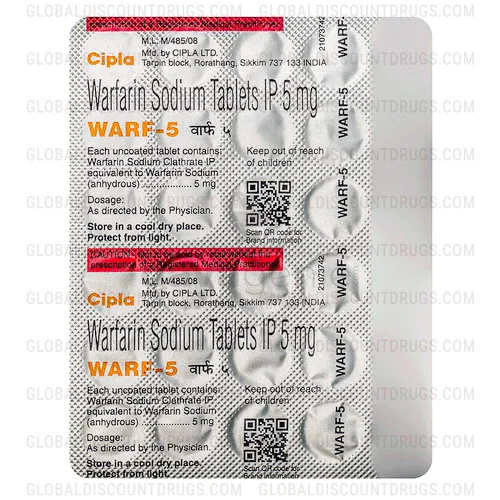
Warfarin 5mg
In StockWarfarin 5mg is a widely prescribed oral anticoagulant, commonly known as a blood thinner, used to prevent the formation of harmful blood clots. It works by decreasing the clotting ability of the blood, reducing the risk of stroke, heart attack, and pulmonary embolism. Regular blood tests (INR) are necessary to ensure the dosage is correct and safe.
$0.41 – $0.50 per pill
Warfarin 5mg Uses
Warfarin 5mg is prescribed to:
- Prevent and treat deep vein thrombosis (DVT) and pulmonary embolism (PE).
- Lower the risk of stroke in individuals with atrial fibrillation, mechanical heart valves, or other heart conditions.
- Manage inherited or acquired clotting disorders, such as antiphospholipid syndrome or protein C and S deficiencies.
- Prevent blood clots after surgeries, especially orthopedic or heart-related procedures.
How Does Warfarin 5mg Work
Warfarin inhibits the liver’s production of vitamin K-dependent clotting factors II, VII, IX, and X, along with proteins C and S. By reducing these factors, it lowers the blood’s ability to clot, preventing the formation of new clots and the growth of existing ones.
How to Use Warfarin 5mg
- Take Warfarin 5mg exactly as prescribed by your healthcare provider, usually once daily.
- Swallow the tablet whole with water, with or without food.
- Follow your doctor’s instructions for regular INR (International Normalized Ratio) blood tests to ensure the correct dosage and prevent complications.
- Maintain a consistent intake of vitamin K in your diet to avoid fluctuations in Warfarin’s effectiveness.
Side Effects
Common side effects may include:
- Minor bleeding or easy bruising (e.g., gums or minor cuts).
- Nausea or mild stomach upset.
- Fatigue or general weakness.
Rare but serious side effects include:
- Severe or prolonged bleeding, such as blood in urine, stools, or coughing up blood.
- Unexplained headaches, dizziness, or vision changes, indicating possible internal bleeding.
- Allergic reactions, such as rash, swelling, or difficulty breathing.
- Skin necrosis or purple toe syndrome (extremely rare).
Drug Interactions
Warfarin 5mg may interact with:
- Nonsteroidal anti-inflammatory drugs (NSAIDs) and aspirin, increasing the risk of bleeding.
- Antibiotics, which may alter Warfarin’s metabolism and efficacy.
- Antifungal medications, such as fluconazole, which can enhance its anticoagulant effects.
- Herbal supplements, including ginseng, garlic, and St. John’s wort, which may interfere with its action.
Food Interactions
- Maintain a consistent intake of vitamin K-rich foods, such as leafy greens like spinach, kale, and broccoli.
- Avoid excessive alcohol consumption, as it can increase the risk of bleeding.
- Limit cranberry juice, which may affect Warfarin’s anticoagulant properties.
Warfarin 5mg Contraindications
This medication is not suitable for:
- Individuals allergic to Warfarin or its components.
- Pregnant women, as it may cause birth defects or bleeding complications.
- Patients with active bleeding, severe liver disease, or clotting disorders.
Precautions and Warnings
- Inform your doctor if you have a history of bleeding disorders, liver or kidney disease, or uncontrolled high blood pressure.
- Avoid activities that may result in injury, as even minor cuts or bruises may bleed excessively.
- Notify healthcare providers about Warfarin use before surgeries or dental procedures.
- Regular INR monitoring is critical to ensure safe and effective anticoagulation therapy.
Storage
- Store Warfarin 5mg tablets at room temperature, away from moisture, heat, and direct sunlight.
- Keep the tablets in their original packaging and out of reach of children and pets.
- Dispose of unused or expired tablets responsibly, according to local disposal regulations.
Safety Information
- Use Warfarin 5mg only as directed by your healthcare provider.
- Do not skip doses or stop taking the medication without consulting your doctor.
- Report any unusual symptoms, such as prolonged bleeding, severe headaches, or allergic reactions, to your doctor immediately.
- Store Warfarin 5mg tablets at room temperature, away from moisture, heat, and direct sunlight.
- Keep the tablets in their original packaging and out of reach of children and pets.
- Dispose of unused or expired tablets responsibly, according to local disposal regulations.
Safety Information
- Use Warfarin 5mg only as directed by your healthcare provider.
- Do not skip doses or stop taking the medication without consulting your doctor.
- Report any unusual symptoms, such as prolonged bleeding, severe headaches, or allergic reactions, to your doctor immediately.
| Quantity | 120, 180, 240, 60 |
|---|---|
| Manufacturer | Cipla Limited |
| Indian Brand | Warf 5 |
| US Brand Name | Brumolin, Coumadin, Jantoven, Marevan, Warfarin, Warfarin Sodium |
| Generic Name | Warfarin |
| Dosage | 5mg. |
| Drug Type | Tablets |
Frequently Asked Questions
What is warfarinWarfarin is a prescription medication that helps prevent blood clots by affecting the blood’s clotting ability.
What is warfarin used forIt is used to prevent and treat blood clots in conditions such as deep vein thrombosis (DVT), pulmonary embolism (PE), and to reduce stroke risk in people with atrial fibrillation.
What does warfarin doWarfarin works by inhibiting vitamin K-dependent clotting factors, reducing the blood’s ability to form clots.
Is warfarin an anticoagulantYes, Warfarin is a commonly prescribed anticoagulant.
Is warfarin a blood thinnerYes, it is often referred to as a blood thinner because it reduces the risk of clot formation, though it does not actually “thin” the blood.


$1.63 per pill


$0.37 – $0.45 per pill


$0.37 – $0.45 per pill
$3.19 – $3.90 per pill


