

Clomifene/Clomiphene
In StockClomiphene (clomifene) is a prescription fertility medicine used to help trigger ovulation. This guide explains its uses, dosage factors, side effects, interactions, safety precautions, and storage. It also covers why a licensed specialist’s prescription is required and how to find a legitimate pharmacy.

What is Clomiphene (Clomifene)?
Clomiphene citrate is a prescription fertility medicine. It belongs to a drug class called selective estrogen receptor modulators (SERMs). It is taken by mouth as a tablet.
Approved use: In the United States, clomiphene is approved by the FDA to help women who are trying to become pregnant but do not ovulate regularly. This problem is called ovulatory dysfunction. It is often linked to conditions such as polycystic ovary syndrome (PCOS).
Other prescribed uses: Some specialists prescribe clomiphene for other reasons, including certain fertility treatments and some cases of male infertility. These uses are not approved by the FDA, and the benefits and risks should be discussed carefully with a specialist.
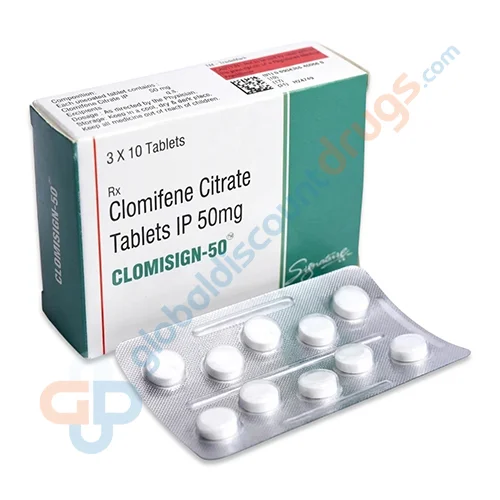
Formulations and strengths: Clomiphene is most commonly available as a 50 mg oral tablet. It is sold under several brand names and as a generic medicine. Brand names vary by country. Other forms, such as injections or creams, are not standard for this medicine.
What is the Recommended Dosage of Clomiphene?
There is no single dose that fits everyone. A specialist chooses the plan based on:
- The condition being treated and how the body has responded before
- Age and overall health
- Body weight and body mass index (BMI), in some cases
- Liver function, because the liver processes this medicine
- Results of monitoring, such as ovulation tests and ultrasound exams
Available dosage form: Oral tablets (commonly 50 mg).
In general, treatment is given as a short course of tablets early in the menstrual cycle. A specialist may adjust the dose in later cycles depending on how the body responds. The number of treatment cycles is usually limited because the risks may increase with longer use.
Always follow the exact instructions from your specialist and the label on your prescription. Do not change the dose or the number of days on your own.
How Clomiphene Works
Each month, the brain sends hormone signals that tell the ovaries to grow and release an egg. Two key signals are follicle-stimulating hormone (FSH) and luteinizing hormone (LH).
Clomiphene attaches to estrogen receptors in the brain. This blocks the brain from sensing the body’s own estrogen. The brain then reads estrogen as “low” and increases its output of FSH and LH. These hormones may help the ovaries grow a follicle and release an egg (ovulation).
Clomiphene helps trigger ovulation. It does not treat every cause of infertility, and it does not guarantee pregnancy. Many factors affect fertility, including age, the health of the fallopian tubes, and a partner’s sperm health.
Is a Prescription Required to Buy Clomiphene Online?
Yes. Clomiphene is a prescription-only medicine. It should be started and monitored by a licensed medical specialist, such as:
- A reproductive endocrinologist (fertility specialist)
- An obstetrician-gynecologist (OB-GYN)
- For male patients, a urologist or endocrinologist experienced in fertility care
Important safety points:
- Only buy medicine from a licensed pharmacy that requires a valid prescription.
- Be careful with websites that sell fertility medicine without a prescription. Products from these sources may be counterfeit, expired, contaminated, or wrongly dosed.
- Do not use products labeled for animal use.
- Check that the tablets match what your pharmacist described, and ask questions if the packaging looks different.
Side Effects of Clomiphene
Many people have mild side effects or none at all. Side effects often go away after the course ends.
Common Side Effects
- Hot flashes
- Bloating or mild pelvic or abdominal discomfort
- Breast tenderness
- Nausea
- Headache
- Mood changes, irritability, or trouble sleeping
- Spotting or changes in menstrual bleeding
- Mild enlargement of the ovaries
Serious Side Effects
These are uncommon but need prompt attention:
- Vision changes, such as blurred vision, spots, flashes of light, or sensitivity to light
- Ovarian hyperstimulation syndrome (OHSS), in which the ovaries swell and fluid builds up in the body. Signs include rapid weight gain, severe pelvic or stomach pain, swelling, nausea or vomiting, and shortness of breath.
- Multiple pregnancy, such as twins or more, which carries added health risks for mother and babies
- Ectopic pregnancy (a pregnancy outside the uterus), which can occur in people being treated for infertility
- Large ovarian cysts
- Allergic reaction, such as rash, itching, or swelling of the face, lips, or throat
- Rarely, blood clots or a severe rise in blood fats in people who already have very high triglycerides
Get medical help right away if you have vision changes, severe pelvic or stomach pain, trouble breathing, sudden swelling, chest pain, or signs of an allergic reaction. If symptoms are severe, call emergency services.
Drug Interactions
Clomiphene does not have many well-established major drug interactions. Even so, other medicines and products can still matter. Tell your specialist about everything you take, including:
- Other fertility medicines, such as gonadotropin injections, letrozole, or metformin
- Hormonal medicines, including birth control, estrogen, progesterone, or testosterone
- Prescription medicines for any condition
- Over-the-counter (OTC) medicines, such as pain relievers, allergy products, and cold remedies
- Vitamins, supplements, and herbal products
Bring a complete, up-to-date medication list to every appointment. Your pharmacist can also check for possible interactions.
Safety & Important Considerations
- Liver disease: Clomiphene is not recommended for people with liver disease or a history of liver problems.
- Kidney disease: Talk to your specialist if you have kidney problems.
- Pregnancy: Clomiphene should not be taken during pregnancy. A specialist may check that you are not pregnant before each treatment cycle. Tell your specialist right away if you think you may be pregnant.
- Breastfeeding: Clomiphene may lower milk production. Ask your specialist before use if you are nursing.
- Children and teens: Clomiphene is not approved for use in children.
- Older adults and postmenopausal women: It is not used for fertility after menopause.
- Monitoring: Your specialist may track ovulation, order blood tests, and perform ultrasound exams. Report any new symptoms between visits.
- Driving and machinery: Clomiphene can cause blurred vision or dizziness in some people. Use caution until you know how it affects you.
- FDA labeling warnings: The FDA-approved label highlights risks including visual symptoms, ovarian enlargement and OHSS, and multiple pregnancy. Treatment length is limited because longer use may raise risks.
Who This Medication Is For
Clomiphene is mainly used by women who:
- Are trying to conceive
- Have irregular or absent ovulation, such as in PCOS
- Have been evaluated by a specialist who found it to be a reasonable option
Before treatment, a specialist usually checks other factors that affect fertility, such as the partner’s semen analysis and the health of the uterus and fallopian tubes.
Who Should Not Take Clomiphene
Clomiphene should not be used by people who:
- Are pregnant or may be pregnant
- Have liver disease or a history of liver problems
- Have unexplained abnormal vaginal bleeding
- Have an ovarian cyst that is not caused by PCOS
- Have uncontrolled thyroid or adrenal gland problems
- Have a brain tumor or pituitary tumor
- Are allergic to clomiphene or any ingredient in the tablet
Use extra caution, and talk with your specialist, if you have PCOS with enlarged ovaries, very high triglycerides, or a history of vision problems.
What to Do If You Miss a Dose
- Take the missed tablet as soon as you remember, unless it is almost time for your next dose.
- Do not take a double dose to make up for a missed one.
- Clomiphene is timed to your menstrual cycle, so a missed dose can affect treatment. Call your specialist’s office for guidance if you miss a dose or are unsure what to do.
Related medications to Clomiphene
Other options may be discussed with a specialist, depending on your diagnosis and history:
- Letrozole: A medicine in the aromatase inhibitor class that specialists sometimes use to help induce ovulation. This use is not FDA-approved.
- Gonadotropin injections: Hormone injections (FSH or LH-based) that directly stimulate the ovaries.
- Metformin: Sometimes used alongside other treatments in people with PCOS and insulin resistance.
- Lifestyle approaches: Weight management, nutrition, and physical activity, which can affect ovulation in some people.
- Assisted reproductive treatments: Such as intrauterine insemination (IUI) or in vitro fertilization (IVF).
Other SERMs, such as tamoxifen or raloxifene, are used for different conditions and are not interchangeable with clomiphene.
Never switch, stop, or combine treatments without consulting a licensed specialist.
Storage Instructions
- Store tablets at room temperature, about 68°F to 77°F (20°C to 25°C).
- Keep the container tightly closed.
- Protect tablets from moisture (do not store in a bathroom) and from light.
- Keep all medicines out of the reach and sight of children and pets.
- Do not use tablets past the expiration date. Ask your pharmacist how to dispose of unused medicine safely.
Disclaimer:
This page is for educational purposes only. It is not a substitute for professional medical advice, diagnosis, or treatment. Patients must consult a licensed reproductive endocrinologist, OB-GYN, or other relevant medical specialist before starting, changing, or stopping treatment. Treatment decisions must be based on a full clinical evaluation by a qualified specialist.
Prescription Required (Rx) to Buy?
This medication is not available over the counter. A valid prescription from a licensed healthcare
professional is required. Always consult your doctor before use.