
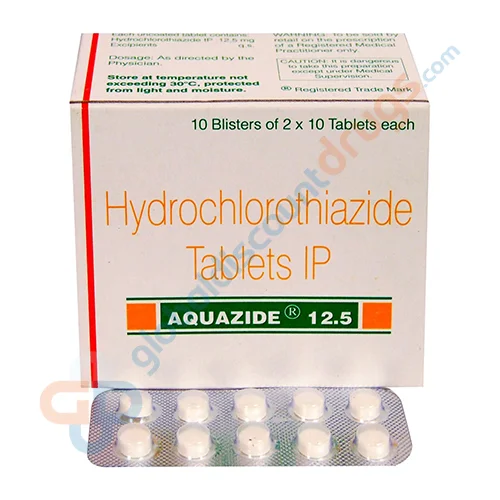
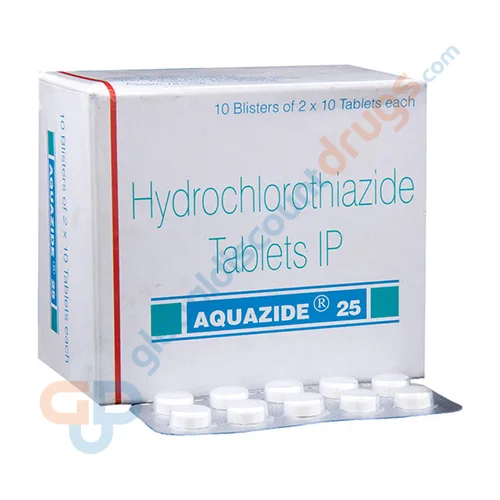
Hydrochlorothiazide
In StockHydrochlorothiazide is a prescription medicine used to treat high blood pressure (hypertension) and fluid retention (edema) associated with heart, kidney, or liver conditions. It works as a thiazide diuretic that helps the kidneys remove excess salt and water from the body, reducing blood volume and lowering blood pressure. Use only as directed on the product label or by a healthcare professional.

What is Hydrochlorothiazide?
Hydrochlorothiazide is a prescription medication used to treat high blood pressure (hypertension) and fluid retention (edema). It belongs to a class of medicines called thiazide diuretics, often referred to as “water pills.”
Hydrochlorothiazide works by helping the kidneys remove excess salt and water from the body through urine. This process reduces fluid buildup and lowers blood pressure.
Doctors commonly prescribe hydrochlorothiazide for:
- High blood pressure
- Edema caused by heart failure
- Fluid retention related to kidney or liver disease
- Swelling associated with certain medications
The medication is available in several forms, including:
Oral tablets:
Combination tablets with other blood pressure medicines
Different strengths are prescribed depending on the patient’s medical needs and treatment response.
What is the Recommended Dosage of Hydrochlorothiazide?
The correct dosage of hydrochlorothiazide depends on the patient’s medical condition and overall health.
Healthcare professionals determine the dosage based on factors such as:
- The condition being treated
- Patient age
- Kidney function
- Other medications being taken
- Response to treatment
Available dosage forms typically include:
Oral tablets
Combination tablets with other antihypertensive medicines
Doctors may start with a lower dose and adjust treatment depending on blood pressure control and fluid balance.
Because this medication affects electrolyte levels and kidney function, dosing must follow specialist instructions carefully. Patients should not change the dose or stop treatment without medical advice.
How Hydrochlorothiazide Works
Hydrochlorothiazide works by increasing the amount of salt and water removed from the body through urine.
It acts on the kidneys, specifically in the distal tubules, where it reduces the reabsorption of sodium. When sodium is removed, water follows it, leading to increased urine production.
This process helps:
- Reduce excess fluid in the body
- Lower blood pressure
- Decrease swelling in tissues
By lowering blood pressure, hydrochlorothiazide may help reduce the risk of complications such as heart disease, stroke, and kidney damage.
The medication controls blood pressure but does not cure hypertension. Ongoing treatment and lifestyle changes are often necessary.
Is a Prescription Required to Buy Hydrochlorothiazide Online?
Yes. In most countries, hydrochlorothiazide is a prescription-only medication.
High blood pressure and fluid retention require medical evaluation to determine the underlying cause and appropriate treatment plan.
Patients should consult healthcare professionals such as:
- Primary care physicians
- Cardiologists
- Nephrologists for kidney-related conditions
Medication should only be obtained from licensed pharmacies. Purchasing medicines from unregulated websites may increase the risk of receiving counterfeit or unsafe products.
Side Effects of Hydrochlorothiazide
Hydrochlorothiazide may cause side effects in some individuals. Many are mild and improve with continued use.
Common Side Effects
Patients may experience:
- Increased urination
- Dizziness
- Headache
- Mild stomach upset
- Muscle cramps
- Fatigue
These effects may occur as the body adjusts to fluid and electrolyte changes.
Serious Side Effects
Rare but serious complications may occur and require medical attention:
- Severe dehydration
- Very low blood pressure
- Irregular heartbeat
- Significant electrolyte imbalance
- Severe allergic reactions
Patients should seek medical care if they experience severe weakness, confusion, or persistent vomiting.
Drug Interactions
Hydrochlorothiazide may interact with several medications.
Important interaction categories include:
- Blood pressure medications
- Combining multiple antihypertensive drugs may increase blood pressure–lowering effects.
- Lithium
Hydrochlorothiazide may increase lithium levels in the blood.
Anti-inflammatory medications
Certain over-the-counter pain medicines may reduce the effectiveness of diuretics.
Supplements and herbal products
Electrolyte supplements or herbal products affecting fluid balance may interact with treatment.
Patients should provide healthcare professionals with a complete list of medications, supplements, and herbal products before starting treatment.
Safety & Important Considerations
Certain health conditions require caution when using hydrochlorothiazide.
Kidney Disease
Patients with kidney impairment may require careful monitoring of electrolyte levels and kidney function.
Liver Disease
Fluid and electrolyte shifts may affect individuals with severe liver disease.
Pregnancy and Breastfeeding
Use during pregnancy or breastfeeding should occur only under medical supervision after evaluating potential risks and benefits.
Monitoring Requirements
Healthcare professionals may monitor:
- Blood pressure
- Kidney function
- Electrolyte levels (such as sodium and potassium)
Regular follow-up visits help ensure safe treatment.
Who This Medication Is For
Hydrochlorothiazide is commonly prescribed for:
- Adults diagnosed with high blood pressure
- Patients with fluid retention (edema)
- Individuals with swelling related to heart, kidney, or liver conditions
The medication may also be used in combination with other antihypertensive drugs to improve blood pressure control.
Who Should Not Take Hydrochlorothiazide
Hydrochlorothiazide may not be appropriate for certain individuals.
It is generally avoided in patients who:
- Have allergy to thiazide diuretics
- Have severe kidney failure
- Have inability to produce urine (anuria)
- Have certain electrolyte imbalances
Patients with chronic medical conditions should discuss risks with their healthcare professional before using this medication.
What to Do If You Miss a Dose
If a dose of hydrochlorothiazide is missed:
- Take the missed dose as soon as you remember
- If it is close to the next scheduled dose, skip the missed dose
- Continue with the normal dosing schedule
- Do not take two doses at the same time.
Patients who frequently miss doses should discuss medication schedules with their healthcare professional.
Related medications to Hydrochlorothiazide
Several other diuretic medications may be used depending on the patient’s medical condition.
Examples include:
Each medication works differently and may be chosen based on clinical evaluation.
Switching medications should occur only after consultation with a qualified healthcare professional.
Storage Instructions
To maintain medication quality:
- Store at room temperature
- Protect from excess heat and moisture
- Keep in the original container
- Avoid storing in humid areas such as bathrooms
- Keep out of reach of children and pets
Always follow the storage instructions provided on the medication label.
Disclaimer:
This page is for educational purposes only. It is not a substitute for professional medical advice, diagnosis, or treatment. Patients must consult a licensed cardiologist, nephrologist, or qualified healthcare professional before starting, changing, or stopping treatment. Treatment decisions must be based on a full clinical evaluation by a qualified medical specialist.
Prescription Required (Rx) to Buy?
This medication is not available over the counter. A valid prescription from a licensed healthcare
professional is required. Always consult your doctor before use.