

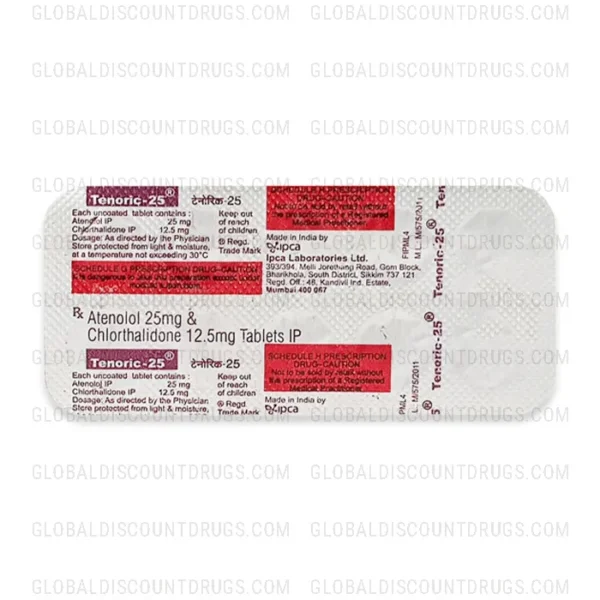
Atenolol-Chlorthalidone 25mg-12.5mg
In StockAtenolol-Chlorthalidone 25 Tablet is a combination of two medicines used to treat hypertension (high blood pressure). It helps to control blood pressure when a single medication is not effective. It also helps to reduce chances of any future heart attack and stroke.
| Active Ingredient: | Atenolol-Chlorthalidone |
|---|---|
| Indication: | Hypertension |
| Strength: | 25mg-12.5mg |
| Dosage Form: | Tablets |
| Manufacturer: | Ipca |

Quick Overview: What Is Atenolol-Chlorthalidone 25mg/12.5mg?
Atenolol-Chlorthalidone 25mg/12.5mg is a prescription combination tablet used to treat high blood pressure (hypertension) in adults. It pairs a beta-blocker (atenolol) with a thiazide-like diuretic (chlorthalidone) to lower blood pressure through two separate mechanisms. This medication requires a valid prescription and must be taken only under physician supervision.
Medical Supervision and Regulatory Status
Atenolol-Chlorthalidone is classified as a prescription-only medication in the United States and is not available over the counter. It falls under FDA-regulated antihypertensive combination drugs. A physician must evaluate your blood pressure readings, kidney function, and overall cardiovascular health before prescribing this medication. Ongoing monitoring is required to ensure the drug is working safely and effectively.
Clinical Context
High blood pressure affects nearly half of all adults in the United States and is a leading risk factor for heart attack, stroke, kidney disease, and heart failure. When blood pressure remains elevated despite lifestyle changes, medication is often necessary to bring it into a safe range.
Single-drug therapy does not always achieve adequate blood pressure control in many patients. A combination product like Atenolol-Chlorthalidone allows two drugs to work through different pathways simultaneously, which can lower blood pressure more effectively than either drug used alone at higher doses.
Atenolol-Chlorthalidone 25mg/12.5mg is typically considered when a patient needs dual-agent therapy or when their physician determines that the specific combination of a beta-blocker and a diuretic suits their individual cardiovascular profile.
How Atenolol-Chlorthalidone 25mg/12.5mg Works
Atenolol belongs to the beta-1 selective adrenergic blocker class. It works by blocking beta-1 receptors in the heart, which slows the heart rate and reduces the force of each heartbeat. The result is a lower cardiac output and a reduction in blood pressure. For patients, this means the heart works with less effort to pump blood through the body.
Chlorthalidone is a thiazide-like diuretic that acts on the kidneys to increase sodium and water excretion through urine. By reducing the volume of fluid circulating in the bloodstream, it lowers the pressure that blood exerts on artery walls. Together, both ingredients address two separate contributors to high blood pressure: cardiac output and blood volume.
What Is Atenolol-Chlorthalidone 25mg/12.5mg?
Drug Class: Beta-blocker combined with thiazide-like diuretic
Active Ingredients: Atenolol 25mg + Chlorthalidone 12.5mg
Mechanism: Atenolol reduces heart rate and cardiac output; chlorthalidone reduces blood volume through increased urinary excretion
Dosage Form: Oral tablet
Dosing Frequency: Typically once daily, as directed by a physician
Regulatory Status: FDA-approved prescription medication (United States)
Uses and Approved Indications
Hypertension (High Blood Pressure) Atenolol-Chlorthalidone 25mg/12.5mg is approved by the FDA for the treatment of hypertension. It is used when a physician determines that combination therapy is appropriate, either as initial treatment in patients with significantly elevated blood pressure or as a step-up from single-agent therapy that has not achieved target blood pressure goals.
Cardiovascular Risk Reduction Because atenolol reduces the workload on the heart, physicians may prescribe this combination in hypertensive patients who also have a history of certain cardiovascular conditions, as part of a broader treatment plan developed with a cardiologist or primary care physician.
How to Use Atenolol-Chlorthalidone / Dosage Guidance
Your physician will determine the appropriate dose based on your blood pressure readings, kidney function, age, and other health conditions. The typical starting dose for the combination is one tablet taken once daily, generally in the morning. Always follow the specific instructions on your prescription label.
Take this medication at the same time each day, with or without food. Taking it in the morning is often recommended because chlorthalidone increases urine output, which can be disruptive at night. Do not crush or split the tablet unless your pharmacist confirms it is safe to do so.
If you miss a dose, take it as soon as you remember during the same day. If it is close to the time of your next dose, skip the missed dose and continue on your regular schedule. Do not take two doses at once to make up for a missed one.
Do not stop taking Atenolol-Chlorthalidone suddenly without speaking to your physician. Abrupt discontinuation of atenolol can cause a rapid increase in heart rate and blood pressure, which may increase the risk of chest pain or serious cardiac events in patients with underlying heart disease. Your doctor will provide a tapering plan if the medication needs to be stopped.
Side Effects
Most people who take Atenolol-Chlorthalidone tolerate it well, particularly at this lower dose combination. Side effects, when they occur, are often mild and tend to improve as the body adjusts during the first few weeks of treatment.
Common side effects associated with this medication include fatigue, dizziness, slow heart rate (bradycardia), increased urination, cold hands or feet, and mild headache. Dizziness is more likely when standing up quickly (orthostatic hypotension), especially early in treatment. Low potassium levels (hypokalemia) can occur due to the chlorthalidone component and may cause muscle cramps or weakness.
Serious side effects are less common but require prompt medical attention. These include significant swelling of the ankles or legs, unusually slow heartbeat, shortness of breath, severe fatigue, signs of kidney problems such as decreased urination, and high blood sugar, which is a known concern with thiazide-type diuretics in patients with or at risk for diabetes.
Seek emergency care immediately if you experience:
- Chest pain or tightness
- Sudden shortness of breath or wheezing
- Severe allergic reaction (swelling of the face, lips, tongue, or throat)
- Rapid or irregular heartbeat after stopping the medication
- Signs of dangerously low potassium: muscle paralysis or severe weakness
- Signs of low sodium: confusion, seizures, or extreme weakness
Warnings and Precautions
Contraindications Atenolol-Chlorthalidone should not be used in patients with sinus bradycardia, second or third-degree heart block, cardiogenic shock, or overt heart failure. Patients with known hypersensitivity to either atenolol, chlorthalidone, or sulfonamide-derived drugs should not use this medication.
Drug Interactions Atenolol-Chlorthalidone can interact with several medications in clinically significant ways. Calcium channel blockers such as verapamil or diltiazem, when combined with atenolol, can cause serious reductions in heart rate and blood pressure. Nonsteroidal anti-inflammatory drugs (NSAIDs) like ibuprofen and naproxen may reduce the antihypertensive effect of both components. Lithium clearance may be reduced by chlorthalidone, leading to increased lithium toxicity. Digoxin combined with atenolol increases the risk of bradycardia and heart block. Antidiabetic agents, including insulin, may have altered effects because beta-blockers can mask the early symptoms of low blood sugar (hypoglycemia).
Pregnancy and Breastfeeding Atenolol has been associated with fetal growth restriction when used during pregnancy and is generally avoided during the second and third trimesters unless clearly necessary. Chlorthalidone passes into breast milk. Women who are pregnant, planning to become pregnant, or breastfeeding should discuss the risks and benefits with their physician before using this medication.
Special Populations Elderly patients may be more sensitive to the blood pressure-lowering effects and may have an increased risk of falls due to dizziness. Patients with diabetes must be monitored carefully because chlorthalidone can raise blood glucose levels, and atenolol may mask hypoglycemia warning signs. Patients with chronic kidney disease require dose adjustments and close monitoring of electrolytes and kidney function. Patients with asthma or chronic obstructive pulmonary disease should use beta-blockers with caution, as atenolol, even at beta-1 selective doses, can trigger bronchospasm at higher doses.
Monitoring Requirements Regular monitoring of blood pressure, heart rate, serum potassium, blood glucose, uric acid, and kidney function is recommended during treatment. Your physician will determine how frequently labs and check-ins are needed based on your overall health.
Who Should Not Use This Medication
- Patients with cardiogenic shock or decompensated heart failure
- Patients with second or third-degree atrioventricular (AV) heart block
- Patients with clinically significant sinus bradycardia
- Patients with anuria (no urine output) or severe kidney impairment
- Patients with a known allergy to sulfonamide-derived drugs or either active ingredient
- Patients currently taking certain antiarrhythmic medications (consult your physician)
- Women in the second or third trimester of pregnancy, unless directed by a physician
Storage Instructions
Store Atenolol-Chlorthalidone tablets at room temperature, between 68°F and 77°F (20°C to 25°C). Keep the medication in a dry place, away from direct sunlight and humidity. Do not store it in the bathroom medicine cabinet, as moisture can degrade the tablet. Keep this medication out of reach of children and pets at all times. Dispose of unused or expired tablets through an FDA-approved medication take-back program rather than flushing them down the toilet.
Frequently Asked Questions
Does Atenolol-Chlorthalidone require a prescription?
Yes, Atenolol-Chlorthalidone is a prescription-only medication in the United States. A physician must evaluate your blood pressure, heart rate, kidney function, and overall health before prescribing it. This ensures the medication is safe and appropriate for your specific situation and that you receive proper follow-up care.
How long does Atenolol-Chlorthalidone take to work?
Blood pressure-lowering effects may begin within 24 hours of the first dose, but full therapeutic benefit typically develops over two to four weeks of consistent use. Your physician will reassess your blood pressure at follow-up visits to determine whether the current dose is meeting your treatment goals.
Can I stop taking Atenolol-Chlorthalidone on my own?
No, you should not stop this medication without guidance from your physician. Stopping atenolol abruptly can cause a rebound increase in heart rate and blood pressure, which may be dangerous, especially in patients with coronary artery disease. Your doctor will advise you on how to safely taper or discontinue this medication if needed.
What should I do if I miss a dose?
Take the missed dose as soon as you remember on the same day. If it is nearly time for your next scheduled dose, skip the missed dose entirely. Do not double up on doses. Consistent daily use is important for maintaining stable blood pressure control. Contact your pharmacist if you have questions about what to do.
What is the cost of Atenolol-Chlorthalidone without insurance?
The cost without insurance depends on the seller, brand availability, and pack size, and may also vary by location and available discounts. Generic versions of this combination are generally more affordable than brand-name options. Pharmacy discount programs and manufacturer coupons may help reduce out-of-pocket costs significantly.
How can I order Atenolol-Chlorthalidone online?
A valid prescription from a licensed physician is required to order Atenolol-Chlorthalidone online. You can upload your prescription or have your doctor send it directly to a licensed online pharmacy, then place your order for home delivery. Always use a pharmacy verified by the National Association of Boards of Pharmacy (NABP) to ensure safety and authenticity.
Is Atenolol-Chlorthalidone available over the counter?
No, Atenolol-Chlorthalidone is not available over the counter in the United States or in most other countries. It requires a prescription because it affects heart rate, blood pressure, and kidney function in ways that need medical evaluation and monitoring. Regulations may vary by region, but medical supervision is required wherever it is dispensed.
Resources
- Atenolol-Chlorthalidone Drug Information | DailyMed (NIH) – https://dailymed.nlm.nih.gov/dailymed/search.cfm?labeltype=all&query=atenolol+chlorthalidone
- Atenolol: MedlinePlus Drug Information –
- https://medlineplus.gov/druginfo/meds/a684031.html
- Chlorthalidone: MedlinePlus Drug Information –
- https://medlineplus.gov/druginfo/meds/a682342.html
Medical Disclaimer:
This content is for informational purposes only and does not constitute medical advice, diagnosis, or treatment. Consult a qualified specialist or physician before using Atenolol-Chlorthalidone 25mg/12.5mg. Read our medical disclaimer for more details
Prescription Required (Rx) to Buy?
This medication is not available over the counter. A valid prescription from a licensed healthcare
professional is required. Always consult your doctor before use.
| Quantity | 100, 200, 300, 400 |
|---|---|
| Indication | Hypertension |
| Active Ingredient | Atenolol-Chlorthalidone |
| Pharmaceutical Form | Tablets |
| Manufacturer | Ipca |
| Indian Brand | Tenoric 25 |
| US Brand Name | Atenolol-Chlorthalidone, Tenoretic |
| Generic Name | Atenolol-Chlorthalidone |
| Dosage | 25mg-12.5mg |
| Drug Type | Tablets |