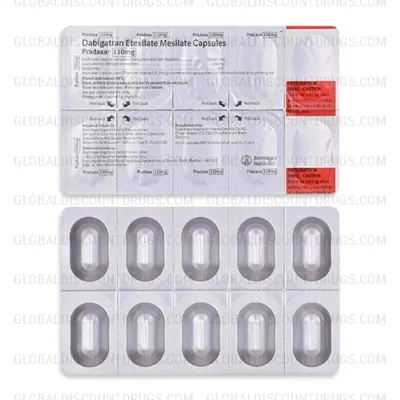


Dabigatran Etexilate Mesilate
In StockDabigatran Etexilate Mesilate is a direct thrombin inhibitor (DOAC) used to prevent stroke and systemic embolism in patients with non-valvular atrial fibrillation (AFib) and to treat deep vein thrombosis (DVT) and pulmonary embolism (PE). It works by directly blocking the activity of thrombin, a key enzyme in the clotting cascade, thereby preventing clot formation. This API offers an effective, oral alternative to warfarin with predictable pharmacokinetics and fewer drug interactions. Dabigatran is a major advancement in antithrombotic therapy.

What is Dabigatran Etexilate Mesilate?
Dabigatran etexilate mesilate is a medication available under the brand name Pradaxa, as well as in generic form in some markets. It belongs to a class of drugs known as direct oral anticoagulants (DOACs), specifically a direct thrombin inhibitor. It is sometimes referred to simply as dabigatran.
Dabigatran is approved for:
- Reducing the risk of stroke and blood clots (systemic embolism) in patients with non-valvular atrial fibrillation (an irregular heart rhythm)
- Treating deep vein thrombosis (DVT) and pulmonary embolism (PE), and reducing the risk of recurrence
- Preventing DVT and PE in patients who have undergone hip replacement surgery
Dabigatran is available in the following formulation:
- Oral capsules (commonly available in 75 mg and 150 mg strengths, with a lower-strength formulation used in certain pediatric or dose-adjusted situations in some markets)
What is the Recommended Dosage of Dabigatran Etexilate Mesilate?
There is no single “correct” dose of dabigatran for everyone. The right dose depends on several individual factors, including:
- The condition being treated
- Kidney function, since dabigatran is eliminated primarily by the kidneys and dosing depends heavily on this
- The patient’s age
- Other medications currently being taken
- Body weight, in certain situations
Available Dosage Forms
Dabigatran is available as oral capsules in different strengths, generally taken twice daily, allowing a prescriber to tailor the dose based on kidney function and the condition being treated.
Important Note on Dosing
Exact dosing instructions are not provided on this page because appropriate dosing must be determined individually, and because dabigatran’s dosing is closely tied to kidney function, which must be checked before and periodically during treatment. Patients should:
- Follow the exact dose and schedule prescribed by their licensed medical specialist
- Never adjust the dose on their own
- Swallow capsules whole; do not open, break, chew, or crush them, as this can significantly increase how much medication is absorbed
- Never stop taking dabigatran abruptly without consulting their prescriber, as this can increase the risk of stroke or blood clots
- Ask their prescriber or pharmacist if dosing instructions are unclear
How Dabigatran Etexilate Mesilate Works
Dabigatran works by directly blocking an enzyme called thrombin, which plays a central role in the blood clotting process. By blocking thrombin, dabigatran reduces the blood’s ability to form clots.
In simple terms: dabigatran thins the blood by interrupting one of the final steps of clot formation, which helps prevent dangerous clots from forming in the heart (which could travel to the brain and cause a stroke) or in the veins of the legs and lungs (deep vein thrombosis and pulmonary embolism).
Dabigatran manages clot-related risk; it does not cure the underlying condition causing that risk, such as atrial fibrillation, and it is often used alongside other treatments aimed at managing the underlying heart rhythm or clotting tendency.
Is a Prescription Required to Buy Dabigatran Etexilate Mesilate Online?
Yes. Dabigatran is a prescription-only medication in the United States and most other countries.
Before starting dabigatran, patients should consult a licensed medical specialist, such as:
- A cardiologist
- A hematologist
- A primary care physician
Important Safety Warning
Patients should be cautious of websites offering dabigatran without a prescription. These may include:
- Counterfeit medications with incorrect, unsafe, or no active ingredient
- Products not manufactured under proper quality and safety standards, which is a particular concern for a blood-thinning medication where incorrect dosing can be dangerous
Always obtain dabigatran from a licensed pharmacy, and only after being evaluated and prescribed by a qualified healthcare provider.
Side Effects of Dabigatran Etexilate Mesilate
Common Side Effects
These are generally mild and may resolve on their own:
- Stomach upset, heartburn, or indigestion
- Nausea
- Bruising more easily than usual
- Mild stomach pain
Serious Side Effects
Although uncommon, seek immediate medical attention if any of the following occur:
- Signs of serious bleeding, such as black or bloody stools, vomit that looks like coffee grounds, blood in urine, or bleeding that does not stop
- Signs of bleeding inside the skull, such as sudden severe headache, confusion, weakness on one side of the body, or difficulty speaking
- Unusual bruising, especially large bruises without clear cause
- Signs of a severe allergic reaction, such as swelling of the face, lips, tongue, or throat, hives, or difficulty breathing
- Signs of spinal or epidural bleeding in patients who have had spinal procedures, such as new numbness, weakness, or loss of bladder or bowel control
This list is not exhaustive. Patients experiencing any unusual or concerning symptoms, especially any sign of bleeding, should contact their prescriber promptly.
Drug Interactions
Dabigatran can interact with a range of substances. Patients should tell their prescriber about all medications and products they use, including:
- Other blood thinners or antiplatelet medications, such as warfarin, aspirin, or clopidogrel, since combined use significantly increases bleeding risk
- P-glycoprotein inhibitors (such as certain antifungals like ketoconazole, or the heart medication dronedarone), which can raise dabigatran levels and bleeding risk, particularly in patients with reduced kidney function
- P-glycoprotein inducers (such as rifampin), which can reduce dabigatran’s effectiveness
- NSAIDs (such as ibuprofen or naproxen), which can further increase bleeding risk
- Certain antidepressants (SSRIs/SNRIs), which may increase bleeding risk
- Supplements and herbal products, such as fish oil, vitamin E, ginkgo biloba, or St. John’s Wort, which may affect bleeding risk or drug levels
Patients should provide their licensed medical specialist and pharmacist with a complete and current list of all prescription drugs, OTC medications, vitamins, and herbal supplements before starting dabigatran.
Safety & Important Considerations
- Kidney function: Dabigatran dosing depends heavily on kidney function; kidney function is typically checked before starting treatment and periodically thereafter, since declining kidney function increases bleeding risk
- Bleeding risk: Dabigatran increases bleeding risk, including serious and potentially life-threatening bleeding; patients should be aware of signs of bleeding and seek care promptly if they occur
- Spinal procedures: Patients undergoing spinal puncture or epidural anesthesia while taking dabigatran are at risk for spinal or epidural blood clots (hematomas), which can cause long-term or permanent paralysis; this requires careful timing coordinated by a specialist
- Discontinuing before procedures: Dabigatran typically needs to be stopped for a period before surgery or invasive procedures, with exact timing depending on kidney function and bleeding risk of the procedure; this must be coordinated with the prescribing physician
- Do not stop abruptly: Stopping dabigatran without a prescriber’s guidance, particularly in patients with atrial fibrillation, increases the risk of stroke
- Prosthetic heart valves: Dabigatran is not recommended for patients with mechanical heart valves
- Pregnancy and breastfeeding: Should only be used during pregnancy or breastfeeding if the potential benefit justifies the potential risk, as determined by a prescriber
- Age-related considerations: Older adults may be at higher risk for bleeding complications and often have reduced kidney function, which affects dosing
- FDA boxed warnings: Dabigatran carries boxed warnings regarding the risk of spinal/epidural hematoma with spinal procedures, and regarding an increased risk of stroke or clot formation if the medication is discontinued prematurely without an adequate alternative anticoagulant
- Monitoring requirements: Prescribers typically monitor kidney function periodically and watch for signs of bleeding throughout treatment
This medication should only be used for its approved purpose, as determined by a licensed prescriber.
Who This Medication Is For
Dabigatran is generally intended for:
- Adults with non-valvular atrial fibrillation who need stroke and blood clot prevention
- Adults with deep vein thrombosis or pulmonary embolism who need treatment or prevention of recurrence
- Adults undergoing hip replacement surgery who need short-term blood clot prevention
- Patients who have been evaluated by a licensed prescriber and determined to be appropriate candidates based on their kidney function, bleeding risk, and clotting risk
Use should always follow an appropriate clinical evaluation and a specialist’s recommendation.
Who Should Not Take Dabigatran Etexilate Mesilate
Dabigatran may not be appropriate for individuals who:
- Have active, serious bleeding
- Have a known allergy to dabigatran or any ingredient in the product
- Have a mechanical (prosthetic) heart valve
- Have severe kidney impairment, without specific dose adjustment guidance from a specialist
- Have certain conditions with a high risk of bleeding, such as recent major surgery, spinal or epidural blood collection, or bleeding disorders
This is not a complete list. A full medical history review by a licensed specialist is necessary to determine if dabigatran is safe and appropriate.
What to Do If You Miss a Dose
- Take the missed dose as soon as remembered on the same day, unless it is close to the time of the next scheduled dose, in which case the missed dose should generally be skipped
- Do not double up or take an extra dose to make up for a missed one
- Try to take dabigatran at the same two times each day to maintain consistent anticoagulant protection
- Do not stop taking dabigatran on your own, even if a dose is missed occasionally, without consulting a prescriber
- Contact a licensed medical specialist if there is any uncertainty about the dosing schedule
Related medications to Dabigatran Etexilate Mesilate
Other medications in the same broad category (oral anticoagulants) that are sometimes prescribed include:
- Other direct oral anticoagulants (DOACs), such as rivaroxaban, apixaban, or edoxaban
- Warfarin, an older anticoagulant that requires regular blood testing to monitor its effect
Switching between treatments should only be done in consultation with a licensed medical specialist, who can weigh factors such as kidney function, bleeding risk, the specific condition being treated, and reversal-agent availability.
Storage Instructions
- Store at room temperature, generally between 68°F and 77°F (20°C to 25°C), unless otherwise directed on the packaging
- Keep in the original manufacturer’s container or blister packaging, since dabigatran capsules are sensitive to moisture and can lose potency if repackaged into pill organizers or other containers for extended periods; ask a pharmacist about proper storage if using a pill organizer
- Keep away from excess heat, moisture, and direct light
- Keep out of reach of children and pets
- Dispose of expired or unused medication according to local guidelines or pharmacist instructions
Disclaimer:
This page is for educational purposes only. It is not a substitute for professional medical advice, diagnosis, or treatment. Patients must consult a licensed cardiologist, hematologist, or other relevant medical specialist before starting, changing, or stopping treatment with dabigatran etexilate mesilate. Treatment decisions must be based on a full clinical evaluation by a qualified specialist.
Prescription Required (Rx) to Buy?
This medication is not available over the counter. A valid prescription from a licensed healthcare
professional is required. Always consult your doctor before use.