
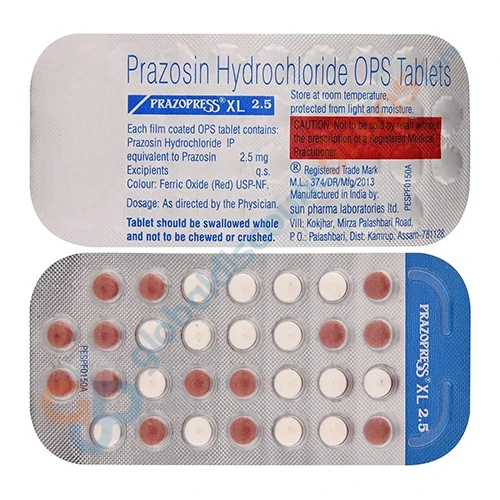

Prazosin
In StockPrazosin is a prescription medicine used to treat high blood pressure (hypertension) and symptoms of benign prostatic hyperplasia (BPH), including difficulty with urination. It works by blocking alpha-1 adrenergic receptors, which helps relax blood vessels and smooth muscles in the prostate and bladder neck. This action supports improved blood flow and urinary function. Use as directed on the product label or by a healthcare professional.

What is Prazosin?
Prazosin is a prescription medication used to treat certain cardiovascular and blood pressure–related conditions. It belongs to a class of medicines known as alpha-1 adrenergic blockers (alpha blockers).
Alpha blockers work by relaxing blood vessels so blood can flow more easily through the body. This effect helps reduce blood pressure and may also improve symptoms related to certain urinary or neurological conditions.
Approved and common uses
Healthcare professionals may prescribe prazosin for:
- Hypertension (high blood pressure)
- Management of benign prostatic hyperplasia (BPH) symptoms in some cases
- Certain circulatory disorders
In some clinical situations, specialists may prescribe it for post-traumatic stress disorder (PTSD)–related nightmares or sleep disturbances
Prazosin helps control symptoms and manage blood pressure but does not cure the underlying condition.
Available formulations and strengths
Prazosin is typically available as:
Oral capsules
Common capsule strengths may include:
The exact strengths and formulations may vary depending on the manufacturer and region.
What is the Recommended Dosage of Prazosin?
The appropriate dosage of prazosin must be determined by a licensed healthcare professional.
Dosing decisions depend on several factors, including:
- The condition being treated
- Patient age and overall health
- Blood pressure levels
- Response to treatment
- Other medications being taken
Treatment often begins with a low initial dose, particularly because prazosin can significantly lower blood pressure when therapy begins.
Doctors may gradually adjust the dose based on treatment response and tolerance.
How Prazosin Works
Prazosin works by blocking alpha-1 adrenergic receptors located in the walls of blood vessels.
Normally, stimulation of these receptors causes blood vessels to tighten and narrow, which raises blood pressure.
When prazosin blocks these receptors:
- Blood vessels relax and widen
- Blood pressure decreases
- Blood flow improves
In certain conditions affecting the prostate or bladder, relaxing smooth muscle may also improve urinary symptoms.
The medication helps manage symptoms and blood pressure levels, but it does not cure the underlying disease.
Is a Prescription Required to Buy Prazosin Online?
Yes. Prazosin is a prescription-only medication in most countries.
Because it affects blood pressure and circulation, patients must be evaluated by a licensed healthcare professional before starting treatment.
Healthcare specialists who may prescribe prazosin include:
- Cardiologists
- Primary care physicians
- Internal medicine specialists
- Urologists
- Psychiatrists in certain clinical circumstances
Patients should avoid purchasing medications from unverified online sellers, as counterfeit or improperly stored medicines may pose health risks.
Prazosin should only be obtained from licensed pharmacies that require a valid prescription.
Side Effects of Prazosin
Like all medications, prazosin may cause side effects. Many patients tolerate the medication well when used as prescribed.
Common Side Effects
Common side effects may include:
- Dizziness
- Drowsiness
- Headache
- Fatigue
- Nausea
- Nasal congestion
- Weakness
These symptoms may occur more often when starting treatment or when standing up quickly.
Serious Side Effects
Rare but serious side effects may include:
- Severe low blood pressure
- Fainting (especially after the first dose)
- Rapid or irregular heartbeat
- Swelling of the hands or feet
- Allergic reactions
Immediate medical attention is required if symptoms such as fainting, chest pain, breathing difficulty, or severe dizziness occur.
Drug Interactions
Prazosin may interact with other medications that affect blood pressure or the cardiovascular system.
Major interaction categories include:
- Other blood pressure medications
- Phosphodiesterase inhibitors used for erectile dysfunction
- Certain heart medications
- Medications that cause sedation or dizziness
OTC medications and supplements
Patients should inform their healthcare provider if they use:
- Over-the-counter cold or allergy medications
- Herbal supplements
- Vitamins or dietary supplements
- Sleep aids or sedative medications
Providing a complete list of medications and supplements helps healthcare professionals prevent potential interactions.
Safety & Important Considerations
Several safety factors should be considered before starting prazosin.
First-dose effect
Prazosin may cause a significant drop in blood pressure after the first dose, sometimes leading to dizziness or fainting. Doctors may recommend taking the first dose at bedtime.
Blood pressure monitoring
Regular blood pressure monitoring may be necessary during treatment.
Driving and alertness
The medication may cause dizziness or drowsiness, especially during early treatment. Patients should avoid activities requiring alertness until they understand how the medication affects them.
Age considerations
Older adults may be more sensitive to blood pressure changes and may require careful dose adjustments.
Who This Medication Is For
Prazosin is typically prescribed for individuals diagnosed with conditions involving high blood pressure or vascular regulation.
Typical patient groups include:
- Adults with hypertension
- Individuals experiencing urinary symptoms related to prostate enlargement
- Patients receiving specialist care for certain sleep or stress-related conditions
Treatment suitability is determined through medical evaluation by a qualified healthcare professional.
Who Should Not Take Prazosin
Prazosin may not be appropriate for certain individuals.
Contraindications and precautions include:
- Known allergy to prazosin or similar medications
- History of severe orthostatic hypotension (blood pressure drops when standing)
- Certain cardiovascular conditions requiring specialist evaluation
Extra caution may be required in patients with:
- Heart disease
- Kidney disease
- Severe dehydration
- Previous episodes of fainting related to blood pressure changes
A licensed healthcare professional must determine whether prazosin is appropriate.
What to Do If You Miss a Dose
If a dose is missed:
- Take the missed dose as soon as it is remembered
- If it is close to the next scheduled dose, skip the missed dose
- Patients should not take two doses at the same time to compensate for a missed dose.
If multiple doses are missed or if there is uncertainty about dosing, patients should consult a licensed healthcare professional or pharmacist.
Related medications to Prazosin
Other medications may be used to treat high blood pressure or related conditions depending on the patient’s medical history.
Examples include:
- Other alpha blockers such as doxazosin or terazosin
- ACE inhibitors
- Angiotensin receptor blockers (ARBs)
- Calcium channel blockers
- Diuretics
Treatment decisions depend on the patient’s medical condition, response to therapy, and overall cardiovascular risk profile.
Medication changes should occur only under professional medical supervision.
Storage Instructions
Proper storage helps maintain medication safety and effectiveness.
Recommended storage guidelines include:
- Store at room temperature
- Keep the medication in its original container
- Protect from excess heat and moisture
- Avoid exposure to direct light
- Keep out of reach of children and pets
Expired or unused medication should be disposed of according to local pharmacy or medication disposal guidelines.
Related Alpha-Blocker Information
Prazosin is an alpha-1 adrenergic blocker. A closely related cardiovascular page is Terazosin. These medicines can have different approved indications and should not be treated as direct substitutes.
Disclaimer
This page is provided for educational purposes only. It is not a substitute for professional medical advice, diagnosis, or treatment. Patients must consult a licensed cardiologist, internal medicine physician, urologist, or other qualified medical specialist before starting, changing, or stopping treatment with prazosin. All treatment decisions must be based on a complete clinical evaluation performed by a qualified healthcare professional.
Prescription Required (Rx) to Buy?
This medication is not available over the counter. A valid prescription from a licensed healthcare
professional is required. Always consult your doctor before use.