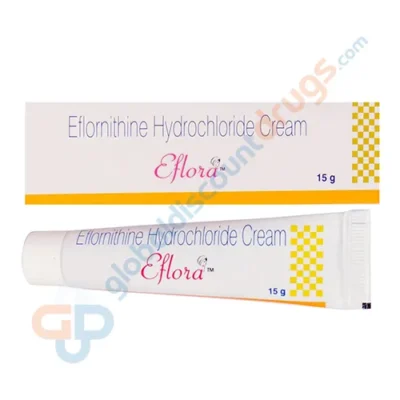
Eflornithine
In StockEflornithine is a prescription medication used primarily for reducing unwanted facial hair in women and treating African sleeping sickness (trypanosomiasis). It works by inhibiting an enzyme involved in hair growth and parasite survival, making it effective for both dermatological and parasitic infections.

What is Eflornithine?
Eflornithine is a medication most commonly used in topical form to slow the growth of unwanted facial hair in women. It is also used in a different, oral form in specialized medical settings for an unrelated parasitic infection; this guide focuses on the topical formulation used for facial hair reduction, as that is its most common patient-facing use.
Drug class: Eflornithine belongs to a class of medications known as ornithine decarboxylase inhibitors. In topical form, it is classified as a treatment for unwanted facial hair growth.
Approved and common uses:
- Reduction in the rate of unwanted facial hair growth in women (topical use)
- Eflornithine in oral form is used in specialized settings for a parasitic infection called African trypanosomiasis, under the direct supervision of infectious disease specialists; this use is unrelated to topical facial hair treatment and follows entirely different dosing and monitoring protocols
Available formulations:
- Topical cream (commonly 13.9%), applied to the face
- Oral formulation, used only in specialized infectious disease treatment settings and not available for general prescription use
For most patients, eflornithine refers to the topical facial cream, and the remainder of this guide focuses on that formulation.
What is the Recommended Dosage of Eflornithine?
There is no single application schedule that applies to every patient. Appropriate use depends on several factors, including:
- Condition being treated: The extent and location of unwanted facial hair
- Age: This medication is generally intended for adult women; use in adolescents should be guided by a specialist
- Body weight: Not typically a factor for topical facial use
- Organ function: Not typically a significant factor for topical use, given limited systemic absorption when used as directed on intact skin
Available dosage forms for general use consist of a topical cream applied to the affected facial areas.
Because appropriate frequency and application area depend on the individual’s skin and hair growth pattern, patients should not exceed the directed frequency or apply the product to unaffected areas without guidance. Use must follow the instructions of a licensed medical specialist, such as a dermatologist.
How Eflornithine Works
Eflornithine works by blocking an enzyme in hair follicle cells called ornithine decarboxylase, which plays a role in cell growth and division within the hair follicle. By inhibiting this enzyme, eflornithine is believed to slow the rate at which new hair grows in the treated area.
It is important to understand that eflornithine slows the growth of unwanted facial hair rather than removing existing hair or providing a permanent solution. It does not eliminate hair follicles and is typically used alongside other hair removal methods, such as shaving, plucking, or waxing, for existing hair. Effects are generally not permanent, and hair growth usually returns to its previous rate if treatment is stopped.
Is a Prescription Required to Buy Eflornithine Online?
Yes, topical eflornithine cream is a prescription medication in most regions.
Patients should consult a licensed dermatologist or other qualified medical specialist before starting treatment. A specialist can confirm that excess facial hair growth is not related to an underlying hormonal or medical condition that may require separate evaluation, and can determine whether this treatment is appropriate.
Important safety warning: Patients should be cautious of products purchased from unverified online sources, as these may be counterfeit, inaccurately labeled, or improperly formulated. Medications should be purchased only from licensed, reputable pharmacies.
Side Effects of Eflornithine
Common Side Effects
- Skin irritation, redness, or stinging at the application site
- Burning sensation upon application
- Tingling or itching of the skin
- Acne or folliculitis (irritation or inflammation around hair follicles)
- Dry skin
Serious Side Effects
- Signs of an allergic reaction, such as significant swelling, hives, or difficulty breathing
- Severe skin irritation, blistering, or open sores at the application site
- Signs of skin infection, such as increasing redness, warmth, swelling, or discharge
Seek immediate medical attention if any serious symptoms occur, particularly signs of an allergic reaction or infection. This list is not exhaustive; patients should report any unusual or persistent symptoms to their specialist.
Drug Interactions
Topical eflornithine has limited systemic absorption when used as directed, so significant drug interactions are uncommon. However, patients should still be aware of the following:
- Other topical facial products, including exfoliants, retinoids, or other treatments applied to the same area, which may increase irritation
- Hair removal methods used concurrently, such as waxing or depilatory creams, which may increase skin sensitivity when combined with this medication
- Over-the-counter (OTC) facial skincare products, particularly those with active ingredients
- Supplements or herbal products applied topically to the treated area
Patients should inform their licensed medical specialist about all topical products and hair removal methods they are using on the treated area before starting eflornithine.
Safety & Important Considerations
- Broken or irritated skin: This medication should be used with caution on skin that is broken, sunburned, or recently irritated by other treatments, as this may increase absorption or irritation.
- Underlying causes of excess hair growth: Because excess facial hair can sometimes be related to hormonal conditions, a specialist should evaluate whether further medical assessment is needed before starting treatment.
- Pregnancy and breastfeeding: The safety of topical eflornithine during pregnancy and breastfeeding has not been fully established; use should be discussed with a specialist.
- Age-related considerations: This medication is generally intended for adult use; use in adolescents should be guided by a specialist.
- Monitoring: Most patients do not require specific laboratory monitoring for topical use; however, persistent irritation or lack of improvement after several weeks should be evaluated by a specialist.
- Timeframe for results: Visible reduction in hair growth typically takes several weeks of consistent use; patients should be aware that results are gradual and not immediate.
This medication should be used strictly according to its approved indication and specialist guidance.
Who This Medication Is For
Eflornithine topical cream is generally intended for adult women experiencing unwanted facial hair growth who have been evaluated by a licensed specialist. It is not intended for use on other areas of the body or for general hair removal purposes beyond its approved facial application.
Who Should Not Take Eflornithine
Topical eflornithine may not be appropriate for:
- Individuals with a known allergy or hypersensitivity to eflornithine or related ingredients
- Individuals with broken, severely irritated, or infected skin at the intended application site, without specialist guidance
- Adolescents, unless specifically directed by a specialist
- Individuals with excess facial hair potentially related to an underlying hormonal condition that has not yet been evaluated
- Pregnant or breastfeeding individuals, without specialist guidance
A licensed specialist should review an individual’s history and the pattern of hair growth before treatment begins.
What to Do If You Miss a Dose
- If an application is missed, apply it at the next scheduled time; there is typically no need to make up for a missed application.
- Do not apply the product more frequently than directed to compensate for a missed application, as this may increase the risk of skin irritation without improving effectiveness.
If there is uncertainty about how to proceed after a missed application, patients should contact their licensed medical specialist or pharmacist for guidance.
Related medications to Eflornithine
Other options within related categories for managing unwanted facial hair may include:
- Mechanical hair removal methods, such as shaving, plucking, waxing, or threading
- Laser hair removal or electrolysis, performed by a qualified provider
- Depilatory creams designed for facial use
- Evaluation and treatment of an underlying hormonal cause, if identified by a specialist
These alternatives differ significantly in mechanism, cost, and suitability. Switching treatments or combining approaches should only be done in consultation with a licensed medical specialist, who can recommend the most appropriate option for the individual’s situation.
Storage Instructions
- Store at room temperature, away from excessive heat, following the specific product label.
- Keep the container tightly closed when not in use.
- Keep away from direct sunlight and excess moisture unless the label indicates otherwise.
- Store out of reach of children and pets, as accidental ingestion or misuse can cause harm.
- Do not use past the expiration date printed on the packaging.
- Dispose of unused or expired medication according to local guidelines or pharmacy take-back programs.
Disclaimer:
This page is for educational purposes only. It is not a substitute for professional medical advice, diagnosis, or treatment. Patients must consult a licensed dermatologist or other relevant medical specialist before starting, changing, or stopping this treatment. Treatment decisions must be based on a full clinical evaluation by a qualified specialist familiar with the patient’s individual health history.
Prescription Required (Rx) to Buy?
This medication is not available over the counter. A valid prescription from a licensed healthcare
professional is required. Always consult your doctor before use.