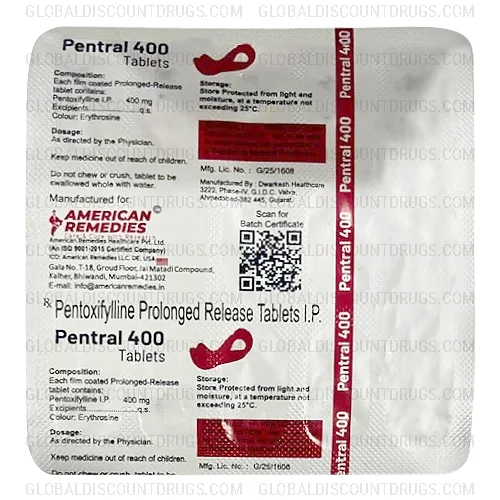
Pentoxifylline 400mg Uses

Pentoxifylline 400mg is prescribed for:

  • Peripheral Arterial Disease (PAD): Improves blood flow in narrowed arteries, reducing symptoms such as pain and cramping during walking (intermittent claudication).
  • Chronic Venous Ulcers: Enhances blood circulation and promotes healing in chronic wounds caused by poor circulation.
  • Other Circulatory Disorders: May be used to treat other conditions related to impaired blood flow, such as diabetic vascular complications.

How Does Pentoxifylline 400mg Work?

Pentoxifylline belongs to a class of drugs called xanthine derivatives. It works by improving blood flow through two mechanisms:

  • Reducing Blood Viscosity: It makes blood less sticky, allowing it to flow more easily through narrowed or damaged blood vessels.
  • Enhancing Oxygen Delivery: By improving blood flow, it increases the supply of oxygen to tissues and muscles, relieving symptoms like pain and improving healing.

How to Use Pentoxifylline 400mg

  1. Dosage: Take Pentoxifylline 400mg exactly as prescribed by your doctor. It is usually taken 2-3 times daily with meals.
  2. Administration: Swallow the tablet whole with a glass of water; do not crush or chew it.
  3. Duration: For best results, take the medication regularly and as directed, as it may take several weeks to see improvement in symptoms.

Side Effects

Common side effects of Pentoxifylline 400mg include:

  • Nausea or vomiting
  • Dizziness or headache
  • Stomach discomfort
  • Flushing or skin rash

If you experience severe side effects such as chest pain, irregular heartbeat, or signs of an allergic reaction, seek immediate medical attention.

Drug Interactions

Pentoxifylline 400mg may interact with other medications, potentially increasing the risk of side effects or reducing effectiveness. Inform your doctor if you are taking:

  • Anticoagulants (e.g., warfarin)
  • Antiplatelet drugs (e.g., aspirin, clopidogrel)
  • Blood pressure medications
  • Cimetidine or other medications for stomach acid

Food Interactions

There are no significant food interactions with Pentoxifylline 400mg. However, it is recommended to take the medication with food to minimize stomach discomfort.

Contraindications

Pentoxifylline 400mg is contraindicated in individuals who:

  • Are allergic to Pentoxifylline or other xanthine derivatives (e.g., caffeine, theophylline)
  • Have severe bleeding disorders
  • Have had recent brain or retinal bleeding

Precautions and Warnings

  • Pregnancy and Breastfeeding: Consult your doctor before using this medication if you are pregnant, planning to become pregnant, or breastfeeding.
  • Kidney or Liver Problems: Use Pentoxifylline with caution if you have impaired kidney or liver function.
  • Bleeding Risk: Inform your doctor if you have a history of bleeding disorders or are taking anticoagulants, as this medication may increase the risk of bleeding.

Storage

Store Pentoxifylline 400mg at room temperature, away from direct sunlight, heat, and moisture. Keep the medication out of reach of children and pets. Dispose of expired or unused tablets responsibly.

Conclusion

Pentoxifylline 400mg is an effective treatment for improving blood flow and relieving symptoms caused by poor circulation, such as pain, cramping, and slow-healing wounds. Regular use under the guidance of a healthcare provider can significantly improve quality of life in individuals with circulatory disorders. Ensure you purchase this medication from a trusted source to guarantee its safety and effectiveness.

Quantity 120, 180, 240, 60
Manufacturer American Remedies
Indian Brand Pentral 400mg
US Brand Name Trental
Generic Name Pentoxifylline
Dosage 400mg
Drug Type Tablets

Leave a Reply

You must be logged in to post a review.

Reviews

There are no reviews yet.

Frequently Asked Questions
Pentoxifylline falls under Category C for pregnancy, which means risk to the fetus cannot be ruled out. It should only be used when clearly needed and when the benefits outweigh the risks. Discuss with your healthcare provider if you are pregnant or plan to become pregnant while using this medication.  
The effects of Pentoxifylline on improving symptoms can take several weeks to become apparent. It is important to continue taking the medication as directed and maintain regular follow-ups with your healthcare provider to assess effectiveness.  
It is advisable to avoid alcohol while taking Pentoxifylline as alcohol can increase the risk of side effects like dizziness and can also potentiate the blood-thinning effect of the medication.  
Pentoxifylline is not known to significantly affect blood sugar levels. However, if you have diabetes, it is always important to monitor your blood sugar regularly as part of your overall health management.  
Pentoxifylline is often referred to as a blood thinner because it improves blood flow by changing the shape of red blood cells in your blood and decreasing its viscosity. However, it does not thin the blood in the same way that medications like warfarin do.  

Product was successfully added to your cart!