
No products in the cart.

Pentoxifylline
In StockPentoxifylline is a prescription medicine used to help improve blood flow in people with circulation problems such as peripheral arterial disease and intermittent claudication. It works by reducing blood viscosity and improving the flexibility of red blood cells, which helps blood move more easily through narrowed vessels. This action supports better oxygen delivery to tissues. Use only as directed on the product label or by a healthcare professional.
$0.20 per pill
What is Pentoxifylline?
Pentoxifylline is a prescription medication used to improve blood flow in people with circulation problems. It belongs to a class of medicines known as hemorheologic agents or xanthine derivatives, which help improve the flexibility of red blood cells and reduce blood thickness.
Doctors most commonly prescribe pentoxifylline to treat symptoms caused by peripheral arterial disease (PAD), particularly a condition called intermittent claudication, where reduced blood flow to the legs causes pain during walking.
Approved and common uses
Pentoxifylline may be prescribed for:
Intermittent claudication associated with peripheral arterial disease
Improving blood circulation in the arms and legs
Conditions where poor microcirculation contributes to symptoms
In some cases, healthcare professionals may consider it for other circulation-related conditions based on clinical judgment.
Pentoxifylline helps improve blood flow and reduce symptoms, but it does not cure the underlying vascular disease.
Available formulations and strengths
Pentoxifylline is most commonly available as:
Extended-release oral tablets
Common tablet strength:
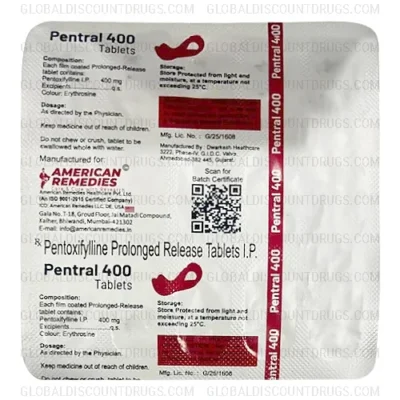
400 mg extended-release tablets
Strength availability may vary depending on the country and manufacturer.
What is the Recommended Dosage of Pentoxifylline?
The correct dosage of pentoxifylline must be determined by a licensed healthcare professional.
Factors influencing dosage
Healthcare providers determine dosing based on:
The condition being treated
Severity of circulation problems
Age and general health
Kidney or liver function
Response to treatment
Other medications being taken
Dosage forms
Pentoxifylline is typically prescribed as:
Extended-release oral tablets
These tablets are usually taken with meals to reduce stomach discomfort. Treatment plans must follow the guidance of a licensed healthcare provider.
Patients should not change the dose or stop the medication without medical advice, as this may affect treatment outcomes.
How Pentoxifylline Works
Pentoxifylline works by improving the flow properties of blood.
It acts through several mechanisms:
Increasing the flexibility of red blood cells
Reducing blood viscosity (thickness)
Improving microcirculation in small blood vessels
These effects allow blood to move more easily through narrowed or partially blocked vessels.
Improved circulation may help reduce symptoms such as:
Leg pain during walking
Muscle cramps related to reduced blood flow
Fatigue in affected limbs
Pentoxifylline helps manage symptoms related to circulation problems but does not reverse underlying arterial disease.
Is a Prescription Required to Buy Pentoxifylline Online?
Yes. Pentoxifylline is a prescription-only medication in most healthcare systems.
Patients must receive a prescription from a licensed medical professional before using it.
Specialists who may prescribe pentoxifylline include:
Cardiologists
Vascular specialists
Internal medicine physicians
Primary care physicians
When purchasing medications online, patients should:
Use licensed and regulated pharmacies
Ensure a valid prescription is required
Avoid unverified sellers
Be cautious of counterfeit medications
Counterfeit medicines may contain incorrect ingredients or unsafe dosing.
Side Effects of Pentoxifylline
Like all medications, pentoxifylline can cause side effects. Many are mild and improve as the body adjusts to treatment.
Common side effects
Some commonly reported effects include:
Nausea
Vomiting
Stomach discomfort
Dizziness
Headache
Flushing
Mild diarrhea
Taking the medication with food may help reduce stomach-related symptoms.
Serious side effects
Serious reactions are uncommon but require prompt medical attention.
Possible serious side effects include:
Severe bleeding
Chest pain
Irregular heartbeat
Severe allergic reactions
Persistent vomiting
Unusual bruising or bleeding
Patients should seek immediate medical attention if they experience:
Difficulty breathing
Severe chest pain
Sudden swelling of the face or throat
Signs of internal bleeding
Drug Interactions
Pentoxifylline may interact with other medications that affect blood circulation or blood clotting.
Medications that may interact
Possible interactions include:
Blood thinners such as warfarin
Antiplatelet medications
Blood pressure medications
Theophylline
Certain antibiotics
Diabetes medications
Over-the-counter and herbal products
Interactions may also occur with:
Herbal supplements that affect blood clotting
Multivitamins
Over-the-counter pain relievers
Alcohol
Patients should provide a complete list of medications, supplements, and herbal products to their healthcare provider before starting treatment.
Safety & Important Considerations
Certain medical conditions require caution when using pentoxifylline.
Bleeding risk
Because pentoxifylline affects blood flow and circulation, it may increase bleeding risk, particularly in patients taking anticoagulant medications.
Kidney and liver function
Patients with kidney or liver disease may require dose adjustments and closer monitoring.
Heart conditions
Individuals with severe heart rhythm disorders or recent heart attack should discuss risks and benefits with their healthcare provider.
Pregnancy and breastfeeding
The safety of pentoxifylline during pregnancy or breastfeeding has not been fully established. Patients should consult a licensed medical specialist before use.
Monitoring
Healthcare providers may monitor:
Circulation symptoms
Signs of bleeding
Blood pressure
Response to treatment
Who This Medication Is For
Pentoxifylline is typically prescribed for adults with circulation problems caused by peripheral arterial disease.
It may be recommended for patients who experience:
Leg pain during walking (intermittent claudication)
Reduced blood flow to the extremities
Symptoms caused by poor microcirculation
Doctors may prescribe this medication when lifestyle changes and other treatments alone do not adequately relieve symptoms.
Who Should Not Take Pentoxifylline
Certain individuals should avoid pentoxifylline or use it only under medical supervision.
Contraindications
Pentoxifylline should generally not be used in patients who:
Have a known allergy to pentoxifylline or other xanthine derivatives
Have recent cerebral or retinal bleeding
Important precautions
Caution may be necessary for patients with:
Severe heart disease
Bleeding disorders
Stomach ulcers
Kidney impairment
Liver disease
Low blood pressure
A licensed healthcare professional must evaluate whether this medication is appropriate.
What to Do If You Miss a Dose
If a dose of pentoxifylline is missed:
Take the missed dose as soon as you remember
If it is close to the next scheduled dose, skip the missed dose
Do not take two doses at the same time to make up for the missed dose.
If multiple doses are missed or if you are unsure what to do, contact a licensed healthcare professional for guidance.
Alternatives to Pentoxifylline
Several other treatments may be used to manage symptoms related to peripheral arterial disease and circulation problems.
Possible alternatives may include:
Cilostazol
Antiplatelet medications such as aspirin or clopidogrel
Other medications used for vascular disease management
Lifestyle interventions may also play an important role, including:
Supervised walking programs
Smoking cessation
Blood pressure and cholesterol control
Any change in treatment must be guided by a qualified healthcare professional.
Storage Instructions
Proper storage helps maintain the medication’s effectiveness.
General storage guidance includes:
Store at room temperature
Protect from excess heat, moisture, and direct sunlight
Keep the medication in its original container
Ensure the container is tightly closed
Safety precautions
Keep out of reach of children and pets
Do not use after the expiration date
Dispose of unused medication according to local pharmacy disposal recommendations
Disclaimer:
This page is provided for educational purposes only.
It is not a substitute for professional medical advice, diagnosis, or treatment.
Patients must consult a licensed cardiologist, vascular specialist, or other qualified healthcare professional before starting, stopping, or changing treatment involving pentoxifylline.
All treatment decisions must be based on a full clinical evaluation by a qualified medical specialist.

$0.77 per pill

$0.20 – $0.24 per pill

$0.77 – $0.94 per pill


