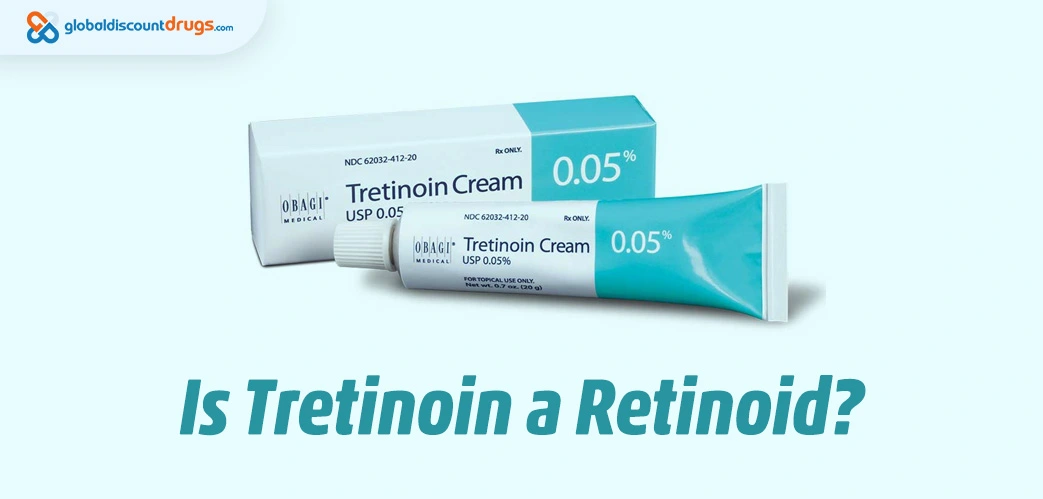
Is Tretinoin a Retinoid? Everything You Need to Know

Tretinoin is a popular skincare ingredient, but many people ask: “Is Tretinoin a retinoid?” The answer is yes. Tretinoin belongs to a family of compounds called retinoids, which are derived from vitamin A and are widely used in dermatology to improve skin health. 

In this article, we’ll explain in detail what retinoids are, how Tretinoin works, its benefits, differences from other retinoids, and how it helps your skin. 


What Are Retinoids? 

Retinoids are vitamin A derivatives that regulate cell growth and differentiation. They are used for both medical and cosmetic purposes, including: 

  • Treating acne 
  • Reducing wrinkles 
  • Improving skin texture and tone 
  • Managing hyperpigmentation 

Retinoids come in different forms: 

  • Tretinoin (all-trans retinoic acid) – prescription-only, strong, fast-acting 
  • Retinol – over-the-counter, weaker, must convert to active form in the skin 
  • Adapalene – prescription, mainly for acne 
  • Tazarotene – prescription, used for acne and anti-aging 

All retinoids share a common goal: to regulate skin cell turnover and improve skin structure. 


What Makes Tretinoin a Retinoid? 

Tretinoin is classified as a first-generation retinoid. Unlike retinol, which needs to be converted into active retinoic acid in the skin, Tretinoin is already in its active form. This is why it is: 

  • More potent than retinol 
  • Faster acting for acne and anti-aging 
  • Prescription-only, due to its strength 

When applied to the skin, Tretinoin binds to retinoic acid receptors (RARs) and retinoid X receptors (RXRs) in the nucleus of skin cells. This modulates gene expression to: 

  • Increase skin cell turnover 
  • Stimulate collagen production 
  • Reduce hyperpigmentation 


How Tretinoin Works in the Skin 

Tretinoin gel works at multiple levels of the skin: 

Epidermal Effects

The epidermis is the outermost layer of the skin. Tretinoin: 

  • Speeds up the shedding of dead skin cells, preventing clogged pores 
  • Promotes the growth of new, healthy skin cells 
  • Fades post-acne marks and dark spots 
  • Makes the skin smoother and brighter 

Dermal Effects

The dermis is the layer beneath the epidermis, containing collagen and elastin. Tretinoin: 

  • Stimulates fibroblasts to produce more collagen 
  • Reduces matrix metalloproteinases (MMPs) that break down collagen 
  • Improves skin thickness and elasticity 

Pigmentation Control

Tretinoin cream also interacts with melanocytes, the cells responsible for skin pigment: 

  • Speeds up shedding of pigmented skin cells 
  • Reduces melanin transfer to other cells 
  • Helps fade sun spots, age spots, and post-acne hyperpigmentation 


Benefits of Tretinoin 

Because Tretinoin is a potent retinoid, it offers multiple benefits for the skin: 

  1. Acne Treatment – Reduces existing breakouts and prevents new ones 
  1. Anti-Aging – Minimizes fine lines, wrinkles, and sagging skin 
  1. Fades Dark Spots – Reduces hyperpigmentation and evens skin tone 
  1. Improves Texture – Smooths rough skin and strengthens the skin barrier 
  1. Boosts Skin Renewal – Encourages healthy skin regeneration 


Available Formulations and Strengths 

Tretinoin comes in creams and gels at different strengths to suit various skin types and conditions: 

  • 0.005% Cream – Gentle, ideal for sensitive or first-time users 
  • 0.025% Cream – Moderate strength for mild acne or early signs of aging 
  • 0.01% Gel – Lightweight gel, suitable for oily or combination skin 
  • 0.025% Gel – Stronger gel for persistent acne or rough texture 
  • 0.04% Gel – High-strength gel for severe acne or deep wrinkles 

The choice of formulation depends on your skin type, sensitivity, and treatment goals. 


Difference Between Tretinoin and Other Retinoids 

Retinoid 

Strength  Form 

Uses 

Tretinoin 

Strong  Cream/Gel  Acne, wrinkles, pigmentation 

Retinol 

Mild  OTC cream/serum 

Anti-aging, mild acne 

Adapalene 

Moderate  Gel 

Acne treatment 

Tazarotene  Strong  Gel/cream 

Acne, anti-aging, psoriasis 

Tretinoin is unique because it is already in active form, making it more potent and faster acting than retinol, while also having broader benefits than some other retinoids. 


Side Effects of Tretinoin 

Tretinoin is powerful, and some side effects are common, especially in the early weeks: 

  • Redness or irritation 
  • Peeling or flaking 
  • Dryness or mild stinging 

Most side effects decrease as the skin adapts. Using gentle cleansers, moisturizers, and sunscreen helps reduce irritation. 


Who Can Benefit from Tretinoin? 

  • People with acne seeking to reduce breakouts and prevent scarring 
  • Those with fine lines or wrinkles looking for anti-aging benefits 
  • Individuals with dark spots or uneven skin tone 
  • Anyone wanting to improve overall skin texture and health 


How to Maximize Tretinoin Benefits 

  • Use as directed by a dermatologist 
  • Start with lower strengths if you have sensitive skin 
  • Apply at night, as it increases sun sensitivity 
  • Combine with moisturizers and sunscreen to protect the skin 
  • Be patient – visible results usually appear after 4–8 weeks, with maximum improvement at 3–6 months 


Summary 

Yes, Tretinoin is a retinoid. It is a prescription-strength, active form of vitamin A that works at the cellular level to improve skin: 

  • Treats acne by unclogging pores and reducing inflammation 
  • Stimulates collagen for firmer, smoother skin 
  • Fades dark spots and pigmentation 
  • Improves skin texture and overall health 

Tretinoin is stronger than over-the-counter retinol, works faster, and provides multiple long-term benefits for skin rejuvenation. 

Understanding Tretinoin as a retinoid helps you appreciate why it is considered one of the most effective dermatological treatments available. 

Leave a comment

You must be logged in to post a review.

* Comment

* Name

* Email

Web Site

Product was successfully added to your cart!