
No products in the cart.
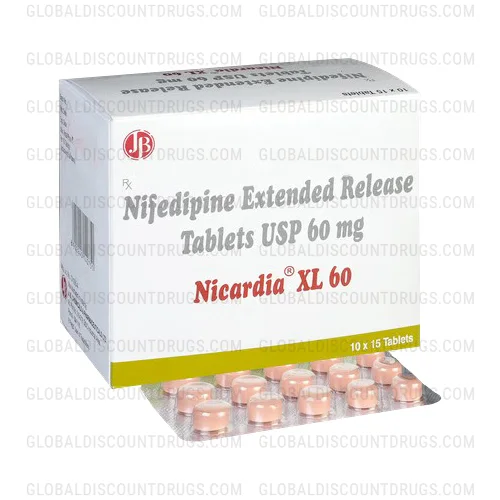
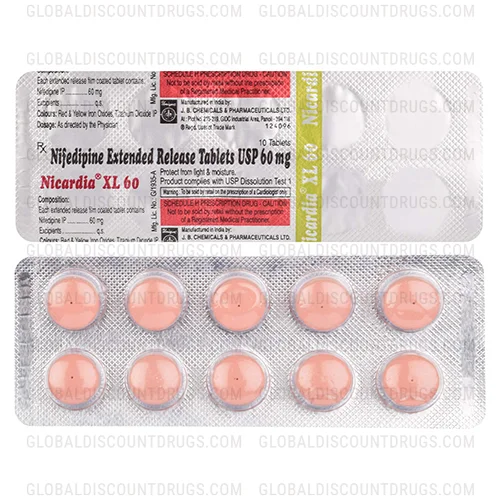
Nifedipine XL 60mg
In Stock$1.17 – $1.43 per pill
Nifedipine XL 60 mg is an extended-release tablet that helps control high blood pressure (hypertension) and chronic stable angina. Belonging to the calcium channel blocker class (specifically, the dihydropyridine group), it works by relaxing and widening blood vessels, improving blood flow, and easing strain on the heart.
Unlike immediate-release forms, the “XL” version gradually releases nifedipine over 24 hours, ensuring smooth and steady control of blood pressure throughout the day.
This formulation is commonly prescribed for patients needing long-term management of cardiovascular conditions, especially those who require once-daily dosing for convenience and stable control.
What Is Nifedipine XL 60 mg Used For?
Nifedipine XL 60 mg is primarily prescribed to treat:
1. Hypertension (High Blood Pressure)
It helps lower high blood pressure by relaxing the smooth muscles of the arteries, which decreases peripheral vascular resistance. Lowering blood pressure reduces the risk of heart attacks, strokes, and kidney problems. For many patients, extended-release nifedipine offers sustained control throughout the day, minimizing early-morning blood pressure spikes.
2. Chronic Stable Angina
In individuals with coronary artery disease, nifedipine improves oxygen supply to the heart muscles. It prevents chest pain (angina) that occurs during exertion or stress by reducing the workload on the heart and improving coronary blood flow.
3. Vasospastic (Prinzmetal’s) Angina
This type of chest pain results from temporary narrowing (spasm) of the coronary arteries. Nifedipine’s vasodilatory effect helps prevent or relieve these spasms, improving heart oxygenation.
4. Off-Label Uses
In select cases, doctors may prescribe nifedipine for:
-
Raynaud’s phenomenon – to reduce finger discoloration and pain caused by cold-induced vessel spasms.
-
Preterm labour – under strict medical supervision, as nifedipine can relax uterine muscles.
(Off-label use should always be guided by a healthcare professional.)
How Nifedipine XL 60 mg Works
Nifedipine blocks L-type calcium channels in cardiac and vascular smooth muscle. Calcium ions are essential for muscle contraction; by limiting their entry, nifedipine reduces muscle tone in the arteries, resulting in vasodilation.
The outcome:
-
Decreased systemic vascular resistance
-
Reduced afterload on the heart
-
Improved oxygen delivery to cardiac tissue
The “XL” (extended-release) version is designed using a controlled-release matrix system, which maintains a steady plasma concentration for 24 hours. This avoids sharp fluctuations and reduces side effects such as reflex tachycardia.
Dosage and Administration
The dosage depends on the condition being treated and individual response.
-
Typical starting dose: 30 mg once daily (extended-release form).
-
Usual maintenance dose: 60 mg once daily.
-
Maximum recommended dose: 120 mg per day under medical supervision.
Administration Guidelines
-
Take the tablet once daily, ideally at the same time each day.
-
Swallow the tablet whole with water — do not crush, chew, or split.
-
May be taken with or without food, but avoid high-fat meals that might alter absorption.
-
Continue taking it even if you feel well; blood pressure control requires consistent medication adherence.
-
If you miss a dose, take it as soon as remembered unless it’s close to the next scheduled dose.
Important Tip
Avoid stopping the medication suddenly. Abrupt withdrawal may cause a sudden increase in blood pressure or recurrence of angina.
Possible Side Effects
Like all medications, Nifedipine XL 60 mg can cause side effects, though not everyone experiences them. They are generally mild and temporary.
Common Side Effects
-
Dizziness or light-headedness: due to lowered blood pressure, especially when standing.
-
Flushing and warmth: caused by vessel dilation.
-
Headache: often transient as the body adjusts.
-
Swelling of feet or ankles (peripheral oedema): due to fluid retention in lower limbs.
-
Palpitations or mild rapid heartbeat: related to reflex cardiac response.
-
Constipation or nausea: mild digestive discomfort.
Less Common or Serious Reactions
-
Severe hypotension (very low blood pressure)
-
Chest pain worsening or new-onset angina
-
Liver problems (jaundice, dark urine, fatigue)
-
Allergic reactions (rash, swelling of face or throat, breathing difficulty)
If any severe or unusual symptoms occur, seek immediate medical help.
Precautions and Warnings
Before starting Nifedipine XL 60 mg, your doctor should evaluate potential risks and interactions.
1. Heart Conditions
Avoid use in cases of severe aortic stenosis or heart failure without specialist approval. Rapid vasodilation may worsen these conditions.
2. Liver or Kidney Impairment
Patients with liver dysfunction may need dose adjustment, as nifedipine is extensively metabolised by the liver (via CYP3A4 pathway).
3. Older Adults
Elderly patients are more sensitive to blood-pressure changes. Monitoring for dizziness, fainting, or swelling is important.
4. Pregnancy and Breastfeeding
Nifedipine should be used during pregnancy only if clearly needed and prescribed by a specialist. It may be used in certain obstetric emergencies, but self-medication is unsafe.
During breastfeeding, trace amounts may pass into milk; consult your doctor before continuing.
5. Lifestyle Considerations
-
Avoid grapefruit and grapefruit juice, as they inhibit CYP3A4, increasing nifedipine levels and side-effect risk.
-
Limit alcohol intake, which may intensify dizziness or low blood pressure.
-
Avoid sudden posture changes to prevent fainting.
Drug Interactions
Nifedipine interacts with several medications. Key categories include:
-
CYP3A4 inhibitors (e.g., erythromycin, ketoconazole, ritonavir): may increase drug levels and cause toxicity.
-
CYP3A4 inducers (e.g., rifampicin, phenytoin, carbamazepine): may reduce effectiveness.
-
Other antihypertensives: may cause additive hypotensive effects.
-
Beta-blockers or nitrates: combination therapy is sometimes prescribed but requires monitoring for excessive cardiovascular suppression.
-
Digoxin: nifedipine may increase digoxin levels; dosage adjustments might be needed.
Always provide your healthcare provider a full list of medications and supplements you take.
Overdose Management
Symptoms of overdose may include:
-
Severe hypotension
-
Rapid heartbeat (tachycardia)
-
Confusion, fatigue, or fainting
Emergency treatment involves supportive care, intravenous fluids, and close cardiac monitoring. Activated charcoal may be used if ingestion is recent.
Storage and Handling
-
Store at room temperature (below 25°C).
-
Protect from direct sunlight, heat, and moisture.
-
Keep tablets in their original packaging until use.
-
Dispose of expired or unused tablets responsibly; do not flush them.
Key Takeaways
-
Nifedipine XL 60 mg is a long-acting calcium channel blocker used for hypertension and angina.
-
Works by relaxing blood vessels, improving oxygen supply, and reducing cardiac strain.
-
Taken once daily, offering stable 24-hour control with fewer blood-pressure fluctuations.
-
Common side effects include dizziness, swelling, and headache; avoid grapefruit juice.
-
Regular monitoring, adherence, and healthy lifestyle habits amplify the drug’s benefits.
Store at room temperature (below 25°C).
Protect from direct sunlight, heat, and moisture.
Keep tablets in their original packaging until use.
Dispose of expired or unused tablets responsibly; do not flush them.
-
Nifedipine XL 60 mg is a long-acting calcium channel blocker used for hypertension and angina.
-
Works by relaxing blood vessels, improving oxygen supply, and reducing cardiac strain.
-
Taken once daily, offering stable 24-hour control with fewer blood-pressure fluctuations.
-
Common side effects include dizziness, swelling, and headache; avoid grapefruit juice.
-
Regular monitoring, adherence, and healthy lifestyle habits amplify the drug’s benefits.
| Quantity | 180, 270, 360, 90 |
|---|---|
| Manufacturer | J.B. Chemicals |
| Indian Brand | Nicardia XL 60mg |
| US Brand Name | Adalat, Addos, Afeditab, Calchan, Fortipine, Nifedipine, Nifehexal, Nyefax, Procardia, Tensipine, Valni |
| Generic Name | Nifedipine |
| Dosage | 60mg |
| Drug Type | Tablets |


$0.64 – $0.78 per pill


$3.37 – $4.12 per pill


$0.95 – $1.16 per pill


$1.18 – $1.44 per pill


