No products in the cart.
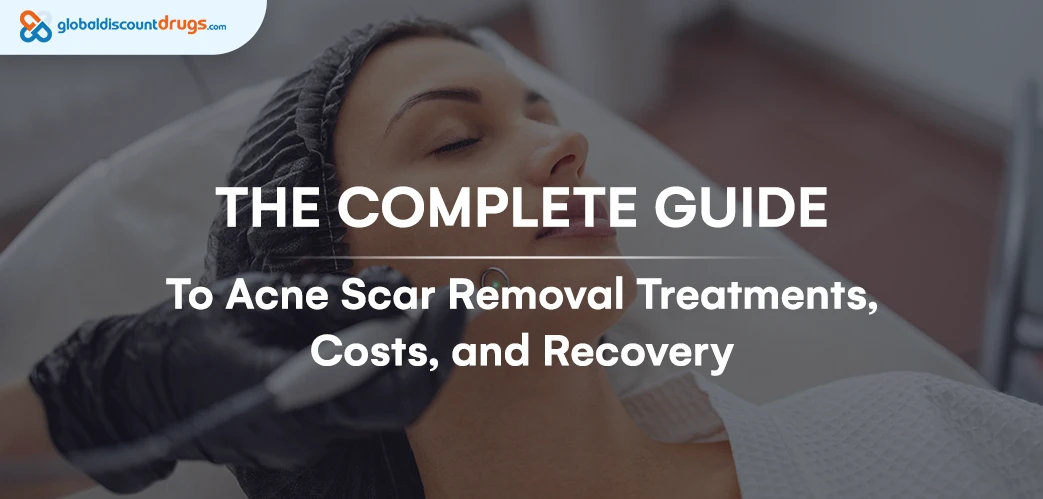

Acne is temporary, but the scars it leaves behind can be permanent. For many, clearing active breakouts is only half the battle; the real challenge is restoring smooth, even skin texture lost to past inflammation.
This comprehensive guide breaks down the different types of acne scars, explores every professional treatment option, and explains how to choose the right strategy for your skin.
Before pursuing treatment, you must identify what kind of “scar” you have. Scars fall into two major categories: Acne Marks (Pigmentation) and True Acne Scars (Texture).
These are not true scars—they are temporary skin discoloration that eventually fades on its own, though treatment can speed up the process.
These are permanent depressions or indentations in the skin caused by the destruction of collagen during the deep inflammatory process (nodules and cysts).
Treating atrophic scars requires stimulating new collagen or physically altering the scar tissue. These procedures must be performed by a dermatologist or licensed professional.
Uses fine needles to create thousands of micro-injuries in the skin. This triggers a wound-healing response, stimulating collagen production beneath the scars.
Combines traditional microneedling with heat energy (radiofrequency) delivered deep into the dermis for a much stronger collagen-building stimulus.
Best For: Moderate-to-severe rolling and boxcar scars.
Ablative Lasers (e.g., CO2 or Erbium): Vaporize the entire top layer of skin, offering the most dramatic results in a single treatment.
Non-Ablative Lasers (e.g., Fraxel): Heat the deep dermis without damaging the surface, stimulating collagen with less downtime. Multiple sessions are required.
Subcision: A needle is used to break the fibrous bands that tether rolling scars down to the underlying tissue. This allows the skin to spring up.
Dermal Fillers (Hyaluronic Acid): Injectable fillers are placed directly beneath depressed scars to instantly raise them and provide volume.
4. Direct Scar Removal Techniques
TCA Cross (Chemical Reconstruction of Skin Scars): A highly concentrated acid (Trichloroacetic Acid) is applied directly to the base of deep icepick scars to force the scar to heal from the bottom up.
Punch Excision or Grafting: A small surgical tool is used to cut out the entire individual scar. The hole is either stitched closed (excision) or filled with a tiny skin graft (grafting).
Most people have a combination of scar types, meaning they need a multi-modal approach for the best outcome.
Your priority must be to fully clear active acne first. Inflammation destroys new collagen and causes new scars.
The PIH and PIE marks are typically easier to treat than textural scars.
This is the longest phase, often requiring multiple sessions.
Scar treatment is an investment of time and money. Manage your expectations realistically to avoid disappointment.
The Goal: The aim of scar revision is not to achieve “perfect” skin, but to achieve a significant, noticeable improvement (50 percent to 80 percent improvement is an excellent outcome). Consistency and patience are key. Consult a board-certified dermatologist for a personalized assessment and plan.
Getting rid of true acne scars (atrophic scars, which are indentations in the skin) requires professional, in-office procedures that stimulate new collagen. Treatment is highly dependent on the type of scar you have:
It is crucial to first get your active acne under control, as ongoing inflammation will create new scars.
No, silicone scar sheets are not effective for atrophic acne scars.
The cost of laser acne scar removal varies significantly based on the type of laser used, the depth of treatment, the size of the area, and your geographical location.
There is no single “best” treatment for acne scars; the most effective approach is a customized, multi-modal plan determined by a board-certified dermatologist.
Since most people have a combination of scar types (e.g., deep icepicks, wide rolling scars, and pigmentation), the best plan usually involves a sequence of different procedures:
The “best” treatment is the one that directly addresses the unique mix of scars on your skin.
No, medical insurance rarely covers acne scar treatment.
Exception: In very rare cases, if severe acne scarring is proven to cause extreme functional impairment (like limited facial movement) or severe, documented psychological distress, a physician might be able to petition the insurance company. However, this is unusual, and most patients should expect to pay for treatment out-of-pocket.

Kevin P draws on 10+ years of health expertise to share actionable wellness tips. He focuses on making health achievable for everyone.
For many people, acne is supposed to be a problem left behind in high school. Yet, adult-onset acne—defined as acne...
Read More
If you’ve ever had a stubborn breakout that simply refuses to clear up with typical spot treatments, you might be dealing with...
Read More
Acne is the most common skin condition in the world. It’s a source of frustration, self-consciousness, and confusion for millions...
Read More 


