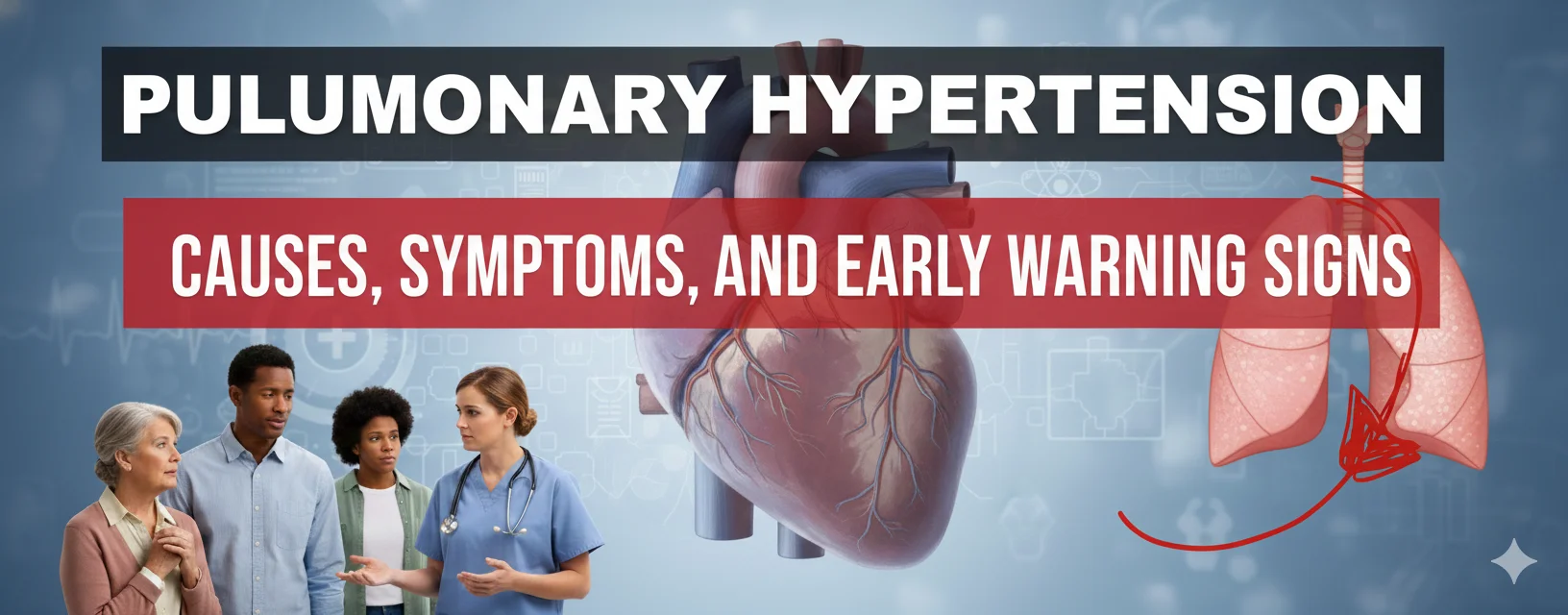
Pulmonary Hypertension: Causes, Symptoms, and Early Warning Signs

High blood pressure, or hypertension, happens when the force of blood against the artery walls stays consistently high. This pressure makes the heart work harder and can slowly damage vital organs. Many people live with it for years without noticing symptoms. This overview serves as a complete guide for hypertension, helping you understand its basics. in this article we are going to know about pulmonary hypertension symptoms, and causes completely.

Pulmonary hypertension is a condition where the blood pressure inside the arteries of the lungs becomes too high. These arteries carry blood from the heart to the lungs to pick up oxygen. When the arteries become narrow, stiff, or blocked, the heart must work harder to move blood through them. Over time, this extra strain can weaken the heart and affect how well it functions.

Many people do not notice pulmonary hypertension in the beginning. Early symptoms often look like common problems such as tiredness, shortness of breath, or low stamina. Because these changes happen slowly, it can take months or even years before someone visits a doctor. Learning the early signs can help people get treatment before the condition becomes more serious.

How Pulmonary Hypertension Affects the Body

This condition does not affect the whole body like regular high blood pressure. Instead, it targets the blood vessels inside the lungs. When these vessels tighten or thicken, blood cannot flow smoothly. The right side of the heart must pump with more force to push blood forward.

At first, the heart can handle the extra effort. But as pressure in the lung arteries continues to rise, the heart becomes tired and may not pump as well as before. This leads to symptoms such as breathlessness, swelling, and fatigue.

You can read more on the CDC’s official page for pulmonary hypertension

How the Condition Develops Over Time

Pulmonary hypertension usually builds slowly. The blood vessels in the lungs may become narrow or lose their ability to relax. Some vessels may even become blocked. This increases resistance, which forces the heart to push harder with each beat.

Early on, people may notice that climbing stairs or walking fast feels more difficult. As the pressure inside the lung arteries grows, breathing becomes more challenging. Low oxygen levels add to the strain on the heart and lungs.

The American Heart Association explains this clearly:

Types of Pulmonary Hypertension

Doctors divide pulmonary hypertension into five groups based on the cause:

Group 1: Pulmonary arterial hypertension. The lung arteries themselves become damaged or thickened.

Group 2: Caused by left-side heart problems. When the left heart cannot pump properly, pressure moves back into the lungs.

Group 3: Caused by lung diseases such as COPD, asthma, or lung scarring. Sleep apnea can also contribute.

Group 4: Caused by old blood clots that block blood flow in the lungs.

Group 5: Caused by different conditions that do not fit into the first four groups.

More details are provided by the NHLBI:

Here is the detailed article for the Types of hypertension, symptoms, and treatment options for an each types.

Common Causes

Pulmonary hypertension can develop for many reasons. Some causes relate to the heart, others to the lungs, and some to the immune system. These factors together shape a clearer picture of  What Causes Pulmonary Hypertension?

Heart-related causes include valve problems, congenital heart defects, and diseases that weaken the heart muscle. These conditions push extra pressure into the lung vessels.

Lung-related causes include COPD, long-term asthma, lung fibrosis, and low oxygen levels during sleep. These conditions make the lung vessels tighten and raise pressure.

Blood clots that remain inside lung arteries can block the normal path of blood. Autoimmune conditions such as lupus or scleroderma may directly damage blood vessels.

Other causes include liver disease, thyroid disorders, HIV, and long-term exposure to harmful chemicals.

In some people, the cause is unknown. Doctors call this idiopathic pulmonary hypertension.

Symptoms You May Notice

The early symptoms of pulmonary hypertension can be mild and easy to miss. Many people first notice shortness of breath when they exercise or walk uphill. They may feel tired more often than usual or notice a drop in physical strength. Some experience light chest discomfort.

As the condition progresses, symptoms become more noticeable. People may feel dizzy, have swelling in the legs, or experience a fast or irregular heartbeat. Breathing can become difficult even with light activity.

In advanced stages, the symptoms are more serious. These include shortness of breath at rest, fainting, chest pain, blue lips or fingertips, and swelling in the stomach area. These signs show that the heart is struggling to keep up.

The World Health Organization (WHO) lists similar symptoms here:

Early Warning Signs You Should Not Ignore

Some early signs may seem small, but they are important:

  • Shortness of breath that is new or worse than before
    • Tiredness that does not improve with rest
    • Feeling dizzy during simple activities
    • A heartbeat that feels faster or stronger than normal
    • Swollen feet or ankles
    • A history of lung clots or family history of similar problems

If these signs appear together, it is important to visit a doctor for further evaluation.

How Pulmonary Hypertension Is Diagnosed

Doctors use several tests to diagnose this condition. An echocardiogram is often the first step. It shows how well the heart is pumping and whether there is extra pressure in the lung arteries. A chest X-ray may show an enlarged heart or widened lung vessels.

Blood tests look for autoimmune diseases, thyroid problems, or infections. Lung function tests measure how the lungs handle air. A CT scan provides a more detailed picture of the lung structures and arteries.

Right heart catheterization is the most accurate test. It directly measures the pressure in the lung arteries and confirms the diagnosis.

Treatment Options for Pulmonary Hypertension

Treatment depends on the cause and stage of the condition. The main goals are to lower the pressure in the lung arteries, help the heart work better, and improve daily life.

Doctors may prescribe medicines to relax blood vessels, reduce swelling, or prevent blood clots. People with low oxygen levels may need oxygen therapy. Treating the main condition,whether lung disease, heart disease, or immune disorder, can improve symptoms.

Lifestyle changes are also important. These include quitting smoking, maintaining a healthy weight, managing sleep apnea, and staying active with safe exercises. Some people may need surgery if chronic blood clots are present.

Daily Care and Long-Term Management

People with pulmonary hypertension must monitor their symptoms regularly. Noticing changes in breathing, swelling, or energy helps detect early warning signs. Following medical advice closely improves long-term results.

A diet with less salt can help reduce swelling. Adequate rest, steady physical activity, and stress management support overall heart and lung health. Many people are able to live stable lives with proper care and regular checkups.

When to Seek Immediate Medical Care

Some symptoms need quick medical attention. These include sudden difficulty breathing, severe chest pain, fainting, or fast swelling of the legs or abdomen. These signs show that the heart may not be able to handle the pressure inside the lung arteries.

Getting help quickly can prevent further complications.

Conclusion

Pulmonary hypertension grows slowly but can greatly affect health if not noticed early. Paying attention to breathing, energy levels, and heart rhythm helps people identify early signs. With timely diagnosis and proper treatment, many individuals continue to live active and balanced lives.

Awareness and early action make a major difference. The sooner the condition is recognized, the better the chances of slowing its progress and protecting the heart and lungs.

Leave a comment

You must be logged in to post a review.

* Comment

* Name

* Email

Web Site

Product was successfully added to your cart!