No products in the cart.
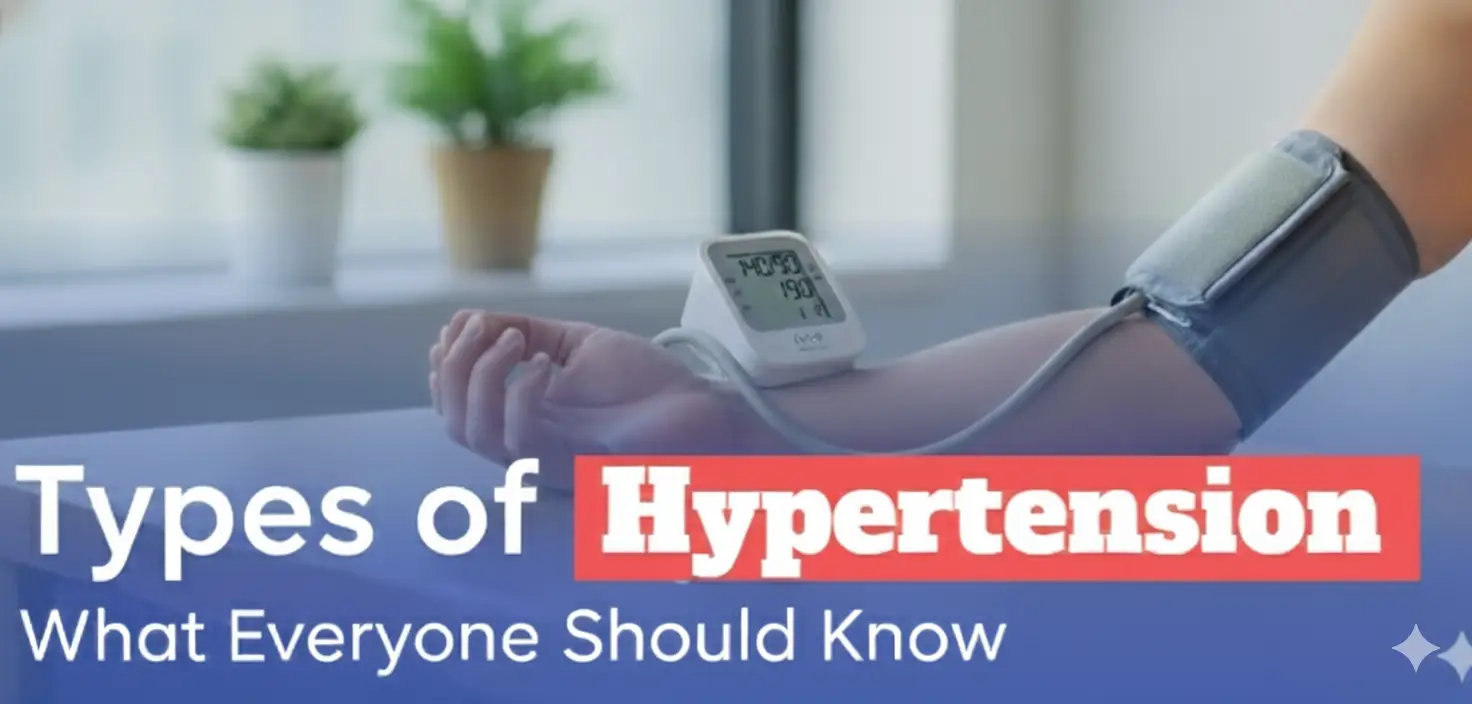

High blood pressure doesn’t start with a big moment. It’s not like a loud alarm goes off in the chest. Instead, it creeps in quietly. The pressure in the arteries climbs little by little while a person continues life without noticing anything unusual. Some feel tired. Some feel stressed. Others feel nothing at all. Meanwhile, the blood vessels are fighting the extra force day after day.
That’s what makes hypertension such a silent threat. You can’t see it. You can’t feel it right away. And by the time the signs show up, damage may already be happening deep inside the body. Many people think high blood pressure is just one condition, but in reality, it comes in different types. Each one has its own root cause, its own behaviour, and its own risks.
One type develops slowly with age. Another shows up because of kidney issues. One type spikes only in a clinic. Another stays hidden during appointments but rises at home. Understanding these types helps people know why their blood pressure is high and how to control it.
This guide explains all the major types of hypertension in a simple, natural way. No heavy medical vocabulary. Just clear, human-level explanations backed by organisations like the American Heart Association, CDC, and the National Heart, Lung, and Blood Institute.
Let’s break it down.
Blood pressure is simply the pressure of blood pushing against artery walls. The heart pumps blood through the body, and that push creates pressure. Doctors measure this using two values.
The pressure when the heart squeezes and pushes blood out.
The pressure when the heart is resting between beats.
The American Heart Association notes that a normal reading usually falls below 120/80 mmHg.
When numbers stay high for weeks or months, arteries stiffen, the heart works harder, and organs feel the strain. That’s how hypertension starts.
But depending on why and how it starts, the condition falls into different types.
Primary hypertension is the most common type. It doesn’t appear suddenly. It develops slowly over years, sometimes decades.This is the category where the majority of high blood pressure cases are found.
There is no single cause. Instead, it builds from long-term habits, aging, and sometimes genetics.
The CDC reports that almost half of adults in the U.S. live with high blood pressure, and most cases are primary hypertension.
Why It Matters
Primary hypertension rarely causes early symptoms. While a person feels fine on the outside, the inside tells a different story. Over time, it raises the risk of:
Routine checks are essential because the condition grows quietly.
Secondary hypertension appears when another health issue pushes blood pressure higher. Unlike primary hypertension, this type has a clear cause.
Doctors run tests like blood work, urine tests, imaging, and hormone studies to find the source. Once the underlying problem is treated, the blood pressure often improves.
White coat hypertension happens when someone has high blood pressure only in a clinic. Outside in daily life, the numbers stay normal.
Some people feel nervous during medical checkups. That stress raises adrenaline levels, which temporarily increases blood pressure. The body treats the clinic like a stressful environment even if nothing bad is happening.
White coat hypertension might seem harmless, but people with this pattern have a higher chance of developing long-term hypertension later. So keeping an eye on it matters.
Masked hypertension is the opposite pattern. Clinic readings look normal, but at home or work, the pressure rises. Because doctor-office readings look fine, the person might think nothing is wrong.
Masked hypertension can damage the heart and kidneys silently. It increases risks similar to long-term uncontrolled hypertension.
Early detection helps prevent long-term problems.
Resistant hypertension shows up when someone takes three medications (including a diuretic), but blood pressure remains high. Some people need four or more medicines.
Doctors may:
Resistant hypertension needs close monitoring because it is more difficult to control.
Malignant hypertension is extremely serious. Blood pressure rises suddenly to dangerous levels, often above 180/120 mmHg. It can cause rapid organ damage.
Emergency treatment is essential. Doctors use IV medication to lower blood pressure in a controlled manner.
Pulmonary hypertension affects the arteries between the heart and lungs. The pressure in these vessels becomes too high, forcing the right side of the heart to work harder.
The National Heart, Lung, and Blood Institute explains that untreated pulmonary hypertension can lead to heart failure.
Pulmonary hypertension requires careful evaluation because symptoms often start mild and grow slowly.
Pulmonary hypertension needs careful follow-up because symptoms start small and slowly increase. To understand the factors linked to this condition and take early steps, explore What Causes Pulmonary Hypertension? for a simple breakdown of the main triggers.
Orthostatic hypertension happens when blood pressure rises after someone stands up. Normally, pressure drops slightly when standing. Here, it rises instead.
Doctors compare lying and standing readings to diagnose this type.
Isolated systolic hypertension means the top (systolic) number is high while the bottom (diastolic) number stays normal. Older adults experience this more often because arteries stiffen with age.
The American Heart Association identifies high blood pressure as a significant concern for older individuals.
Managing it early protects the heart and brain.
Different types require different approaches. But many lifestyle changes help across almost all categories.
Doctors may prescribe:
Regular tracking helps catch dangerous changes early.
Seek help if you notice:
If blood pressure hits 180/120 mmHg and symptoms appear, emergency care is needed.
Hypertension may start quietly, but understanding its types gives people a stronger chance at controlling it. Each type has its own pattern, its own cause, and its own risks. With regular monitoring, smart lifestyle choices, and proper medical care, people can manage hypertension and avoid major health problems.
Organizations like the American Heart Association, CDC, and National Heart, Lung, and Blood Institute all highlight the same message: early awareness leads to better outcomes. Once someone understands their type of hypertension, they can take smarter steps toward long-term heart health.

Kevin P draws on 10+ years of health expertise to share actionable wellness tips. He focuses on making health achievable for everyone.

We, at the Global Discount Drugs, pride ourselves in placing our customers’ privacy high on our list of priorities. At every step, we make sure our customers’ privacy is protected and their personal information is kept confidential. These are the policies that we follow when we gather, use, maintain and protect personal information from our customers:
At the Global Discount Drugs, we only collect relevant and necessary information that we need to carry out our customers’ orders. This includes the following:
It is fully left to the discretion of our customers whether or not they chose to provide us with this information and how much information they provide us with. However, we make recommendations based on the information that they provide and it becomes difficult for us to suggest alternatives if we have not been given adequate information. We may even request additional information in case we are not able to carry out the request based on the information provided. We also maintain a file on our customers on their personal information that our customers can update from time to time.
We collect personal information from our customers in order to serve them better and quickly and effectively provide them with the appropriate services they require.
Customers’ consent is always taken before making use of their personal information. We only use their personal information for the purposes that we disclose to them.
Customers’ personal information is shared with an outside source only under the following circumstances:
Only in some cases such as when it comes to employing legal methods to collect a delinquent account, a medical emergency or suspicion of illegal activities do we legally access and disclose our customers’ personal information.
At the Global Discount Drugs, we employ very strict security measures to ensure that our customers’ personal information is protected against inappropriate use, disclosure or alteration.
We employ the latest technology to maintain high security standards and restrict access to electronic flies containing our customers’ data. Our firewall infrastructure is strictly adhered to and we regularly update our security settings.
Customer information stored in paper based files is kept in restricted areas and only authorized employees are allowed to access them. All our employees sign confidentiality agreements when they join our organization which binds them to follow our strict privacy policies and procedures. They are strictly forbidden from accessing customer information without the appropriate authorization and may even be dismissed in case they, in any way, compromise our customers’ privacy.
It is highly important for our customers to keep their personal information up-to-date as we, at the Global Discount Drugs, make recommendations and decisions based on the information that our customers provide us.
Customers can access and modify their information in case they wish to make any changes or corrections in case of a clerical error on our part. Once the customer informs us about the incorrect or old information in their file, we carry out the necessary changes. We also make these changes known to any other parties who we may have passed the incorrect information onto.
Any queries that our customers may have regarding our privacy policies and procedures can be directed towards our Privacy official at the following mail id: webmaster@globaldiscountdrugs.com
From time to time, additions, insertions and modifications may be made to the existing policy. If and when changes are made in our privacy policy and procedures, our customers can come to know about it by referring to the modification date found at the bottom of the Global Discount Drugs privacy policy web page.


