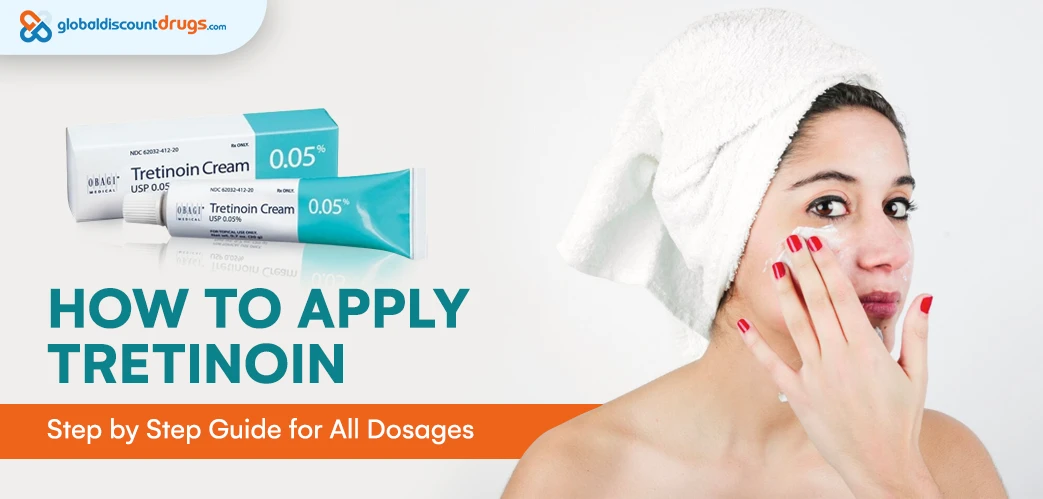
How to Apply Tretinoin: Step-by-Step Guide for All Dosages

Tretinoin is a prescription-strength topical treatment commonly used to treat acne, fine lines, and uneven skin texture. Knowing how to apply Tretinoin correctly is essential to maximize results while minimizing irritation. Proper application ensures the medication penetrates effectively and reduces the risk of side effects like redness, peeling, or dryness. 

Understanding Tretinoin and Its Dosages 

Tretinoin works by increasing skin cell turnover, stimulating collagen production, and unclogging pores. Different formulations are available to suit various skin types and concerns: 

  • Tretinoin Cream 0.005% – ideal for sensitive skin or first-time users 
  • Tretinoin Gel 0.01% – lightweight gel suitable for oily or combination skin 
  • Tretinoin Gel 0.025% – stronger gel for persistent acne or uneven skin texture 
  • Tretinoin Gel 0.04% – high-strength option for severe acne or pronounced wrinkles 

Choosing the correct dosage is critical. Beginners often start with a lower concentration like Tretinoin Cream 0.005%, while more experienced users or those with persistent skin concerns may use higher strengths under dermatologist supervision. 

Step-by-Step Guide: How to Apply Tretinoin 

  1. Cleanse Your Skin Gently

Before applying Tretinoin, wash your face with a mild, non-comedogenic cleanser. Avoid using exfoliating scrubs or harsh cleansers, as they can increase skin sensitivity. Pat your face dry with a soft towel—do not rub. 

  1. Wait Before Application

Allow your skin to completely dry for 10–15 minutes. Applying Tretinoin to damp skin can increase irritation and redness. 

  1. Use a Small Amount

A pea-sized amount is sufficient for the entire face. For Tretinoin gels, use a thin layer, dotting it on the forehead, cheeks, nose, and chin, then spread evenly. Using more than recommended does not increase effectiveness but can increase side effects. 

  1. Start Slowly if Needed
  • Tretinoin Cream 0.025%: Start every other night and increase frequency as tolerated 
  • Tretinoin Gel 0.01%: Can be applied 3–4 nights per week initially 
  • Tretinoin Gel 0.025%: Begin 2–3 nights per week; adjust frequency based on skin response 
  • Tretinoin Gel 0.04%: High-strength gels should be used sparingly and under dermatologist supervision 

Gradual introduction reduces the risk of irritation, redness, and peeling. 

  1. Apply Moisturizer

After Tretinoin has absorbed (about 20 minutes), apply a gentle moisturizer to prevent dryness and flaking. Some users prefer the “sandwich” method: moisturizer → Tretinoin → moisturizer to buffer sensitivity, especially for higher-strength gels. 

  1. Avoid Sensitive Areas

Do not apply Tretinoin near the eyes, lips, or nostrils. These areas are more prone to irritation. 

Tips for Effective Tretinoin Application 

  • Consistency is Key: Nightly use is recommended for best results once your skin tolerates it. 
  • Sun Protection: Tretinoin increases sun sensitivity. Always use a broad-spectrum SPF 30+ during the day. 
  • Avoid Other Irritants: Do not combine Tretinoin with harsh chemical peels, scrubs, or high-strength benzoyl peroxide products. 
  • Monitor Skin Reactions: Mild redness, dryness, and peeling are normal initially. Severe irritation should prompt consultation with a dermatologist. 
  • Be Patient: Visible improvement generally appears after 4–8 weeks, with maximum benefits around 3–6 months. 

Common Mistakes to Avoid 

  • Applying too much product: More does not mean faster results and increases irritation risk. 
  • Using on damp skin: This can worsen redness and peeling. 
  • Skipping moisturizer: Tretinoin can dry out the skin; a moisturizer helps maintain hydration. 
  • Sun exposure without protection: UV rays can worsen skin sensitivity and dark spots. 
  • Expecting overnight results: Patience and consistent application are essential. 

Expected Results by Dosage 

  • Tretinoin Cream 0.005%: Gradual improvement in mild acne and early signs of aging; ideal for sensitive skin. 
  • Tretinoin Cream 0.025%: Reduces acne, early wrinkles, and minor pigmentation. 
  • Tretinoin Gel 0.01%: Lightweight gel that smooths texture and fades minor post-acne marks. 
  • Tretinoin Gel 0.04%: High-strength gel for severe acne or pronounced wrinkles, best used under supervision. 

How Long Before You See Results? 

  • First 1–4 Weeks: Mild redness, peeling, and dryness may occur; acne might appear worse. 
  • 4–8 Weeks: Reduction in breakouts and early improvements in skin texture. 
  • 8–12+ Weeks: Significant reduction in acne, fading of dark spots, smoother texture. 
  • 3–6 Months: Maximum visible results with consistent use. 

Storage and Safety Tips 

  • Store Tretinoin at room temperature, away from sunlight and moisture. 
  • Keep the tube tightly closed to maintain potency. 
  • Do not use expired Tretinoin; it may be less effective and can irritate the skin. 
  • Always consult a dermatologist before changing dosage or starting a higher-strength gel. 

Conclusion 

Knowing how to apply Tretinoin correctly is crucial for achieving clear, smooth, and healthy skin. Using the appropriate dosage, starting slowly, applying a small amount, and moisturizing afterward can minimize side effects and improve results. 

Whether you are using Tretinoin Cream 0.005%0.025%, or gels like 0.01%0.025%, or 0.04%, following the right routine, protecting your skin from sun exposure, and maintaining patience will maximize the effectiveness of your treatment. 

With proper application and care, Tretinoin can significantly improve acne, post-acne marks, fine lines, and overall skin texture over time. 


Related Blog

Tretinoin Before and After

Does Tretinoin Expire?

Does Tretinoin Help with Acne Scars?

How Long Does Tretinoin Take to Work?

Leave a comment

You must be logged in to post a review.

* Comment

* Name

* Email

Web Site

Product was successfully added to your cart!