
No products in the cart.
How Long Does Fluconazole Stay In Your System
Medically Reviewed By
Dr. Roger H – General Practitioner
| Last Reviewed: March 9, 2026
If you have ever been prescribed with the medicine fluconazole for a yeast infection or thrush, you shall wonder how long that one little pill shall stay in the body. This medicine is trusted to be powerful medication, and even after the symptoms shall start to fade, the medicine can further be hard at work behind the scenes.
Let us break down the science of how the body shall process the antifungal and how long it shall stay in the system, and what are some of the factors that can alter the timing.
What is Fluconazole?
Fluconazole medicine is known to be the common antifungal medicine that helps on overcoming those infections that are caused by fungus or yeast. One shall also know that it is known to all by the brand name, Diflucan. Doctors can further prescribe it for vaginal yeast infections, oral thrush, or even more severe systemic infections.
Unlike some of the creams that one shall choose to apply topically, fluconazole medicine is systemic. This also means that one shall travel through the bloodstream to reach the site of the infection, whether that it is about the mouth, skin, or elsewhere. As it shall travel through the whole system, this shall take some time for the body to completely clear it out.
Understanding Fluconazole Half-Life
For understanding as to how long a drug shall stay in the body, scientists are known to use a term known as half-life.
Definition: A medication’s "half-life" is just the amount of time it takes for the concentration of the drug in the blood to lower it exactly by 50%.
As per the FDA-approved prescribing information, the fluconazole half-life in a healthy adult is approx. 30 hours (though it can range anywhere from 20 to 50 hours).
This long half-life is just another good thing to treat infections. This can also help a single 150 mg dose to stay at a high enough level in your tissues to keep fighting the fungus for several days, even though you only took one pill.
Fluconazole Elimination Time: The 6-Day Rule
A general rule in medication is that it can take approx. five to six half-lives for a drug to be considered "completely" gone from your system.
While we are using the average 30-hour half-life:
After 30 hours: 50% of the medicine remains.
After 60 hours: 25% remains.
After 90 hours: 12.5% remains.
After 150 hours (roughly 6 days): Less than 3% remains.
For most of the healthy people, the fluconazole elimination time is about 6 to 10 days after the last dose. However, while the medicines are technically "in the system," the levels shall be simply low after the first few days that it might no longer be actively fighting the infection.
Fluconazole Duration in Body: Where Does it Go?
Fluconazole medicine is trusted to be unique as it distributes very well into almost all parts of the body. It does not just stay in the blood; but on the other hand, it soaks into your skin, nails, and even vaginal fluids.

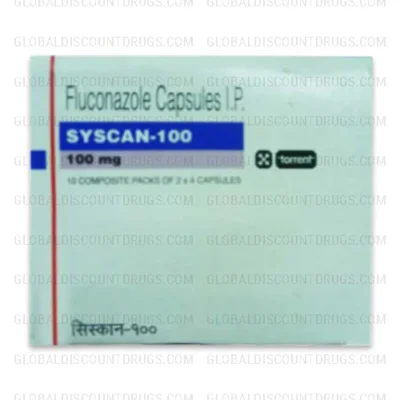 $1.47 per pill
Vaginal Tissues: Research have all shown that after a single 150 mg dose, the medicine can stay at effective levels in vaginal tissue for up to 72 hours.
Skin and Nails: As this shall be about binding things well to keratin, it can all help in staying in the skin and nails much longer than it stays in the blood. This is why it is so effective for fungal nail infections like condition.
Urine: The kidneys is known to do most of the heavy lifting things when it shall all come to clearing this medicine. Approx 80% of fluconazole leaves your body unchanged through your urine.
$1.47 per pill
Vaginal Tissues: Research have all shown that after a single 150 mg dose, the medicine can stay at effective levels in vaginal tissue for up to 72 hours.
Skin and Nails: As this shall be about binding things well to keratin, it can all help in staying in the skin and nails much longer than it stays in the blood. This is why it is so effective for fungal nail infections like condition.
Urine: The kidneys is known to do most of the heavy lifting things when it shall all come to clearing this medicine. Approx 80% of fluconazole leaves your body unchanged through your urine.
Factors That Affect How Long It Stays
Not everyone processes medication at the same speed and there are also several factors can shorten or lengthen the fluconazole duration in body:
-
Kidney Health
Since the kidneys are well responsible for flushing fluconazole out, people with several kidney conditions shall keep the drug in their system much longer. When the kidney is not filtering at 100%, the half-life can stretch far beyond 30 hours. Doctors shall furtehr usually adjust the dosage for patients with known kidney disease.
-
Age
Older adults shall have a slightly slower metabolism and decreased kidney function. Studies have further shown that in people over 65, the half-life can enhance to around 46 hours. On the other hand, children are seen to usually clear the drug faster than adults.
-
Drug Interactions
Fluconazole medicine shall interact with many other medications. Some of the medicine, like the antibiotic Rifampin, can actually speed up how fast your body gets rid of fluconazole. Other drugs might slow it down, increasing the risk of side effects.

Kevin P draws on 10+ years of health expertise to share actionable wellness tips. He focuses on making health achievable for everyone.
Medically Reviewed By
If you have ever been prescribed with the medicine fluconazole for a yeast infection or thrush, you shall wonder how long that one little pill shall stay in the body. This medicine is trusted to be powerful medication, and even after the symptoms shall start to fade, the medicine can further be hard at work behind the scenes.
Let us break down the science of how the body shall process the antifungal and how long it shall stay in the system, and what are some of the factors that can alter the timing.
Dr. Roger H – General Practitioner | Last Reviewed: March 9, 2026
What is Fluconazole?
Fluconazole medicine is known to be the common antifungal medicine that helps on overcoming those infections that are caused by fungus or yeast. One shall also know that it is known to all by the brand name, Diflucan. Doctors can further prescribe it for vaginal yeast infections, oral thrush, or even more severe systemic infections. Unlike some of the creams that one shall choose to apply topically, fluconazole medicine is systemic. This also means that one shall travel through the bloodstream to reach the site of the infection, whether that it is about the mouth, skin, or elsewhere. As it shall travel through the whole system, this shall take some time for the body to completely clear it out.Understanding Fluconazole Half-Life
For understanding as to how long a drug shall stay in the body, scientists are known to use a term known as half-life. Definition: A medication’s "half-life" is just the amount of time it takes for the concentration of the drug in the blood to lower it exactly by 50%. As per the FDA-approved prescribing information, the fluconazole half-life in a healthy adult is approx. 30 hours (though it can range anywhere from 20 to 50 hours). This long half-life is just another good thing to treat infections. This can also help a single 150 mg dose to stay at a high enough level in your tissues to keep fighting the fungus for several days, even though you only took one pill.Fluconazole Elimination Time: The 6-Day Rule
A general rule in medication is that it can take approx. five to six half-lives for a drug to be considered "completely" gone from your system. While we are using the average 30-hour half-life: After 30 hours: 50% of the medicine remains. After 60 hours: 25% remains. After 90 hours: 12.5% remains. After 150 hours (roughly 6 days): Less than 3% remains. For most of the healthy people, the fluconazole elimination time is about 6 to 10 days after the last dose. However, while the medicines are technically "in the system," the levels shall be simply low after the first few days that it might no longer be actively fighting the infection.Fluconazole Duration in Body: Where Does it Go?
Fluconazole medicine is trusted to be unique as it distributes very well into almost all parts of the body. It does not just stay in the blood; but on the other hand, it soaks into your skin, nails, and even vaginal fluids.
$1.47 per pill
Factors That Affect How Long It Stays
Not everyone processes medication at the same speed and there are also several factors can shorten or lengthen the fluconazole duration in body:-
Kidney Health
-
Age
-
Drug Interactions
Kevin P draws on 10+ years of health expertise to share actionable wellness tips. He focuses on making health achievable for everyone.


