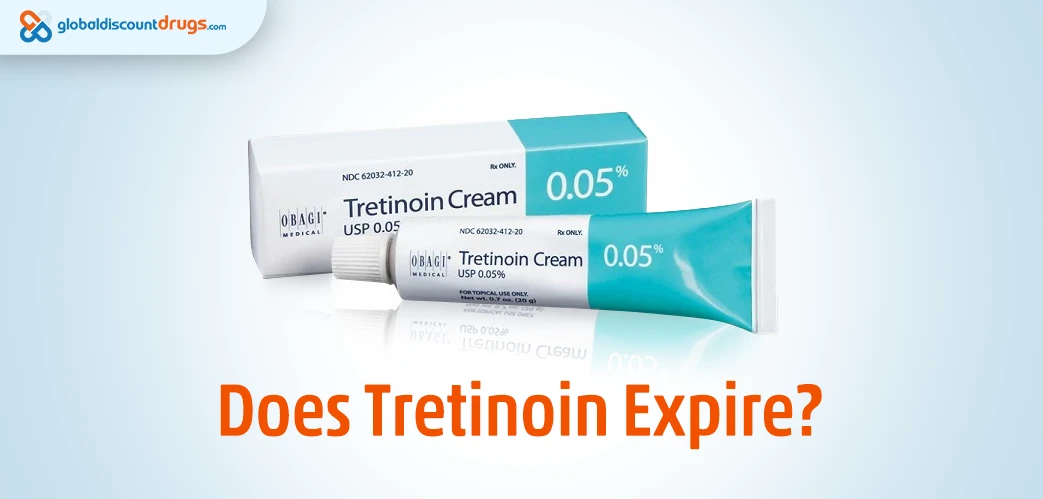
Does Tretinoin Expire?
-
Written By:
Kevin P
-
December 3, 2025
-
Tretinoin is a widely used topical treatment for acne, fine lines, and uneven skin texture. Like all medications, it has a shelf life, and understanding does Tretinoin expire is essential to ensure safety and effectiveness. Using expired Tretinoin can reduce its potency and may increase the risk of irritation or ineffective treatment.
This guide covers how long Tretinoin lasts, how to store it properly, and what to do if your product has expired.
What is Tretinoin?
Tretinoin is a derivative of vitamin A and is commonly prescribed in various formulations:
- Tretinoin Cream 0.005% – suitable for sensitive skin or first-time users
- Tretinoin Cream 0.025% – moderate strength for mild acne or early signs of aging
- Tretinoin Gel 0.01% – lightweight gel ideal for oily or combination skin
- Tretinoin Gel 0.025% – stronger gel for persistent acne or rough skin
- Tretinoin Gel 0.04% – high-strength gel for severe acne or pronounced wrinkles
Tretinoin works by increasing skin cell turnover, unclogging pores, and stimulating collagen production. Like all topical medications, it is sensitive to light, air, and heat, which can affect its shelf life.
Does Tretinoin Expire?
Yes, Tretinoin does expire. Like most topical medications, Tretinoin has an expiration date printed on its packaging. Beyond this date:
- The potency of Tretinoin may decrease, making it less effective.
- Chemical changes can occur, potentially irritating the skin.
- The consistency or color of the cream or gel may change.
Expired Tretinoin may not provide the intended benefits, such as reducing acne or improving skin texture. It is always advisable to check the expiration date before use.
Typical Shelf Life of Tretinoin
The shelf life of Tretinoin varies by formulation and storage conditions:
- Tretinoin Cream 0.005% – typically 2–3 years from the date of manufacture
- Tretinoin Cream 0.025% – usually 2–3 years
- Tretinoin Gel 0.01% – approximately 2–3 years
- Tretinoin Gel 0.025% – around 2–3 years
- Tretinoin Gel 0.04% – roughly 2–3 years
Keep in mind that exposure to heat, light, or moisture can shorten the effective life of Tretinoin. Always store it as instructed on the label.
How to Store Tretinoin Properly
Proper storage helps maintain the stability and effectiveness of Tretinoin. Follow these tips:
- Keep it in a cool, dry place – Avoid storing near windows, radiators, or bathrooms where humidity is high.
- Avoid direct sunlight – Light can degrade Tretinoin, reducing its potency.
- Keep the tube or jar tightly closed – Exposure to air accelerates oxidation.
- Do not refrigerate unless specified – Most formulations should be stored at room temperature.
- Store away from children and pets – Tretinoin is prescription-only and should not be used accidentally.
Signs Your Tretinoin Has Expired
Even if the expiration date has not passed, Tretinoin may lose potency if not stored properly. Signs include:
- Change in color (darkening or yellowing)
- Change in consistency (gel becoming watery or clumpy)
- Unusual odor or smell
- Reduced effectiveness when applied
If any of these signs are present, it is safer to dispose of the product.
Risks of Using Expired Tretinoin
Using expired Tretinoin may result in:
- Reduced effectiveness – Acne may persist or dark spots may not fade.
- Increased irritation – Redness, peeling, or burning may occur.
- Skin sensitivity – Chemical changes in the expired product can trigger reactions.
For optimal results, always use fresh, properly stored Tretinoin.
What to Do with Expired Tretinoin
Never use expired Tretinoin. Instead:
- Check if your pharmacy offers a take-back program for expired medications.
- If not, seal the product in a bag and dispose of it in the trash. Do not flush it down the toilet.
- Replace it with a fresh prescription from your dermatologist to continue effective treatment.
Tips for Ensuring Your Tretinoin Lasts
- Check expiration dates when purchasing.
- Buy in appropriate quantities to finish before expiration.
- Follow storage instructions carefully.
- Keep a small diary of opening dates to track the shelf life after first use.
Conclusion
Yes, Tretinoin does expire, and using expired medication can reduce its effectiveness and potentially irritate your skin. All dosages, including Tretinoin Cream 0.005%, 0.025%, and gels 0.01%, 0.025%, and 0.04%, should be stored properly, used before the expiration date, and replaced as needed.
Proper storage, monitoring for changes in color, texture, or smell, and adherence to expiration dates are essential to maintain the benefits of Tretinoin. Always consult your dermatologist if you are unsure whether your Tretinoin is still safe to use. Using fresh, properly stored Tretinoin ensures you get the best results in improving acne, post-acne marks, and overall skin texture.
Related Blogs
- Tretinoin Before and After
- Where to Buy Tretinoin Over the Counter
- How to Get a Tretinoin Prescription
Kevin P draws on 10+ years of health expertise to share actionable wellness tips. He focuses on making health achievable for everyone.
Tretinoin is a widely used topical treatment for acne, fine lines, and uneven skin texture. Like all medications, it has a shelf life, and understanding does Tretinoin expire is essential to ensure safety and effectiveness. Using expired Tretinoin can reduce its potency and may increase the risk of irritation or ineffective treatment.
This guide covers how long Tretinoin lasts, how to store it properly, and what to do if your product has expired.
What is Tretinoin?
Tretinoin is a derivative of vitamin A and is commonly prescribed in various formulations:
- Tretinoin Cream 0.005% – suitable for sensitive skin or first-time users
- Tretinoin Cream 0.025% – moderate strength for mild acne or early signs of aging
- Tretinoin Gel 0.01% – lightweight gel ideal for oily or combination skin
- Tretinoin Gel 0.025% – stronger gel for persistent acne or rough skin
- Tretinoin Gel 0.04% – high-strength gel for severe acne or pronounced wrinkles
Tretinoin works by increasing skin cell turnover, unclogging pores, and stimulating collagen production. Like all topical medications, it is sensitive to light, air, and heat, which can affect its shelf life.
Does Tretinoin Expire?
Yes, Tretinoin does expire. Like most topical medications, Tretinoin has an expiration date printed on its packaging. Beyond this date:
- The potency of Tretinoin may decrease, making it less effective.
- Chemical changes can occur, potentially irritating the skin.
- The consistency or color of the cream or gel may change.
Expired Tretinoin may not provide the intended benefits, such as reducing acne or improving skin texture. It is always advisable to check the expiration date before use.
Typical Shelf Life of Tretinoin
The shelf life of Tretinoin varies by formulation and storage conditions:
- Tretinoin Cream 0.005% – typically 2–3 years from the date of manufacture
- Tretinoin Cream 0.025% – usually 2–3 years
- Tretinoin Gel 0.01% – approximately 2–3 years
- Tretinoin Gel 0.025% – around 2–3 years
- Tretinoin Gel 0.04% – roughly 2–3 years
Keep in mind that exposure to heat, light, or moisture can shorten the effective life of Tretinoin. Always store it as instructed on the label.
How to Store Tretinoin Properly
Proper storage helps maintain the stability and effectiveness of Tretinoin. Follow these tips:
- Keep it in a cool, dry place – Avoid storing near windows, radiators, or bathrooms where humidity is high.
- Avoid direct sunlight – Light can degrade Tretinoin, reducing its potency.
- Keep the tube or jar tightly closed – Exposure to air accelerates oxidation.
- Do not refrigerate unless specified – Most formulations should be stored at room temperature.
- Store away from children and pets – Tretinoin is prescription-only and should not be used accidentally.
Signs Your Tretinoin Has Expired
Even if the expiration date has not passed, Tretinoin may lose potency if not stored properly. Signs include:
- Change in color (darkening or yellowing)
- Change in consistency (gel becoming watery or clumpy)
- Unusual odor or smell
- Reduced effectiveness when applied
If any of these signs are present, it is safer to dispose of the product.
Risks of Using Expired Tretinoin
Using expired Tretinoin may result in:
- Reduced effectiveness – Acne may persist or dark spots may not fade.
- Increased irritation – Redness, peeling, or burning may occur.
- Skin sensitivity – Chemical changes in the expired product can trigger reactions.
For optimal results, always use fresh, properly stored Tretinoin.
What to Do with Expired Tretinoin
Never use expired Tretinoin. Instead:
- Check if your pharmacy offers a take-back program for expired medications.
- If not, seal the product in a bag and dispose of it in the trash. Do not flush it down the toilet.
- Replace it with a fresh prescription from your dermatologist to continue effective treatment.
Tips for Ensuring Your Tretinoin Lasts
- Check expiration dates when purchasing.
- Buy in appropriate quantities to finish before expiration.
- Follow storage instructions carefully.
- Keep a small diary of opening dates to track the shelf life after first use.
Conclusion
Yes, Tretinoin does expire, and using expired medication can reduce its effectiveness and potentially irritate your skin. All dosages, including Tretinoin Cream 0.005%, 0.025%, and gels 0.01%, 0.025%, and 0.04%, should be stored properly, used before the expiration date, and replaced as needed.
Proper storage, monitoring for changes in color, texture, or smell, and adherence to expiration dates are essential to maintain the benefits of Tretinoin. Always consult your dermatologist if you are unsure whether your Tretinoin is still safe to use. Using fresh, properly stored Tretinoin ensures you get the best results in improving acne, post-acne marks, and overall skin texture.
Related Blogs
- Tretinoin Before and After
- Where to Buy Tretinoin Over the Counter
- How to Get a Tretinoin Prescription
Kevin P draws on 10+ years of health expertise to share actionable wellness tips. He focuses on making health achievable for everyone.