
No products in the cart.

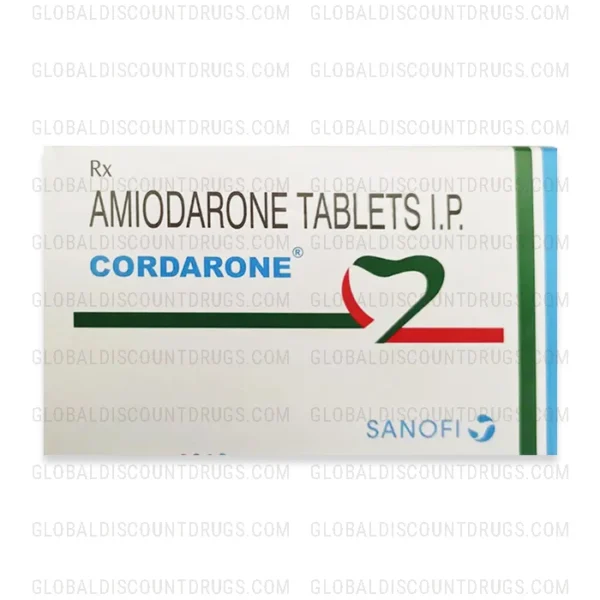
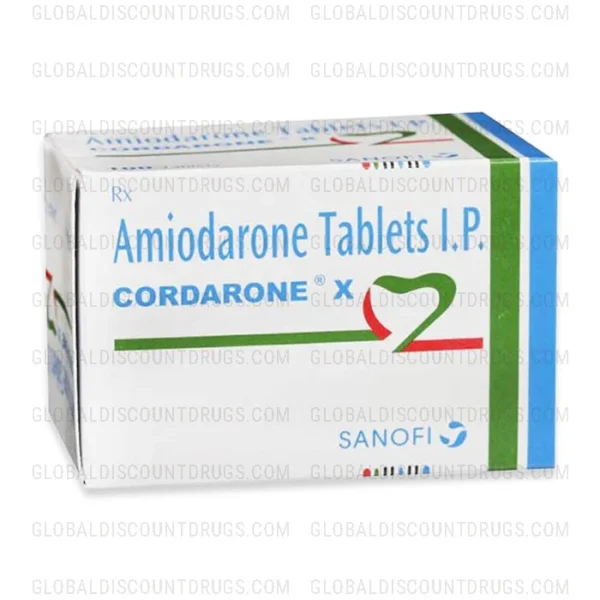
Amiodarone
In StockAmiodarone is a powerful antiarrhythmic drug used primarily to treat life-threatening ventricular and supraventricular arrhythmias that are resistant to other treatments. It works by prolonging the action potential duration and refractory period in myocardial tissue, thereby stabilizing the heart rhythm. Due to its efficacy in maintaining sinus rhythm, this API is critical for patients with severe cardiac electrical instability. Its use requires careful monitoring due to potential systemic side effects.
$0.43 per pill
What is Amiodarone?
Amiodarone is a prescription anti-arrhythmic medicine used to treat serious irregular heart rhythms. It helps the heart maintain a regular beat by calming electrical signals that cause heart rhythm problems. Because of its power and potential risks, Amiodarone is typically used when other treatments haven’t worked or cannot be tolerated.
Amiodarone Used For
This medication is primarily used for:
-
Ventricular tachycardia and ventricular fibrillation that recur despite other treatments.
-
Atrial fibrillation or flutter in some off-label situations when rhythm control is needed.
-
Supporting heart rhythm stabilization after cardiac events such as resuscitated cardiac arrest.
Chemical Composition
The active ingredient is amiodarone hydrochloride, a benzofuran derivative that contains iodine. It is formulated as oral tablets (e.g., 100 mg, 200 mg strength) in many regions.
Because it includes iodine, people with iodine sensitivity or certain thyroid conditions must use caution.
Amiodarone Mechanism
Amiodarone works by blocking several types of ion channels in the heart — especially potassium channels that support repolarisation of heart muscle cells.
It also has additional effects: slowing conduction through sodium and calcium channels, and inhibiting certain adrenergic (beta- and alpha-) receptors.
These combined actions prolong the heart’s refractory period, reduce abnormal electrical circuits and help stabilize rhythm.
How It Helps Control Irregular Heart Rhythms
When heart muscle cells fire abnormally fast or erratically, Amiodarone helps by extending the period between impulses and reducing the ability of faulty circuits to persist. This means fewer episodes of rapid heartbeats and improved efficiency of the heart pump. Over time, the risk of life-threatening arrhythmias can be reduced.
Because it is a potent medication, close monitoring of heart rate, blood pressure, thyroid, liver and lung function is recommended.
What Are Other Benefits
-
Helps reduce hospitalisations for recurring dangerous arrhythmias.
-
Provides an option when other anti-arrhythmic medicines fail or are not tolerated.
-
Often used as a once-daily oral tablet which supports easier long-term management.
-
Has both heart rhythm stabilising and in some cases, rate-control effects in complex cardiac cases.
Dosages
Available strengths or dosage
Oral Amiodarone tablets are commonly available in strengths of 100 mg, 200 mg, and sometimes 400 mg, depending on the country.
Some uses may require intravenous (IV) formulations in hospital settings.
How and when to take it
-
For oral use: Take Amiodarone exactly as prescribed by your cardiologist — often after food to improve absorption.
-
Loading dose phase may involve multiple tablets daily until rhythm is stabilised, then a maintenance dose (often 400 mg/day or lower) is used.
-
Do not stop the medicine suddenly or change dose without medical advice; the effects may persist long after stopping because the drug accumulates in body tissues.
Overdose caution
An overdose of Amiodarone can lead to significant side-effects including very slow heart rate, dangerously low blood pressure, or severe lung or liver toxicity. In case of suspected overdose, seek immediate medical attention or call emergency services.
Because of its long half-life and tissue accumulation, even past doses may continue to influence body systems for weeks.
Who can use/take Amiodarone?
Amiodarone is suitable for adult men and women who have documented, life-threatening arrhythmias or unstable tachycardias, especially if other treatments have failed.
It is usually not recommended for:
-
Children (less commonly used and with special dosing)
-
People with severe sinus-node dysfunction, AV-block without a pacemaker, or cardiogenic shock, unless under specialist supervision.
-
Patients with severe liver or lung disease, or uncontrolled thyroid conditions, as Amiodarone may worsen these.
Side Effects & Precautions
What are the side effects
Many people taking Amiodarone experience some adverse effects, and some effects can be serious. Common side-effects include:
-
Fatigue, dizziness, tremor, or visual disturbances
-
Gastrointestinal upset, nausea
-
Slowed heart rate (bradycardia)
-
Skin sensitivity to sun, bluish-gray skin discoloration
Serious but less frequent side-effects: -
Pulmonary toxicity, including interstitial lung disease and fibrosis (can be life-threatening)
-
Thyroid problems — either hypo- or hyper-thyroidism due to iodine content
-
Liver damage, elevated liver enzymes, hepatotoxicity
-
Prolonged QT interval or new arrhythmias such as Torsades de Pointes in rare cases.
What is the Precautions to avoid side effects
-
Prior to starting Amiodarone, get baseline screening: chest X-ray, pulmonary-function tests, liver & thyroid labs.
-
Use sunscreen and protective clothing, because skin becomes more sensitive to light.
-
Avoid grapefruit or large amounts of grapefruit juice as it may raise drug levels.
-
Inform your doctor about all other medications you take — many interactions occur because Amiodarone affects the metabolism of other drugs.
-
If you are pregnant or plan a pregnancy, discuss risks/benefits. Breastfeeding is typically not recommended.
Always consult your cardiologist before starting any dose. If prescribed, you can order Amiodarone tablets online safely from trusted pharmacy sources and ensure timely refills to maintain your treatment progress.


$0.43 per pill

$1.33 – $1.63 per pill


$0.84 – $1.03 per pill


$0.43 – $0.53 per pill


