
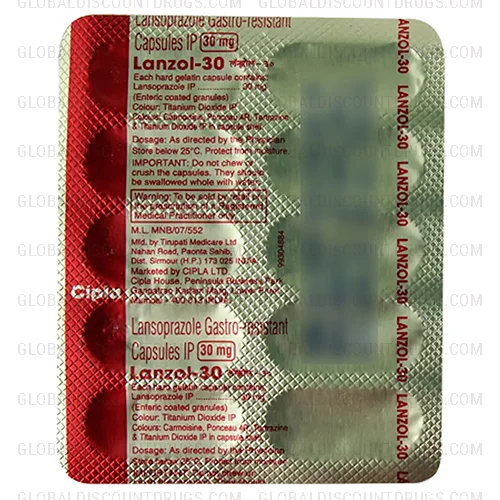
Lansoprazole 30mg
In StockLansoprazole 30 mg Delayed-Release Capsule is a prescription proton pump inhibitor used to treat GERD, erosive esophagitis, and selected ulcer conditions. Complete the prescribed treatment course even if symptoms improve.
| Active Ingredient: | Lansoprazole |
|---|---|
| Indication: | Gastroesophageal Reflux Disease |
| Strength: | 30mg |
| Dosage Form: | Capsules |
| Manufacturer: | Cipla Limited |

Quick Overview
Lansoprazole 30mg is a prescription proton pump inhibitor (PPI) used to treat stomach and duodenal ulcers, erosive esophagitis from acid reflux disease (GERD), and conditions that make the stomach produce too much acid. It works by switching off the acid pumps in the stomach lining. A valid prescription is required, and a prescriber should supervise how long you take it.
Medical Supervision and Regulatory Status
In the United States, the 30 mg strength is available by prescription only, and a prescriber decides when treatment starts, how long it continues, and when it should stop. The FDA approved the brand Prevacid, and generic lansoprazole capsules are widely sold. It is not a controlled substance. Only 15 mg lansoprazole products are sold over the counter, for short courses. Supervision matters because long-term acid suppression has been linked to low magnesium, low vitamin B12, bone fractures, and kidney inflammation.
Clinical Context
Lansoprazole treats problems caused by excess stomach acid, mainly stomach and duodenal ulcers, gastroesophageal reflux disease (GERD, or chronic acid reflux), erosive esophagitis, and rare disorders such as Zollinger-Ellison syndrome.
Treatment matters beyond comfort. Ulcers can bleed or perforate, and repeated reflux can inflame and scar the esophagus. Healing the lining and preventing relapse are the main goals, and people who take anti-inflammatory pain relievers (NSAIDs) may also use a PPI to protect the stomach.
PPIs are the main acid-suppressing drug class in US guidelines for erosive esophagitis and ulcer healing. Lansoprazole is a long-established option, and for Helicobacter pylori infection it is one part of a combination regimen with antibiotics chosen by the prescriber.
How Lansoprazole 30mg Works
Lansoprazole is a proton pump inhibitor that lowers stomach acid by permanently blocking the enzyme, often called the acid pump, that produces acid in the stomach lining.
Once a pump is blocked, it stays blocked until the body builds new ones. That is why one capsule a day can reduce acid across 24 hours even though the drug leaves the bloodstream within hours. Full acid-lowering effect builds over several days of daily dosing.
With less acid washing over it, inflamed tissue in the esophagus, stomach, or duodenum gets time to heal, and heartburn often eases. Results differ from person to person. The medicine reduces acid but does not correct causes of reflux, such as a weak valve at the bottom of the esophagus.
What Is Lansoprazole 30mg?
Lansoprazole 30mg is a delayed-release capsule filled with coated granules, designed to pass through stomach acid intact and release the medicine in the small intestine.
- Drug Class: Proton pump inhibitor (PPI)
- Active Ingredient: Lansoprazole
- Mechanism: Blocks the H+/K+ ATPase acid pump in stomach lining cells, which lowers stomach acid.
- Available Forms and Strengths: Delayed-release capsules in 15 mg and 30 mg (this product is 30 mg). Orally disintegrating tablets and other forms exist and are prescribed separately.
- Dosing Frequency: Usually once daily. Some regimens, such as Helicobacter pylori treatment, use twice-daily dosing. Your prescriber sets the schedule.
- Regulatory Status: US prescription (Rx) only at this strength. Not a controlled substance. Generic versions available.
Approved Uses
The FDA has approved lansoprazole delayed-release capsules for several acid-related conditions in adults, and for some of them in children, as listed here.
- Active duodenal ulcer (adults): Short-term treatment of ulcers in the first part of the small intestine, and lower-dose maintenance after healing.
- Active benign gastric ulcer (adults): Short-term treatment of non-cancerous stomach ulcers.
- NSAID-associated gastric ulcer (adults): Healing of these ulcers, and lower-dose use to reduce the risk of one developing in people who keep taking NSAIDs.
- Helicobacter pylori eradication (adults): Used with antibiotics to clear the infection and reduce the risk of duodenal ulcer returning.
- Symptomatic GERD and erosive esophagitis (adults and children 1 year and older): Treatment of heartburn and of acid damage to the esophageal lining, and maintenance of healing once it has healed.
- Pathological hypersecretory conditions (adults): Long-term treatment of conditions such as Zollinger-Ellison syndrome, in which the stomach makes very large amounts of acid.
How to Use and Dosage
Your prescriber determines the dose; the labeled adult dose is 30 mg once daily for erosive esophagitis and stomach ulcers, and 15 mg once daily for most other uses.
Swallow the capsule whole, usually once daily before a meal, as the label and your prescriber direct. If swallowing capsules is difficult, ask your pharmacist whether the capsule can be opened and the granules sprinkled on a spoonful of applesauce and swallowed right away without chewing. Children’s doses are based on weight, so never give this strength to a child without the prescriber’s instructions. If you take sucralfate, take it at least 30 minutes after lansoprazole, because it can slow the absorption of this medicine.
If you miss a dose, take it when you remember. If your next dose is almost due, skip the missed one and return to your usual schedule. Never take two doses together to catch up.
The label does not describe a withdrawal syndrome for this drug. Even so, acid secretion returns within a few days of stopping, so symptoms can come back, and an ulcer or damaged esophagus may be only partly healed. For Helicobacter pylori treatment, finishing the full course matters. Talk with your prescriber before stopping.
Side Effects
Side effects vary from person to person, and many people take lansoprazole with few or no problems, though some reactions need prompt medical attention and are listed below.
Common effects: Diarrhea, stomach pain, nausea, constipation, vomiting, gas, and headache have been reported. These are usually mild and often ease as the body adjusts. Tell your pharmacist if they persist or bother you.
Serious effects: Less often, PPIs including lansoprazole can cause severe allergic reactions, severe skin reactions, kidney inflammation (acute tubulointerstitial nephritis), Clostridioides difficile-associated diarrhea, low magnesium levels, vitamin B12 deficiency, bone fractures with long-term or high-dose use, lupus-type skin or joint symptoms, and stomach growths called fundic gland polyps. This medicine does not carry a boxed warning.
Emergency Warning Signs:
- Swelling of the face, lips, tongue, or throat, wheezing, or trouble breathing
- Severe blistering, peeling, or a spreading skin rash with fever
- Severe or watery diarrhea that does not stop, especially with fever, stomach cramps, or blood in the stool
- Muscle spasms, tremor, seizures, fast or irregular heartbeat, or dizziness (possible low magnesium)
- Less urine than usual, new swelling, or blood in the urine
- Black, tarry stools, or vomit that is bloody or looks like coffee grounds
- Trouble or pain with swallowing, or unplanned weight loss
Call 911 for throat swelling, breathing trouble, seizures, fainting, or vomiting blood. For the other signs, contact your prescriber right away or go to urgent care.
Warnings and Precautions
Lansoprazole is contraindicated with a known allergy to lansoprazole or any capsule ingredient, and it must not be combined with rilpivirine-containing HIV medicines. Allergy to other PPIs such as omeprazole, esomeprazole, pantoprazole, or rabeprazole also calls for caution.
Relief of symptoms does not rule out stomach cancer in adults. If you have trouble swallowing, unintended weight loss, repeated vomiting, anemia, or black stools, your prescriber should evaluate you before or during treatment.
Several interactions need attention. Lansoprazole can raise warfarin effects, so INR may need checking, and it can increase methotrexate, tacrolimus, and digoxin levels. It may lower levels of the HIV drugs atazanavir and nelfinavir, so those combinations are avoided, and saquinavir may need monitoring. Because stomach acid helps absorb some drugs, lansoprazole can lower exposure to ketoconazole, itraconazole, erlotinib, and iron salts. Sucralfate delays lansoprazole absorption, and St. John’s wort and rifampin can lower lansoprazole levels. The label lists no specific alcohol interaction, but alcohol can irritate the stomach and worsen reflux.
Long-term use calls for periodic review. Prescribers may check magnesium levels, especially if you also take digoxin or diuretics, and may watch vitamin B12 status and bone health risk. PPIs can interfere with chromogranin A tests and secretin stimulation tests, so tell the testing clinician you take one. They can also cause a false-positive urine screen for THC.
For pregnancy and breastfeeding, tell your prescriber if you are pregnant, planning pregnancy, or nursing. Human studies have not shown a clear pattern of birth defects with PPIs, and the benefits and risks of use while nursing are weighed individually.
Trials found no major differences in safety or effectiveness between older and younger adults, though greater sensitivity in some older people cannot be excluded. The label advises considering a lower dose in severe liver impairment, since drug exposure is higher. Children 1 year and older may use lansoprazole with weight-based dosing, and 30 mg is the labeled dose only for certain weight and age groups.
Who Should Not Use This Medication
Anyone who matches one of the label’s contraindications, or who needs a dose or form this capsule cannot provide, should not take this medicine, as listed below.
- People with a known allergy to lansoprazole or any ingredient in the capsule
- People taking rilpivirine-containing HIV medicines (for example, rilpivirine alone or in combination products)
- Children under 1 year, because the capsule is not labeled for that age group
- Children whose weight and age do not match the 30 mg labeled dose, unless the prescriber directs otherwise
Storage Instructions
Store the capsules in the original tightly closed container at room temperature, away from moisture, heat, and direct light, because moisture can damage the protective coating on the granules. Keep the bottle out of the bathroom, where steam and humidity build up.
Keep it out of reach of children and pets, and never share it with another person. For disposal, use a drug take-back program or a pharmacy kiosk. If none is available, follow FDA household disposal steps: mix the capsules with used coffee grounds or cat litter, seal them in a bag, and discard with household trash.
Frequently Asked Questions
What is the cost of Lansoprazole 30mg without insurance?
The cost without insurance depends on the seller, brand availability, and pack size. Location and discounts can also change what you pay. Generic lansoprazole is generally more affordable than the brand Prevacid, and generics exist in the US. Ask the pharmacy for the cash price of your exact strength and quantity before ordering.
How can I order Lansoprazole 30mg online?
You can order it online only with a valid prescription. Upload your prescription or ask your prescriber to send it electronically, order from a licensed US pharmacy, and receive the medicine at home. Before paying, confirm the pharmacy holds a state license and has a pharmacist available to answer questions by phone or chat.
Is Lansoprazole 30mg available over the counter?
No, the 30 mg strength is not sold over the counter in the United States. Only 15 mg lansoprazole products are sold OTC, meant for a 14-day course for frequent heartburn. Rules differ in other countries, and medical supervision is needed at prescription strength because heartburn can occasionally signal more serious problems.
Does Lansoprazole 30mg require a prescription?
Yes, it requires a prescription from a licensed US prescriber. An evaluation confirms that acid-related disease explains your symptoms and screens for warning signs such as bleeding or trouble swallowing. Follow-up can also catch long-term concerns like low magnesium, low vitamin B12, or bone loss, which is why the prescriber stays involved during treatment.
How long does Lansoprazole 30mg take to work?
Acid reduction starts soon after the first doses, but full effect builds over several days of daily use. Heartburn may improve within days, while healing takes longer: erosive esophagitis and stomach ulcers are usually treated for up to 8 weeks. Response differs by person, so report symptoms that persist to your prescriber.
Is it safe to stop taking Lansoprazole 30mg suddenly?
The label describes no withdrawal syndrome, but stopping without guidance carries real risks. Acid production returns within a few days, so symptoms may come back and healing may be incomplete. Ask your prescriber before stopping, especially after months or years of use, because they can decide whether to taper, switch, or continue.
Can Lansoprazole 30mg interact with other medicines?
Yes. It is contraindicated with rilpivirine-containing HIV medicines. It can raise warfarin effects and methotrexate levels, and it may lower atazanavir and nelfinavir levels. It can also reduce absorption of ketoconazole, itraconazole, erlotinib, and iron salts, and sucralfate slows its own absorption. Give your pharmacist a complete list of prescriptions, supplements, and over-the-counter products at each refill.
What should I do if I miss a dose of Lansoprazole 30mg?
Take the missed capsule as soon as you remember. If it is nearly time for your next dose, skip the missed one and resume your normal schedule. Do not take two capsules together to make up for it. If you take it twice daily in a Helicobacter pylori regimen, contact your pharmacist or prescriber about missed doses.
References
- DailyMed (NIH): Current FDA-approved prescribing information for lansoprazole delayed-release capsules, including indications, dosing, warnings, and interactions.
- MedlinePlus (NIH): Plain-language patient information on lansoprazole, covering uses, how to take it, precautions, and side effects. https://medlineplus.gov/druginfo/meds/a695020.html
- FDA (Drugs@FDA or drug label entry): FDA approval history and labeling for lansoprazole delayed-release capsules, including the reference product Prevacid.
Medical Disclaimer:
This content is for informational purposes only and does not constitute medical advice, diagnosis, or treatment. Consult a qualified specialist or physician before using Lansoprazole 30mg.
Prescription Required (Rx) to Buy?
This medication is not available over the counter. A valid prescription from a licensed healthcare
professional is required. Always consult your doctor before use.
| Quantity | 120, 30, 60, 90 |
|---|---|
| Indication | Gastroesophageal Reflux Disease |
| Active Ingredient | Lansoprazole |
| Pharmaceutical Form | Capsules |
| Manufacturer | Cipla Limited |
| Indian Brand | Lanzol 30mg |
| US Brand Name | Lansoprazole, Prevacid, Zoton |
| Generic Name | Lansoprazole |
| Dosage | 30mg |
| Drug Type | Capsules |