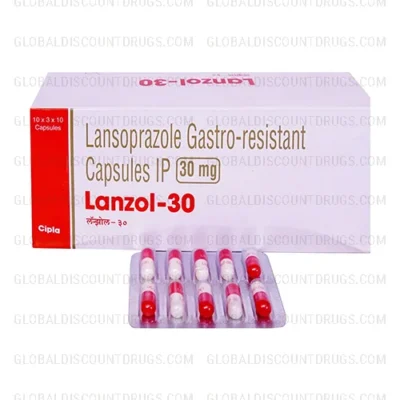


Lansoprazole 15mg
In StockLansoprazole 15 mg Delayed-Release Capsule is a lower-strength proton pump inhibitor used for acid-related gastrointestinal disorders. Dose selection depends on the diagnosed condition and treatment response.
| Active Ingredient: | Lansoprazole |
|---|---|
| Indication: | Gastroesophageal Reflux Disease |
| Strength: | 15mg |
| Dosage Form: | Capsules |
| Manufacturer: | Cipla Limited |

Quick Overview
Lansoprazole 15mg is a proton pump inhibitor (PPI), a medicine that lowers stomach acid. It is used to treat acid reflux disease (GERD), certain stomach and duodenal ulcers, and related conditions. It works by blocking the acid-making pumps in the stomach lining. The prescription 15 mg capsule requires a prescription and a prescriber’s supervision.
Medical Supervision and Regulatory Status
Prescription Lansoprazole 15mg capsules are FDA-approved and available in the US only with a prescriber’s order, and they need oversight because acid suppression can mask serious stomach disease. Lansoprazole is not a controlled substance, and generic capsules are widely sold. A separate nonprescription 15 mg lansoprazole product exists for frequent heartburn, but it is limited to 14-day courses. Prescriber follow-up allows checks for warning-sign symptoms, kidney problems, and low magnesium or vitamin B12 with long-term use.
Clinical Context
Lansoprazole 15mg is used for conditions in which stomach acid irritates or damages the esophagus (food pipe), stomach, or first part of the small intestine (duodenum). In gastroesophageal reflux disease (GERD), acid flows back into the esophagus and causes heartburn, a sour taste, or chest discomfort. Ulcers are open sores in the lining of the stomach or duodenum.
Treating these conditions matters because the damage can progress. Ongoing reflux can inflame and wear away the esophageal lining (erosive esophagitis), and repeated injury may lead to scarring and narrowing of the esophagus. Ulcers can bleed, and an untreated Helicobacter pylori (H. pylori) infection raises the chance that a duodenal ulcer returns.
PPIs are a first-line drug class for erosive esophagitis and for GERD with typical symptoms. They are also used to heal ulcers and to lower ulcer risk in people who must keep taking NSAIDs (such as ibuprofen or naproxen) after an earlier gastric ulcer. In H. pylori treatment, lansoprazole is one part of a multi-drug regimen, and current American College of Gastroenterology guidance favors bismuth quadruple therapy for many patients, so lansoprazole-based triple therapy is chosen less often. Prescribers generally aim for the lowest dose that keeps symptoms controlled.
How Lansoprazole 15mg Works
Lansoprazole 15mg belongs to the proton pump inhibitor class and lowers stomach acid by shutting down the pumps in the stomach lining that produce it. The capsule holds coated granules that protect the medicine from stomach acid. Absorption into the blood begins after the granules pass into the small intestine.
Once absorbed, the medicine reaches the acid-producing (parietal) cells of the stomach and blocks an enzyme called H+/K+ ATPase, the proton pump. This pump performs the last step of acid release, so blocking it reduces acid made day and night, whatever triggered the release.
Less acid gives irritated tissue time to heal and often eases heartburn. It does not repair every cause of reflux, such as a weak valve between the esophagus and stomach, and it does not clear H. pylori by itself. The blocked pumps stay switched off until the body makes new ones, so the full effect builds over several days rather than within minutes.
What Is Lansoprazole 15mg?
Lansoprazole 15mg is a delayed-release capsule containing 15 mg of the active ingredient lansoprazole, a proton pump inhibitor sold as a generic and under the brand name Prevacid.
- Drug Class: Proton pump inhibitor (PPI)
- Active Ingredient: Lansoprazole, 15 mg per capsule
- Mechanism: Blocks the proton pump (H+/K+ ATPase) in stomach lining cells, which lowers the amount of acid released into the stomach.
- Available Forms and Strengths: Delayed-release capsules in 15 mg and 30 mg. Other lansoprazole forms include orally disintegrating tablets and delayed-release oral suspension.
- Dosing Frequency: Usually once daily before eating, as prescribed. Some regimens, such as H. pylori combinations, use twice-daily dosing.
- Regulatory Status: Prescription (Rx only) for the pharmacy-dispensed capsule. Not a controlled substance. A separate nonprescription 15 mg product exists for short-term frequent heartburn.
Approved Uses
Lansoprazole delayed-release capsules are FDA-approved to heal and prevent acid-related conditions in adults, and for GERD and erosive esophagitis in children aged 1 and older.
- Active duodenal ulcer: Short-term treatment, about four weeks, to heal the ulcer and relieve symptoms.
- H. pylori eradication: Used with amoxicillin and clarithromycin, or with amoxicillin alone when clarithromycin cannot be used, to lower the chance a duodenal ulcer returns.
- Maintenance of healed duodenal ulcers: Helps keep a healed ulcer from coming back.
- Active benign gastric ulcer: Short-term treatment, up to eight weeks.
- NSAID-associated gastric ulcer: Healing of an ulcer in people who must continue their NSAID.
- Risk reduction of NSAID-associated gastric ulcer: For people with a documented past gastric ulcer who need ongoing NSAID therapy.
- Symptomatic GERD: Heartburn and related symptoms, for up to eight weeks in adults and ages 12 to 17, and up to 12 weeks in ages 1 to 11.
- Erosive esophagitis: Short-term healing and symptom relief, with an extra course sometimes given if healing is incomplete.
- Maintenance of healed erosive esophagitis (adults): Controlled studies did not extend beyond 12 months.
- Pathological hypersecretory conditions, including Zollinger-Ellison syndrome (adults): Long-term control of excess stomach acid production.
How to Use and Dosage
Your prescriber sets the dose of Lansoprazole 15mg for your condition, and the label directs most people to swallow the capsule whole once daily before eating. The labeled adult range for the 15 mg strength includes once-daily use for symptomatic GERD (up to eight weeks), for keeping healed duodenal ulcers and healed erosive esophagitis from returning, and for lowering ulcer risk in some NSAID users. Other conditions use 30 mg, sometimes twice daily. Do not change the strength or the length of treatment on your own.
Take it at the same time each day, before a meal, usually in the morning unless your prescriber says otherwise. If swallowing a capsule is hard, open it and sprinkle the granules on one tablespoon of applesauce, ENSURE pudding, cottage cheese, yogurt, or strained pears, then swallow right away without chewing. Use only the foods and juices named in the Instructions for Use. If you also take sucralfate (Carafate), take lansoprazole at least 30 minutes before it.
For a missed dose, take it when you remember. If the next dose is close, skip the missed one and carry on with the usual schedule. A double dose is never needed.
The label lists no withdrawal syndrome for lansoprazole. Even so, ending treatment early can leave an ulcer partly healed and let symptoms return, and an incomplete H. pylori regimen may fail to clear the infection. Ask your prescriber how and when to stop.
Side Effects
Side effects of Lansoprazole 15mg vary by person, dose, and length of treatment, and the most commonly reported ones involve the stomach and bowels. Lansoprazole does not carry a boxed warning.
Common effects. In clinical trials in adults, diarrhea, abdominal pain, nausea, and constipation were each reported in roughly 1% to 4% of people, and headache is also listed on the label. These effects are usually mild and often fade as the body adjusts, but tell your pharmacist if they persist.
Serious effects. Less often, lansoprazole can cause severe diarrhea from Clostridioides difficile infection, kidney inflammation (acute tubulointerstitial nephritis), low blood magnesium, vitamin B12 deficiency with long-term use, bone fractures with high-dose or year-long use, new or worsening lupus (mostly affecting the skin), severe skin reactions, and serious allergic reactions. Stomach polyps (fundic gland polyps) have also been linked to long-term use.
Emergency Warning Signs
Call 911 or go to the nearest emergency department for the first, second, and fifth signs below. For the others, contact your prescriber the same day or go to urgent care.
- Swelling of the face, lips, tongue, or throat, trouble breathing, or widespread hives
- Blistering or peeling skin, or sores in the mouth, eyes, or genital area, with fever
- Watery or bloody diarrhea that does not stop, with fever or severe stomach cramps
- Muscle spasms, tremors, seizures, or a fast or irregular heartbeat (possible low magnesium)
- Vomiting blood, vomit that looks like coffee grounds, or black, tarry stools
- Much less urine than usual, blood in the urine, or new swelling in the legs or ankles
- A rash on the cheeks or arms that worsens in sunlight, with joint pain
Warnings and Precautions
Lansoprazole 15mg should not be used by anyone with a severe allergy to it or by people taking rilpivirine, and other drugs and conditions call for extra care. Allergic reactions to this class can include anaphylaxis, angioedema, and kidney inflammation, so a past reaction to any PPI should be reported before the first capsule.
Several drug interactions are named in the label. Rilpivirine-containing HIV medicines are contraindicated, and the HIV drugs atazanavir and nelfinavir are not recommended with lansoprazole because acid reduction lowers their absorption. Saquinavir levels may rise and need monitoring. Warfarin users need INR monitoring, digoxin and tacrolimus users need blood level checks, and high-dose methotrexate may require a temporary pause of lansoprazole. Rifampin and St. John’s wort lower lansoprazole levels and should be avoided. Medicines that need stomach acid to be absorbed, including ketoconazole, itraconazole, iron salts, mycophenolate mofetil, and cancer drugs such as erlotinib, dasatinib, and nilotinib, may work less well. Alcohol has no labeled interaction, but it can irritate the stomach lining and worsen reflux or ulcer symptoms.
For pregnancy, the label states that published human data have not shown a clear drug-associated risk of major birth defects or miscarriage, though your prescriber should still weigh the need for treatment. For breastfeeding, data on lansoprazole in human milk and its effects on a nursing infant are limited, so the benefit to the mother is weighed against possible risk to the baby. In adults over 65, lansoprazole clears from the body more slowly, and long-term PPI use is linked with a higher fracture risk, so the lowest effective dose for the shortest time is preferred. Children aged 1 to 17 may receive it for GERD and erosive esophagitis, and safety and effectiveness have not been established under 1 year. People with severe liver disease clear lansoprazole more slowly, and the label calls for a reduced dose in that group, while kidney impairment does not require a labeled dose change.
Symptom relief does not rule out stomach cancer, so trouble swallowing, unplanned weight loss, repeated vomiting, or black stools need evaluation rather than longer self-treatment. Monitoring depends on the situation: magnesium before and during prolonged treatment, especially alongside digoxin or diuretics; vitamin B12 with long-term use; INR with warfarin; and evaluation for C. difficile if diarrhea does not clear. Lansoprazole can cause false-positive results on some tests, including the chromogranin A test (stopping at least 14 days beforehand may be needed) and some urine screens for THC, so tell any lab or clinic you take it.
Who Should Not Use This Medication
Lansoprazole 15mg is not suitable for people with a known severe allergy to lansoprazole or other ingredients, or for anyone taking a rilpivirine-containing HIV medicine.
- Anyone who has had a severe allergic reaction, such as anaphylaxis or angioedema, to lansoprazole or any ingredient in the capsule
- People taking rilpivirine-containing products (for example Edurant, Complera, Odefsey, or Juluca)
- People with a penicillin or amoxicillin allergy, or a clarithromycin allergy, who have been prescribed the matching H. pylori combination regimen
- Children under 1 year of age, because the prescription capsule is not approved for them
- People with trouble swallowing, unplanned weight loss, vomiting blood, or black stools, until a prescriber has examined them
Storage Instructions
Store Lansoprazole 15mg capsules at room temperature between 68°F and 77°F (20°C to 25°C), in the original tightly closed container, away from moisture and light. Avoid bathrooms and sunny windowsills, where heat and humidity can damage the coating. Keep the container out of reach and sight of children and pets, and use the child-resistant cap each time.
To dispose of unused capsules, use a drug take-back program or pharmacy kiosk when possible, as the FDA recommends. If none is available, mix the capsules with something unappealing such as used coffee grounds or cat litter, seal the mixture in a bag, and place it in household trash. Remove personal details from the empty bottle label before discarding it.
Frequently Asked Questions
What is the cost of Lansoprazole 15mg without insurance?
The cost without insurance depends on the seller, brand availability, and pack size. Location and discounts can also change what you pay. Generic lansoprazole is generally more affordable than brand-name Prevacid, so ask your pharmacist whether a generic capsule is stocked. Comparing several licensed US pharmacies before ordering shows the range.
How can I order Lansoprazole 15mg online?
You can order it online from a licensed US pharmacy once you have a valid prescription. Upload a copy of the prescription or ask your prescriber to send it electronically, then place the order and receive it by home delivery. Before paying, confirm the pharmacy holds a state license and has a pharmacist available to answer medication questions.
Is Lansoprazole 15mg available over the counter?
Lansoprazole 15mg is sold both ways in the US: as a prescription capsule and as a nonprescription capsule (Prevacid 24HR) for frequent heartburn. The OTC version is limited to 14 days at a time. Prescription use needs medical supervision, and rules differ by country. Ulcers, reflux disease, and use in children need a prescriber’s assessment instead.
Does Lansoprazole 15mg require a prescription?
Yes, the 15 mg capsule used for ulcers and reflux disease is dispensed only with a prescription. A prescriber confirms the diagnosis, rules out warning-sign symptoms such as trouble swallowing or unplanned weight loss, and decides how long treatment should last. Follow-up visits matter because long-term use can call for checks of magnesium, vitamin B12, and kidney function.
How long does Lansoprazole 15mg take to work?
Many people notice less heartburn within one to four days, though full symptom control and ulcer healing take longer. The label lists treatment periods of about four weeks for active duodenal ulcers and up to eight weeks for gastric ulcers and erosive esophagitis. Response differs from person to person, so tell your prescriber if symptoms persist or return.
Is it safe to stop taking Lansoprazole 15mg suddenly?
It is usually not dangerous to stop suddenly, but stop only when your prescriber agrees. The label lists no withdrawal syndrome, yet heartburn can return, sometimes strongly at first, and ulcers may not be fully healed. A Helicobacter pylori regimen only works when every dose is finished. Your prescriber can set a safe stopping plan.
Can Lansoprazole 15mg interact with other medicines?
Yes, it can interact with several medicines, so your pharmacist should review your full list. Rilpivirine must not be combined with it, and atazanavir and nelfinavir are not recommended. Warfarin, digoxin, tacrolimus, and methotrexate need monitoring, while rifampin and St. John’s wort should be avoided. Ketoconazole, itraconazole, and iron tablets may absorb less.
What should I do if I miss a dose of Lansoprazole 15mg?
Take the missed dose as soon as you remember, unless your next dose is almost due. If it is nearly time for the next capsule, skip the missed one and return to your usual schedule. Never take two doses together. If you are on a Helicobacter pylori combination regimen, ask your pharmacist about missed doses.
References
- DailyMed (NIH), lansoprazole delayed-release capsules label. The current FDA-approved prescribing information, including indications, dosing, contraindications, and interactions.
- MedlinePlus (NIH), Lansoprazole drug information. Patient-level explanation of how to take lansoprazole, precautions, side effects, and storage. https://medlineplus.gov/druginfo/meds/a695020.html
- FDA (Drugs@FDA entry or drug label for lansoprazole/Prevacid). Regulatory approval history and FDA-reviewed labeling for lansoprazole.
Medical Disclaimer:
This content is for informational purposes only and does not constitute medical advice, diagnosis, or treatment. Consult a qualified specialist or physician before using Lansoprazole 15mg.
| Quantity | 120, 30, 60, 90 |
|---|---|
| Indication | Gastroesophageal Reflux Disease |
| Active Ingredient | Lansoprazole |
| Pharmaceutical Form | Capsules |
| Manufacturer | Cipla Limited |
| Indian Brand | Junior Lanzol 15mg |
| US Brand Name | Lansoprazole, Prevacid, Zoton |
| Generic Name | Lansoprazole |
| Dosage | 15mg |
| Drug Type | Capsules |