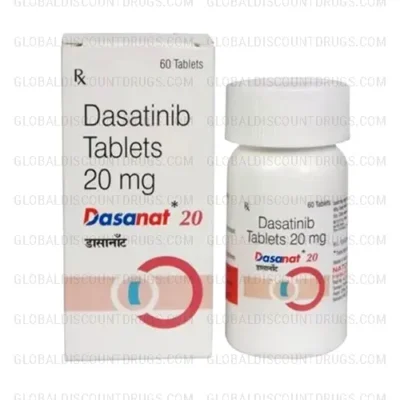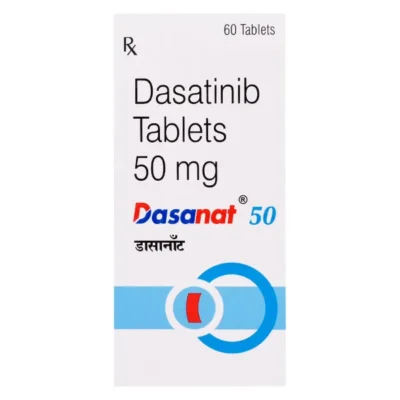

Dasatinib 20mg
In StockDasatinib 20 mg Tablet is a prescription BCR-ABL tyrosine kinase inhibitor used to treat selected Philadelphia chromosome-positive leukemias. Regular blood counts and clinical monitoring are required during therapy.
| Active Ingredient: | Dasatinib |
|---|---|
| Indication: | Chronic Myeloid Leukemia |
| Strength: | 20mg |
| Dosage Form: | Tablets |
| Manufacturer: | Natco |

Dasatinib 20mg — Quick Overview
Dasatinib is a prescription cancer medicine used to treat certain types of Philadelphia chromosome-positive (Ph+) leukemia. It belongs to a class of medications called kinase inhibitors and works by blocking the action of an abnormal protein that signals cancer cells to multiply, helping stop the spread of cancer cells. The 20mg strength is one of several tablet strengths used to build an individualized dose, prescribed and monitored exclusively by a hematologist-oncologist.
Medical Supervision & Regulatory Status
Dasatinib is a prescription-only (Rx) medication in the United States, the UK, the EU, and Australia — there is no over-the-counter form. Because dasatinib is a targeted cancer therapy with serious potential effects on blood counts, the heart, lungs, and liver, treatment requires ongoing oversight by an oncology specialist, including regular blood tests and monitoring visits. This is not a medication to start, stop, or adjust without direct physician guidance.
Clinical Context
Philadelphia chromosome-positive (Ph+) leukemias are cancers of the blood and bone marrow in which a genetic abnormality — the Philadelphia chromosome — drives an abnormal protein (BCR-ABL) that causes white blood cells to multiply uncontrollably. Dasatinib is approved to treat Philadelphia chromosome-positive chronic myelogenous leukemia (CML) and Philadelphia chromosome-positive acute lymphoblastic leukemia (ALL).
Without effective treatment, these leukemias can progress from a more manageable chronic phase into faster-growing, harder-to-treat accelerated or blast phases. Targeted therapy aims to control the disease, reduce the leukemic cell burden, and help patients maintain a good quality of life — dasatinib is used to help manage the disease, not as a guaranteed cure.
Dasatinib is prescribed in adults and children who are either newly diagnosed or whose leukemia has stopped responding to, or who could not tolerate, prior treatments such as imatinib. It is typically part of a broader treatment plan directed by a hematologist-oncologist and may be combined with chemotherapy in certain pediatric ALL cases.
How Dasatinib Works
Dasatinib is a BCR-ABL tyrosine kinase inhibitor, a type of targeted cancer therapy rather than traditional chemotherapy.
It works by blocking the abnormal BCR-ABL protein that signals leukemia cells to multiply, which helps slow or stop the spread of cancerous cells in the body. Because it’s a targeted therapy, it is designed to act more selectively on cells driven by this abnormal signal compared with older, broader chemotherapy agents.
For patients, this mechanism can translate into better control of blood cell counts and disease markers over time, though response is monitored closely through regular lab work and, at times, bone marrow or genetic testing — your oncology team will track your progress and adjust your plan accordingly.
What Is Dasatinib 20mg?
| Drug Information | Details |
|---|---|
| Drug Class | BCR-ABL tyrosine kinase inhibitor |
| Active Ingredient | Dasatinib |
| Mechanism | Blocks the abnormal BCR-ABL protein that drives leukemic cell growth |
| Form | Film-coated oral tablet, available in multiple strengths (20 mg, 50 mg, 70 mg, 80 mg, 100 mg, and 140 mg) |
| Dosing Frequency | Individualized — typically once daily, exactly as prescribed |
| Regulatory Status | Prescription only in the US, UK, EU, and Australia |
A note on the 20mg strength: The 20mg tablet is not the standard adult starting dose for most indications — adults typically start at 100 mg once daily for chronic phase CML, or 140 mg once daily for accelerated/blast phase CML or Ph+ ALL. The 20mg strength is generally used to build reduced or individualized doses, such as pediatric weight-based dosing or dose reductions when dasatinib must be combined with certain interacting medications, or after side effects requiring a lower dose. Your prescribed strength and total daily dose should always match your oncologist’s specific instructions.
Uses / Indications
Chronic Myeloid Leukemia (CML): Approved for newly diagnosed adults with Ph+ CML in chronic phase, and for adults with chronic, accelerated, or blast phase Ph+ CML who are resistant to or intolerant of prior therapy, including imatinib.
Acute Lymphoblastic Leukemia (ALL): Approved for adults with Ph+ ALL who are resistant to or intolerant of prior therapy.
Pediatric Use: Approved for children 1 year of age and older with Ph+ CML in chronic phase, and for newly diagnosed pediatric Ph+ ALL in combination with chemotherapy.
This is the full set of FDA-approved uses — dasatinib should not be used for other cancers or conditions outside of a clinical trial setting.
How to Use / Dosage
Your oncologist determines your exact strength, total daily dose, and schedule based on your specific diagnosis, disease phase, age or body weight, lab results, and other medications — never adjust your dose on your own.
Timing: Dasatinib is usually taken once a day, in the morning or evening, with or without food, at around the same time each day.
Swallowing: Tablets should be swallowed whole and should not be crushed, split, or chewed. The film coating helps prevent exposure to the active drug; if a tablet is accidentally broken or crushed, it should be handled with gloves.
Missed Dose: Do not take an extra dose to make up for one you missed. Contact your oncology team or pharmacist promptly for specific instructions, since guidance can vary based on your treatment plan.
Do Not Stop Suddenly Without Guidance: Treatment is typically continued until disease progression or until it’s no longer tolerated, as determined by your oncologist. Stopping or interrupting treatment without medical guidance can affect disease control.
Side Effects
Dasatinib can cause side effects ranging from mild to serious, and your care team will monitor you closely throughout treatment with regular blood work and check-ins.
Common side effects reported with dasatinib include low blood cell counts, fluid retention, diarrhea, headache, skin rash, bleeding, shortness of breath, fatigue, nausea, and musculoskeletal pain.
Serious side effects include myelosuppression, bleeding-related events, fluid retention, cardiovascular toxicity, pulmonary arterial hypertension, QT prolongation, severe skin reactions, tumor lysis syndrome, and liver toxicity. Severe thrombocytopenia, neutropenia, and anemia may occur, so blood counts are monitored regularly, and treatment may be transfused or interrupted if needed.
Emergency Warning Signs — seek medical care immediately if you experience:
- Fever, especially with signs of infection
- Unusual bleeding or easy bruising
- Shortness of breath, chest pain, rapid heartbeat, dizziness, or fainting (possible signs of PAH or cardiac involvement)
- New or worsening swelling, rapid weight gain, or persistent dry cough
- Severe rash, blistering, or peeling skin
- Yellowing of the skin or eyes, dark urine, or severe abdominal pain
Warnings & Precautions
Dasatinib carries several serious risks that require ongoing monitoring by your oncology team. Severe thrombocytopenia, neutropenia, and anemia may occur, and caution is needed if dasatinib is combined with medications that affect platelet function or blood clotting, such as anticoagulants. Fluid retention, sometimes severe, including fluid around the lungs, may develop and is managed with supportive care or dose adjustments. Dasatinib may increase the risk of pulmonary arterial hypertension, which can occur at any point during treatment, even after more than a year, and may present as shortness of breath, fatigue, or low oxygen levels — this risk is evaluated before starting treatment and monitored throughout, and dasatinib is permanently stopped if PAH is confirmed. The medication may also prolong the QT interval, so it is used with caution in people with electrolyte imbalances, congenital long QT syndrome, or those taking other QT-prolonging medications, and potassium and magnesium levels are corrected before and during treatment. Tumor lysis syndrome has been reported, so adequate hydration and correction of uric acid levels are addressed before starting treatment in at-risk patients. Regarding drug interactions, dasatinib is broken down by the CYP3A4 liver enzyme, and combining it with strong CYP3A4 inhibitors can significantly increase drug levels and should generally be avoided, while CYP3A4 inducers may lower dasatinib levels. Antacids can reduce dasatinib absorption and should not be taken at the same time — if needed, they should be spaced at least two hours apart, and H2 blockers and proton pump inhibitors are generally not recommended with dasatinib. For pregnancy and breastfeeding, dasatinib can cause fetal harm, so effective contraception is recommended during treatment and for 30 days after the last dose, and breastfeeding is not recommended during treatment and for 2 weeks after the final dose. Older adults may be more likely to experience fatigue, fluid around the lungs, diarrhea, shortness of breath, cough, and gastrointestinal bleeding, and should be monitored closely.
Who Should Not Use This Medication
- Known hypersensitivity to dasatinib or any component of the tablet
- Anyone who is pregnant or planning pregnancy, without explicit oncologist guidance and a documented risk-benefit discussion
- Individuals with uncontrolled heart rhythm problems or significant electrolyte imbalances, unless cleared and monitored by their care team
- Children under 1 year of age (safety and effectiveness not established)
- Anyone not under active oncology supervision — this medication should never be used outside a monitored treatment plan
Storage Instructions
- Store at room temperature, away from excess heat and moisture
- Keep tablets in their original container, tightly closed
- Keep out of the reach of children and pets — accidental ingestion of a cancer medication can be dangerous
- Handle broken or crushed tablets with gloves, and pregnant individuals should avoid direct contact with damaged tablets
- Dispose of unused medication through a pharmacy take-back program rather than household trash
Frequently Asked Questions
Does Dasatinib 20mg require a prescription?
Yes, dasatinib is available only by prescription and must be managed by a hematologist-oncologist. Regular blood work and monitoring are required throughout treatment to catch side effects early.
Is Dasatinib available over the counter?
No, dasatinib is not available over the counter anywhere it’s approved, including the US, UK, EU, and Australia. It’s a specialist-prescribed cancer medication that requires close medical supervision.
How long does it take to work?
Response is tracked over weeks to months using blood tests and, at times, genetic or bone marrow testing, since leukemia treatment response is measured in specific clinical milestones rather than symptom relief alone. Your oncologist will explain what to expect at each stage of monitoring.
Is it safe to stop taking Dasatinib suddenly?
No — stopping or skipping doses without your oncologist’s guidance can allow the leukemia to progress. Any changes to your treatment schedule should go through your care team first.
Can Dasatinib interact with other medications?
Yes, significantly. It interacts with strong CYP3A4 inhibitors/inducers, antacids, H2 blockers, and proton pump inhibitors, among others. Always give your full medication list, including OTC drugs and supplements, to your oncology team and pharmacist.
What if I miss a dose?
Don’t take an extra tablet to make up for a missed one. Contact your oncology team or pharmacist right away for guidance specific to your treatment plan.
What is the cost of Dasatinib 20mg without insurance?
Cost varies by seller, brand versus generic availability, and pack size, and may also depend on location and available manufacturer or pharmacy discounts. Many patients qualify for oncology-specific copay assistance programs — ask your care team or pharmacist about options.
How can I order Dasatinib online?
A valid prescription from your oncologist is required. This typically involves your prescriber sending the prescription directly to a licensed specialty pharmacy, which coordinates dispensing and home delivery — always confirm you’re using a licensed pharmacy experienced in oncology medications.
References
DailyMed (NIH/NLM) — Dasatinib Tablets — Official FDA Label: https://dailymed.nlm.nih.gov/dailymed/drugInfo.cfm?setid=11703145-29ea-480a-9810-bc70663b783f
MedlinePlus (NIH) — Dasatinib: https://medlineplus.gov/druginfo/meds/a607063.html
National Cancer Institute (NCI) — Dasatinib: https://cancer.gov/about-cancer/treatment/drugs/dasatinib
Medical Disclaimer:
This content is for informational purposes only and does not constitute medical advice, diagnosis, or treatment. Consult a qualified specialist or physician before using Dasatinib 20mg.
Prescription Required (Rx) to Buy?
This medication is not available over the counter. A valid prescription from a licensed healthcare
professional is required. Always consult your doctor before use.
| Quantity | 120, 180, 240, 60 |
|---|---|
| Indication | Chronic Myeloid Leukemia |
| Active Ingredient | Dasatinib |
| Pharmaceutical Form | Tablets |
| Manufacturer | Natco |
| Indian Brand | Dasanat 20mg |
| US Brand Name | Dasatinib, Sprycel |
| Generic Name | Dasatinib |
| Dosage | 20mg |
| Drug Type | Tablets |