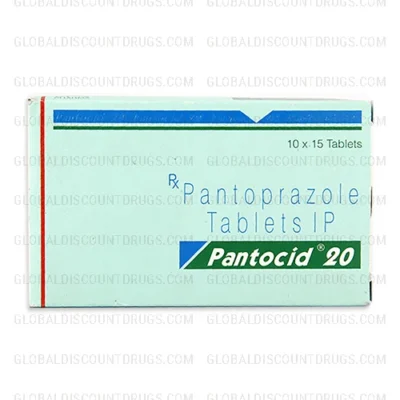

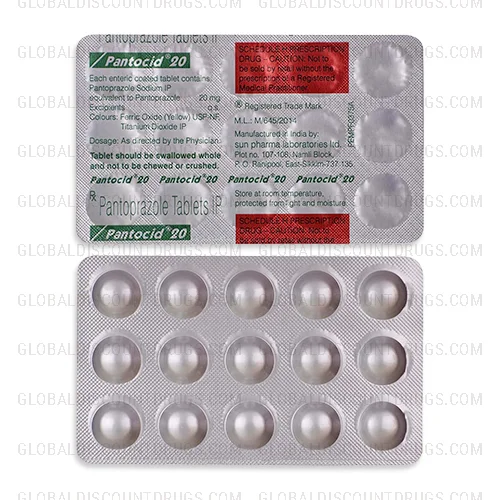
Pantoprazole 20mg
In StockPantoprazole 20 mg Tablet is a prescription proton pump inhibitor used to reduce stomach acid in GERD and related conditions. The lower strength may be selected according to individual treatment needs.
| Active Ingredient: | Pantoprazole |
|---|---|
| Indication: | Gastroesophageal Reflux Disease |
| Strength: | 20mg |
| Dosage Form: | Tablets |
| Manufacturer: | Sun Pharma |

Quick Overview
Pantoprazole 20mg is a prescription proton pump inhibitor (PPI) used to heal erosive esophagitis caused by acid reflux disease (GERD), help keep it from returning, and treat conditions that make the stomach produce too much acid. It works by switching off the acid pumps in the stomach lining. A valid prescription is required, and a prescriber should supervise use.
Medical Supervision and Regulatory Status
In the United States, this medicine is available by prescription only, and a prescriber decides when treatment starts, how long it continues, and when it should stop. The FDA approved the brand Protonix, and generic pantoprazole delayed-release tablets are widely sold. It is not a controlled substance. Supervision matters because long-term acid suppression has been linked to low magnesium, low vitamin B12, bone fractures, and kidney inflammation.
Clinical Context
Pantoprazole treats problems caused by excess stomach acid, mainly erosive esophagitis from gastroesophageal reflux disease (GERD, or chronic acid reflux) and rare disorders such as Zollinger-Ellison syndrome. In GERD, stomach acid flows back into the esophagus and causes heartburn, regurgitation, and sometimes raw, inflamed tissue.
Treatment matters beyond comfort. Repeated acid injury can lead to open sores in the esophagus, bleeding, and scarring that narrows the swallowing tube. Healing the lining and keeping it healed are the main goals, alongside habits such as avoiding late meals and trigger foods.
PPIs are the main acid-suppressing drug class in US guidelines for erosive esophagitis. Pantoprazole is commonly used as a first-line choice, and a prescriber may switch to another PPI or change the plan if symptoms persist.
How Pantoprazole 20mg Works
Pantoprazole is a proton pump inhibitor that lowers stomach acid by permanently blocking the enzyme, often called the acid pump, that produces acid in the stomach lining.
Once a pump is blocked, it stays blocked until the body builds new ones. That is why one tablet a day can reduce acid across 24 hours even though the drug itself clears the bloodstream within hours. Full acid-lowering effect builds over the first few days of dosing rather than at once.
With less acid washing over it, inflamed esophageal tissue gets time to heal, and heartburn often eases. Results differ from person to person. The medicine reduces acid but does not correct the cause of reflux, such as a weak valve at the bottom of the esophagus.
What Is Pantoprazole 20mg?
Pantoprazole 20mg is a coated delayed-release tablet taken by mouth, designed to pass through the stomach intact before it dissolves in the small intestine, where it is absorbed.
- Drug Class: Proton pump inhibitor (PPI)
- Active Ingredient: Pantoprazole sodium
- Mechanism: Blocks the H+/K+ ATPase acid pump in stomach lining cells, which lowers stomach acid.
- Available Forms and Strengths: Delayed-release tablets in 20 mg and 40 mg (this product is 20 mg). Granules and an injectable form also exist and are prescribed separately.
- Dosing Frequency: Usually once daily. Some acid overproduction conditions use twice-daily dosing. Your prescriber sets the schedule.
- Regulatory Status: US prescription (Rx) only. Not a controlled substance. Generic versions available.
Approved Uses
The FDA has approved pantoprazole delayed-release tablets for three uses, and each is listed here with the age group it covers.
- Short-term treatment of erosive esophagitis from GERD (adults and children 5 years and older): Treatment for up to 8 weeks to heal damage to the esophageal lining and relieve symptoms.
- Maintenance of healed erosive esophagitis (adults): Long-term use to lower the chance that esophageal damage and daytime or nighttime heartburn come back.
- Pathological hypersecretory conditions, including Zollinger-Ellison syndrome (adults): Long-term treatment when the stomach makes very large amounts of acid.
How to Use and Dosage
Your prescriber determines the dose; the labeled once-daily dose is 20 mg for children 5 and older under 40 kg, and 40 mg for adults.
Swallow the tablet whole. Do not chew, crush, or split it, because the coating protects the medicine from stomach acid. The label allows dosing with or without food, and taking it at the same time each day makes it easier to remember. The 20 mg tablet matches the labeled dose for children who weigh 15 kg to under 40 kg, and children are dosed by body weight, so never give a tablet to a child without the prescriber’s instructions. Adults prescribed this strength should follow the prescriber’s exact directions, which may differ from the labeled adult dose. Some conditions, such as Zollinger-Ellison syndrome, use higher or twice-daily dosing set by the prescriber.
If you miss a dose, take it when you remember. If your next dose is almost due, skip the missed one and return to your usual schedule. Never take two doses together to catch up.
The label does not describe a withdrawal syndrome for this drug. Even so, stopping early can let symptoms return and may leave the esophagus only partly healed. Talk with your prescriber before stopping, particularly after months of daily use.
Side Effects
Side effects vary from person to person, and many people take pantoprazole with few or no problems, though some reactions need prompt medical attention and are listed below.
Common effects: Headache, diarrhea, nausea, stomach pain, vomiting, gas, dizziness, and joint pain have been reported. These are usually mild and often ease as the body adjusts. Tell your pharmacist if they persist or bother you.
Serious effects: Less often, PPIs including pantoprazole can cause severe allergic reactions, severe skin reactions, kidney inflammation (acute tubulointerstitial nephritis), Clostridioides difficile-associated diarrhea, low magnesium levels, vitamin B12 deficiency, bone fractures with long-term or high-dose use, lupus-type skin or joint symptoms, and stomach growths called fundic gland polyps. This medicine does not carry a boxed warning.
Emergency Warning Signs:
- Swelling of the face, lips, tongue, or throat, wheezing, or trouble breathing
- Severe blistering, peeling, or a spreading skin rash with fever
- Severe or watery diarrhea that does not stop, especially with fever, stomach cramps, or blood in the stool
- Muscle spasms, tremor, seizures, fast or irregular heartbeat, or dizziness (possible low magnesium)
- Less urine than usual, new swelling, or blood in the urine
- Black, tarry stools, or vomit that is bloody or looks like coffee grounds
- Trouble or pain with swallowing, or unplanned weight loss
Call 911 for throat swelling, breathing trouble, seizures, fainting, or vomiting blood. For the other signs, contact your prescriber right away or go to urgent care.
Warnings and Precautions
Pantoprazole is contraindicated in anyone with a known allergy to it, to other substituted benzimidazole drugs, or to any tablet ingredient, and with rilpivirine-containing HIV medicines. Substituted benzimidazoles are a chemical group that includes other PPIs such as omeprazole, lansoprazole, esomeprazole, and rabeprazole.
Relief of symptoms does not rule out stomach cancer in adults. If you have trouble swallowing, unintended weight loss, repeated vomiting, anemia, or black stools, your prescriber should evaluate you before or during treatment.
Several interactions need attention. Pantoprazole can raise warfarin effects, so INR and prothrombin time may need checking. It can increase methotrexate levels, particularly with high-dose methotrexate, and your prescriber may pause the PPI. It may reduce levels of the HIV drugs atazanavir and nelfinavir, so these combinations are avoided, and saquinavir may need monitoring. Because stomach acid helps absorb some drugs, pantoprazole can lower exposure to ketoconazole, itraconazole, erlotinib, and iron salts. It may also affect mycophenolate mofetil. Antacids may be used alongside it if needed. The label lists no specific alcohol interaction, but alcohol can irritate the stomach and worsen reflux.
Long-term use calls for periodic review. Prescribers may check magnesium levels, especially if you also take digoxin or diuretics, and may watch vitamin B12 status and bone health risk. PPIs can interfere with chromogranin A tests used for certain tumors, so tell the testing clinician you take one. They can also cause a false-positive urine screen for THC.
For pregnancy and breastfeeding, tell your prescriber if you are pregnant, planning pregnancy, or nursing. Human studies have not shown a clear pattern of birth defects with PPIs. Pantoprazole is present in human breast milk, so the benefits and risks are weighed individually.
Trials found no differences in safety or effectiveness between older and younger adults, though greater sensitivity in some older people cannot be excluded. Tablets are approved for children 5 years and older, with weight-based dosing. Infants and toddlers use other pantoprazole forms. The label lists no dose change for mild kidney or liver impairment, though kidney inflammation can occur, and prescribers monitor people with severe liver disease.
Who Should Not Use This Medication
Anyone who matches one of the label’s contraindications, or who needs a form or dose this tablet cannot provide, should not take this medicine, as listed below.
- People with a known allergy to pantoprazole or any ingredient in the tablet
- People allergic to other substituted benzimidazoles, including omeprazole, lansoprazole, esomeprazole, and rabeprazole
- People taking rilpivirine-containing HIV medicines (for example, rilpivirine alone or in combination products)
- Children under 5 years, who need a different pantoprazole form
- Children 5 to 17 years who weigh under 15 kg, because tablet dosing is not established for them
Storage Instructions
Store the tablets at room temperature, 68 to 77 degrees F (20 to 25 degrees C), in the original tightly closed container, away from moisture, heat, and direct light. Keep the bottle out of the bathroom, where steam and humidity can damage the coating.
Keep it out of reach of children and pets, and never share it with another person. For disposal, use a drug take-back program or a pharmacy kiosk. If none is available, follow FDA household disposal steps: mix the tablets with used coffee grounds or cat litter, seal them in a bag, and discard with household trash.
Frequently Asked Questions
What is the cost of Pantoprazole 20mg without insurance?
The cost without insurance depends on the seller, brand availability, and pack size. Location and discounts can also change what you pay. Generic pantoprazole is generally more affordable than the brand Protonix, and generics exist in the US. Ask the pharmacy for the cash price of your exact strength and quantity before ordering.
How can I order Pantoprazole 20mg online?
You can order it online only with a valid prescription. Upload your prescription or ask your prescriber to send it electronically, order from a licensed US pharmacy, and receive the medicine at home. Before paying, confirm the pharmacy holds a state license and has a pharmacist available to answer questions by phone or chat.
Is Pantoprazole 20mg available over the counter?
No, it is not sold over the counter in the United States. Prescription status can differ in other countries, but US rules require medical supervision. A prescriber needs to confirm the cause of your symptoms, since heartburn can occasionally signal more serious problems. Some other PPIs have OTC versions, but not pantoprazole.
Does Pantoprazole 20mg require a prescription?
Yes, it requires a prescription from a licensed US prescriber. An evaluation confirms that acid-related disease explains your symptoms and screens for warning signs such as bleeding or trouble swallowing. Follow-up can also catch long-term concerns like low magnesium, low vitamin B12, or bone loss, which is why the prescriber stays involved during treatment.
How long does Pantoprazole 20mg take to work?
Acid reduction begins soon after the first doses, but full effect builds over a few days. Heartburn may improve within days, while healing erosive esophagitis takes longer, with treatment lasting up to 8 weeks. Response differs by person, so report symptoms that persist to your prescriber instead of changing the dose yourself.
Is it safe to stop taking Pantoprazole 20mg suddenly?
The label describes no withdrawal syndrome, but stopping without guidance carries real risks. Symptoms may return, and the esophagus may not finish healing. Ask your prescriber before stopping, especially if you have taken it for months or years, because they can decide whether to taper, switch, or keep going based on your diagnosis.
Can Pantoprazole 20mg interact with other medicines?
Yes. It is contraindicated with rilpivirine-containing HIV medicines. It can raise warfarin effects and methotrexate levels, and it may reduce atazanavir and nelfinavir levels. It can also lower absorption of ketoconazole, itraconazole, erlotinib, and iron salts. Give your pharmacist a full list of prescriptions, supplements, and over-the-counter products each time you refill.
What should I do if I miss a dose of Pantoprazole 20mg?
Take the missed tablet as soon as you remember. If it is nearly time for your next dose, skip the missed one and resume your normal schedule. Do not take two tablets together to make up for it. If you take it twice daily for an acid overproduction condition, ask your pharmacist how to handle missed doses.
References
- DailyMed (NIH): Current FDA-approved prescribing information for pantoprazole sodium delayed-release tablets, including indications, dosing, warnings, and interactions. URL to be verified by editor.
- MedlinePlus (NIH): Plain-language patient information on pantoprazole, covering uses, how to take it, precautions, and side effects. https://medlineplus.gov/druginfo/meds/a601246.html
- FDA (Drugs@FDA or drug label entry): FDA approval history and labeling for pantoprazole sodium, including the reference product Protonix.
Medical Disclaimer:
This content is for informational purposes only and does not constitute medical advice, diagnosis, or treatment. Consult a qualified specialist or physician before using Pantoprazole 20mg.
Prescription Required (Rx) to Buy?
This medication is not available over the counter. A valid prescription from a licensed healthcare
professional is required. Always consult your doctor before use.
| Quantity | 120, 30, 60, 90 |
|---|---|
| Indication | Gastroesophageal Reflux Disease |
| Active Ingredient | Pantoprazole |
| Pharmaceutical Form | Tablets |
| Manufacturer | Sun Pharma |
| Indian Brand | Pantocid 20 |
| US Brand Name | Panto, Pantoloc, Pantoprazole, Protium, Protonix |
| Generic Name | Pantoprazole |
| Dosage | 20mg |
| Drug Type | Tablets |