
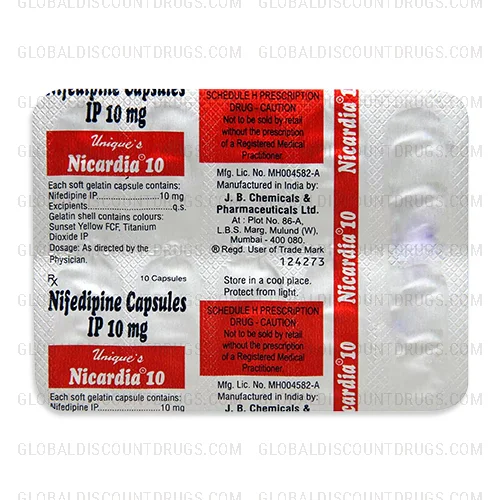
Nifedipine 10mg
In StockNifedipine 10mg Capsule is a prescription calcium channel blocker used to treat hypertension and angina. Take it only according to the prescribed dosing schedule.
| Active Ingredient: | Nifedipine |
|---|---|
| Indication: | Hypertension |
| Strength: | 10mg |
| Dosage Form: | Capsules |
| Manufacturer: | J.B. Chemicals |

Quick Overview
Nifedipine 10mg is a prescription calcium channel blocker in immediate-release capsule form, used to treat angina, which is chest pain caused by reduced blood flow to the heart. It works by relaxing and widening blood vessels, including the heart’s arteries. Nifedipine requires a valid prescription and medical supervision, because blood pressure, swelling, and chest pain patterns need monitoring, and dose changes are made slowly.
Medical Supervision and Regulatory Status
Nifedipine 10mg is available only with a prescription in the United States, and it is not a controlled substance, so it has no DEA schedule. The FDA approved the brand Procardia capsules, and generic nifedipine capsules are widely available. The label carries no boxed warning. Supervision is needed because the capsules act quickly and can lower blood pressure sharply, cause dose-related swelling, and sometimes worsen angina after starting or raising the dose. These capsules are a different product from extended-release nifedipine tablets, and the two must not be swapped without a prescriber’s instruction.
Clinical Context
Nifedipine treats angina pectoris, chest pain or pressure that happens when the heart muscle does not receive enough oxygen-rich blood, either from narrowed arteries or from artery spasm.
Two patterns are treated. In chronic stable angina, pain comes on with exertion or stress and eases with rest. In vasospastic angina, a coronary artery tightens suddenly, often at rest or at night. Treatment matters because angina limits daily activity and signals underlying heart disease that raises the risk of a heart attack.
For chronic stable angina, current US guidance generally favors a beta blocker first, with a calcium channel blocker used as an alternative or an add-on, especially when beta blockers are not tolerated. For vasospastic angina, calcium channel blockers are a main treatment. Longer-acting forms are often preferred in practice because immediate-release capsules cause larger swings in blood pressure and heart rate. Your prescriber decides which form suits you.
How Nifedipine 10mg Works
Nifedipine is a dihydropyridine calcium channel blocker, which means it stops calcium from entering muscle cells in artery walls, so the arteries relax and widen.
Wider arteries lower resistance to blood flow, so the heart pumps with less effort and needs less oxygen. Nifedipine also relaxes the coronary arteries directly. That helps relieve spasm and lets more oxygen-rich blood reach heart muscle during activity.
Immediate-release capsules are absorbed quickly, with blood levels peaking around 30 minutes after a dose, and the effect fades within hours. That is why the dose is taken three times a day. The fast action can also cause a quick drop in blood pressure and a faster heartbeat in some people. Nifedipine relieves angina while it is taken and does not cure the underlying heart disease.
What Is Nifedipine 10mg?
Nifedipine 10mg is an immediate-release prescription calcium channel blocker capsule taken three times daily, and the facts below summarize its class, ingredient, forms, and regulatory status.
- Drug Class: Dihydropyridine calcium channel blocker
- Active Ingredient: Nifedipine
- Mechanism: Blocks calcium entry into artery wall muscle cells, relaxing and widening arteries, including the coronary arteries.
- Available Forms and Strengths: Immediate-release oral capsules in 10 mg and 20 mg (generic and Procardia brand). Extended-release tablets are a separate product.
- Dosing Frequency: Usually three times daily
- Regulatory Status: Prescription only (Rx) in the US, not a controlled substance, no boxed warning, generic versions available
Approved Uses
The FDA has approved nifedipine capsules for two uses: vasospastic angina, caused by spasm of a heart artery, and chronic stable angina, brought on by exertion.
- Vasospastic angina (Prinzmetal’s or variant angina): Nifedipine reduces chest pain caused by spasm of a coronary artery, including pain that occurs at rest.
- Chronic stable angina (effort-associated angina): It is used to reduce how often chest pain occurs with exertion, mainly in people who cannot take or do not respond well to beta blockers or nitrates.
Immediate-release nifedipine capsules are not FDA-approved for high blood pressure. Extended-release nifedipine tablets are a separate product with their own approved uses.
How to Use and Dosage
Your prescriber sets the dose, and the labeled starting dose is 10 mg three times daily, with a usual range of 10 mg to 20 mg per dose.
The prescriber raises the dose gradually over about seven to 14 days based on your response. Some people need 20 mg to 30 mg three or four times daily. The label advises against single doses above 30 mg and daily totals above 180 mg. People with liver impairment and older adults often need lower doses.
Swallow each capsule whole with water. Do not bite, chew, or break it. Space doses about evenly through the day, and follow the directions on your pharmacy label about food. Avoid grapefruit juice, which can raise nifedipine levels.
If you miss a dose, take it as soon as you remember, unless the next dose is almost due. Then skip the missed capsule and continue as usual. Never double up.
Do not stop nifedipine on your own. The label describes no rebound reaction, but angina can return and may be harder to control. If a side effect is troubling, your prescriber can change the dose before you consider stopping.
Side Effects
Side effects of nifedipine vary by person, and dizziness, flushing, headache, weakness, nausea, and swelling of the ankles or feet are reported most often.
Boxed warning: Nifedipine capsules have none.
Common effects: Dizziness or lightheadedness, a feeling of heat or flushing, headache, weakness, nausea, heartburn, muscle cramps, nasal congestion, cough, and a pounding or fast heartbeat (palpitations) are the effects reported most often. Swelling of the ankles or feet (edema) depends on the dose, and it does not respond well to water pills because it comes from widened small vessels leaking fluid into the tissues. Many effects fade with time, and a dose change can be considered if they persist.
Serious effects: Blood pressure can fall too low, causing fainting. Chest pain can worsen, or a heart attack can occur, after starting or raising the dose in people with severe blocked heart arteries. Heart failure can worsen, especially with severe aortic stenosis (a narrowed heart valve) or when combined with a beta blocker. Rare effects include liver inflammation with yellowing of the skin or eyes, allergic reactions with swelling or severe rash, and overgrowth of the gums.
Emergency Warning Signs
- New, worsening, or more frequent chest pain, or chest pressure that does not ease with rest
- Fainting or near-fainting
- Swelling of the face, lips, tongue, or throat, or trouble breathing or swallowing
- Yellowing of the skin or eyes, with dark urine or severe stomach pain
- Fast, pounding, or irregular heartbeat with dizziness or shortness of breath
- Sudden swelling in both legs with rapid weight gain or worsening breathlessness
- Severe, widespread rash, blistering, or peeling skin
Call 911 or go to the nearest emergency room for chest pain, fainting, trouble breathing, or swelling of the face or throat. For the other signs, contact your prescriber or seek urgent care the same day.
Warnings and Precautions
Nifedipine capsules can lower blood pressure quickly and may worsen angina when treatment starts or the dose rises, so doses are increased slowly under close supervision.
The label lists known allergy to nifedipine as a contraindication, and rifampin should not be used with it because it makes nifedipine ineffective. Extra care applies to people with low blood pressure, severe aortic stenosis, severe blocked heart arteries, heart failure, and liver disease, since the liver clears nifedipine and levels rise when liver function is poor. Nifedipine does not protect against the rebound that follows abrupt beta blocker withdrawal, so a beta blocker must never be stopped suddenly because nifedipine was added.
Several medicines and foods change how nifedipine behaves. Ketoconazole, itraconazole, clarithromycin, erythromycin, ritonavir, and diltiazem can raise nifedipine levels and increase low blood pressure and swelling. Cimetidine can do the same. Rifampin, phenytoin, carbamazepine, phenobarbital, and St. John’s wort can lower levels so far that the drug stops working. Beta blockers add to the blood pressure drop and can worsen heart failure in a few people. Digoxin and tacrolimus levels may need checking. Other blood pressure medicines and alcohol add to dizziness. Grapefruit juice raises nifedipine levels and should be avoided.
The label notes that human pregnancy data are limited and that animal studies have shown harm to developing offspring at high doses, so the prescriber weighs benefit against risk. Tell your prescriber if you are pregnant or planning pregnancy. Nifedipine passes into breast milk, and data on effects in nursing infants are limited, so feeding plans should be reviewed with the prescriber or pediatrician.
Older adults tend to clear nifedipine more slowly and are more likely to have low blood pressure and swelling, so lower starting doses are common. Safety and effectiveness of these capsules in children have not been established. People with liver impairment need lower doses and closer monitoring. Kidney impairment does not usually require a dose change.
Monitoring usually includes blood pressure and pulse at each visit, a check of ankle swelling, a record of how often chest pain occurs, and liver tests if symptoms such as yellowing of the skin or eyes appear. Regular dental care also helps, since gum overgrowth has been reported.
Who Should Not Use This Medication
Nifedipine 10mg should not be used by anyone allergic to nifedipine or taking rifampin, and several heart and liver conditions require a prescriber’s review before use.
- Known hypersensitivity (allergy) to nifedipine or any ingredient in the capsule
- Current use of rifampin, which lowers nifedipine to ineffective levels
- Severe aortic stenosis, severe blocked heart arteries, or heart failure, which need the prescriber’s decision and close monitoring if treatment is chosen
- Low blood pressure at baseline, where starting nifedipine can cause fainting
- Severe liver disease, where a lower dose and slower increases are needed
Storage Instructions
Store nifedipine capsules at room temperature, below 86°F (30°C), in the original tight container that protects them from light and moisture.
Avoid keeping the bottle in a bathroom or near the stove, where heat and steam can damage capsules. Do not pierce or crush them. Keep the bottle out of sight and reach of children, because an overdose can cause a severe drop in blood pressure and shock. If a child swallows capsules, call Poison Control at 1-800-222-1222, or 911 if the child collapses or has trouble breathing. Do not share your capsules.
For disposal, use a drug take-back site or program, such as those at many pharmacies or on DEA take-back days. If none is available, FDA guidance allows mixing capsules with used coffee grounds or cat litter in a sealed bag, placing it in household trash, and scratching out personal details on the label.
Frequently Asked Questions
What is the cost of Nifedipine 10mg without insurance?
The cost without insurance depends on the seller, brand availability, and pack size. Location and available discounts can also change it. Generic nifedipine capsules are generally more affordable than the brand-name product, Procardia, and are widely available. Request a quote from a licensed US pharmacy, and ask whether your prescription can be filled with the generic.
How can I order Nifedipine 10mg online?
You can order Nifedipine 10mg online only with a valid prescription. Upload it, or ask your prescriber to send it to the pharmacy, then order from a licensed US pharmacy and receive home delivery. Before paying, confirm the pharmacy holds a state license and has a pharmacist available to answer questions.
Is Nifedipine 10mg available over the counter?
No, nifedipine is not sold over the counter in the United States. Rules differ by country, but here it stays prescription-only. Medical supervision is required because the capsules act quickly, can lower blood pressure sharply, and can worsen angina if the dose is wrong. A prescriber adjusts the dose slowly while checking your response.
Does Nifedipine 10mg require a prescription?
Yes, nifedipine requires a prescription from a licensed US prescriber. Evaluation matters because the capsules can drop blood pressure fast, cause swelling, and bring on chest pain at the start, and the safe dose depends on liver function. Your prescriber reviews your history, picks a starting dose, and schedules follow-up. A pharmacist verifies the prescription before dispensing.
How long does Nifedipine 10mg take to work?
Nifedipine capsules start working within about 20 minutes, and blood levels peak around 30 minutes after a dose. The effect wears off within hours, which is why dosing happens three times daily. Prescribers judge the right dose over seven to 14 days of adjustment. Response varies by person, so report any change in chest pain pattern.
Is it safe to stop taking Nifedipine 10mg suddenly?
No, do not stop nifedipine suddenly without your prescriber’s advice. The label describes no rebound reaction, but angina can return, and a sudden stop may leave chest pain uncontrolled. If dizziness or swelling bothers you, your prescriber can adjust the dose or change treatment. Tapering decisions belong to your prescriber, and chest pain that returns needs prompt medical attention.
Can Nifedipine 10mg interact with other medicines?
Yes, nifedipine interacts with many medicines. Ketoconazole, itraconazole, clarithromycin, ritonavir, and diltiazem can raise nifedipine levels, while rifampin, phenytoin, carbamazepine, and St. John’s wort can lower them. Beta blockers add to the blood pressure drop, and digoxin or tacrolimus levels may need checking. Grapefruit juice should be avoided while taking nifedipine.
What should I do if I miss a dose of Nifedipine 10mg?
Take the missed nifedipine 10mg capsule as soon as you remember, unless your next dose is almost due. If it is, skip the missed capsule and keep your regular schedule. Do not take two capsules together, since a sudden drop in blood pressure can cause dizziness or fainting. Spacing doses evenly across the day helps prevent gaps.
References
- DailyMed (NIH), nifedipine capsules drug label. Official FDA-approved prescribing information, including indications, dosing, contraindications, and interactions. URL to be verified by editor.
- MedlinePlus, Nifedipine. Plain-language patient information on uses, precautions, side effects, and missed doses. https://medlineplus.gov/druginfo/meds/a684046.html
- FDA, Drugs@FDA entry for Procardia (nifedipine capsules). Approval history and current labeling for the reference brand product.
Medical Disclaimer:
This content is for informational purposes only and does not constitute medical advice, diagnosis, or treatment. Consult a qualified specialist or physician before using Nifedipine 10mg.
Prescription Required (Rx) to Buy?
This medication is not available over the counter. A valid prescription from a licensed healthcare
professional is required. Always consult your doctor before use.
| Quantity | 180, 270, 360, 90 |
|---|---|
| Indication | Hypertension |
| Active Ingredient | Nifedipine |
| Pharmaceutical Form | Capsules |
| Manufacturer | J.B. Chemicals |
| Indian Brand | Nicardia 10mg Capsule |
| US Brand Name | Adalat, Addos, Afeditab, Calchan, Fortipine, Nifedipine, Nifehexal, Nyefax, Procardia, Tensipine, Valni |
| Generic Name | Nifedipine |
| Dosage | 10mg |
| Drug Type | Capsules |