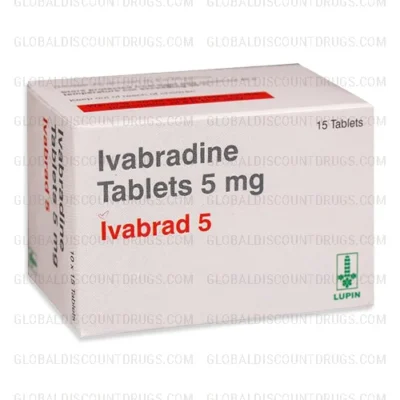


Ivabradine
In StockIvabradine is a unique antianginal and anti-ischemic drug used to treat stable, symptomatic chronic heart failure and chronic stable angina in certain patients. It works by selectively inhibiting the funny current (If) in the heart’s pacemaker, which results in a reduction in heart rate without affecting blood pressure. This allows the heart more time to fill with blood and improves cardiac efficiency.

What is Ivabradine?
Ivabradine is a medication available under the brand name Corlanor in the United States (and Procoralan or Coralan in other countries), as well as in generic form in some markets. It belongs to a class of drugs sometimes described as If channel inhibitors (sinus node inhibitors), distinct from other heart-rate-lowering medications such as beta-blockers or calcium channel blockers.
Ivabradine is approved for:
- Reducing the risk of hospitalization for worsening heart failure in adults with stable, symptomatic chronic heart failure with reduced ejection fraction, who are in normal sinus rhythm with a resting heart rate at or above a certain threshold, and who are already on other guideline-directed heart failure treatments (such as beta-blockers) at the maximally tolerated dose, or who cannot tolerate beta-blockers
- In some countries (outside the U.S.), it is also approved for symptomatic treatment of chronic stable angina in patients who cannot tolerate or have a contraindication to beta-blockers
Ivabradine is available in the following formulation:
- Oral tablets (Ivabradine 5mg, Ivabradine 7.5mg)
What is the Recommended Dosage of Ivabradine?
There is no single “correct” dose of ivabradine for everyone. The right dose depends on several individual factors, including:
- The patient’s resting heart rate, which is used to guide both starting dose and subsequent dose adjustments
- The condition being treated
- Liver function, since ivabradine is processed by the liver
- The patient’s age
- Other medications currently being taken, particularly other heart-rate-lowering medications
Available Dosage Forms
Ivabradine is available as oral tablets, generally taken twice daily with food, with the dose adjusted over time based on how the resting heart rate responds to treatment.
Important Note on Dosing
Exact dosing instructions are not provided on this page because appropriate dosing must be determined individually and adjusted based on regular heart rate monitoring. Patients should:
- Follow the exact dose and schedule prescribed by their licensed medical specialist
- Never adjust the dose on their own
- Take ivabradine with food, as this affects how much of the medication is absorbed
- Monitor their heart rate as directed by their prescriber, since dose adjustments are based on this
- Ask their prescriber or pharmacist if dosing instructions are unclear
How Ivabradine Works
Ivabradine works by selectively blocking a specific electrical current in the heart’s natural pacemaker (the sinus node), called the “funny current” or If current. This slows the rate at which the sinus node fires electrical signals, which lowers the heart rate.
In simple terms: ivabradine slows the heart rate without significantly affecting the force of the heart’s contractions or blood pressure, which distinguishes it from beta-blockers and calcium channel blockers. In heart failure, a lower heart rate can reduce the heart’s workload and may help reduce the risk of hospitalization for worsening symptoms.
Ivabradine manages heart rate as part of an overall heart failure or angina treatment plan; it does not cure the underlying heart failure or coronary artery disease, and it is used alongside other guideline-directed treatments rather than as a replacement for them.
Is a Prescription Required to Buy Ivabradine Online?
Yes. Ivabradine is a prescription-only medication in the United States and most other countries.
Before starting ivabradine, patients should consult a licensed medical specialist, such as:
- A cardiologist, particularly one experienced in heart failure management
- A primary care physician, typically in coordination with a cardiologist
Important Safety Warning
Patients should be cautious of websites offering ivabradine without a prescription. These may include:
- Counterfeit medications with incorrect, unsafe, or no active ingredient
- Products not manufactured under proper quality and safety standards
Always obtain ivabradine from a licensed pharmacy, and only after being evaluated and prescribed by a qualified healthcare provider.
Side Effects of Ivabradine
Common Side Effects
These are generally mild and may resolve on their own:
- Visual disturbances, including temporary brightness or flashes of light in the visual field (called phosphenes), particularly noticeable when there are sudden changes in light intensity
- Slower than normal heart rate (bradycardia)
- Headache
- Dizziness
- Irregular heartbeat sensation
Serious Side Effects
Although uncommon, seek immediate medical attention if any of the following occur:
- A very slow heart rate, especially accompanied by dizziness, fainting, or severe fatigue
- Signs of a specific abnormal heart rhythm called atrial fibrillation, such as a fluttering or irregular heartbeat, which has been reported with ivabradine use
- Severe or worsening visual disturbances
- Signs of worsening heart failure, such as increased shortness of breath, swelling in the legs or abdomen, or rapid weight gain
- Signs of an allergic reaction, such as swelling of the face, lips, tongue, or throat, hives, or difficulty breathing
This list is not exhaustive. Patients experiencing any unusual or concerning symptoms should contact their prescriber promptly.
Drug Interactions
Ivabradine can interact with a range of substances. Patients should tell their prescriber about all medications and products they use, including:
- Strong CYP3A4 inhibitors (such as certain antifungals like ketoconazole, certain antibiotics like clarithromycin, or certain HIV medications), which can significantly raise ivabradine levels and are generally avoided in combination
- Strong CYP3A4 inducers (such as rifampin or certain seizure medications), which can reduce ivabradine’s effectiveness
- Other heart rate-lowering medications, such as beta-blockers, certain calcium channel blockers (verapamil, diltiazem), and certain antiarrhythmic medications, since combined use can cause excessive slowing of the heart rate
- Grapefruit juice, which can increase ivabradine levels if consumed in large amounts
- QT-prolonging medications, since caution is advised when combining these with ivabradine
Patients should provide their licensed medical specialist and pharmacist with a complete and current list of all prescription drugs, OTC medications, vitamins, and herbal supplements before starting ivabradine.
Safety & Important Considerations
- Heart rate monitoring: Ivabradine’s dose is directly tied to resting heart rate; regular heart rate checks are an essential part of safe use, both to guide dosing and to watch for excessive slowing
- Atrial fibrillation risk: Ivabradine has been associated with an increased risk of developing atrial fibrillation (an irregular heart rhythm); patients should be aware of and report any new palpitations or irregular heartbeat sensations
- Liver disease: Ivabradine is processed by the liver; it should be used with caution in mild to moderate liver impairment and is generally avoided in severe liver impairment
- Kidney disease: Should be used with caution in severe kidney impairment
- Visual effects: The visual brightness/flashing effects (phosphenes) are usually mild and reversible, but patients should discuss any significant or bothersome visual changes with their prescriber
- Pregnancy and breastfeeding: Ivabradine should not be used during pregnancy or breastfeeding, as it may cause harm to a developing fetus
- Age-related considerations: Older adults may be more sensitive to heart rate and blood pressure effects
- Sinus node or conduction abnormalities: Ivabradine should be used with caution or avoided in patients with certain underlying conduction system disorders, such as sick sinus syndrome or significant AV block, unless they have an appropriately functioning pacemaker
- Monitoring requirements: Prescribers typically monitor resting heart rate, heart rhythm (watching for atrial fibrillation), liver function where relevant, and overall heart failure or angina symptom control
This medication should only be used for its approved purpose, as determined by a licensed prescriber.
Who This Medication Is For
Ivabradine is generally intended for:
- Adults with stable, symptomatic chronic heart failure with reduced ejection fraction, in normal sinus rhythm, with a resting heart rate above a specific threshold, who are already on appropriate heart failure therapy
- In countries where approved for this use, adults with chronic stable angina who cannot tolerate or have a contraindication to beta-blockers
- Patients who have been evaluated by a licensed cardiologist and determined to be appropriate candidates based on their heart rhythm, heart rate, and overall cardiac function
Use should always follow an appropriate clinical evaluation and a specialist’s recommendation.
Who Should Not Take Ivabradine
Ivabradine may not be appropriate for individuals who:
- Have a resting heart rate that is already too low, or significant conduction system disorders (such as sick sinus syndrome or significant AV block) without an appropriately functioning pacemaker
- Are in an unstable or acutely decompensated state of heart failure
- Have severe low blood pressure
- Have severe liver impairment
- Are pregnant, planning to become pregnant, or breastfeeding
- Are taking strong CYP3A4 inhibitors or certain other heart rate-lowering medications where combination is not recommended
- Have a known allergy to ivabradine or any ingredient in the product
This is not a complete list. A full medical history review by a licensed specialist is necessary to determine if ivabradine is safe and appropriate.
What to Do If You Miss a Dose
- Take the missed dose as soon as remembered, unless it is close to the time of the next scheduled dose, in which case the missed dose should generally be skipped
- Do not double up or take an extra dose to make up for a missed one
- Try to take ivabradine at the same two times each day, with food, to maintain consistent heart rate control
- Contact a licensed medical specialist if there is any uncertainty about the dosing schedule
Related medications to Ivabradine
Other medications sometimes used for heart failure or angina management, depending on the specific condition and individual tolerability, include:
- Beta-blockers, which remain a foundational heart failure and angina treatment for most patients who can tolerate them
- Other guideline-directed heart failure medications, such as ACE inhibitors, ARBs, ARNI medications, mineralocorticoid receptor antagonists, and SGLT2 inhibitors, used as part of a broader heart failure treatment plan
- For angina specifically, calcium channel blockers, long-acting nitrates, ranolazine, or trimetazidine (where available)
Switching between or adding treatments should only be done in consultation with a licensed medical specialist, who can weigh factors such as heart rhythm, heart rate, blood pressure, and overall cardiac function.
Storage Instructions
- Store at room temperature, generally between 68°F and 77°F (20°C to 25°C), unless otherwise directed on the packaging
- Keep away from excess heat, moisture, and direct light
- Store in the original packaging or container until ready to use
- Keep out of reach of children and pets
- Dispose of expired or unused medication according to local guidelines or pharmacist instructions
Disclaimer:This page is for educational purposes only. It is not a substitute for professional medical advice, diagnosis, or treatment. Patients must consult a licensed cardiologist or other relevant medical specialist before starting, changing, or stopping treatment with ivabradine. Treatment decisions must be based on a full clinical evaluation by a qualified specialist.
Prescription Required (Rx) to Buy?
This medication is not available over the counter. A valid prescription from a licensed healthcare
professional is required. Always consult your doctor before use.