
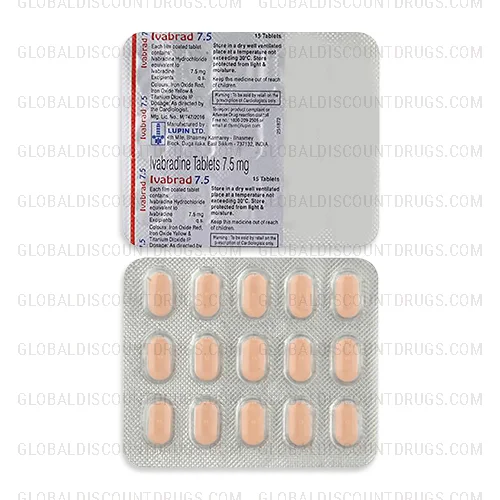
Ivabradine 7.5mg
In StockIvabradine 7.5 mg Tablet is a prescription heart-rate-lowering medicine used in selected patients with chronic heart failure or stable angina, depending on local approval. Heart rate and rhythm should be monitored.
| Active Ingredient: | Ivabradine |
|---|---|
| Indication: | Chronic Heart Failure |
| Strength: | 7.5mg |
| Dosage Form: | Tablets |
| Manufacturer: | Lupin Ltd |

Ivabradine 7.5mg – Quick Overview
Ivabradine 7.5mg is a prescription heart rate–lowering tablet used in adults with chronic heart failure. It works by slowing the sinus node, which lowers resting heart rate and may reduce hospital stays for worsening heart failure in eligible adults. Ivabradine requires a doctor’s prescription and regular heart-rate monitoring because it can cause a slow heartbeat.
Medical Supervision & Regulatory Status
Ivabradine 7.5mg is a prescription-only medicine in the United States and cannot be legally purchased over the counter. It is approved by the U.S. Food and Drug Administration (FDA) and must be dispensed by a licensed pharmacy.
Supervision is required because the medicine lowers heart rate. Your doctor checks your heart rate, rhythm, and blood pressure before and during treatment, and adjusts the dose when needed.
Clinical Context
Ivabradine is used for chronic heart failure, a long-term condition in which the heart cannot pump enough blood to meet the body’s needs. It is prescribed to adults with symptoms such as shortness of breath, tiredness, and swelling in the legs.
Treatment matters because a persistently fast resting heart rate makes a weakened heart work harder. Heart failure can worsen over time and lead to hospital admissions, so controlling heart rate is one part of a larger care plan.
Ivabradine is usually added when a patient is already taking standard heart failure therapy, including a beta-blocker at the maximum tolerated dose, and the resting heart rate remains at or above 70 beats per minute. It can also be considered when a beta-blocker cannot be used. It is not a first-choice medicine and does not replace other heart failure treatments.
How Ivabradine 7.5mg Works
Ivabradine belongs to a drug class called “If channel inhibitors” (also called HCN channel blockers). It acts directly on the heart’s natural pacemaker, the sinus node, which sets the speed of your heartbeat.
By blocking the “funny current” (If) in the sinus node, ivabradine slows how quickly the node fires. This lowers the resting heart rate without reducing the strength of each heartbeat or significantly lowering blood pressure.
For patients, a slower resting heart rate gives the heart more time to fill with blood between beats. In clinical studies, this was linked to fewer hospitalizations for worsening heart failure. It does not cure heart failure, and results vary from person to person.
What Is Ivabradine 7.5mg?
Ivabradine 7.5mg is an oral tablet that lowers heart rate by slowing the sinus node, taken twice daily under a doctor’s direction for chronic heart failure.
| Feature | Details |
|---|---|
| Drug Class | If (HCN) channel inhibitor |
| Active Ingredient | Ivabradine (as ivabradine hydrochloride) |
| Mechanism | Blocks the If current in the sinus node, slowing the resting heart rate without weakening heart contraction. |
| Form | Oral film-coated tablet (7.5 mg) |
| Dosing Frequency | Twice daily, with meals |
| Regulatory Status | Prescription-only (FDA-approved) |
Uses / Indications
Ivabradine is approved for specific heart failure uses, and your doctor decides whether you meet the criteria. It is only used in people whose heart is in normal sinus rhythm.
- Adults with chronic heart failure: To reduce the risk of hospitalization for worsening heart failure in adults with stable, symptomatic chronic heart failure, a left ventricular ejection fraction of 35% or less, normal sinus rhythm, and a resting heart rate of 70 beats per minute or more. It is used with maximum tolerated beta-blocker therapy or when a beta-blocker is not allowed.
- Children with heart failure: In children aged 6 months and older with stable, symptomatic heart failure due to dilated cardiomyopathy, in sinus rhythm with an elevated heart rate. Pediatric dosing is weight-based and set by a specialist.
How to Use / Dosage
Take Ivabradine 7.5mg exactly as your doctor prescribes, usually twice a day with meals. Your doctor determines your dose based on your heart rate and how you respond.
Dose adjustment: In U.S. labeling, adults typically start at a lower dose of 5 mg twice daily. After about two weeks, the doctor may increase to 7.5 mg twice daily, keep the dose the same, or lower it, depending on resting heart rate. The 7.5 mg twice-daily dose is the highest recommended dose, so it is usually reached through gradual adjustment rather than started right away.
Timing: Take one tablet in the morning and one in the evening, with food, at about the same times every day. Swallow the tablet with water. Avoid grapefruit juice, which can raise ivabradine levels.
Missed dose: If you miss a dose, skip it and take the next dose at the usual time. Do not take a double dose to catch up.
Do not stop suddenly: Do not stop taking ivabradine or change your dose without talking to your doctor, because your heart failure care plan depends on regular, consistent treatment.
Side Effects
Many people take ivabradine without serious problems, and your doctor will monitor you to catch side effects early.
Common effects: The most common side effects include a slow heartbeat (bradycardia), high blood pressure, and temporary visual brightness known as phosphenes. Phosphenes are brief patches of increased brightness in part of the visual field, often triggered by sudden changes in light. They usually appear within the first two months and often go away during treatment, but they can make driving or operating machinery in changing light more difficult.
Serious effects: Ivabradine can cause atrial fibrillation, an irregular heart rhythm that raises the risk of blood clots and stroke. It can also cause severe bradycardia and heart conduction problems, which may lead to dizziness, fainting, or, rarely, a need for a pacemaker. Your doctor may check your pulse and ECG regularly.
Emergency Warning Signs – seek immediate medical help if you have:
- Fainting or near-fainting
- Very slow heartbeat (for example, a pulse that feels much slower than usual) with dizziness
- Fast, irregular, or pounding heartbeat or palpitations
- Chest pain or pressure
- Sudden or worsening shortness of breath
- Sudden weakness, trouble speaking, or facial drooping (possible stroke)
- Swelling of the face, lips, tongue, or throat, or trouble breathing
Warnings & Precautions
Ivabradine can lower heart rate too much and may cause atrial fibrillation, so careful monitoring is important. Tell your doctor about all medical conditions and every medicine you take before starting.
Contraindications: Do not use ivabradine if you have acute decompensated heart failure, blood pressure below 90/50 mmHg, sick sinus syndrome, sinoatrial block, or third-degree heart block (unless you have a working pacemaker). It is also contraindicated if your resting heart rate is below 60 beats per minute before treatment, if your heartbeat depends entirely on a pacemaker, or if you have severe liver impairment.
Drug interactions: Do not take ivabradine with strong CYP3A4 inhibitors, such as ketoconazole, itraconazole, clarithromycin, telithromycin, nefazodone, nelfinavir, or ritonavir, as they can raise ivabradine levels and cause dangerous bradycardia. Avoid moderate CYP3A4 inhibitors that also slow heart rate, such as diltiazem and verapamil, and avoid grapefruit juice. Avoid CYP3A4 inducers such as St. John’s wort, rifampin, barbiturates, and phenytoin, which can make ivabradine less effective. Use caution with other medicines that lower heart rate, such as beta-blockers and digoxin.
Pregnancy and breastfeeding: Ivabradine can harm an unborn baby, and animal studies showed fetal harm. Women who can become pregnant should use effective contraception during treatment and tell their doctor right away if they become pregnant. Breastfeeding is not recommended during treatment.
Special populations: Use caution in people with moderate liver impairment, and ask your doctor about kidney problems. Older adults may be more sensitive to a slow heartbeat. Pediatric use requires specialist supervision.
Monitoring: Your doctor will check your heart rate, blood pressure, and rhythm before starting, after dose changes, and during treatment. Report any palpitations, dizziness, or vision changes promptly.
Who Should Not Use This Medication
Do not take Ivabradine 7.5mg if any of the following apply to you:
- Allergy to ivabradine or any ingredient in the tablet
- Acute decompensated (suddenly worsening) heart failure
- Blood pressure below 90/50 mmHg
- Sick sinus syndrome or sinoatrial block
- Third-degree AV block without a functioning pacemaker
- Resting heart rate below 60 beats per minute before treatment
- Heart rate maintained solely by a pacemaker
- Severe liver impairment
- Current use of strong CYP3A4 inhibitors (such as ketoconazole, clarithromycin, or ritonavir)
- Pregnancy, or planning to become pregnant without effective contraception
Storage Instructions
Store Ivabradine 7.5mg at room temperature, about 68°F to 77°F (20°C to 25°C), in its original container. Brief storage between 59°F and 86°F is generally permitted.
Protect the tablets from moisture and light. Keep the bottle tightly closed and do not store it in a bathroom. Keep this medicine out of reach of children and pets, and dispose of expired tablets through a pharmacy take-back program.
Frequently Asked Questions
What is the cost of Ivabradine 7.5mg without insurance?
The cost without insurance depends on the seller, brand availability, and pack size. Generic versions are often more affordable than brand-name medicines, where available. Price may also vary by location and available discounts, so compare licensed pharmacies and ask your pharmacist about lower-cost options.
How can I order Ivabradine 7.5mg online?
You need a valid prescription to order Ivabradine 7.5mg online from a licensed pharmacy. You can upload your prescription or have your doctor send it directly, then place the order and choose home delivery. Always use a verified, state-licensed pharmacy to avoid counterfeit or unsafe medicines.
Is Ivabradine 7.5mg available over the counter?
No, Ivabradine 7.5mg is not available over the counter in the United States or in most countries. Regulations may vary by region. Because it affects heart rate and rhythm, it must be used under medical supervision with regular monitoring by a qualified healthcare professional.
Does Ivabradine 7.5mg require a prescription?
Yes, Ivabradine 7.5mg requires a prescription from a licensed healthcare provider. A medical evaluation is needed to confirm that you have the right type of heart failure and a suitable heart rate and rhythm. Ongoing monitoring helps keep treatment safe and effective.
How long does Ivabradine 7.5mg take to work?
Ivabradine begins lowering heart rate within hours to days, but your doctor usually reviews the dose after about two weeks. The benefit for heart failure, such as fewer hospital stays, builds over months of regular use. Responses differ, so follow your care team’s schedule for check-ups.
Is it safe to stop taking Ivabradine 7.5mg suddenly?
Do not stop Ivabradine 7.5mg suddenly without speaking to your doctor. Stopping may allow your heart rate to rise again and your heart failure symptoms to worsen. If side effects bother you, contact your doctor, who can adjust the dose or suggest a safer alternative plan.
What medicines should I avoid with Ivabradine 7.5mg?
Avoid strong CYP3A4 inhibitors such as ketoconazole, itraconazole, clarithromycin, and ritonavir, as they can cause a dangerously slow heartbeat. Also avoid grapefruit juice, diltiazem, verapamil, and St. John’s wort unless your doctor approves. Share a full list of your prescriptions, supplements, and herbal products with your pharmacist.
What should I do if I miss a dose of Ivabradine 7.5mg?
If you miss a dose of Ivabradine 7.5mg, skip it and take your next dose at the regular time. Never take two doses together to make up for a missed one, because this may slow your heart rate too much. Call your doctor if you often forget doses.
References
- MedlinePlus (NIH): Ivabradine – Drug Information
- U.S. FDA (Drugs@FDA): Corlanor (ivabradine) – NDA 206143, Approval History and Prescribing Information
- AHA/ACC/HFSA Clinical Guideline: 2022 Guideline for the Management of Heart Failure
Resources:
- MedlinePlus: Ivabradine patient information
- FDA Drugs@FDA: Corlanor (ivabradine) label and approval history
- AHA/ACC/HFSA 2022 Heart Failure Guideline
Medical Disclaimer:This content is for informational purposes only and does not constitute medical advice, diagnosis, or treatment. Consult a qualified specialist or physician before using Ivabradine 7.5mg.
Prescription Required (Rx) to Buy?
This medication is not available over the counter. A valid prescription from a licensed healthcare
professional is required. Always consult your doctor before use.
| Quantity | 180, 270, 360, 90 |
|---|---|
| Indication | Chronic Heart Failure |
| Active Ingredient | Ivabradine |
| Pharmaceutical Form | Tablets |
| Manufacturer | Lupin Ltd |
| Indian Brand | Ivabrad 7.5 |
| US Brand Name | Coralan, Ivabradine, Procoralan |
| Generic Name | Ivabradine |
| Dosage | 7.5mg |
| Drug Type | Tablets |