
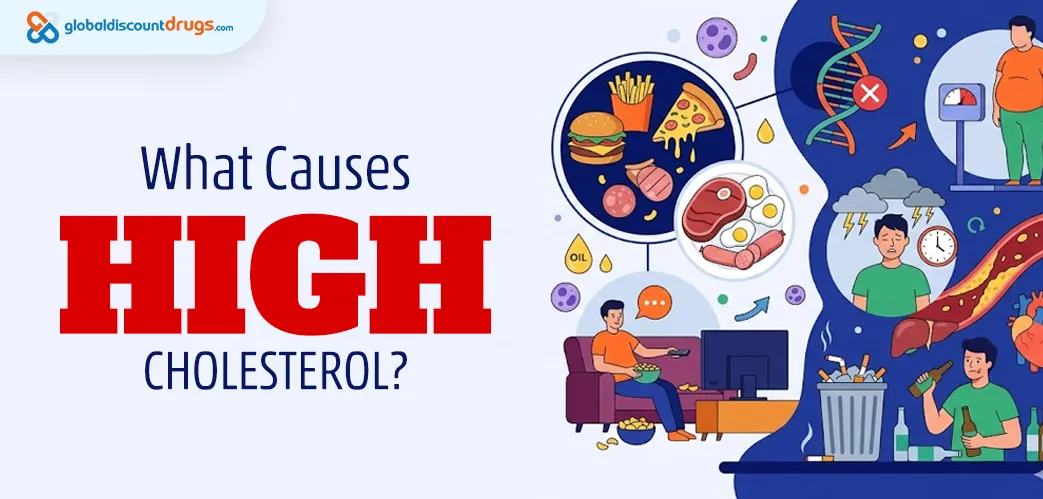
What Causes High Cholesterol?
-
Written By:
Julie Smith
-
June 16, 2026
-
Medically Reviewed By
Dr. Jessica G – General Practitioner
| Last Updated On: June 15, 2026
Key Takeaways
- High cholesterol can develop due to a combination of genetic, lifestyle, and health-related factors.
- Diet, physical activity, body weight, and smoking may influence cholesterol levels.
- Some individuals inherit conditions that affect how their bodies process cholesterol.
- Certain medical conditions may contribute to elevated cholesterol levels.
- Understanding risk factors may help support informed healthcare decisions.
Quick Answer: What Causes High Cholesterol?
High cholesterol may develop when the body produces too much cholesterol, does not remove cholesterol efficiently, or receives excess cholesterol from dietary and lifestyle factors. Genetics, age, physical activity, body weight, smoking, and certain health conditions may all influence cholesterol levels.
Understanding Cholesterol and Its Role in the Body
Cholesterol is a waxy substance that plays several important roles in the body.
The body uses cholesterol to:
- Build cells
- Produce hormones
- Support vitamin D production
- Assist with certain digestive processes
Although cholesterol is necessary for health, elevated levels may increase cardiovascular risk over time.
How High Cholesterol Develops
The liver naturally produces cholesterol.
Normally, the body maintains a balance between cholesterol production, usage, and removal.
High cholesterol may develop when this balance is disrupted.
Examples include:
- Increased cholesterol production
- Reduced cholesterol removal
- Lifestyle factors that contribute to elevated levels
- Genetic conditions affecting cholesterol metabolism
Genetic Causes of High Cholesterol
Family History
Genetics can influence cholesterol levels.
Individuals with a family history of high cholesterol may have a greater likelihood of developing elevated cholesterol themselves.
Familial Hypercholesterolemia
Familial hypercholesterolemia is an inherited condition that can cause significantly elevated LDL cholesterol levels.
People with this condition may develop high cholesterol even when following healthy lifestyle habits.
Because the condition is inherited, family members may also be affected.
Lifestyle Factors That May Contribute to High Cholesterol
Lifestyle habits can influence cholesterol levels and cardiovascular health.
Dietary Patterns
Certain dietary patterns may contribute to elevated cholesterol levels.
Examples may include diets high in:
- Saturated fats
- Trans fats
- Highly processed foods
Balanced eating patterns that emphasize nutrient-dense foods are often discussed as part of cholesterol management.
Physical Inactivity
Regular physical activity supports overall cardiovascular health.
A sedentary lifestyle may contribute to cholesterol imbalances and other cardiovascular risk factors.
Excess Body Weight
Excess body weight may influence how the body processes fats and cholesterol.
Maintaining a healthy weight may support overall metabolic and cardiovascular health.
Smoking
Smoking may affect blood vessels and cholesterol balance.
It is frequently discussed as a cardiovascular risk factor alongside high cholesterol.
Medical Conditions Associated With High Cholesterol
Several health conditions may influence cholesterol levels.
Diabetes
Diabetes and high cholesterol often occur together.
Managing both conditions may be important for long-term cardiovascular health.
Chronic Kidney Disease
Kidney function can influence how the body processes fats and cholesterol.
Thyroid Disorders
Certain thyroid conditions may affect cholesterol metabolism.
Liver Conditions
Because the liver plays a central role in cholesterol production and regulation, some liver conditions may influence cholesterol levels.
Age and High Cholesterol
The likelihood of elevated cholesterol often increases with age.
As people get older, changes in metabolism and lifestyle factors may contribute to cholesterol changes.
This is one reason healthcare professionals may recommend routine cholesterol screening.
Can Stress Affect Cholesterol Levels?
Stress affects many aspects of health.
Although stress itself may not directly cause high cholesterol, it may influence behaviors that affect cardiovascular health, such as:
- Eating habits
- Physical activity levels
- Sleep quality
- Smoking habits
Managing stress may support overall wellness.
Risk Factors for High Cholesterol
Several factors may increase the likelihood of developing high cholesterol.
Family History
Increasing Age
Physical Inactivity
Excess Body Weight
Smoking
Diabetes
High Blood Pressure
Unhealthy Dietary Patterns
Having one or more risk factors does not necessarily mean a person will develop high cholesterol.
Can High Cholesterol Be Prevented?
Not all causes of high cholesterol can be prevented.
For example, inherited conditions cannot be changed.
However, certain lifestyle habits may help support healthy cholesterol levels and cardiovascular health.
Healthy Eating Habits
Many heart-healthy eating patterns emphasize:
- Vegetables
- Fruits
- Whole grains
- Lean proteins
- Healthy fats
Regular Physical Activity
Physical activity may help support cholesterol management and overall cardiovascular health.
Examples include:
- Walking
- Cycling
- Swimming
- Strength training
Weight Management
Maintaining a healthy weight may help reduce some cardiovascular risk factors.
Routine Health Screenings
Regular cholesterol testing may help identify elevated cholesterol levels before complications occur.
Related Conditions
High cholesterol is often discussed alongside:
- High Blood Pressure
- Heart Disease
- Stroke
- Diabetes
- Obesity
- Metabolic Syndrome
Understanding these relationships may help individuals take a broader view of cardiovascular health.
When to Speak With a Healthcare Professional
Consider discussing cholesterol testing with a healthcare professional if:
- You have a family history of high cholesterol.
- You have previously been told your cholesterol levels are elevated.
- You have diabetes or high blood pressure.
- You are concerned about cardiovascular risk factors.
- You have not had recent cholesterol screening.
Learn More About High Cholesterol
Continue exploring these resources:
- Complete Guide to High Cholesterol
- High Cholesterol Symptoms and Warning Signs
- How High Cholesterol Is Diagnosed
- Managing High Cholesterol
- Cholesterol Medications
Frequently Asked Questions
What is the most common cause of high cholesterol?
High cholesterol often develops due to a combination of genetics, lifestyle habits, and other health factors.
Can high cholesterol be inherited?
Yes. Certain inherited conditions may increase cholesterol levels and cardiovascular risk.
Does diet affect cholesterol levels?
Dietary patterns may influence cholesterol levels and overall cardiovascular health.
Can exercise help support healthy cholesterol levels?
Regular physical activity may support cholesterol management and overall heart health.
Can someone have high cholesterol even with healthy habits?
Yes. Genetics and certain medical conditions can influence cholesterol levels regardless of lifestyle habits.
Is high cholesterol preventable?
Some risk factors cannot be changed, but healthy lifestyle habits may support overall cardiovascular health.
Our Editorial Process
This content is created using evidence-based medical sources and reviewed for accuracy before publication.
Medical Disclaimer
This content is intended for educational purposes only and should not replace professional medical advice, diagnosis, or treatment.
References
- Centers for Disease Control and Prevention (CDC)
- National Heart, Lung, and Blood Institute (NHLBI)
- American Heart Association (AHA)
- MedlinePlus
- National Institutes of Health (NIH)
Editorial Standards
Content published on Global Discount Drugs is reviewed by healthcare professionals and supported by credible medical sources. Read our Editorial Content Policy to learn more.
With over a decade of experience in health and wellness, Dr. Julie Smith shares practical tips to help readers improve their overall well-being and live healthier lives.
Written By:
Julie Smith
June 16, 2026
Medically Reviewed By
Dr. Jessica G – General Practitioner | Last Updated On: June 15, 2026
Key Takeaways
- High cholesterol can develop due to a combination of genetic, lifestyle, and health-related factors.
- Diet, physical activity, body weight, and smoking may influence cholesterol levels.
- Some individuals inherit conditions that affect how their bodies process cholesterol.
- Certain medical conditions may contribute to elevated cholesterol levels.
- Understanding risk factors may help support informed healthcare decisions.
Quick Answer: What Causes High Cholesterol?
High cholesterol may develop when the body produces too much cholesterol, does not remove cholesterol efficiently, or receives excess cholesterol from dietary and lifestyle factors. Genetics, age, physical activity, body weight, smoking, and certain health conditions may all influence cholesterol levels.Understanding Cholesterol and Its Role in the Body
Cholesterol is a waxy substance that plays several important roles in the body. The body uses cholesterol to:- Build cells
- Produce hormones
- Support vitamin D production
- Assist with certain digestive processes
How High Cholesterol Develops
The liver naturally produces cholesterol. Normally, the body maintains a balance between cholesterol production, usage, and removal. High cholesterol may develop when this balance is disrupted. Examples include:- Increased cholesterol production
- Reduced cholesterol removal
- Lifestyle factors that contribute to elevated levels
- Genetic conditions affecting cholesterol metabolism
Genetic Causes of High Cholesterol
Family History
Genetics can influence cholesterol levels. Individuals with a family history of high cholesterol may have a greater likelihood of developing elevated cholesterol themselves.Familial Hypercholesterolemia
Familial hypercholesterolemia is an inherited condition that can cause significantly elevated LDL cholesterol levels. People with this condition may develop high cholesterol even when following healthy lifestyle habits. Because the condition is inherited, family members may also be affected.Lifestyle Factors That May Contribute to High Cholesterol
Lifestyle habits can influence cholesterol levels and cardiovascular health.Dietary Patterns
Certain dietary patterns may contribute to elevated cholesterol levels. Examples may include diets high in:- Saturated fats
- Trans fats
- Highly processed foods
Physical Inactivity
Regular physical activity supports overall cardiovascular health. A sedentary lifestyle may contribute to cholesterol imbalances and other cardiovascular risk factors.Excess Body Weight
Excess body weight may influence how the body processes fats and cholesterol. Maintaining a healthy weight may support overall metabolic and cardiovascular health.Smoking
Smoking may affect blood vessels and cholesterol balance. It is frequently discussed as a cardiovascular risk factor alongside high cholesterol.Medical Conditions Associated With High Cholesterol
Several health conditions may influence cholesterol levels.Diabetes
Diabetes and high cholesterol often occur together. Managing both conditions may be important for long-term cardiovascular health.Chronic Kidney Disease
Kidney function can influence how the body processes fats and cholesterol.Thyroid Disorders
Certain thyroid conditions may affect cholesterol metabolism.Liver Conditions
Because the liver plays a central role in cholesterol production and regulation, some liver conditions may influence cholesterol levels.Age and High Cholesterol
The likelihood of elevated cholesterol often increases with age. As people get older, changes in metabolism and lifestyle factors may contribute to cholesterol changes. This is one reason healthcare professionals may recommend routine cholesterol screening.Can Stress Affect Cholesterol Levels?
Stress affects many aspects of health. Although stress itself may not directly cause high cholesterol, it may influence behaviors that affect cardiovascular health, such as:- Eating habits
- Physical activity levels
- Sleep quality
- Smoking habits
Risk Factors for High Cholesterol
Several factors may increase the likelihood of developing high cholesterol.Family History
Increasing Age
Physical Inactivity
Excess Body Weight
Smoking
Diabetes
High Blood Pressure
Unhealthy Dietary Patterns
Having one or more risk factors does not necessarily mean a person will develop high cholesterol.Can High Cholesterol Be Prevented?
Not all causes of high cholesterol can be prevented. For example, inherited conditions cannot be changed. However, certain lifestyle habits may help support healthy cholesterol levels and cardiovascular health.Healthy Eating Habits
Many heart-healthy eating patterns emphasize:- Vegetables
- Fruits
- Whole grains
- Lean proteins
- Healthy fats
Regular Physical Activity
Physical activity may help support cholesterol management and overall cardiovascular health. Examples include:- Walking
- Cycling
- Swimming
- Strength training
Weight Management
Maintaining a healthy weight may help reduce some cardiovascular risk factors.Routine Health Screenings
Regular cholesterol testing may help identify elevated cholesterol levels before complications occur.Related Conditions
High cholesterol is often discussed alongside:- High Blood Pressure
- Heart Disease
- Stroke
- Diabetes
- Obesity
- Metabolic Syndrome
When to Speak With a Healthcare Professional
Consider discussing cholesterol testing with a healthcare professional if:- You have a family history of high cholesterol.
- You have previously been told your cholesterol levels are elevated.
- You have diabetes or high blood pressure.
- You are concerned about cardiovascular risk factors.
- You have not had recent cholesterol screening.
Learn More About High Cholesterol
Continue exploring these resources:- Complete Guide to High Cholesterol
- High Cholesterol Symptoms and Warning Signs
- How High Cholesterol Is Diagnosed
- Managing High Cholesterol
- Cholesterol Medications
Frequently Asked Questions
What is the most common cause of high cholesterol?
High cholesterol often develops due to a combination of genetics, lifestyle habits, and other health factors.Can high cholesterol be inherited?
Yes. Certain inherited conditions may increase cholesterol levels and cardiovascular risk.Does diet affect cholesterol levels?
Dietary patterns may influence cholesterol levels and overall cardiovascular health.Can exercise help support healthy cholesterol levels?
Regular physical activity may support cholesterol management and overall heart health.Can someone have high cholesterol even with healthy habits?
Yes. Genetics and certain medical conditions can influence cholesterol levels regardless of lifestyle habits.Is high cholesterol preventable?
Some risk factors cannot be changed, but healthy lifestyle habits may support overall cardiovascular health. Our Editorial Process This content is created using evidence-based medical sources and reviewed for accuracy before publication. Medical Disclaimer This content is intended for educational purposes only and should not replace professional medical advice, diagnosis, or treatment. References- Centers for Disease Control and Prevention (CDC)
- National Heart, Lung, and Blood Institute (NHLBI)
- American Heart Association (AHA)
- MedlinePlus
- National Institutes of Health (NIH)
Editorial Standards
Content published on Global Discount Drugs is reviewed by healthcare professionals and supported by credible medical sources. Read our Editorial Content Policy to learn more.
With over a decade of experience in health and wellness, Dr. Julie Smith shares practical tips to help readers improve their overall well-being and live healthier lives.