
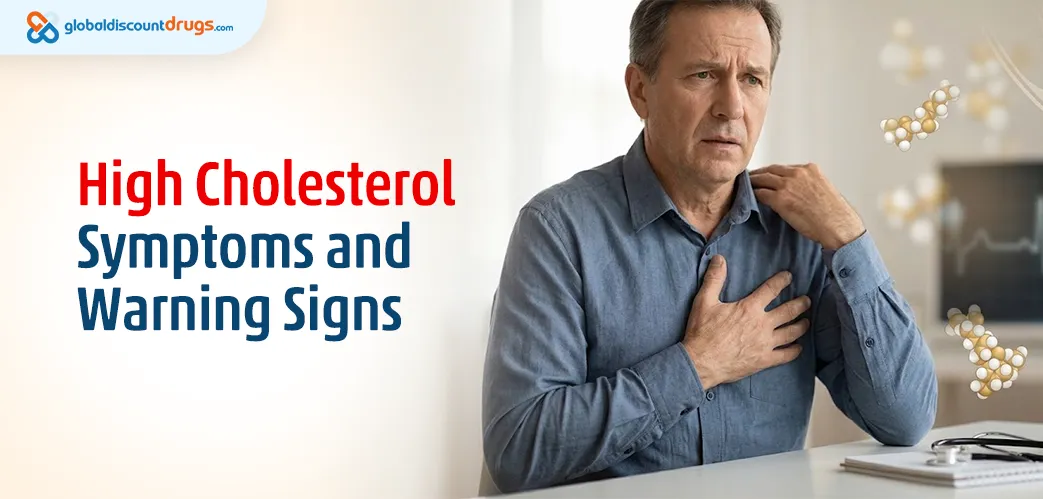
High Cholesterol Symptoms and Warning Signs
-
Written By:
Kevin P
-
June 15, 2026
-
Medically Reviewed By
Dr. Jessica G – General Practitioner
| Last Updated On: June 15, 2026
High Cholesterol Symptoms and Warning Signs
Key Takeaways
- High cholesterol often develops without noticeable symptoms.
- Many individuals discover they have high cholesterol through routine blood testing.
- Regular cholesterol screening may help identify elevated cholesterol levels early.
- Certain health conditions and lifestyle factors may increase cholesterol-related risks.
- Healthcare professionals can recommend appropriate testing and monitoring.
Quick Answer: Does High Cholesterol Cause Symptoms?
In most cases, high cholesterol does not cause obvious symptoms. Many people are unaware they have elevated cholesterol levels until a blood test identifies the condition. Because symptoms are often absent, routine cholesterol screening may play an important role in early detection.
Why High Cholesterol Is Often Called a Silent Condition
Unlike some health conditions that produce noticeable symptoms, high cholesterol can develop gradually over many years.
Cholesterol itself does not usually cause pain or discomfort.
As a result, many individuals may feel healthy while cholesterol levels remain elevated.
This is one reason healthcare professionals often recommend periodic cholesterol screening, particularly for individuals with risk factors.
Understanding Cholesterol
Cholesterol is a waxy substance that the body uses for important functions such as hormone production and cell development.
The body naturally produces cholesterol, and additional cholesterol can come from dietary sources.
Problems may occur when cholesterol levels become elevated over time.
Why Symptoms Are Often Absent
High cholesterol affects blood vessels gradually.
Elevated cholesterol levels may contribute to the buildup of fatty deposits known as plaque inside arteries.
This process often occurs slowly and silently.
Because blood vessels can continue functioning despite early plaque buildup, symptoms may not appear until cardiovascular complications develop.
Possible Warning Signs Associated With Cholesterol-Related Conditions
Although high cholesterol itself may not cause symptoms, certain cardiovascular conditions associated with cholesterol buildup may produce warning signs.
Chest Discomfort
Reduced blood flow to the heart may contribute to chest discomfort in some individuals.
Shortness of Breath
Breathing difficulties may occur when cardiovascular health is affected.
Fatigue During Physical Activity
Some individuals may notice reduced exercise tolerance.
Leg Pain During Walking
Reduced circulation in the legs may contribute to discomfort during physical activity.
These symptoms can occur for many reasons and should be evaluated by a healthcare professional.
Who Is More Likely to Have High Cholesterol?
Several factors may increase the likelihood of elevated cholesterol levels.
Family History
Genetics may influence cholesterol metabolism and cardiovascular risk.
Increasing Age
The likelihood of elevated cholesterol levels often increases with age.
Physical Inactivity
Regular physical activity may help support healthy cholesterol levels.
Excess Body Weight
Maintaining a healthy weight may support cardiovascular health.
Smoking
Smoking may affect cholesterol balance and blood vessel health.
Certain Medical Conditions
Examples include:
- Diabetes
- High blood pressure
- Kidney disease
- Thyroid disorders
Why Routine Cholesterol Testing Matters
Because high cholesterol often develops without symptoms, blood testing remains one of the most effective ways to identify elevated levels.
Testing may help:
- Detect cholesterol abnormalities early
- Monitor treatment progress
- Assess cardiovascular risk factors
- Support healthcare decision-making
What Is a Lipid Panel?
A lipid panel is a blood test commonly used to evaluate cholesterol levels.
The test may measure:
Total Cholesterol
An overall measurement of cholesterol in the bloodstream.
LDL Cholesterol
Often referred to as "bad" cholesterol.
HDL Cholesterol
Often referred to as "good" cholesterol.
Triglycerides
A type of fat found in the blood.
Healthcare professionals interpret these results within the context of an individual's overall health.
Conditions Commonly Associated With High Cholesterol
High cholesterol is frequently discussed alongside other cardiovascular risk factors.
Related conditions may include:
- High Blood Pressure
- Diabetes
- Obesity
- Metabolic Syndrome
- Heart Disease
- Stroke
Understanding these relationships may help individuals gain a broader picture of cardiovascular health.
Can High Cholesterol Be Prevented?
While some risk factors such as genetics cannot be changed, healthy lifestyle habits may support overall cardiovascular health.
Examples include:
Healthy Eating Habits
Many healthy eating patterns emphasize:
- Vegetables
- Fruits
- Whole grains
- Lean proteins
Regular Physical Activity
Consistent physical activity may support healthy cholesterol levels.
Weight Management
Maintaining a healthy weight may help reduce certain cardiovascular risk factors.
Routine Healthcare Visits
Regular checkups and cholesterol testing may support early detection.
When to Discuss Cholesterol Testing With a Healthcare Professional
Consider discussing cholesterol testing if:
- You have a family history of high cholesterol.
- You have diabetes or high blood pressure.
- You have concerns about cardiovascular health.
- You have not had recent cholesterol screening.
- You have previously been told your cholesterol levels are elevated.
Learn More About High Cholesterol
Continue exploring these educational resources:
- Complete Guide to High Cholesterol
- What Causes High Cholesterol?
- How High Cholesterol Is Diagnosed
- Managing High Cholesterol
- Cholesterol Medications
Frequently Asked Questions
Does high cholesterol always cause symptoms?
No. Most individuals with high cholesterol experience no noticeable symptoms.
How can someone know if they have high cholesterol?
A blood test is commonly used to evaluate cholesterol levels.
What are the warning signs of high cholesterol?
High cholesterol itself usually does not cause symptoms. Cardiovascular complications associated with cholesterol buildup may produce symptoms in some cases.
Why is cholesterol testing important?
Testing may help identify elevated cholesterol levels before complications develop.
Can healthy lifestyle habits support cholesterol management?
Healthy eating, physical activity, and routine healthcare visits may support overall cardiovascular health.
Is high cholesterol hereditary?
Genetics may influence cholesterol levels and cardiovascular risk.
Our Editorial Process
This content is created using evidence-based medical sources and reviewed for accuracy before publication.
Medical Disclaimer
This content is intended for educational purposes only and should not replace professional medical advice, diagnosis, or treatment.
References
- Centers for Disease Control and Prevention (CDC)
- National Heart, Lung, and Blood Institute (NHLBI)
- American Heart Association (AHA)
- MedlinePlus
- National Institutes of Health (NIH)
Editorial Standards
Content published on Global Discount Drugs is reviewed by healthcare professionals and supported by credible medical sources. Read our Editorial Content Policy to learn more.
Kevin P draws on 10+ years of health expertise to share actionable wellness tips. He focuses on making health achievable for everyone.
Written By:
Kevin P
June 15, 2026
Medically Reviewed By
Dr. Jessica G – General Practitioner | Last Updated On: June 15, 2026
High Cholesterol Symptoms and Warning Signs
Key Takeaways
- High cholesterol often develops without noticeable symptoms.
- Many individuals discover they have high cholesterol through routine blood testing.
- Regular cholesterol screening may help identify elevated cholesterol levels early.
- Certain health conditions and lifestyle factors may increase cholesterol-related risks.
- Healthcare professionals can recommend appropriate testing and monitoring.
Quick Answer: Does High Cholesterol Cause Symptoms?
In most cases, high cholesterol does not cause obvious symptoms. Many people are unaware they have elevated cholesterol levels until a blood test identifies the condition. Because symptoms are often absent, routine cholesterol screening may play an important role in early detection.Why High Cholesterol Is Often Called a Silent Condition
Unlike some health conditions that produce noticeable symptoms, high cholesterol can develop gradually over many years. Cholesterol itself does not usually cause pain or discomfort. As a result, many individuals may feel healthy while cholesterol levels remain elevated. This is one reason healthcare professionals often recommend periodic cholesterol screening, particularly for individuals with risk factors.Understanding Cholesterol
Cholesterol is a waxy substance that the body uses for important functions such as hormone production and cell development. The body naturally produces cholesterol, and additional cholesterol can come from dietary sources. Problems may occur when cholesterol levels become elevated over time.Why Symptoms Are Often Absent
High cholesterol affects blood vessels gradually. Elevated cholesterol levels may contribute to the buildup of fatty deposits known as plaque inside arteries. This process often occurs slowly and silently. Because blood vessels can continue functioning despite early plaque buildup, symptoms may not appear until cardiovascular complications develop.Possible Warning Signs Associated With Cholesterol-Related Conditions
Although high cholesterol itself may not cause symptoms, certain cardiovascular conditions associated with cholesterol buildup may produce warning signs.Chest Discomfort
Reduced blood flow to the heart may contribute to chest discomfort in some individuals.Shortness of Breath
Breathing difficulties may occur when cardiovascular health is affected.Fatigue During Physical Activity
Some individuals may notice reduced exercise tolerance.Leg Pain During Walking
Reduced circulation in the legs may contribute to discomfort during physical activity. These symptoms can occur for many reasons and should be evaluated by a healthcare professional.Who Is More Likely to Have High Cholesterol?
Several factors may increase the likelihood of elevated cholesterol levels.Family History
Genetics may influence cholesterol metabolism and cardiovascular risk.Increasing Age
The likelihood of elevated cholesterol levels often increases with age.Physical Inactivity
Regular physical activity may help support healthy cholesterol levels.Excess Body Weight
Maintaining a healthy weight may support cardiovascular health.Smoking
Smoking may affect cholesterol balance and blood vessel health.Certain Medical Conditions
Examples include:- Diabetes
- High blood pressure
- Kidney disease
- Thyroid disorders
Why Routine Cholesterol Testing Matters
Because high cholesterol often develops without symptoms, blood testing remains one of the most effective ways to identify elevated levels. Testing may help:- Detect cholesterol abnormalities early
- Monitor treatment progress
- Assess cardiovascular risk factors
- Support healthcare decision-making
What Is a Lipid Panel?
A lipid panel is a blood test commonly used to evaluate cholesterol levels. The test may measure:Total Cholesterol
An overall measurement of cholesterol in the bloodstream.LDL Cholesterol
Often referred to as "bad" cholesterol.HDL Cholesterol
Often referred to as "good" cholesterol.Triglycerides
A type of fat found in the blood. Healthcare professionals interpret these results within the context of an individual's overall health.Conditions Commonly Associated With High Cholesterol
High cholesterol is frequently discussed alongside other cardiovascular risk factors. Related conditions may include:- High Blood Pressure
- Diabetes
- Obesity
- Metabolic Syndrome
- Heart Disease
- Stroke
Can High Cholesterol Be Prevented?
While some risk factors such as genetics cannot be changed, healthy lifestyle habits may support overall cardiovascular health. Examples include:Healthy Eating Habits
Many healthy eating patterns emphasize:- Vegetables
- Fruits
- Whole grains
- Lean proteins
Regular Physical Activity
Consistent physical activity may support healthy cholesterol levels.Weight Management
Maintaining a healthy weight may help reduce certain cardiovascular risk factors.Routine Healthcare Visits
Regular checkups and cholesterol testing may support early detection.When to Discuss Cholesterol Testing With a Healthcare Professional
Consider discussing cholesterol testing if:- You have a family history of high cholesterol.
- You have diabetes or high blood pressure.
- You have concerns about cardiovascular health.
- You have not had recent cholesterol screening.
- You have previously been told your cholesterol levels are elevated.
Learn More About High Cholesterol
Continue exploring these educational resources:- Complete Guide to High Cholesterol
- What Causes High Cholesterol?
- How High Cholesterol Is Diagnosed
- Managing High Cholesterol
- Cholesterol Medications
Frequently Asked Questions
Does high cholesterol always cause symptoms?
No. Most individuals with high cholesterol experience no noticeable symptoms.How can someone know if they have high cholesterol?
A blood test is commonly used to evaluate cholesterol levels.What are the warning signs of high cholesterol?
High cholesterol itself usually does not cause symptoms. Cardiovascular complications associated with cholesterol buildup may produce symptoms in some cases.Why is cholesterol testing important?
Testing may help identify elevated cholesterol levels before complications develop.Can healthy lifestyle habits support cholesterol management?
Healthy eating, physical activity, and routine healthcare visits may support overall cardiovascular health.Is high cholesterol hereditary?
Genetics may influence cholesterol levels and cardiovascular risk. Our Editorial Process This content is created using evidence-based medical sources and reviewed for accuracy before publication. Medical Disclaimer This content is intended for educational purposes only and should not replace professional medical advice, diagnosis, or treatment. References- Centers for Disease Control and Prevention (CDC)
- National Heart, Lung, and Blood Institute (NHLBI)
- American Heart Association (AHA)
- MedlinePlus
- National Institutes of Health (NIH)
Editorial Standards
Content published on Global Discount Drugs is reviewed by healthcare professionals and supported by credible medical sources. Read our Editorial Content Policy to learn more.
Kevin P draws on 10+ years of health expertise to share actionable wellness tips. He focuses on making health achievable for everyone.