
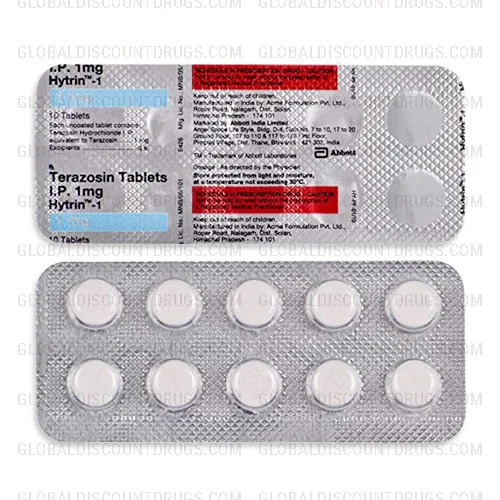
Terazosin 1mg
In StockTerazosin 1 mg Tablet is a lower-strength prescription alpha-1 blocker commonly used when beginning treatment for hypertension or benign prostatic hyperplasia. Rise slowly to reduce dizziness or fainting.
| Active Ingredient: | Terazosin |
|---|---|
| Indication: | Benign Prostatic Hyperplasia |
| Strength: | 1mg |
| Dosage Form: | Tablets |
| Manufacturer: | Abbott |

Quick Overview
Terazosin 1mg is a prescription capsule from the alpha-1 blocker class, used to treat the urinary symptoms of benign prostatic hyperplasia (enlarged prostate) and to lower high blood pressure. It works by relaxing smooth muscle in the prostate, bladder neck, and blood vessels. It requires a prescription, and a prescriber should supervise its use, starting at low doses because of the risk of fainting.
Medical Supervision and Regulatory Status
Terazosin 1mg is a prescription-only medicine in the United States, FDA-approved, available as a generic, and not classified as a controlled substance. Supervision matters because the first dose, a dose increase, or restarting after a break of several days can cause sudden fainting from low blood pressure, which is why treatment starts at this 1 mg strength at bedtime. Prescribers also rule out prostate cancer, which can mimic BPH symptoms, and check blood pressure lying and standing.
Clinical Context
Benign prostatic hyperplasia (BPH) is a noncancerous enlargement of the prostate that squeezes the urethra, causing a weak stream, frequent urination, nighttime waking to urinate, and incomplete emptying.
Untreated symptoms can disturb sleep, limit daily activity, and in some men lead to urinary retention or bladder problems. High blood pressure, the second approved use, often causes no symptoms but raises the risk of stroke, heart attack, and kidney disease.
Current American Urological Association guidance lists alpha-blockers such as terazosin among first-line medicines for bothersome BPH symptoms. For hypertension, US guidelines do not favor alpha-blockers as the first choice, so terazosin is generally added when other medicines are not enough or when a man also has BPH.
How Terazosin 1mg Works
Terazosin blocks alpha-1 adrenergic receptors in the smooth muscle of the prostate, bladder neck, and blood vessels, which lets them relax, so urine flows more easily and blood pressure falls.
In BPH, the muscle tone around the urethra eases, so the stream can improve and emptying feels easier. Terazosin does not shrink the prostate, so it relieves symptoms without treating the underlying growth.
In blood vessels, relaxation lowers resistance to blood flow, which explains the blood pressure benefit. Relaxed vessels also explain dizziness on standing, the main side effect, and why the starting strength is kept low.
What Is Terazosin 1mg?
Terazosin 1mg is a prescription capsule containing terazosin hydrochloride, an alpha-1 blocker approved by the FDA for benign prostatic hyperplasia and high blood pressure.
- Drug Class: Alpha-1 adrenergic blocker (quinazoline type)
- Active Ingredient: Terazosin hydrochloride
- Mechanism: Blocks alpha-1 receptors so smooth muscle in the prostate and blood vessels relaxes.
- Available Forms and Strengths: Oral capsules in 1, 2, 5, and 10 mg. Tablets also exist. Brand name Hytrin, plus generics.
- Dosing Frequency: Once daily, usually at bedtime
- Regulatory Status: US prescription-only (Rx), FDA-approved, not a controlled substance
Approved Uses
The FDA approved terazosin for two uses in adults: relieving urinary symptoms caused by benign prostatic hyperplasia and lowering high blood pressure, alone or with other blood pressure medicines.
- Benign prostatic hyperplasia: Terazosin eases weak flow, hesitancy, and frequent urination caused by an enlarged prostate.
- Hypertension: Terazosin lowers blood pressure, which reduces the long-term risk of stroke and heart disease. It may be combined with a thiazide diuretic or other agents.
How to Use and Dosage
Your prescriber sets the terazosin dose, and 1 mg at bedtime is the labeled starting dose for both BPH and high blood pressure, chosen to limit first-dose fainting.
The label describes raising the dose step by step. For BPH that means 2, 5, or 10 mg once daily, and many men need 10 mg a day for full benefit. For high blood pressure the usual range is 1 to 5 mg once daily, though some people need more. Treat 1 mg as a starting point, and do not raise it on your own. Swallow the capsule whole with water at about the same time each night, and sit or lie down if you feel lightheaded.
If you miss a dose, take it when you remember, unless the next dose is near. Never double up. If you skip several days, call your prescriber before restarting, because treatment may need to begin again at 1 mg.
Do not stop terazosin on your own, as urinary symptoms and high blood pressure can return.
Side Effects
Side effects differ from person to person, and most relate to blood pressure falling or smooth muscle relaxing, especially in the first days or after a dose increase.
Boxed warning: None is listed on the current label. The first-dose fainting risk is described in the Warnings section.
Common effects: Dizziness is the most reported effect, along with lightheadedness on standing, weakness or tiredness, sleepiness, stuffy nose, blurred vision, swelling of the ankles or feet, palpitations, nausea, weight gain, and erectile difficulty. Many ease as the body adjusts. Stand up slowly, especially at night.
Serious effects: Fainting (syncope), a painful erection that does not go away (priapism), severe low blood pressure, a fast or irregular heartbeat, chest pain (angina), a low platelet count, and allergic reactions can occur.
Emergency Warning Signs
- Fainting or loss of consciousness
- An erection lasting longer than four hours
- Chest pain, pressure, or tightness
- A very fast, pounding, or irregular heartbeat
- Swelling of the face, lips, or tongue, or trouble breathing
- Unusual bruising or bleeding, or pinpoint red spots on the skin
Call 911 or go to the nearest emergency department for these signs. For lasting dizziness, swelling of the feet, or blurred vision, contact your prescriber the same day.
Warnings and Precautions
Terazosin can cause sudden fainting after the first dose or a dose increase, and it requires caution with other blood pressure lowering drugs, cataract surgery, and priapism risk.
Do not take terazosin if you are allergic to terazosin or to related drugs such as prazosin or doxazosin. Avoid driving or hazardous tasks for 12 hours after the first dose, after a dose increase, and after restarting following a break. Sildenafil, tadalafil, and vardenafil can add to blood pressure drops, so they are started at the lowest dose in men already taking terazosin. Other alpha-blockers, including doxazosin, tamsulosin, and prazosin, should not be combined with it. Blood pressure drugs such as verapamil, enalapril, metoprolol, and diuretics, and alcohol, can intensify dizziness. Tell your eye surgeon before cataract surgery, because alpha-blockers can cause intraoperative floppy iris syndrome, a complication during the operation. Prostate cancer can cause the same symptoms as BPH, so a prostate exam and PSA blood test are done before treatment and at intervals afterward.
The label says there are no adequate studies in pregnant women, so use during pregnancy is limited to clear need. It is not known whether terazosin passes into breast milk. Older adults are more likely to have dizziness and falls. Safety and effectiveness in children have not been established. Kidney impairment does not usually require a dose change, but terazosin is processed mainly by the liver, so caution is needed in liver disease. Monitoring includes blood pressure lying down and standing, symptom scores for BPH, and occasional blood counts, because small early drops in hemoglobin, white cells, and protein have been reported.
Who Should Not Use This Medication
Terazosin should not be used by anyone with a known allergy to terazosin or related quinazoline alpha-blockers such as prazosin and doxazosin, which are the labeled contraindications.
- Anyone with a past allergic reaction to terazosin or any capsule ingredient
- Anyone allergic to prazosin or doxazosin
- Use needs prescriber review first, though not a labeled contraindication, for people with a history of fainting on standing, men who take sildenafil or tadalafil, and anyone planning cataract surgery
Storage Instructions
Store terazosin capsules at room temperature, 68 to 77 degrees F (20 to 25 degrees C), in the original tightly closed container, away from moisture and light.
Avoid bathrooms, where steam raises humidity. Keep the container out of sight and reach of children and pets, and use child-resistant caps. For disposal, use a pharmacy or DEA-authorized take-back program. If none is available, mix capsules with used coffee grounds or cat litter in a sealed bag, place it in household trash, and scratch out the label on the empty bottle. Do not flush capsules. Poison Control (1-800-222-1222) can advise on accidental ingestion.
Frequently Asked Questions
What is the cost of Terazosin 1mg without insurance?
The cost without insurance depends on the seller, brand availability, and pack size. Location and available discounts can also change what you pay. Generic terazosin is generally more affordable than the Hytrin brand name. Comparing licensed US pharmacies, and asking a pharmacist about generic choices and quantities, helps you understand the likely cost before ordering.
How can I order Terazosin 1mg online?
You can order terazosin online only with a valid prescription, filled by a licensed US pharmacy. Upload a photo of the prescription or ask your prescriber to send it electronically, then confirm the order and receive home delivery. Before paying, verify the pharmacy holds a state license and has a pharmacist available to answer questions about your medicine.
Is Terazosin 1mg available over the counter?
No, terazosin is not sold over the counter in the United States. Rules differ by country, but US law classifies it as a prescription medicine. Both prostate symptoms and high blood pressure need a proper diagnosis, and the first doses can cause fainting, so a prescriber must supervise treatment and adjust the dose gradually.
Does Terazosin 1mg require a prescription?
Yes, terazosin requires a prescription from a licensed US clinician. An evaluation confirms the diagnosis, rules out prostate cancer when symptoms suggest BPH, and checks blood pressure lying and standing. Follow-up visits then show whether symptoms and readings are improving, and whether dizziness or other effects mean the dose needs a slower increase.
How long does Terazosin 1mg take to work?
Blood pressure begins to fall within hours of a dose, but urinary symptoms usually improve over several weeks. Many men notice a better stream within two to four weeks, and the full effect may take longer as the dose is raised stepwise. Response varies by person, so your prescriber judges progress using symptom scores and blood pressure readings.
Is it safe to stop taking Terazosin 1mg suddenly?
Stopping terazosin suddenly is not advised without your prescriber’s direction, because urinary symptoms and high blood pressure can return. The key risk is restarting: if you skip doses for several days, the first dose back can cause fainting, so treatment usually restarts at 1 mg at bedtime. Call your prescriber before resuming after any break.
Can Terazosin 1mg interact with other medicines?
Yes, terazosin interacts with several medicines. Sildenafil, tadalafil, and vardenafil can add to blood pressure drops, and other alpha-blockers such as doxazosin or tamsulosin should not be combined with it. Blood pressure drugs like verapamil, enalapril, metoprolol, and diuretics, and alcohol, can intensify dizziness. Give your pharmacist a full medicine list, including supplements.
What should I do if I miss a dose of Terazosin 1mg?
Take a missed terazosin dose as soon as you remember, unless the next dose is near; then skip it and never double up. If you miss several days, call your prescriber before restarting, since treatment may need to begin again at 1 mg at bedtime. Stay seated or lie down if you feel lightheaded after any dose.
References
- DailyMed (NIH): Current FDA-approved prescribing information for terazosin, including indications, dosing, first-dose fainting warning, and adverse reactions.
- MedlinePlus (NIH): Plain-language patient information on terazosin, covering uses, precautions, side effects, and missed doses.
- FDA (Drugs@FDA): Approval history and labeling for terazosin (Hytrin).
Medical Disclaimer
This content is for informational purposes only and does not constitute medical advice, diagnosis, or treatment. Consult a qualified specialist or physician before using Terazosin 1mg.
Prescription Required (Rx) to Buy?
This medication is not available over the counter. A valid prescription from a licensed healthcare
professional is required. Always consult your doctor before use.
| Quantity | 100, 150, 200, 50 |
|---|---|
| Indication | Benign Prostatic Hyperplasia |
| Active Ingredient | Terazosin |
| Pharmaceutical Form | Tablets |
| Manufacturer | Abbott |
| Indian Brand | Hytrin 1 |
| US Brand Name | Hytrin, Terazosin |
| Generic Name | Hytrin |
| Dosage | 1mg |
| Drug Type | Tablets |