
Tacrolimus 0.1%-10g
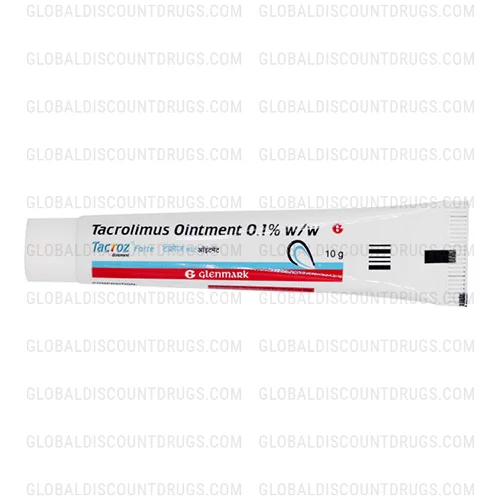
Out of StockTacrolimus 0.1% Ointment is a prescription topical calcineurin inhibitor used to manage moderate to severe atopic dermatitis in appropriate patients. Apply only to affected skin and limit unnecessary ultraviolet exposure.
| Active Ingredient: | Tacrolimus |
|---|---|
| Indication: | Atopic Dermatitis |
| Strength: | 0.1% 10g |
| Dosage Form: | Ointment |
| Manufacturer: | Glenmark |

Quick Overview
Tacrolimus 0.1% Ointment 10 g is a prescription calcineurin inhibitor ointment applied to the skin to treat moderate to severe atopic dermatitis (eczema) in adults who did not respond to other topical treatments. It calms immune activity in the skin. It requires a prescription and medical supervision because of a boxed warning about long-term safety.
Medical Supervision and Regulatory Status
Tacrolimus 0.1% Ointment 10 g is a prescription-only medicine in the United States and is not a controlled substance under federal law. The FDA approved topical tacrolimus (brand name Protopic) in 2000, and generic ointments are available. It carries a boxed warning about the long-term safety of topical calcineurin inhibitors, so a prescriber monitors the skin response, infection risk, and total time on treatment.
Clinical Context
Atopic dermatitis is a long-lasting inflammatory skin condition that causes itchy, inflamed patches and tends to flare repeatedly, often beginning in childhood.
Constant itching disrupts sleep and daily life, and scratching breaks the skin barrier, which lets bacteria and viruses in. Treatment aims to settle flares quickly and keep the barrier intact between them.
For most people, moisturizers and topical corticosteroids come first. Topical calcineurin inhibitors such as tacrolimus are a second-line option, often chosen for the face, eyelids, and skin folds, where steroids can thin the skin, or when steroids have not worked or are not advisable. The 0.1% strength is the stronger of the two tacrolimus strengths and is labeled for adults.
How Tacrolimus 0.1% Ointment 10 g Works
Tacrolimus is a calcineurin inhibitor, and it reduces skin inflammation by quieting T cells, the immune cells that drive the redness and itch of eczema.
Calcineurin is an enzyme T cells need to switch on inflammatory signals. When tacrolimus blocks it, those signals drop and the skin can calm down. Unlike corticosteroids, topical tacrolimus does not thin the skin. The label notes that exactly how it works in atopic dermatitis is not fully known.
Very little of the ointment gets into the bloodstream, about half a percent in studies, so blood levels stay low. The label still carries a boxed warning and cautions, which is why use stays limited to the areas that need it.
What Is Tacrolimus 0.1% Ointment 10 g?
Tacrolimus 0.1% Ointment 10 g is a topical calcineurin inhibitor ointment applied twice daily to affected skin to treat moderate to severe atopic dermatitis in adults.
- Drug Class: Topical calcineurin inhibitor (immunosuppressant)
- Active Ingredient: Tacrolimus, 0.1% (1 mg per gram)
- Mechanism: Blocks calcineurin in T cells, which lowers inflammatory signaling in the skin
- Available Forms and Strengths: Ointment for the skin, 0.1% (the brand also comes as 0.03%). Tube sizes vary by manufacturer and seller; this page covers a 10 g tube.
- Dosing Frequency: Thin layer twice daily to affected skin
- Regulatory Status: US prescription-only; FDA-approved 2000; boxed warning; not a controlled substance; generics available
Approved Uses
The FDA has approved tacrolimus 0.1% ointment as second-line treatment for moderate to severe atopic dermatitis in adults whose immune systems are normal.
- Moderate to severe atopic dermatitis: For short-term and non-continuous chronic treatment in adults who did not respond well to other topical prescription treatments, or when those treatments are not advisable.
- Age limits: The 0.1% strength is for adults. Children aged 2 to 15 use only the 0.03% strength, and tacrolimus ointment is not indicated for children under 2.
How to Use and Dosage
The prescriber decides how long to use it, and the labeled adult regimen is a thin layer applied to affected skin twice daily, stopping when signs clear.
Rub in the smallest amount that covers the area, gently and completely. Apply only to skin affected by eczema, and wash your hands afterward unless the hands are being treated. Keep it away from the eyes, mouth, and other moist membranes. Do not cover treated skin with bandages or wraps unless the prescriber says to. Moisturizers can be used on the same areas as directed by the prescriber.
For a missed application, put it on when you remember. If it is nearly time for the next one, skip the missed one. Never use extra or a thicker layer to catch up.
No withdrawal is known when tacrolimus is stopped. Stop once signs of atopic dermatitis clear, restart if a flare returns, and have the skin re-checked if there is no improvement after six weeks.
Side Effects
Side effects from tacrolimus ointment vary from person to person, and most reported effects are local reactions where the ointment is applied.
Boxed warning: The long-term safety of topical calcineurin inhibitors has not been established. Rare cases of skin cancer and lymphoma have been reported in people using them, although a causal link has not been shown. Continuous long-term use should be avoided in any age group, and application should be limited to areas affected by atopic dermatitis.
Common effects: Burning, itching, and redness where the ointment is applied are the most frequent effects, usually strongest in the first days and easing as the skin heals. Headache, flu-like symptoms, skin tingling, acne-like bumps, and flushing of the face after alcohol have also been reported.
Serious effects: Skin infections, including cold sores (herpes simplex), eczema herpeticum, and shingles or chickenpox virus infection, swollen lymph nodes, serious allergic reactions, and rare skin cancers or lymphoma.
Emergency Warning Signs
- Swelling of the face, lips, tongue, or throat, or trouble breathing
- Clusters of painful blisters or sores on or near the eczema, especially with fever
- Fever with spreading redness, pus, or oozing on treated skin
- Swollen glands in the neck, armpit, or groin that persist, with fever or night sweats
- A new skin growth, a changing mole, or a sore that does not heal in a treated area
- Severe burning, blistering, or skin pain that does not ease after the first few days
Call 911 for throat swelling or trouble breathing. For the other signs, contact the prescriber or a dermatologist the same day.
Warnings and Precautions
The main warnings for tacrolimus ointment concern long-term safety, skin infections, sun exposure, and use in people with weakened immune systems or widespread skin disease.
The boxed warning calls for avoiding continuous long-term use and limiting treatment to affected areas. It is not for children under 2, and the 0.1% strength is not labeled for children aged 2 to 15. The label advises a re-check if signs persist after six weeks. Tacrolimus ointment is contraindicated in people with a known allergy to tacrolimus or any ingredient in the ointment.
Use is not recommended in people with weakened immune systems, with Netherton syndrome, or with widespread redness of the skin (generalized erythroderma), because more of the drug can be absorbed. Skin infections should be cleared before starting. Natural sunlight, tanning beds, and ultraviolet light therapy should be minimized, and protective clothing helps on treated areas.
Medicines that block the CYP3A4 enzyme, such as erythromycin, itraconazole, ketoconazole, fluconazole, calcium channel blockers such as diltiazem, and cimetidine, may raise tacrolimus blood levels, mainly when large areas of skin are treated. Some people flush or feel skin irritation after drinking alcohol while using the ointment, and the prescriber can advise on that.
For pregnancy and breastfeeding, human data are limited, and little drug is absorbed, so use is a decision for the prescriber. Older adults use it the same way as other adults. The label does not call for a dose change in kidney or liver impairment given the low absorption, but extensive use in severe disease is a prescriber decision. Monitoring usually means checking the skin response, watching for infection and swollen lymph nodes, and reviewing skin changes over time.
Who Should Not Use This Medication
Tacrolimus 0.1% Ointment 10 g is not suitable for everyone, and the label names specific people for whom it should not be used.
- Anyone with a known allergy to tacrolimus or any ingredient in the ointment
- Children under 2 years old
- Children aged 2 to 15, who use only the 0.03% strength
- People with weakened immune systems
- People with Netherton syndrome or widespread redness of the skin (generalized erythroderma)
- Anyone planning continuous long-term use without prescriber supervision
Storage Instructions
Store tacrolimus ointment at room temperature, about 77 degrees Fahrenheit, with the cap closed tightly and away from heat, moisture, and direct sunlight.
Keep the tube out of sight and reach of children, ideally in a locked cabinet, and avoid storing it in a bathroom. Leftover ointment is best returned through a drug take-back site or a pharmacy mail-back program. If none is available, FDA guidance is to mix it with used coffee grounds or cat litter in a sealed bag, place it in household trash, and scratch out personal details on the label.
Frequently Asked Questions
What is the cost of Tacrolimus 0.1% Ointment 10 g without insurance?
The cost without insurance depends on the seller, brand availability, and pack size. Location and discount programs can also change what a patient pays. Generic tacrolimus ointment is generally more affordable than brand-name Protopic, so ask the pharmacy whether a generic is dispensed. Comparing quotes from licensed pharmacies helps a patient see the real total before ordering.
How can I order Tacrolimus 0.1% Ointment 10 g online?
A valid prescription is required, so ordering starts with a prescriber. The patient uploads the prescription or the prescriber sends it to a licensed US pharmacy, which dispenses the medicine and delivers it home. Before ordering, confirm the pharmacy holds a state license and has a pharmacist available to answer questions, since unlicensed sellers may ship counterfeit products.
Is Tacrolimus 0.1% Ointment 10 g available over the counter?
No, Tacrolimus 0.1% Ointment 10 g is not sold over the counter in the United States. It is prescription-only because it carries a boxed safety warning. Rules vary by country, but medical supervision is still required. Websites selling it without a prescription break US federal rules, and products may be counterfeit.
Does Tacrolimus 0.1% Ointment 10 g require a prescription?
Yes, Tacrolimus 0.1% Ointment 10 g requires a prescription from a licensed US prescriber. A medical evaluation confirms that the rash is atopic dermatitis, checks whether corticosteroids or other topicals were tried, and reviews immune status and infections. Follow-up then sets how long to use it, which is why a pharmacy cannot supply it without an order.
How long does Tacrolimus 0.1% Ointment 10 g take to work?
Itching and redness often begin to ease within the first one to two weeks of Tacrolimus 0.1% Ointment 10 g, though full clearing can take longer. The label advises re-examination if signs have not improved after six weeks. Burning at the application site is common in the first days and usually fades. Response varies by person.
Is it safe to stop taking Tacrolimus 0.1% Ointment 10 g suddenly?
Stopping Tacrolimus 0.1% Ointment 10 g is not known to cause withdrawal, and the label directs stopping once signs of atopic dermatitis clear. Symptoms can return, so the prescriber may suggest restarting at the first sign of a flare. Continuous long-term use is not advised because of the boxed warning, so ask the prescriber before extending treatment.
Can Tacrolimus 0.1% Ointment 10 g interact with other medicines?
Yes, Tacrolimus 0.1% Ointment 10 g can interact with medicines that block the CYP3A4 enzyme, including erythromycin, itraconazole, ketoconazole, fluconazole, diltiazem, and cimetidine, which may raise tacrolimus blood levels when large skin areas are treated. Alcohol can cause facial flushing in some users. Tell the pharmacist about every prescription, over-the-counter product, and skin cream you use.
What should I do if I miss a dose of Tacrolimus 0.1% Ointment 10 g?
Put on the missed layer of Tacrolimus 0.1% Ointment 10 g as soon as you remember, unless it is nearly time for the next one. In that case, skip the missed one and continue the twice-daily routine. Do not apply extra or a thicker layer to catch up. For swallowed ointment, call poison control at 1-800-222-1222.
References
- DailyMed (NIH), Tacrolimus ointment label: Current FDA-approved prescribing information, including the boxed warning, dosing, contraindications, warnings, and storage.
- MedlinePlus, Tacrolimus topical: Plain-language patient information on use, precautions, side effects, and missed doses.
- FDA, Tacrolimus (marketed as Protopic Ointment) Information: FDA postmarket drug safety page explaining the boxed warning and Medication Guide. https://www.fda.gov/drugs/postmarket-drug-safety-information-patients-and-providers/tacrolimus-marketed-protopic-ointment-information
Medical Disclaimer:
This content is for informational purposes only and does not constitute medical advice, diagnosis, or treatment. Consult a qualified specialist or physician before using Tacrolimus 0.1% Ointment 10 g.
Prescription Required (Rx) to Buy?
This medication is not available over the counter. A valid prescription from a licensed healthcare
professional is required. Always consult your doctor before use.
| Quantity | 12, 3, 6, 9 |
|---|---|
| Indication | Atopic Dermatitis |
| Active Ingredient | Tacrolimus |
| Pharmaceutical Form | Ointment |
| Manufacturer | Glenmark |
| Indian Brand | Tacroz Forte Ointment |
| US Brand Name | Advagraf, Prograf, Tacrolimus |
| Generic Name | Tacrolimus |
| Dosage | 0.1% 10g |
| Drug Type | Tubes |