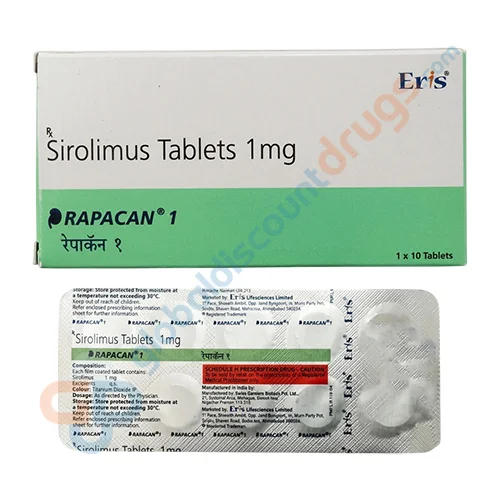
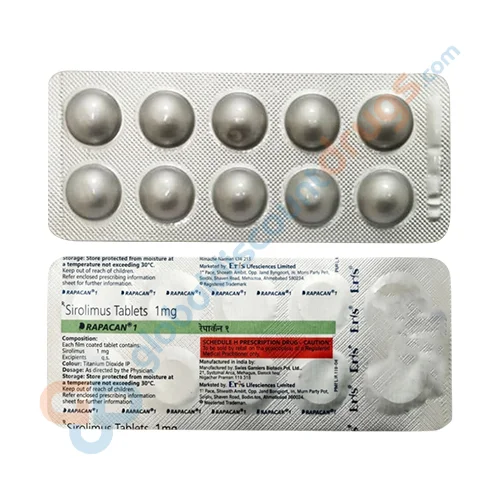
Sirolimus 1mg
In StockSirolimus 1 mg Tablet is a prescription mTOR inhibitor used to prevent rejection after selected organ transplants and for certain rare conditions. Blood levels, blood counts, cholesterol, and kidney function require monitoring.
| Active Ingredient: | Sirolimus |
|---|---|
| Indication: | Organ Transplant Rejection Prevention |
| Strength: | 1mg |
| Dosage Form: | Tablets |
| Manufacturer: | Eris Lifesciences Ltd |

Quick Overview
Sirolimus 1 mg is an mTOR inhibitor tablet used to help prevent rejection of a transplanted kidney and to treat lymphangioleiomyomatosis (LAM), a rare lung disease. It works by slowing the growth and activity of immune cells and certain lung cells. It is available only by prescription, and it requires medical supervision with regular blood level, kidney, and lipid testing.
Medical Supervision and Regulatory Status
Sirolimus 1 mg is a prescription-only drug in the United States, approved by the FDA, and it is not a controlled substance.
Supervision is needed because the dose is guided by sirolimus trough blood levels (the lowest level just before the next dose), and kidney function, urine protein, cholesterol, triglycerides, and blood counts need regular checks. The boxed warning covers serious infection, lymphoma, and skin cancer, and it states that use is not recommended in liver or lung transplant.
Clinical Context
Sirolimus 1 mg is used in people aged 13 and older who have received a kidney transplant, where the immune system may attack the new organ. That attack is called rejection, and it can lead to loss of the kidney.
It is also approved for lymphangioleiomyomatosis (LAM), a rare, progressive lung disease that mostly affects women of childbearing age. In LAM, abnormal muscle-like cells form cysts in the lungs and gradually reduce lung function, and treatment aims to slow that loss rather than reverse existing damage.
In kidney transplant, sirolimus serves as an add-on or alternative to calcineurin inhibitors such as cyclosporine and tacrolimus. The label describes starting it with cyclosporine and a corticosteroid, then withdrawing cyclosporine after 2 to 4 months in people at low to moderate immune risk, while people at high risk stay on the combination.
How Sirolimus 1 mg Works
Sirolimus belongs to the mTOR inhibitor class and works by blocking a protein called mTOR, which immune cells need in order to multiply after they are activated.
Inside a cell, sirolimus attaches to FKBP-12, the same protein tacrolimus binds, but the resulting pair acts on mTOR instead of calcineurin. This stops T-cells from moving through their growth cycle in response to interleukin-2, so fewer of them expand to attack the transplanted kidney.
In LAM, the mTOR pathway is overactive in the abnormal lung cells, and blocking it can slow their growth. In both uses the benefit is a lower risk of rejection or slower disease progression, not a cure, and the same effect on cell growth helps explain side effects such as mouth sores, slow wound healing, and higher infection risk.
What Is Sirolimus 1 mg?
Sirolimus 1 mg is an oral tablet containing the active ingredient sirolimus, an mTOR inhibitor immunosuppressant that is dispensed only on prescription in the United States.
- Drug Class: mTOR inhibitor immunosuppressant (anti-rejection medicine)
- Active Ingredient: Sirolimus
- Mechanism: Blocks mTOR, which slows the multiplication of activated T-cells and of abnormal LAM lung cells.
- Available Forms and Strengths: Tablets in 0.5 mg, 1 mg, and 2 mg, and an oral solution of 1 mg per mL (this page covers the 1 mg tablet)
- Dosing Frequency: Once daily
- Regulatory Status: Prescription only (Rx), FDA-approved, not a controlled substance, generic available (brand name Rapamune)
Approved Uses
The FDA has approved sirolimus for preventing organ rejection in people aged 13 and older who receive a kidney transplant, and for treating lymphangioleiomyomatosis.
- Kidney transplant, low to moderate immune risk: Used with cyclosporine and a corticosteroid at first, then continued with a corticosteroid after cyclosporine is withdrawn at about 2 to 4 months.
- Kidney transplant, high immune risk: Used together with cyclosporine and a corticosteroid, as the prescriber directs.
- Lymphangioleiomyomatosis (LAM): Used to treat this rare lung disease and slow the decline in lung function.
How to Use and Dosage
Your prescriber sets the dose based on the reason for treatment, body weight, liver function, and blood levels, so the amount differs from person to person.
Timing and food. Sirolimus is taken once a day at about the same time each day, either always with food or always without, because food changes how much drug is absorbed. Swallow tablets whole with water. Do not crush, chew, or split them. If cyclosporine is part of the regimen, take sirolimus 4 hours after the cyclosporine dose. Grapefruit and grapefruit juice raise sirolimus levels and should be avoided.
Missed dose. Take it as soon as you remember on the same day. If the next day’s dose is close, skip the missed one and return to the usual schedule. Never take two doses together. Call the pharmacist or prescriber if you miss several doses.
Stopping the medicine. Sirolimus protects a transplanted kidney only while it is being taken, so stopping can allow rejection, and in LAM the benefit on lung function may be lost. Do not stop or change the dose unless the prescriber directs it.
Side Effects
Side effects of sirolimus vary by dose, blood level, and the other medicines taken with it, and many can be managed with monitoring or treatment adjustments.
Boxed warning: Sirolimus weakens immune defenses, which raises the risk of serious infection, lymphoma, and skin cancer. Use is not recommended in liver transplant, where it has been linked with hepatic artery thrombosis (a blood clot in the liver’s main artery), or in lung transplant, where airway wound separation (bronchial anastomotic dehiscence) has occurred. Only clinicians experienced in immunosuppressive therapy should prescribe it.
Common effects. Swelling of the hands, feet, or legs (peripheral edema), high cholesterol and triglycerides, high blood pressure (hypertension), acne, mouth sores, constipation, diarrhea, abdominal pain, nausea, headache, fever, joint pain, and urinary tract infection are among the effects reported most often in labeled studies. Blood tests may also show low red blood cell or platelet counts.
Serious effects. These include serious infections such as Pneumocystis pneumonia, cytomegalovirus (CMV), and BK virus, along with lymphoma and skin cancer. Other serious effects are angioedema (deep swelling of the face, lips, tongue, or throat), non-infectious lung inflammation (interstitial lung disease), protein in the urine and worsening kidney function (especially with cyclosporine), poor wound healing with fluid collecting around surgical sites, new-onset diabetes, and thrombotic microangiopathy (damage to small blood vessels). Lower sperm counts have also been reported.
Emergency Warning Signs
- Fever, chills, cough, or other signs of infection
- Swelling of the face, lips, tongue, or throat, or trouble breathing
- New or worsening cough, shortness of breath, or chest tightness
- A surgical wound that opens, leaks fluid, or shows spreading redness
- Much less urine than usual, foamy urine, or rapid weight gain with swelling
- Unexplained bruising or bleeding, pale skin, or extreme tiredness
Call 911 or go to the nearest emergency department for swelling of the face or throat, trouble breathing, or chest tightness. For the other signs, contact the prescriber the same day, or use urgent care if they cannot be reached.
Warnings and Precautions
Sirolimus must not be used by anyone allergic to it, and it requires monitoring of blood levels, kidney function, urine protein, lipids, blood counts, and blood pressure.
Allergy to sirolimus or its components is the contraindication on the US label. The boxed warning advises against use in liver and lung transplant. Live vaccines should be avoided during treatment, and any vaccine should be discussed with the prescriber first. Because the drug raises skin cancer risk, limit sun and tanning bed exposure and use sunscreen and protective clothing. Healing can be slow after surgery or injury, so the surgical team should know about the medicine before any procedure, including dental work.
Many interactions change sirolimus levels. Ketoconazole, itraconazole, voriconazole, posaconazole, clarithromycin, telithromycin, and ritonavir-containing regimens are strong inhibitors, and their use with sirolimus is not recommended. Rifampin and rifabutin are strong inducers that can lower levels and are also not recommended. Diltiazem, verapamil, erythromycin, nicardipine, and grapefruit can raise levels, while carbamazepine, phenytoin, phenobarbital, and the supplement St. John’s wort can lower them. Cyclosporine raises sirolimus exposure, which is why sirolimus is taken 4 hours after it. ACE inhibitors such as lisinopril and enalapril can increase the risk of angioedema. Statins and fibrates call for monitoring for muscle injury, and cholesterol and triglycerides often need treatment during sirolimus use.
Sirolimus can cause fetal harm. People who can become pregnant should use effective birth control before starting treatment, during treatment, and for 12 weeks after the last dose, and anyone who becomes pregnant should call the prescriber instead of stopping the drug. The label advises weighing the benefit of breastfeeding against possible serious effects in the infant, so that decision belongs with the prescriber and pediatrician. Sirolimus may lower sperm counts, which can matter for people planning a family.
Older adults are monitored with extra care, since kidney, liver, and heart function often decline with age. Safety and effectiveness for kidney transplant have not been established in children under 13. Mild to moderate liver impairment calls for a lower maintenance dose, and severe impairment for a larger reduction, with trough levels guiding changes. Expect regular tests, including sirolimus trough levels, creatinine, urine protein, a lipid panel, blood counts, blood sugar, and blood pressure checks, along with periodic skin examinations.
Who Should Not Use This Medication
The only contraindication on the US label for sirolimus is a known allergy to it or its components, but several other situations call for a prescriber’s decision before use.
- Anyone with a known allergy to sirolimus or to any ingredient listed in the Medication Guide
- Liver or lung transplant recipients, because the boxed warning advises against use
- Children under 13 who need kidney transplant rejection prevention
- Anyone with an active serious infection or with major surgery scheduled
- Anyone who is due to receive a live vaccine
- Anyone who is pregnant, planning pregnancy, or breastfeeding, unless the prescriber has weighed the risks and benefits
Storage Instructions
Store Sirolimus 1 mg tablets at room temperature, between 68 and 77 degrees Fahrenheit, in the original blister pack or container, protected from light and moisture.
Keep the tablets where children and pets cannot reach them, ideally in a locked cabinet. If someone swallows tablets by accident, call Poison Control at 1-800-222-1222 or emergency services right away. For disposal, use a drug take-back program or a pharmacy kiosk. If none is available, follow FDA household disposal steps: mix the tablets with used coffee grounds or cat litter, seal them in a bag, and place the bag in the trash. Do not flush them down the toilet.
Frequently Asked Questions
What is the cost of Sirolimus 1 mg without insurance?
The cost without insurance depends on the seller, brand availability, and pack size. Location and available discounts can also change what a pharmacy charges. Generics are generally more affordable when one exists, and generic sirolimus tablets are sold in the US. Ask a licensed pharmacy for a quote before ordering, since prices can differ between sellers.
How can I order Sirolimus 1 mg online?
You can order Sirolimus 1 mg online only with a valid prescription from your transplant team, pulmonologist, or another prescriber. Upload the prescription or ask the prescriber to send it, choose a licensed US pharmacy, and receive the tablets by home delivery. Before paying, confirm the pharmacy holds a state license and has a pharmacist available to answer questions.
Is Sirolimus 1 mg available over the counter?
No, Sirolimus 1 mg is not sold over the counter in the United States. Rules differ by country, but US law classifies it as a prescription drug because it needs medical supervision, blood level testing, and regular safety monitoring. Products sold without a prescription that claim to contain sirolimus should be avoided.
Does Sirolimus 1 mg require a prescription?
Yes, a prescription is required to obtain Sirolimus 1 mg from a US pharmacy. A clinician must first confirm the reason for treatment and check liver and kidney function, then set a dose that is adjusted using trough blood levels. Those evaluations and follow-up tests are why a prescriber must stay involved throughout treatment.
How long does Sirolimus 1 mg take to work?
Sirolimus starts acting on immune cells soon after dosing, but blood levels take about a week to settle, and the full benefit varies by person. Prescribers check trough levels early in treatment and adjust the dose. In LAM, any effect on lung function is judged over months of treatment, and use for either condition is usually long term.
Is it safe to stop taking Sirolimus 1 mg suddenly?
No, stopping Sirolimus 1 mg suddenly is not safe, because a transplanted kidney can be rejected once immune suppression drops, sometimes with permanent damage. People taking it for LAM may also lose its benefit on lung function. If side effects are troubling or supply runs low, call the prescriber so a change can be planned instead of skipping doses.
Can Sirolimus 1 mg interact with other medicines?
Yes, Sirolimus 1 mg interacts with many medicines and some foods, so every new product should be checked with the pharmacist. Ketoconazole, voriconazole, clarithromycin, and grapefruit raise levels, while rifampin, carbamazepine, phenytoin, and St. John’s wort lower them. Sirolimus is taken 4 hours after cyclosporine, and ACE inhibitors can increase the risk of angioedema.
What should I do if I miss a dose of Sirolimus 1 mg?
Take the missed dose as soon as you remember on the same day, unless the next day’s dose is close, in which case skip it. Never double up to catch up. Because Sirolimus 1 mg is taken once daily, call the pharmacist or prescriber if you miss several doses or are unsure whether to take a late one.
References
- DailyMed (NIH): Current FDA-approved prescribing information and Medication Guide for sirolimus tablets, including the boxed warning, dosing, and interactions.
- MedlinePlus (NIH): Plain-language patient drug information on sirolimus, covering uses, precautions, and side effects. https://medlineplus.gov/druginfo/meds/a602026.html
- U.S. Food and Drug Administration (Drugs@FDA): Approval history and label entry for sirolimus tablets.
Medical Disclaimer:
This content is for informational purposes only and does not constitute medical advice, diagnosis, or treatment. Consult a qualified specialist or physician before using Sirolimus 1 mg.
Prescription Required (Rx) to Buy?
This medication is not available over the counter. A valid prescription from a licensed healthcare
professional is required. Always consult your doctor before use.
| Quantity | 20, 40, 60, 80 |
|---|---|
| Active Ingredient | Sirolimus |
| Pharmaceutical Form | Tablets |
| Indication | Organ Transplant Rejection Prevention |
| Manufacturer | Eris Lifesciences Ltd |
| Indian Brand | Rapacan 1mg |
| US Brand Name | Rapamune, Sirolimus |
| Generic Name | Sirolimus |
| Dosage | 1mg |
| Drug Type | Tablets |