
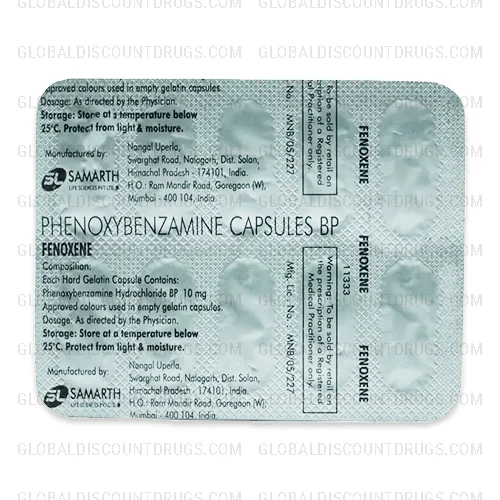
Phenoxybenzamine 10mg
In StockPhenoxybenzamine 10 mg Capsule is a prescription nonselective alpha-adrenergic blocker used to control hypertension and sweating associated with pheochromocytoma. Careful dose titration and blood-pressure monitoring are required.
| Active Ingredient: | Phenoxybenzamine |
|---|---|
| Indication: | Pheochromocytoma |
| Strength: | 10mg |
| Dosage Form: | Capsules |
| Manufacturer: | Samarth |

Quick Overview
Phenoxybenzamine 10mg is a prescription capsule from the alpha-blocker class, used to control episodes of high blood pressure and sweating caused by pheochromocytoma, a rare adrenal gland tumor. It works by binding to alpha receptors on blood vessels so adrenaline-type hormones cannot tighten them. It is available only by prescription, and a specialist should supervise its use with blood pressure and heart rate monitoring.
Medical Supervision and Regulatory Status
Phenoxybenzamine 10mg is a prescription-only capsule in the United States, FDA-approved under the brand name Dibenzyline, and it is not a controlled substance. Supervision is needed because the drug can cause sharp blood pressure drops on standing and a fast heartbeat, and doses are raised step by step against blood pressure readings. An endocrinologist, surgeon, or other specialist usually manages it.
Clinical Context
Pheochromocytoma is a rare tumor, usually in the adrenal glands, that releases excess adrenaline and noradrenaline, causing sudden surges of high blood pressure, pounding headaches, sweating, and a racing heart.
Uncontrolled surges can lead to stroke, heart rhythm problems, heart attack, or a hypertensive crisis, especially during surgery or anesthesia. Controlling the surges protects the heart and brain while the tumor is evaluated and treated.
Surgical removal is the definitive treatment. Current Endocrine Society guidance calls for alpha-adrenergic blockade before surgery, most often with phenoxybenzamine or a selective alpha-1 blocker, and a beta blocker is added only after alpha blockade is established. Phenoxybenzamine is also used when surgery is delayed or not possible.
How Phenoxybenzamine 10mg Works
Phenoxybenzamine attaches permanently to alpha-adrenergic receptors on blood vessel walls, so adrenaline and noradrenaline can no longer tighten the vessels, and blood pressure falls.
The binding is irreversible, so the effect lasts until the body builds new receptors. That is why the medicine acts slowly, builds over several days, and fades slowly after the last dose. It is also why dose changes are made gradually.
The benefit is control of blood pressure swings and sweating, not removal of the tumor. Blocking alpha receptors can speed up the heart rate, which is why a prescriber sometimes adds a beta blocker.
What Is Phenoxybenzamine 10mg?
Phenoxybenzamine 10mg is a prescription capsule containing phenoxybenzamine hydrochloride, a long-acting alpha-adrenergic blocker approved by the FDA to control blood pressure episodes and sweating in pheochromocytoma.
- Drug Class: Alpha-adrenergic blocker (nonselective, irreversible)
- Active Ingredient: Phenoxybenzamine hydrochloride
- Mechanism: Permanently blocks alpha receptors on blood vessels, so vessels relax and blood pressure falls.
- Available Forms and Strengths: Oral capsules, 10 mg. Brand name Dibenzyline. Generic availability varies.
- Dosing Frequency: Twice daily at the start, and sometimes two or three times daily later, as the prescriber directs.
- Regulatory Status: US prescription-only (Rx), FDA-approved, not a controlled substance
Approved Uses
The FDA approved phenoxybenzamine for one use in the United States: controlling episodes of high blood pressure and excess sweating in people with pheochromocytoma.
- Pheochromocytoma: The medicine reduces blood pressure surges and sweating caused by the tumor’s hormone release. The label notes that a beta blocker may be needed if the heart rate becomes too fast.
How to Use and Dosage
Your prescriber sets the phenoxybenzamine dose, and the labeled starting dose for adults is 10 mg twice daily, raised every other day according to blood pressure response.
The label describes a usual maintenance range of 20 to 40 mg two or three times a day, but only your prescriber should adjust it. Swallow capsules whole with water, and take them at consistent times each day. Taking them with food or milk may ease stomach upset.
If you miss a dose, take it when you remember on the same day. If the next dose is close, skip the missed one and keep your schedule. Never double up.
Do not stop phenoxybenzamine on your own. The label describes no withdrawal syndrome, but blood pressure surges and sweating can return as the blocking effect fades over several days. If surgery is planned, the surgical team directs when to stop.
Side Effects
Side effects vary with dose and with how quickly the dose is raised, and many are caused by the blood vessel widening that gives the medicine its effect.
Boxed warning: None is listed on the current label.
Common effects: Dizziness or lightheadedness on standing (postural hypotension), a fast heartbeat, stuffy nose, small pupils (miosis), tiredness, and difficulty with ejaculation are the most reported effects. They are usually most noticeable as the dose is increased, so stand up slowly.
Serious effects: Severe low blood pressure with fainting, a very fast or irregular heartbeat, chest pain, and allergic reactions can occur. The label also warns that alpha blockers may worsen the symptoms of a respiratory infection.
Emergency Warning Signs
- Fainting or collapse
- Chest pain, pressure, or tightness
- A very fast, pounding, or irregular heartbeat
- Sudden severe headache, confusion, weakness on one side, or trouble speaking
- Swelling of the face, lips, or tongue, or trouble breathing
- Severe shortness of breath that does not ease with rest
Call 911 or go to the nearest emergency department for any of these signs. For milder dizziness, nasal stuffiness, or sexual side effects, contact your prescriber.
Warnings and Precautions
Phenoxybenzamine requires caution in people with heart or brain artery disease, kidney damage, or respiratory infection, and it can cause large blood pressure drops, especially on standing.
The label advises against use when a fall in blood pressure would be undesirable. Specific interactions matter. Epinephrine and norepinephrine can produce an unexpected blood pressure drop when alpha receptors are blocked, and decongestants such as phenylephrine and pseudoephedrine may lose their effect. Other blood pressure medicines, including amlodipine, lisinopril, and diuretics, can add to dizziness. Beta blockers such as propranolol or metoprolol may be prescribed alongside it, but only under specialist direction. Alcohol and erectile dysfunction medicines such as sildenafil and tadalafil can also increase blood pressure drops. In long-term animal studies at high doses, phenoxybenzamine caused tumors, and the relevance to people is unknown, so the prescriber weighs this against the need for treatment.
The label states that safe use in pregnancy has not been established, although an untreated pheochromocytoma during pregnancy is itself dangerous, so the decision rests with the specialist. Tell your prescriber if you are pregnant, planning pregnancy, or breastfeeding. Older adults are more prone to dizziness and falls. Use in children is limited and should be directed by a pediatric specialist. Kidney damage calls for caution, and the label gives no specific liver guidance. Monitoring usually includes blood pressure lying down and standing, heart rate, and symptom review at each dose change, plus tests the specialist uses to follow the tumor.
Who Should Not Use This Medication
Phenoxybenzamine should not be used by people for whom a drop in blood pressure would be dangerous, or by anyone with a known allergy to it.
- People in whom a fall in blood pressure would be undesirable, as judged by the prescriber
- Anyone with a known allergy to phenoxybenzamine or any capsule ingredient
- People without a pheochromocytoma diagnosis, since the medicine is approved only for that condition
Storage Instructions
Store phenoxybenzamine capsules at room temperature, 68 to 77 degrees F (20 to 25 degrees C), in the original tightly closed container, away from moisture and light.
Avoid bathrooms, where steam raises humidity. Keep the container out of sight and reach of children and pets, and use child-resistant caps. For disposal, use a pharmacy or DEA-authorized take-back program. If none is available, mix capsules with used coffee grounds or cat litter in a sealed bag, place it in household trash, and scratch out the label on the empty bottle. Do not flush capsules. Poison Control (1-800-222-1222) can advise on accidental ingestion.
Frequently Asked Questions
What is the cost of Phenoxybenzamine 10mg without insurance?
The cost without insurance depends on the seller, brand availability, and pack size. Location and available discounts can also change what you pay. Generic phenoxybenzamine is generally more affordable than the Dibenzyline brand, if a generic is on the market. Because stock can be limited, ask a licensed pharmacist about availability and options before ordering.
How can I order Phenoxybenzamine 10mg online?
You can order phenoxybenzamine online only with a valid prescription, filled by a licensed US pharmacy. Upload the prescription or have your specialist send it electronically, then confirm the order and arrange home delivery. Before paying, check that the pharmacy holds a state license and offers a pharmacist who can answer questions about this capsule.
Is Phenoxybenzamine 10mg available over the counter?
No, phenoxybenzamine is not sold over the counter in the United States. Rules differ by country, but US law classifies it as a prescription medicine. Treating pheochromocytoma requires a confirmed diagnosis, careful dose increases, and blood pressure and heart rate checks, so a specialist must closely oversee every step of therapy.
Does Phenoxybenzamine 10mg require a prescription?
Yes, phenoxybenzamine requires a prescription from a licensed US clinician. A medical evaluation confirms the tumor diagnosis, checks heart, kidney, and blood vessel health, and sets a cautious starting dose. Follow-up visits then track standing and lying blood pressure and heart rate, so the dose can rise or fall safely as symptoms and readings change.
How long does Phenoxybenzamine 10mg take to work?
Phenoxybenzamine acts slowly, and its blocking effect builds over several days of regular use rather than within hours. Prescribers usually raise the dose every other day and judge progress by blood pressure readings and symptoms such as sweating and headaches. Timing varies by person, so full benefit may take one to two weeks.
Is it safe to stop taking Phenoxybenzamine 10mg suddenly?
Stopping phenoxybenzamine suddenly is not advised without your specialist’s direction. No withdrawal syndrome is described, but blood pressure surges and sweating can return as the blocking effect fades over several days. If surgery is planned, the surgical team sets the timing. Call your prescriber promptly if you cannot take doses because of vomiting or side effects.
Can Phenoxybenzamine 10mg interact with other medicines?
Yes, phenoxybenzamine interacts with several medicines. Epinephrine, norepinephrine, and decongestants such as phenylephrine or pseudoephedrine can behave unpredictably or lose effect. Other blood pressure medicines, including amlodipine, lisinopril, and diuretics, can add to dizziness, and so can alcohol and sildenafil or tadalafil. Give your pharmacist a full medicine list, including supplements.
What should I do if I miss a dose of Phenoxybenzamine 10mg?
Take a missed phenoxybenzamine capsule when you remember on the same day. If the next dose is only a few hours away, skip the missed one and keep your normal schedule. Do not double up, because extra drug can drop blood pressure sharply. Report repeated missed doses to your prescriber, since the dose may need adjusting.
References
- DailyMed (NIH): Current FDA-approved prescribing information for phenoxybenzamine hydrochloride capsules, including the indication, dosing, warnings, and adverse reactions.
- MedlinePlus (NIH): Plain-language patient information on phenoxybenzamine, if a page exists for this drug.
- FDA (Drugs@FDA): Approval history and labeling for Dibenzyline (phenoxybenzamine hydrochloride).
Medical Disclaimer:
This content is for informational purposes only and does not constitute medical advice, diagnosis, or treatment. Consult a qualified specialist or physician before using Phenoxybenzamine 10mg.
Prescription Required (Rx) to Buy?
This medication is not available over the counter. A valid prescription from a licensed healthcare
professional is required. Always consult your doctor before use.
| Quantity | 100, 150, 200, 50 |
|---|---|
| Indication | Pheochromocytoma |
| Active Ingredient | Phenoxybenzamine |
| Pharmaceutical Form | Capsules |
| Manufacturer | Samarth |
| Indian Brand | Fenoxene |
| US Brand Name | Phenoxybenzamine 10mg |
| Generic Name | Phenoxybenzamine |
| Dosage | 10mg |
| Drug Type | Capsules |