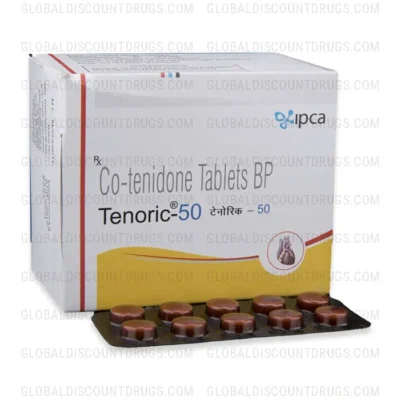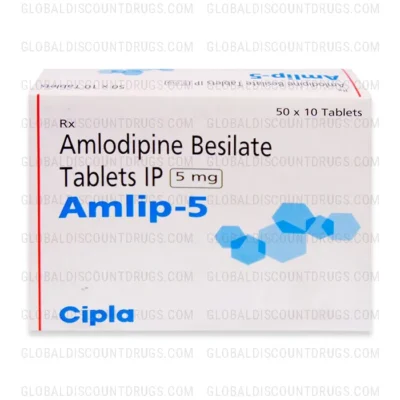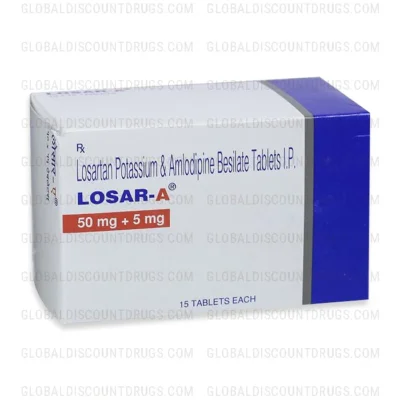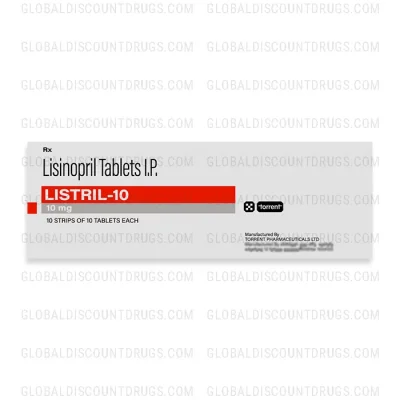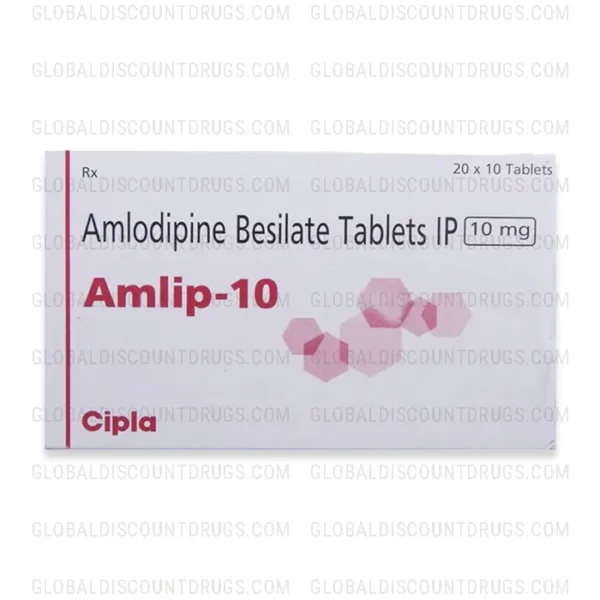
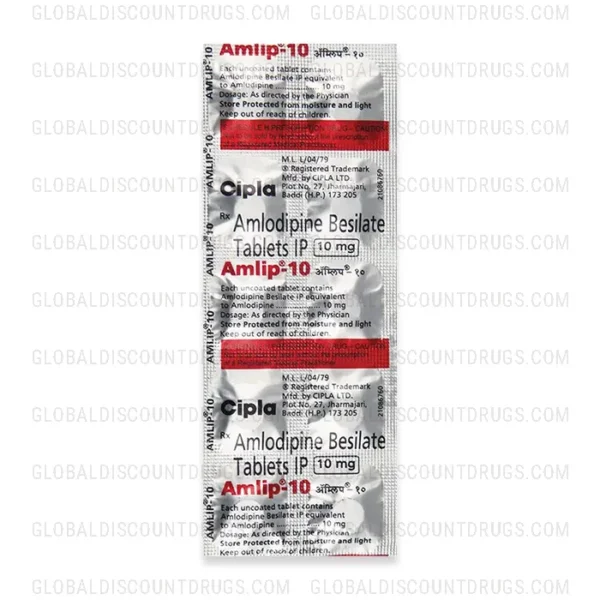
Amlodipine 10mg
In StockAmlodipine 10mg is a higher-strength dosage form of Amlodipine used to treat high blood pressure and certain heart conditions. It relaxes blood vessels, improving blood flow.
| Active Ingredient: | Amlodipine |
|---|---|
| Indication: | Hypertension |
| Strength: | 10mg |
| Dosage Form: | Tablets |
| Manufacturer: | Cipla Limited |

Quick Overview: What Is Amlodipine 10mg Used For?
Amlodipine 10mg is a prescription calcium channel blocker prescribed to lower high blood pressure and reduce chest pain (angina) in adults. It works by relaxing the walls of blood vessels, allowing the heart to pump blood with less resistance and effort. This medication must be taken only as directed by a licensed physician.
Drug Profile: What Is Amlodipine 10mg?
Drug Class: Dihydropyridine Calcium Channel Blocker Active Ingredient: Amlodipine besylate (equivalent to 10mg amlodipine) Mechanism: Blocks voltage-gated L-type calcium channels in vascular smooth muscle, reducing arterial resistance and blood pressure Dosage Form: Oral tablet Dosing Frequency: Once daily Regulatory Status: Prescription-only drug (Rx); FDA-approved
Prescription Status and Regulatory Information
Amlodipine 10mg is a prescription-only medication regulated by the U.S. Food and Drug Administration. It is not available over the counter in the United States. Physician supervision is required because blood pressure management involves individualized dosing, cardiovascular risk assessment, and periodic monitoring of heart rate, blood pressure, and organ function. Starting or adjusting this medication without medical evaluation can lead to serious cardiovascular complications.
Clinical Context: Understanding High Blood Pressure and Angina
High blood pressure (hypertension) affects nearly half of all adults in the United States. When left untreated, chronically elevated blood pressure damages arteries, increases the risk of heart attack, stroke, and kidney failure. Stable angina, a condition marked by chest pain or tightness during exertion, results from reduced blood flow through narrowed coronary arteries.
Effective treatment of hypertension and angina depends on consistently controlling blood pressure and reducing the workload placed on the heart. Without proper management, both conditions progressively worsen and significantly raise the risk of life-threatening cardiac events.
Amlodipine fits into first-line antihypertensive therapy and is widely included in clinical treatment guidelines for hypertension and chronic stable angina. At the 10mg dose, it is typically used when lower doses have not achieved adequate blood pressure control, or when the physician determines this strength is the appropriate starting point for the individual patient.
How Amlodipine 10mg Works
Amlodipine belongs to the dihydropyridine subclass of calcium channel blockers. Calcium ions play a key role in triggering contraction of smooth muscle cells in blood vessel walls. By selectively blocking the entry of calcium into these cells, amlodipine prevents the vessels from contracting with excessive force.
The result is vasodilation, meaning the blood vessels widen and relax. This reduction in vascular resistance lowers blood pressure and reduces the oxygen demand placed on the heart muscle. In patients with angina, this mechanism increases the supply of blood and oxygen to the heart, decreasing the frequency and severity of chest pain episodes.
Because of its long half-life of approximately 30 to 50 hours, amlodipine maintains stable blood levels throughout the day from a single daily dose. This prolonged action translates into smooth, consistent blood pressure control without the peaks and drops sometimes seen with shorter-acting agents.
Approved Uses and Indications
Amlodipine 10mg is approved by the FDA for two primary indications in adult patients.
Hypertension (High Blood Pressure): Amlodipine is used to treat essential hypertension, either as a standalone therapy or in combination with other antihypertensive agents. Lowering blood pressure reduces the long-term risk of cardiovascular events including stroke and myocardial infarction.
Chronic Stable Angina: Amlodipine is used to manage stable chest pain that occurs predictably during physical activity or emotional stress. It reduces the frequency of anginal episodes and may improve exercise tolerance in affected patients.
Vasospastic Angina (Prinzmetal’s or Variant Angina): Amlodipine is also indicated for the treatment of confirmed or suspected coronary artery spasm, a condition in which the coronary arteries intermittently tighten even at rest.
Dosage and Administration
The prescribing physician determines the appropriate dose of amlodipine based on individual blood pressure levels, medical history, tolerance, and response to treatment. The information below is general guidance only and does not replace physician or pharmacist instructions.
Amlodipine 10mg is typically taken once daily, with or without food, at approximately the same time each day. Consistent timing supports stable blood pressure control throughout a 24-hour period.
If a dose is missed, it should be taken as soon as remembered on the same day. If it is almost time for the next scheduled dose, the missed dose should be skipped entirely. Taking a double dose to compensate for a missed one is not safe and should be avoided.
Amlodipine should never be stopped suddenly without physician guidance. Abrupt discontinuation can cause rebound increases in blood pressure or a worsening of angina symptoms. Any decision to change or stop this medication must be made in coordination with the treating physician.
Side Effects of Amlodipine 10mg
Most patients tolerate amlodipine well, and many who experience side effects find them mild and manageable. Knowing what to expect helps patients distinguish normal responses from signs that need medical attention.
The most common side effects reported with amlodipine include swelling of the ankles or feet (peripheral edema), flushing or a sensation of warmth in the face and neck, headache, dizziness, and fatigue. Peripheral edema occurs because vasodilation causes fluid to shift from blood vessels into surrounding tissue. These effects are generally dose-dependent and more frequently reported at the 10mg strength.
Some patients experience palpitations, nausea, abdominal discomfort, or skin flushing, particularly during the first few weeks of treatment. These typically lessen as the body adjusts to the medication.
Serious but less common side effects include pronounced drops in blood pressure (hypotension), excessive slowing of the heart rate (bradycardia), and worsening of heart failure in patients with pre-existing cardiac conditions. A rare but documented risk is an increase in the frequency or severity of angina and, in very rare cases, myocardial infarction, shortly after starting therapy or increasing the dose. This appears to occur most often in patients with severe obstructive coronary artery disease.
Seek emergency medical care immediately if any of the following occur:
- Chest pain, tightness, or pressure that does not improve or is worsening
- Severe shortness of breath or difficulty breathing
- Sudden swelling of the face, lips, tongue, or throat
- Irregular or very rapid heartbeat
- Fainting or sudden loss of consciousness
- Severe dizziness or inability to stand
- Yellowing of the skin or eyes (jaundice)
Warnings, Precautions, and Drug Interactions
Patients with severely low blood pressure (hypotension) should use amlodipine with caution, as the vasodilatory effect of the drug can further reduce blood pressure to unsafe levels. Close monitoring is especially important during initial dosing or when the dose is increased.
Patients with severe aortic stenosis face particular risk because reduced afterload in the setting of outflow obstruction can precipitate hemodynamic compromise. Amlodipine should be used only after a careful risk-benefit evaluation in this population.
In patients with heart failure, amlodipine does not worsen outcomes compared to placebo, according to clinical data, but it should still be used cautiously and with appropriate monitoring by the treating cardiologist.
Regarding specific drug interactions, amlodipine is metabolized primarily through the liver enzyme CYP3A4. Medications that strongly inhibit CYP3A4, such as clarithromycin, itraconazole, ritonavir, and other protease inhibitors, can significantly raise amlodipine blood levels and increase the risk of side effects including hypotension. Conversely, strong CYP3A4 inducers such as rifampin and phenytoin may reduce the effectiveness of amlodipine.
The FDA recommends limiting the daily dose of simvastatin to 20mg when taken alongside amlodipine, due to an increased risk of simvastatin-related muscle damage (myopathy). Patients taking both medications should discuss this interaction explicitly with their physician.
Cyclosporine blood levels may rise when taken concurrently with amlodipine. Patients on cyclosporine therapy require closer monitoring and potential dose adjustment by their transplant or prescribing physician.
Grapefruit and grapefruit juice can inhibit CYP3A4 in the gut wall, potentially raising amlodipine concentrations in the blood. Patients are generally advised to avoid grapefruit products while on this medication, unless a physician advises otherwise.
Regarding pregnancy, amlodipine is classified by the FDA under the prior labeling system as Category C. Animal studies have shown adverse fetal effects at high doses, but there are limited controlled human data. Amlodipine should only be used during pregnancy when the potential benefit clearly justifies the potential risk to the fetus. Pregnant patients or those planning to become pregnant must inform their physician before continuing or starting this medication.
Amlodipine passes into breast milk. The safety for nursing infants is not well established, and the prescribing physician should evaluate whether breastfeeding should be continued or discontinued based on clinical need.
Older adults and patients with hepatic impairment tend to clear amlodipine more slowly. Lower starting doses are typically recommended in these groups to reduce the risk of excessive blood pressure lowering and associated dizziness or falls.
Who Should Not Take Amlodipine 10mg
The following individuals should not use amlodipine without explicit clearance from a physician, and in some cases it is contraindicated:
- Anyone with a known allergy or hypersensitivity to amlodipine or any other dihydropyridine calcium channel blocker
- Patients with cardiogenic shock
- Patients with hemodynamically significant aortic stenosis (in most clinical contexts)
- Patients with severely low blood pressure who have not been medically evaluated for this medication
- Patients already taking medications that carry serious interactions with amlodipine, unless medically supervised dose adjustments are in place
Storage Instructions
Store amlodipine 10mg tablets at room temperature, between 59 degrees F and 86 degrees F (15 to 30 degrees C). Keep the tablets away from moisture and direct light. Bathroom medicine cabinets are generally not ideal storage locations due to heat and humidity. Store this medication in a secure location out of the reach of children and pets. Do not use tablets past the expiration date printed on the packaging.
Frequently Asked Questions
Does amlodipine 10mg require a prescription in the United States?
Yes, amlodipine 10mg requires a valid prescription from a licensed physician. It is not available over the counter in the US. A medical evaluation is required because appropriate dosing depends on blood pressure levels, cardiovascular history, kidney function, and other individual health factors. Self-medication with amlodipine is not safe.
Is amlodipine available over the counter?
No, amlodipine is not available over the counter in the United States or most countries. It is classified as a prescription-only drug. Regulations may vary in certain regions, but medical supervision is required in most jurisdictions due to the cardiovascular risks involved in unmonitored blood pressure therapy.
What is the cost of amlodipine 10mg without insurance?
The cost without insurance depends on the seller, brand availability, and pack size, and may also vary by location and applicable discounts. Amlodipine is available as a generic, which generally makes it one of the more affordable antihypertensive medications. Discount programs through pharmacies or manufacturer assistance programs may help reduce out-of-pocket costs for eligible patients.
How can I order amlodipine 10mg online?
Ordering amlodipine online requires a valid prescription. The standard process involves uploading a current prescription or having the prescribing physician send it directly to a licensed online pharmacy, selecting the correct product, and arranging home delivery. Only use pharmacies verified by the National Association of Boards of Pharmacy (NABP) to ensure medication safety and authenticity.
How long does amlodipine 10mg take to work?
Amlodipine begins lowering blood pressure within a few hours of the first dose, but the full therapeutic effect typically develops over 7 to 14 days of consistent daily use. Patients should continue taking the medication as prescribed and attend scheduled follow-up appointments to allow the physician to assess blood pressure response and adjust the dose if needed.
Is it safe to stop taking amlodipine suddenly?
No, stopping amlodipine abruptly is not safe. Sudden discontinuation can cause a rapid increase in blood pressure or a worsening of angina symptoms. Any decision to stop or taper this medication must be made in coordination with the prescribing physician, who will guide a gradual and monitored reduction if discontinuation is appropriate.
Can amlodipine interact with other medications I am taking?
Yes, amlodipine has clinically significant interactions with several drugs including simvastatin, cyclosporine, rifampin, clarithromycin, and ritonavir, among others. Provide a complete list of all prescription drugs, over-the-counter medications, and supplements to the treating physician before starting amlodipine. Do not add or stop any medication without informing the prescribing doctor.
Resources:
- Amlodipine Patient Information: https://medlineplus.gov/druginfo/meds/a692044.html
- FDA Drug Safety Information: https://www.fda.gov/drugs
- American Heart Association Hypertension Guidelines: https://www.heart.org/en/health-topics/high-blood-pressure
References:
- MedlinePlus, National Library of Medicine. “Amlodipine.” https://medlineplus.gov/druginfo/meds/a692044.html
- ALLHAT Officers and Coordinators for the ALLHAT Collaborative Research Group. “Major outcomes in high-risk hypertensive patients randomized to angiotensin-converting enzyme inhibitor or calcium channel blocker vs diuretic.” JAMA. 2002;288(23):2981-2997. https://jamanetwork.com/journals/jama/fullarticle/195531
- DailyMed, U.S. National Library of Medicine. “Amlodipine besylate tablet prescribing information.” https://dailymed.nlm.nih.gov/dailymed/search.cfm?labeltype=all&query=amlodipine
Disclaimer
This content is for informational purposes only and does not constitute medical advice, diagnosis, or treatment. Consult a qualified specialist or physician before using Amlodipine 10mg. Read our full medical disclaimer for more details
Prescription Required (Rx) to Buy?
This medication is not available over the counter. A valid prescription from a licensed healthcare
professional is required. Always consult your doctor before use.
| Quantity | 120, 30, 60, 90 |
|---|---|
| Indication | Hypertension |
| Active Ingredient | Amlodipine |
| Pharmaceutical Form | Tablets |
| Manufacturer | Cipla Limited |
| Indian Brand | Amlip 10mg |
| US Brand Name | Amlo, Amlodipine, Amlodipine Besylate, Istin, Norvasc |
| Generic Name | Amlodipine |
| Dosage | 10mg |
| Drug Type | Tablets |