
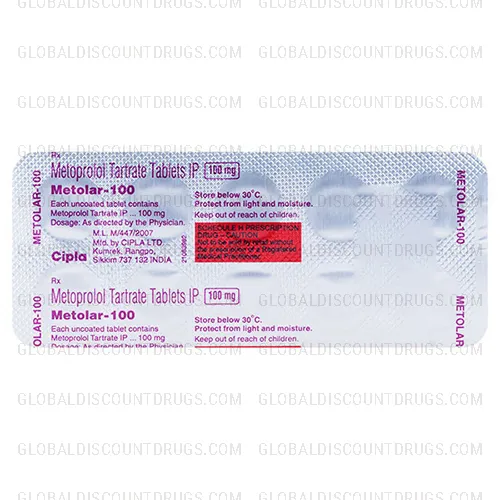
Metoprolol 100mg
In StockMetoprolol 100 mg Tablet is a higher-strength prescription beta-1 selective blocker used for individualized cardiovascular treatment. Heart rate, blood pressure, and treatment response should be reviewed during dose adjustment.
| Active Ingredient: | Metoprolol |
|---|---|
| Indication: | Hypertension |
| Strength: | 100mg |
| Dosage Form: | Tablets |
| Manufacturer: | Cipla Limited |

Quick Overview
Metoprolol 100 mg is a beta blocker tablet used to treat high blood pressure, chest pain from angina, and to lower the risk of death after a heart attack. It works by slowing the heart rate and easing the force of each heartbeat. It is available only by prescription, and it requires medical supervision, including heart rate and blood pressure checks.
Medical Supervision and Regulatory Status
Metoprolol 100 mg is a prescription-only drug in the United States, approved by the FDA, and it is not a controlled substance.
Supervision is needed because the dose is adjusted to heart rate and blood pressure, and because stopping suddenly can trigger chest pain, a heart attack, or dangerous heart rhythms in people with coronary artery disease. The boxed warning addresses this risk.
Clinical Context
Metoprolol 100 mg is used for hypertension (high blood pressure), angina (chest pain from reduced blood flow to the heart), and treatment after a suspected or confirmed heart attack. Uncontrolled high blood pressure raises the risk of stroke, heart attack, heart failure, and kidney disease, often without causing symptoms.
In angina, the drug lowers how hard the heart works, which can reduce the number of chest pain episodes. After a heart attack, it is used to lower the chance of death from cardiovascular causes.
For high blood pressure alone, current US guidelines list thiazide-type diuretics, ACE inhibitors, angiotensin receptor blockers, and calcium channel blockers as first-line options. Beta blockers such as metoprolol are usually chosen when there is also coronary artery disease, a prior heart attack, or angina, and they are often added to other blood pressure medicines.
How Metoprolol 100 mg Works
Metoprolol is a beta-1 selective beta blocker that blocks adrenaline (epinephrine) from stimulating receptors in the heart, which slows the heart rate and lowers blood pressure.
By reducing heart rate and the force of each contraction, the heart needs less oxygen. That is how the drug eases angina and why it helps protect the heart muscle after a heart attack. In blood pressure treatment, it also lowers the release of renin, a kidney hormone that raises blood pressure.
Beta-1 selective means that at usual doses it acts mainly on the heart rather than the lungs, but the selectivity is not absolute and fades as the dose rises. This is why people with asthma or COPD need extra caution, and why the benefit builds gradually instead of appearing at once.
What Is Metoprolol 100 mg?
Metoprolol 100 mg is a prescription tablet containing metoprolol tartrate, an immediate-release beta blocker, and this page describes that form rather than the extended-release metoprolol succinate tablet.
- Drug Class: Beta-1 selective adrenergic blocker (beta blocker)
- Active Ingredient: Metoprolol tartrate
- Mechanism: Blocks beta-1 receptors in the heart, which slows heart rate and lowers blood pressure and the heart’s oxygen demand.
- Available Forms and Strengths: Immediate-release tablets in several strengths, including 25 mg, 50 mg, and 100 mg (this page covers the 100 mg tablet), and an injection for hospital use
- Dosing Frequency: Once or twice daily, as the prescriber directs
- Regulatory Status: Prescription only (Rx), FDA-approved, not a controlled substance, generic available (brand name Lopressor)
Approved Uses
The FDA has approved metoprolol tartrate tablets for high blood pressure, long-term treatment of angina, and reducing the risk of cardiovascular death after a definite or suspected heart attack.
- Hypertension: Used alone or with other blood pressure medicines to lower blood pressure and reduce the risk of stroke, heart attack, and kidney problems.
- Angina pectoris: Used for long-term treatment to reduce the frequency of chest pain caused by reduced blood flow to the heart.
- Myocardial infarction (heart attack): Used during or soon after a definite or suspected heart attack to lower the risk of cardiovascular death.
Heart failure is an approved use of the extended-release succinate form only and is not covered on this page.
How to Use and Dosage
Your prescriber sets the dose based on the condition treated, heart rate, blood pressure, and how well you tolerate it, so the amount differs from person to person.
Timing and food. Tablets are taken once or twice a day as prescribed, with or immediately after a meal, because food increases how much drug is absorbed and keeps levels steady. Swallow them with water and keep the same routine every day. Because 100 mg is a higher strength, do not switch between strengths or combine tablets of different strengths unless the prescriber or pharmacist tells you how. Do not split tablets unless the prescriber or pharmacist says the product allows it. If a home blood pressure monitor is advised, check your pulse and pressure at the times your prescriber suggests.
Missed dose. Take it as soon as you remember. If the next dose is almost due, skip the missed one and go back to the usual schedule. Never take two doses together. Call the pharmacist or prescriber if you miss more than one dose or run out.
Stopping the medicine. Do not stop suddenly. The boxed warning describes severe worsening of angina, heart attack, and dangerous heart rhythms after abrupt withdrawal in people with coronary artery disease. When stopping is planned, the label calls for lowering the dose gradually over about 1 to 2 weeks, with close monitoring.
Side Effects
Side effects of metoprolol vary by person and dose, and many are mild and ease as the body adjusts, but some need prompt attention.
Boxed warning: Stopping metoprolol abruptly can cause severe worsening of angina, heart attack, and dangerous ventricular heart rhythms, especially in people with coronary artery disease. Dose reductions should be gradual, over about 1 to 2 weeks, and anyone with known or possible coronary disease should be told not to interrupt treatment without medical advice.
Common effects. Tiredness, dizziness, depression, shortness of breath, slow heartbeat, diarrhea, nausea, rash or itching, cold hands and feet, trouble sleeping, and headache are among the effects reported in labeled studies. Tiredness and dizziness were the most frequent, affecting roughly 1 in 10 people, while the others were reported less often.
Serious effects. These include worsening heart failure, a very slow heartbeat or heart block, low blood pressure with fainting, wheezing or bronchospasm in people with asthma or COPD, and worse circulation in the arms or legs in people with peripheral artery disease. Metoprolol can also hide warning signs of low blood sugar (hypoglycemia) and an overactive thyroid, and it may make allergic reactions harder to treat.
Emergency Warning Signs
- New or worsening chest pain, or pain spreading to the arm, jaw, or back
- Fainting or near-fainting
- A pulse below 50 beats per minute with dizziness, or a very slow or irregular heartbeat
- Wheezing, chest tightness, or trouble breathing
- Swelling of the ankles or feet, rapid weight gain, or breathlessness when lying flat
- Swelling of the lips, tongue, or throat, or hives
- Confusion, unusual drowsiness, or shakiness in someone with diabetes, which may signal low blood sugar
Call 911 or go to the nearest emergency department for chest pain, fainting, trouble breathing, or swelling of the face or throat. For the other signs, contact the prescriber the same day, or use urgent care if they cannot be reached.
Warnings and Precautions
Metoprolol must not be used in severe slow heart rate, high-degree heart block, cardiogenic shock, or decompensated heart failure, and it requires regular heart rate and blood pressure checks.
The US label lists severe bradycardia (a very slow heart rate), second and third degree heart block, sick sinus syndrome without a pacemaker, cardiogenic shock, decompensated heart failure, and known hypersensitivity as contraindications. Caution is also needed in people with heart failure, asthma or COPD, peripheral artery disease, diabetes, and thyroid disease, and in those with an untreated pheochromocytoma (an adrenal gland tumor), where an alpha blocker is given first. Tell the surgical and anesthesia teams about metoprolol before any procedure, and do not stop it beforehand unless told to. In diabetes, the drug can mask a fast heartbeat caused by low blood sugar, so check glucose as advised.
Several interactions matter. Fluoxetine, paroxetine, bupropion, quinidine, propafenone, terbinafine, diphenhydramine, and hydroxychloroquine can raise metoprolol levels by blocking the CYP2D6 enzyme. Verapamil, diltiazem, digoxin, amiodarone, and other beta blockers (including timolol eye drops) can slow the heart rate or conduction too much. Clonidine can cause severe rebound high blood pressure if stopped while a beta blocker continues, so the prescriber has a set order for stopping. Reserpine and MAO inhibitors add to the effect, ibuprofen and naproxen can blunt the blood pressure effect, and injected epinephrine can cause a sharp rise in blood pressure with a slow pulse. Insulin and sulfonylureas can have their warning signs of low blood sugar hidden. Alcohol can add to dizziness and low blood pressure, so ask the prescriber what is acceptable.
The label notes that metoprolol crosses the placenta, and newborns exposed late in pregnancy should be watched for a slow heart rate, low blood sugar, and breathing problems. Untreated high blood pressure also carries risks in pregnancy, so the prescriber weighs the options and no one should stop on their own. Small amounts pass into breast milk, and a breastfed infant should be watched for a slow heartbeat and drowsiness.
Older adults may be more sensitive to the effects on heart rate and blood pressure, so dosing is started with care. Safety and effectiveness of the tablets have not been established in children. People with liver impairment may need lower doses because the liver clears most of the drug, and people who are poor CYP2D6 metabolizers may have higher levels and a slower pulse. Expect regular checks of heart rate and blood pressure, an ECG when indicated, and review for signs of heart failure.
Who Should Not Use This Medication
The label lists several heart conditions and allergy as reasons not to use metoprolol, and other situations call for a prescriber’s decision first.
- Anyone with severe bradycardia (a very slow heart rate)
- Anyone with second or third degree heart block
- Anyone with sick sinus syndrome who does not have a permanent pacemaker
- Anyone in cardiogenic shock or with decompensated heart failure
- Anyone with a known allergy to metoprolol or any ingredient listed in the Medication Guide
- People with severe asthma or COPD, severe peripheral artery disease, or an untreated pheochromocytoma, unless the prescriber has weighed the risks and benefits
Storage Instructions
Store Metoprolol 100 mg tablets at room temperature, between 68 and 77 degrees Fahrenheit, in a tight container, away from moisture, heat, and direct light.
Keep the tablets where children and pets cannot reach them, ideally in a locked cabinet, and avoid the bathroom because of humidity. An overdose can cause a very slow heartbeat, low blood pressure, and trouble breathing, so call Poison Control at 1-800-222-1222, or emergency services if the person has collapsed or cannot be awakened. For disposal, use a drug take-back program or a pharmacy kiosk. If none is available, follow FDA household disposal steps: mix the tablets with used coffee grounds or cat litter, seal them in a bag, and place the bag in the trash.
Frequently Asked Questions
What is the cost of Metoprolol 100 mg without insurance?
The cost without insurance depends on the seller, brand availability, and pack size. Location and available discounts can also change what a pharmacy charges. Generics are generally more affordable when one exists, and generic metoprolol tartrate tablets are widely sold in the US. Ask a licensed pharmacy for a quote before ordering, since prices can differ between sellers.
How can I order Metoprolol 100 mg online?
You can order Metoprolol 100 mg online only with a valid prescription from your prescriber. Upload the prescription or ask the prescriber to send it, choose a licensed US pharmacy, and receive the tablets by home delivery. Before paying, confirm the pharmacy holds a state license and has a pharmacist available to answer questions.
Is Metoprolol 100 mg available over the counter?
No, Metoprolol 100 mg is not sold over the counter in the United States. Rules differ by country, but US law classifies it as a prescription drug because it needs a medical evaluation of heart rate, blood pressure, and heart conditions before and during use. Products sold without a prescription that claim to contain metoprolol should be avoided.
Does Metoprolol 100 mg require a prescription?
Yes, a prescription is required to obtain Metoprolol 100 mg from a US pharmacy. A clinician must first confirm the diagnosis and check heart rate, blood pressure, and conditions such as asthma or heart block that affect safety. Follow-up visits and dose adjustments are why a prescriber must stay involved throughout treatment.
How long does Metoprolol 100 mg take to work?
Metoprolol slows the heart rate within a few hours of a dose, but the full effect on blood pressure can take up to a week or longer, and the timeline varies by person. Angina relief is judged over weeks of regular use. Take it every day as prescribed, even when readings are normal, and keep follow-up visits.
Is it safe to stop taking Metoprolol 100 mg suddenly?
No, stopping Metoprolol 100 mg suddenly is not safe, because it can cause severe chest pain, a heart attack, or dangerous heart rhythms, especially in people with coronary artery disease. When treatment must end, the prescriber lowers the dose gradually over about 1 to 2 weeks. Call the prescriber before stopping, and urgently if you run out.
Can Metoprolol 100 mg interact with other medicines?
Yes, Metoprolol 100 mg interacts with several medicines, so every new product should be checked with the pharmacist. Verapamil, diltiazem, digoxin, and amiodarone can slow the heart too much, while fluoxetine, paroxetine, and bupropion raise metoprolol levels. Clonidine can cause rebound high blood pressure when stopped, and ibuprofen or naproxen can weaken the blood pressure effect.
What should I do if I miss a dose of Metoprolol 100 mg?
Take the missed dose as soon as you remember, unless it is almost time for the next one, in which case skip the missed dose. Never double up to catch up. Because abrupt gaps can affect heart rate and blood pressure, call the pharmacist or prescriber if you miss more than one dose or are unsure what to do.
References
- DailyMed (NIH): Current FDA-approved prescribing information and Medication Guide for metoprolol tartrate tablets, including the boxed warning, dosing, and interactions.
- MedlinePlus (NIH): Plain-language patient drug information on metoprolol, covering uses, precautions, and side effects. https://medlineplus.gov/druginfo/meds/a682864.html
- U.S. Food and Drug Administration (Drugs@FDA): Approval history and label entry for metoprolol tartrate tablets.
Medical Disclaimer
This content is for informational purposes only and does not constitute medical advice, diagnosis, or treatment. Consult a qualified specialist or physician before using Metoprolol 100 mg.
Prescription Required (Rx) to Buy?
This medication is not available over the counter. A valid prescription from a licensed healthcare
professional is required. Always consult your doctor before use.
| Quantity | 120, 180, 240, 60 |
|---|---|
| Indication | Hypertension |
| Active Ingredient | Metoprolol |
| Pharmaceutical Form | Tablets |
| Manufacturer | Cipla Limited |
| Indian Brand | Metolar 100 Tablet 10's |
| US Brand Name | Betaloc, Betaloc XL, Lopressor, Metohexal, Metohexal XL, Metolol, Metolol XL, Metoprolol, Minax, Minax XL, Toprol, Toprol XL |
| Generic Name | Metoprolol |
| Dosage | 100mg |
| Drug Type | Tablets |
Is this medicine effective for daily symptom control?
Yes. When taken as directed, it helps maintain steady relief throughout the day. Regular use can improve comfort, reduce flare-ups, and support better daily functioning without needing frequent dose adjustments.
Are there benefits to buying the generic version?
Yes. Generic versions offer the same therapeutic benefits at a lower price. They are widely chosen for long-term use due to cost savings, consistent quality, and easier access without insurance restrictions.
Does this medication provide long-lasting results?
It is designed to deliver reliable, sustained benefits when taken consistently. Many users report improved symptom stability over time, making it suitable for ongoing management rather than short-term relief alone.
How do coupons help reduce the cost of this medication?
Coupons help lower the out-of-pocket cost by offering instant discounts. They are especially helpful for people buying without insurance, making long-term treatment more affordable and easier to manage within a monthly budget.