
Metoprolol XL 25mg
In StockMetoprolol Succinate 25 mg Extended-Release Tablet is a prescription beta-1 selective blocker used for hypertension, angina, and stable symptomatic heart failure. Take it once daily as prescribed and do not stop it abruptly.
| Active Ingredient: | Metoprolol |
|---|---|
| Indication: | Hypertension |
| Strength: | XL 25mg |
| Dosage Form: | Tablets |
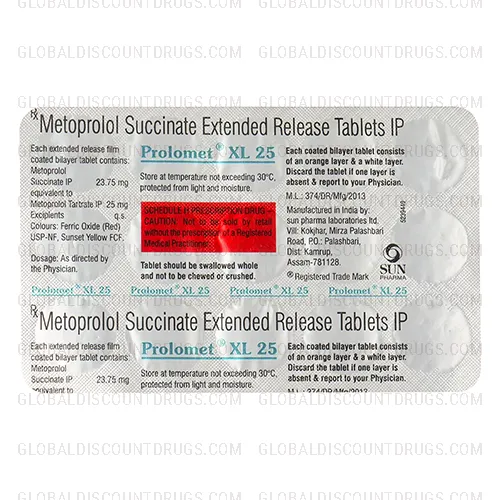
| Manufacturer: | Sun Pharma |

Quick Overview
Metoprolol XL 25 mg is an extended-release beta blocker tablet used to treat high blood pressure, angina, and stable heart failure. It works by slowing the heart rate and easing the workload of the heart across a full day. It is available only by prescription, and it requires medical supervision, including heart rate and blood pressure checks.
Medical Supervision and Regulatory Status
Metoprolol XL 25 mg is a prescription-only drug in the United States, approved by the FDA, and it is not a controlled substance.
Supervision is needed because the dose is adjusted to heart rate, blood pressure, and heart failure symptoms, and because stopping suddenly can trigger chest pain, a heart attack, or dangerous heart rhythms in people with coronary artery disease. The boxed warning addresses this risk.
Clinical Context
Metoprolol XL 25 mg is used for hypertension (high blood pressure), angina (chest pain from reduced blood flow to the heart), and stable symptomatic heart failure. In heart failure, the heart muscle is too weak to pump blood as well as the body needs, which causes breathlessness, tiredness, and swelling. The drug is used to lower the chance of death from cardiovascular causes and of hospital stays for heart failure.
High blood pressure raises the risk of stroke, heart attack, and kidney disease, often without symptoms, while angina reflects heart muscle that is not getting enough oxygen. For each condition, treatment is meant to continue long term, and in heart failure the dose is increased slowly, with the label describing steps no sooner than about every 2 weeks.
In heart failure with reduced ejection fraction, metoprolol succinate is one of three beta blockers with proven survival benefit, alongside carvedilol and bisoprolol, and it is used with other guideline-directed medicines. For high blood pressure alone, thiazide-type diuretics, ACE inhibitors, angiotensin receptor blockers, and calcium channel blockers are first-line options, and beta blockers are usually chosen when there is also angina, a prior heart attack, or heart failure.
How Metoprolol XL 25 mg Works
Metoprolol is a beta-1 selective beta blocker that blocks adrenaline (epinephrine) from stimulating receptors in the heart, which slows the heart rate and lowers blood pressure.
The XL stands for extended release. The tablet is built to release metoprolol succinate steadily through the day, which keeps blood levels smoother than immediate-release tablets and allows a single daily dose. The heart needs less oxygen when it beats more slowly and with less force, which is how the drug eases angina.
By blunting the constant adrenaline drive on a weakened heart, long-term treatment can reduce strain and, in heart failure, may improve survival and lower hospital stays. Selectivity for the heart is not absolute and fades at higher doses, so people with asthma or COPD need extra caution.
What Is Metoprolol XL 25 mg?
Metoprolol XL 25 mg is an extended-release tablet containing metoprolol succinate, a prescription beta blocker taken once daily, and it is a different product from immediate-release metoprolol tartrate.
- Drug Class: Beta-1 selective adrenergic blocker (beta blocker)
- Active Ingredient: Metoprolol succinate
- Mechanism: Blocks beta-1 receptors in the heart, which slows heart rate and lowers blood pressure and the heart’s oxygen demand, with release spread over the day.
- Available Forms and Strengths: Extended-release tablets in 25 mg, 50 mg, 100 mg, and 200 mg (this page covers the 25 mg tablet)
- Dosing Frequency: Once daily
- Regulatory Status: Prescription only (Rx), FDA-approved, not a controlled substance, generic available (brand name Toprol-XL)
Approved Uses
The FDA has approved metoprolol succinate extended-release tablets for high blood pressure, long-term treatment of angina, and stable symptomatic heart failure to reduce cardiovascular death and heart failure hospitalization.
- Hypertension: Used alone or with other medicines to lower blood pressure in adults and in children 6 years of age and older.
- Angina pectoris: Used for long-term treatment to reduce the frequency of chest pain caused by reduced blood flow to the heart.
- Heart failure: Used in stable, symptomatic heart failure (NYHA class II or III) of ischemic, hypertensive, or cardiomyopathic origin, together with standard therapy.
How to Use and Dosage
Your prescriber sets the dose based on the condition treated, heart rate, and blood pressure, and raises it gradually, so the amount differs from person to person.
Timing and food. Take one dose once a day at about the same time, with or immediately after a meal. Swallow the tablet whole with water. Some tablets are scored and may be divided if the prescriber or pharmacist says so, but each half must still be swallowed whole. Do not crush or chew them, because breaking the extended-release design can release too much drug at once. Do not switch between this product and immediate-release metoprolol unless the prescriber gives a new dosing plan.
Missed dose. Take it as soon as you remember on the same day. If the next day’s dose is close, skip the missed one and return to the usual schedule. Never take two doses together. Call the pharmacist or prescriber if you miss more than one dose or run out.
Stopping the medicine. Do not stop suddenly. The boxed warning describes severe worsening of angina, heart attack, and dangerous heart rhythms after abrupt withdrawal in people with coronary artery disease. When stopping is planned, the label calls for lowering the dose gradually over about 1 to 2 weeks, with close monitoring.
Side Effects
Side effects of metoprolol vary by person and dose, and many are mild and ease as the body adjusts, but some need prompt attention.
Boxed warning: Stopping metoprolol abruptly can cause severe worsening of angina, heart attack, and dangerous ventricular heart rhythms, especially in people with coronary artery disease. Dose reductions should be gradual, over about 1 to 2 weeks, and anyone with known or possible coronary disease should be told not to interrupt treatment without medical advice.
Common effects. Tiredness, dizziness, slow heartbeat, shortness of breath, depression, diarrhea, nausea, rash or itching, cold hands and feet, and headache are among the effects reported most often in labeled studies. In heart failure, symptoms such as fatigue and fluid retention can briefly worsen when treatment is started or the dose is raised.
Serious effects. These include worsening heart failure, a very slow heartbeat or heart block, low blood pressure with fainting, wheezing or bronchospasm in people with asthma or COPD, and worse circulation in the arms or legs in people with peripheral artery disease. Metoprolol can also hide warning signs of low blood sugar (hypoglycemia) and an overactive thyroid, and it may make allergic reactions harder to treat.
Emergency Warning Signs
- New or worsening chest pain, or pain spreading to the arm, jaw, or back
- Fainting or near-fainting
- A pulse below 50 beats per minute with dizziness, or a very slow or irregular heartbeat
- Wheezing, chest tightness, or trouble breathing
- Swelling of the ankles or feet, rapid weight gain, or breathlessness when lying flat
- Swelling of the lips, tongue, or throat, or hives
- Confusion, unusual drowsiness, or shakiness in someone with diabetes, which may signal low blood sugar
Call 911 or go to the nearest emergency department for chest pain, fainting, trouble breathing, or swelling of the face or throat. For the other signs, contact the prescriber the same day, or use urgent care if they cannot be reached.
Warnings and Precautions
Metoprolol must not be used in severe slow heart rate, high-degree heart block, cardiogenic shock, or decompensated heart failure, and it requires regular heart rate and blood pressure checks.
The US label lists severe bradycardia (a very slow heart rate), second and third degree heart block, sick sinus syndrome without a pacemaker, cardiogenic shock, decompensated heart failure, and known hypersensitivity as contraindications. Caution is also needed in people with asthma or COPD, peripheral artery disease, diabetes, and thyroid disease, and in those with an untreated pheochromocytoma (an adrenal gland tumor), where an alpha blocker is given first. In heart failure, treatment starts at a low dose in stable patients, and the prescriber may adjust water pills (diuretics) if swelling or weight gain appears. Tell the surgical and anesthesia teams about metoprolol before any procedure, and do not stop it beforehand unless told to. In diabetes, the drug can mask a fast heartbeat caused by low blood sugar, so check glucose as advised.
Several interactions matter. Fluoxetine, paroxetine, bupropion, quinidine, propafenone, terbinafine, diphenhydramine, and hydroxychloroquine can raise metoprolol levels by blocking the CYP2D6 enzyme. Verapamil, diltiazem, digoxin, amiodarone, and other beta blockers (including timolol eye drops) can slow the heart rate or conduction too much. Clonidine can cause severe rebound high blood pressure if stopped while a beta blocker continues, so the prescriber has a set order for stopping. Reserpine and MAO inhibitors add to the effect, ibuprofen and naproxen can blunt the blood pressure effect, and injected epinephrine can cause a sharp rise in blood pressure with a slow pulse. Insulin and sulfonylureas can have their warning signs of low blood sugar hidden. Alcohol can add to dizziness and low blood pressure, so ask the prescriber what is acceptable.
The label notes that metoprolol crosses the placenta, and newborns exposed late in pregnancy should be watched for a slow heart rate, low blood sugar, and breathing problems. Untreated high blood pressure and heart disease also carry risks in pregnancy, so the prescriber weighs the options and no one should stop on their own. Small amounts pass into breast milk, and a breastfed infant should be watched for a slow heartbeat and drowsiness.
Older adults may be more sensitive to the effects on heart rate and blood pressure, so dosing is started with care. The tablets are labeled for high blood pressure in children 6 years and older, and their safety and effectiveness for angina and heart failure in children have not been established. People with liver impairment may need lower doses because the liver clears most of the drug, and people who are poor CYP2D6 metabolizers may have higher levels and a slower pulse. Expect regular checks of heart rate and blood pressure, an ECG when indicated, and review of heart failure symptoms such as swelling, weight gain, and breathlessness.
Who Should Not Use This Medication
The label lists several heart conditions and allergy as reasons not to use metoprolol, and other situations call for a prescriber’s decision first.
- Anyone with severe bradycardia (a very slow heart rate)
- Anyone with second or third degree heart block
- Anyone with sick sinus syndrome who does not have a permanent pacemaker
- Anyone in cardiogenic shock or with decompensated heart failure
- Anyone with a known allergy to metoprolol or any ingredient listed in the Medication Guide
- People with severe asthma or COPD, severe peripheral artery disease, or an untreated pheochromocytoma, unless the prescriber has weighed the risks and benefits
Storage Instructions
Store Metoprolol XL 25 mg tablets at room temperature, between 68 and 77 degrees Fahrenheit, in a tight container, away from moisture, heat, and direct light.
Keep the tablets where children and pets cannot reach them, ideally in a locked cabinet, and avoid the bathroom because of humidity. An overdose can cause a very slow heartbeat, low blood pressure, and trouble breathing, so call Poison Control at 1-800-222-1222, or emergency services if the person has collapsed or cannot be awakened. For disposal, use a drug take-back program or a pharmacy kiosk. If none is available, follow FDA household disposal steps: mix the tablets with used coffee grounds or cat litter, seal them in a bag, and place the bag in the trash.
Frequently Asked Questions
What is the cost of Metoprolol XL 25 mg without insurance?
The cost without insurance depends on the seller, brand availability, and pack size. Location and available discounts can also change what a pharmacy charges. Generics are generally more affordable when one exists, and generic metoprolol succinate extended-release tablets are widely sold in the US. Ask a licensed pharmacy for a quote before ordering, since prices can differ between sellers.
How can I order Metoprolol XL 25 mg online?
You can order Metoprolol XL 25 mg online only with a valid prescription from your prescriber. Upload the prescription or ask the prescriber to send it, choose a licensed US pharmacy, and receive the tablets by home delivery. Before paying, confirm the pharmacy holds a state license and has a pharmacist available to answer questions.
Is Metoprolol XL 25 mg available over the counter?
No, Metoprolol XL 25 mg is not sold over the counter in the United States. Rules differ by country, but US law classifies it as a prescription drug because it needs a medical evaluation of heart rate, blood pressure, and heart conditions before and during use. Products sold without a prescription that claim to contain metoprolol should be avoided.
Does Metoprolol XL 25 mg require a prescription?
Yes, a prescription is required to obtain Metoprolol XL 25 mg from a US pharmacy. A clinician must first confirm the diagnosis and check heart rate, blood pressure, and conditions such as asthma or heart block that affect safety. Follow-up visits and dose adjustments are why a prescriber must stay involved throughout treatment.
How long does Metoprolol XL 25 mg take to work?
Metoprolol XL starts slowing the heart rate within hours of a dose, but the full effect on blood pressure can take a week or longer, and the timeline varies by person. In heart failure, benefit builds over months, and doses are raised slowly. Take it every day as prescribed, even when readings are normal, and keep follow-up visits.
Is it safe to stop taking Metoprolol XL 25 mg suddenly?
No, stopping Metoprolol XL 25 mg suddenly is not safe, because it can cause severe chest pain, a heart attack, or dangerous heart rhythms, especially in people with coronary artery disease. When treatment must end, the prescriber lowers the dose gradually over about 1 to 2 weeks. Call the prescriber before stopping, and urgently if you run out.
Can Metoprolol XL 25 mg interact with other medicines?
Yes, Metoprolol XL 25 mg interacts with several medicines, so every new product should be checked with the pharmacist. Verapamil, diltiazem, digoxin, and amiodarone can slow the heart too much, while fluoxetine, paroxetine, and bupropion raise metoprolol levels. Clonidine can cause rebound high blood pressure when stopped, and ibuprofen or naproxen can weaken the blood pressure effect.
What should I do if I miss a dose of Metoprolol XL 25 mg?
Take the missed dose as soon as you remember on the same day, unless it is almost time for the next one, in which case skip the missed dose. Never double up to catch up. Because Metoprolol XL 25 mg is taken once daily, call the pharmacist or prescriber if you miss more than one dose.
References
- DailyMed (NIH): Current FDA-approved prescribing information and Medication Guide for metoprolol succinate extended-release tablets, including the boxed warning, dosing, and interactions.
- MedlinePlus (NIH): Plain-language patient drug information on metoprolol, covering uses, precautions, and side effects. https://medlineplus.gov/druginfo/meds/a682864.html
- U.S. Food and Drug Administration (Drugs@FDA): Approval history and label entry for metoprolol succinate extended-release tablets.
Medical Disclaimer:
This content is for informational purposes only and does not constitute medical advice, diagnosis, or treatment. Consult a qualified specialist or physician before using Metoprolol XL 25 mg.
Prescription Required (Rx) to Buy?
This medication is not available over the counter. A valid prescription from a licensed healthcare
professional is required. Always consult your doctor before use.
| Quantity | 120, 30, 60, 90 |
|---|---|
| Indication | Hypertension |
| Active Ingredient | Metoprolol |
| Pharmaceutical Form | Tablets |
| Manufacturer | Sun Pharma |
| Indian Brand | Prolomet XL 25 Tablet 15's |
| US Brand Name | Metoprolol XL |
| Generic Name | Metoprolol |
| Dosage | XL 25mg |
| Drug Type | Tablets |