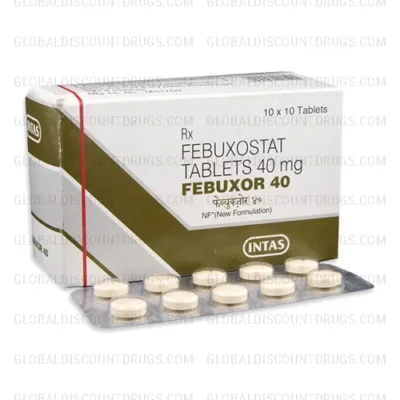
Febuxostat
In StockFebuxostat is a medication used for the chronic management of hyperuricemia (high uric acid levels in the blood) in patients with gout. It is a selective inhibitor of the enzyme xanthine oxidase, which is responsible for producing uric acid. By reducing the overall amount of uric acid in the body, it helps prevent gout flares and joint damage.

What Is Febuxostat?
Febuxostat is a once-daily tablet taken by mouth. It is used to keep uric acid levels low in people who have gout. Over time, lower uric acid can reduce the buildup of urate crystals in the joints and may lower the number of gout flares.
Drug Class
Febuxostat is a xanthine oxidase inhibitor. It is also called a urate-lowering therapy.
FDA-Approved Uses
In the United States, febuxostat is approved for the chronic management of high uric acid (hyperuricemia) in adults with gout who have had an inadequate response to, or cannot tolerate, allopurinol.
Febuxostat is not recommended for people who have high uric acid but no symptoms of gout.
Other Uses Doctors May Consider
Some specialists have prescribed febuxostat for other conditions linked to high uric acid, such as tophaceous gout or uric acid kidney stones. These uses are not part of the FDA labeling. Only a licensed specialist can decide if febuxostat is right for you.
Available Formulations and Strengths
- Tablets: 40 mg and 80 mg (brand and generic versions)
Febuxostat is not available as an injection, cream, or liquid.
What Is the Recommended Dosage of Febuxostat?
Your dose is set by your licensed specialist and may change over time based on blood tests. Do not change your dose on your own.
What Affects Dosing
- Uric acid levels measured by blood tests
- Response to treatment and how well you tolerate it
- Kidney function: people with severe kidney disease have limited study data and may need closer monitoring
- Liver function
- Other medicines you take
Dosage Forms
Febuxostat is taken by mouth, once a day. It can be taken with or without food. Your specialist may start you on a lower strength and adjust it based on your uric acid levels.
Important Dosing Reminders
- Take febuxostat exactly as prescribed, even if you feel well or have no gout symptoms.
- Do not stop taking it without talking to your specialist. Uric acid levels can rise again.
- Do not take extra doses to treat a gout flare. Febuxostat does not treat flares.
- Ask your pharmacist or specialist if the label directions are unclear.
How Febuxostat Works
Your body makes uric acid when it breaks down natural substances called purines. An enzyme called xanthine oxidase helps make uric acid. Febuxostat blocks this enzyme, so the body makes less uric acid.
In simple terms:
- When uric acid stays too high, it can form sharp crystals in joints and cause painful gout flares.
- Lower uric acid levels can allow existing crystals to slowly dissolve and may help prevent new ones.
Febuxostat manages gout over the long term but does not cure it. It is not a pain reliever and will not stop a flare that is already happening. Many people have more gout flares during the first months of treatment because uric acid levels are changing. This does not mean the medicine is failing, and your specialist may prescribe a flare-prevention medicine to take alongside it.
Is a Prescription Required to Buy Febuxostat Online?
Yes. Febuxostat is a prescription-only medicine in the United States.
Who to See
- A rheumatologist is the specialist most often involved in treating gout.
- A nephrologist (kidney specialist) may be involved if you also have kidney disease.
- Your primary care provider may also prescribe it or refer you.
Safe Purchasing Tips
- Buy only from a licensed pharmacy that requires a valid prescription.
- Check that the pharmacy is state-licensed and has a pharmacist available to answer questions.
- Avoid websites that sell febuxostat without a prescription. Counterfeit or unapproved tablets may have the wrong strength or contain harmful ingredients.
- Check that your tablets match the strength and description your pharmacist gave you.
Side Effects of Febuxostat
Common Side Effects
- Gout flares, especially in the first months of treatment
- Nausea
- Joint pain
- Skin rash
- Abnormal liver blood tests (often found only on lab work)
- Dizziness or headache
Tell your specialist if side effects continue or are hard to manage.
Serious Side Effects
Serious reactions are uncommon but need quick attention. Stop taking febuxostat and get medical help right away if you have:
- Heart or stroke warning signs: chest pain, shortness of breath, a fast or irregular heartbeat, sudden weakness on one side of the body, slurred speech, or sudden trouble seeing
- Liver warning signs: yellowing of the skin or eyes, dark urine, severe tiredness, pain in the upper right belly, or unusual nausea or vomiting
- Severe skin or allergic reaction: a spreading or blistering rash, peeling skin, mouth sores, fever with rash, or swelling of the face, lips, or throat
- Trouble breathing
If you think a serious reaction is happening, call emergency services or go to the nearest emergency room.
Boxed Warning
Febuxostat has an FDA boxed warning, the strongest type of safety warning. It says that gout patients treated with febuxostat had a higher risk of death from heart-related causes compared with those treated with allopurinol in a large safety study. For this reason, febuxostat is usually reserved for people who cannot take allopurinol or did not respond to it. Your specialist will weigh the benefits and risks with you.
Drug Interactions
Always give your specialist and pharmacist a complete list of everything you take.
Major Interaction Categories
- Azathioprine and mercaptopurine: these medicines are broken down by the same enzyme febuxostat blocks. Using them together can raise their levels and cause serious blood problems. This combination is not recommended.
- Theophylline: may build up to higher levels, though the effect is not fully understood. Your specialist will guide this.
- Other medicines that affect the same enzyme pathway: your pharmacist can check for these.
- Medicines used to prevent gout flares (such as colchicine or NSAIDs): these are often prescribed with febuxostat on purpose. Use them only as directed.
- Medicines that affect the liver: your specialist may monitor liver tests more closely.
Over-the-Counter Medicines
Ask your pharmacist before combining febuxostat with OTC products, including pain relievers and anti-inflammatory medicines. High-dose aspirin can affect uric acid levels.
Supplements, Herbal Products, and Foods
- Tell your specialist about all vitamins, supplements, and herbal remedies.
- Vitamin C and other supplements may affect uric acid, so ask before starting them.
- Limiting alcohol, especially beer, and sugary drinks may help with gout control. Ask your specialist for diet guidance.
Safety & Important Considerations
Heart and Blood Vessel Disease
Because of the boxed warning, tell your specialist if you have had a heart attack, stroke, heart failure, or other heart problems. Report new chest pain, shortness of breath, or stroke symptoms immediately.
Liver Disease
Liver problems have been reported. Your specialist may check liver tests before and during treatment. People with liver disease should discuss risks carefully.
Kidney Disease
Mild to moderate kidney disease generally does not require a dose change. Data in severe kidney disease are limited, so closer monitoring may be needed.
Pregnancy and Breastfeeding
There is limited information about febuxostat in pregnancy and breastfeeding. Tell your specialist if you are pregnant, planning pregnancy, or breastfeeding.
Children and Older Adults
- Children: Safety and effectiveness have not been established.
- Older adults: No dose change is usually needed based on age alone, but heart, kidney, and liver health should be reviewed.
Monitoring
Your specialist may order:
- Uric acid blood tests to see if treatment is working
- Liver function tests
- Checks of your heart health and symptoms
Keep follow-up appointments and report new symptoms promptly.
Gout Flares at the Start of Treatment
Flares may increase when starting febuxostat. Your specialist may prescribe a flare-prevention medicine, often for several months. Do not stop febuxostat during a flare unless told to do so.
Who This Medication Is For
Febuxostat is generally prescribed to adults with gout who have high uric acid and who have not responded to allopurinol or cannot take it. A licensed specialist decides if febuxostat fits your medical history, heart health, and other medicines.
Who Should Not Take Febuxostat
Do not use febuxostat, or talk to your specialist first, if any of these apply:
- You are allergic to febuxostat or any ingredient in the tablet
- You take azathioprine or mercaptopurine
- You have a history of heart attack, stroke, or other serious heart disease, unless your specialist has decided the benefits outweigh the risks
- You have significant liver disease
- You have high uric acid without gout symptoms (febuxostat is not recommended for this)
- You are pregnant or breastfeeding and have not discussed it with your specialist
Use extra care if you have kidney disease, thyroid problems, or a history of severe skin reactions to medicines.
What to Do If You Miss a Dose
- Take the missed dose as soon as you remember.
- If it is almost time for your next dose, skip the missed dose and return to your usual schedule.
- Never double a dose to make up for a missed one.
- If you are unsure what to do, contact your licensed specialist or pharmacist.
Related medications to Febuxostat
Other options may be used for long-term gout management. Your specialist will help you compare them.
- Allopurinol: another xanthine oxidase inhibitor and the usual first-choice urate-lowering medicine for most patients
- Probenecid: helps the kidneys remove uric acid; not suitable for everyone, such as people with kidney stones or poor kidney function
- Pegloticase: an infusion given in a medical setting for severe gout that has not responded to other treatments
- Flare-prevention medicines: low-dose colchicine or NSAIDs, often used alongside urate-lowering therapy
- Lifestyle changes: limiting alcohol and sugary drinks, staying hydrated, and maintaining a healthy weight
Each option has its own benefits and risks. Do not switch, add, or stop treatments without consulting your specialist.
Storage Instructions
- Store at room temperature, about 68°F to 77°F (20°C to 25°C), unless your label says otherwise.
- Keep tablets in the original container with the lid tightly closed.
- Protect from moisture, such as bathroom humidity, and from excess heat and light.
- Keep out of reach and sight of children and pets.
- Do not use after the expiration date on the label.
- Ask your pharmacist about safe disposal of unused tablets, such as a drug take-back program.
Disclaimer
This page is for educational purposes only. It is not a substitute for professional medical advice, diagnosis, or treatment. Patients must consult a licensed rheumatologist or other qualified medical specialist before starting, changing, or stopping treatment. Treatment decisions must be based on a full clinical evaluation by a qualified specialist. If you have a medical emergency, call your local emergency number right away.
Prescription Required (Rx) to Buy?
This medication is not available over the counter. A valid prescription from a licensed healthcare
professional is required. Always consult your doctor before use.