
Conjugated Estrogens 0.3mg
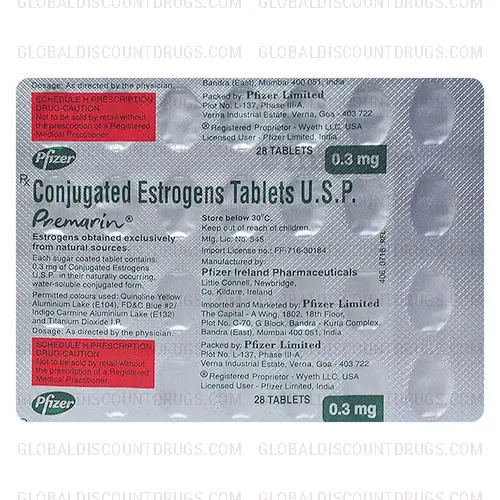
Out of StockConjugated Estrogens 0.3 mg Tablet is a prescription estrogen therapy used for selected menopausal symptoms and estrogen-deficiency conditions. Use the lowest effective dose for the shortest clinically appropriate duration.
| Active Ingredient: | Conjugated Estrogens |
|---|---|
| Indication: | Menopausal Symptoms |
| Strength: | 0.3mg 28s |
| Dosage Form: | Tablets |
| Manufacturer: | Pfizer Ltd |

Quick Overview
Conjugated Estrogens 0.3mg is a prescription estrogen tablet used to treat moderate to severe hot flashes and vaginal symptoms of menopause and, in some women, to help prevent bone loss after menopause. It replaces estrogen the body no longer makes. It requires a prescription and medical supervision because estrogen carries boxed warnings for uterine cancer, stroke, blood clots, breast cancer, and dementia.
Medical Supervision and Regulatory Status
In the United States, conjugated estrogens tablets are available by prescription only, are not controlled substances, and are FDA-approved for menopause symptoms and several other specific conditions. Generic availability should be confirmed for the product sold. Supervision is needed because estrogen can raise the risk of uterine cancer, blood clots, stroke, and breast cancer, so a prescriber reviews your history, investigates any unexplained bleeding, and rechecks the need for treatment regularly.
Clinical Context
Conjugated estrogens tablets replace estrogen to treat menopause symptoms such as hot flashes and vaginal dryness, and they are also used for bone loss prevention and other labeled conditions.
Hot flashes and night sweats can interrupt sleep, concentration, and mood for years. Vaginal dryness and thinning cause discomfort and pain with sex, and falling estrogen speeds bone loss, which raises the risk of fractures later in life.
Hormone therapy is the most effective treatment for hot flashes, and nonhormonal options such as certain antidepressants, gabapentin, and fezolinetant are alternatives. Women who still have a uterus usually need a progestin added to protect the uterine lining. For vaginal symptoms alone, vaginal products are often considered first, and for bone loss, the label advises weighing non-estrogen options.
How Conjugated Estrogens 0.3mg Works
Conjugated estrogens are a mixture of estrogen hormones that replace the estrogen the ovaries stop making at menopause, which may reduce hot flashes, support vaginal tissue, and slow bone loss.
Estrogen acts on receptors in the brain’s temperature-control center, vaginal lining, and bone. Replacing the missing hormone calms the signals that trigger hot flashes, helps vaginal tissue stay thicker and moist, and slows the breakdown of bone.
For the patient, the possible benefit is fewer and milder symptoms and, over time, better bone protection. The tablet is not a contraceptive, and because estrogen also acts on the uterus, breast, and blood clotting system, the warnings below matter as much as the benefits.
What Is Conjugated Estrogens 0.3mg?
- Drug Class: Estrogen (conjugated estrogens, a mixture of estrogen hormones)
- Active Ingredient: Conjugated estrogens 0.3 mg per tablet
- Mechanism: Replaces estrogen by acting on estrogen receptors in the brain, vaginal tissue, and bone
- Available Forms and Strengths: Film-coated oral tablets; 0.3 mg is the lowest strength, and higher strengths exist
- Dosing Frequency: One tablet by mouth once daily, continuous or cyclic, as the prescriber directs
- Regulatory Status: US prescription only (Rx), not a controlled substance
Approved Uses
Conjugated estrogens tablets are FDA-approved for menopause symptoms, bone loss prevention, estrogen deficiency states, and palliative treatment of selected cancers, and the exact list depends on the product label.
- Hot flashes (vasomotor symptoms) due to menopause: Treats moderate to severe hot flashes and night sweats.
- Vulvar and vaginal atrophy due to menopause: Treats moderate to severe dryness, thinning, and discomfort of vaginal tissue. If this is the only symptom, vaginal products may be considered first.
- Low estrogen from ovarian conditions: Treats hypoestrogenism due to hypogonadism, castration, or primary ovarian failure.
- Postmenopausal osteoporosis prevention: Helps prevent bone loss, usually when non-estrogen options are not suitable.
- Palliation of certain cancers: Used in selected people with metastatic breast cancer or advanced androgen-dependent prostate cancer, under specialist care.
How to Use and Dosage
The prescriber sets the dose, and the label describes starting with the lowest effective amount, often one 0.3 mg tablet by mouth once daily, then adjusting as needed.
Timing and food: take it at about the same time each day, with or without food, and swallow it whole. Women with a uterus usually also take a progestin as prescribed. Use the lowest dose for the shortest time that controls symptoms.
Missed dose: take it as soon as you remember, unless it is nearly time for the next dose. Never take two doses at once.
Stopping suddenly: no withdrawal effect is described, but hot flashes and other symptoms may return. The label advises that the prescriber try lowering the dose or stopping every 3 to 6 months to see whether treatment is still needed.
Side Effects
Side effects of estrogen tablets vary, and many people notice mild effects such as breast tenderness or headache, while serious risks are described in the boxed warning.
Boxed warning: Estrogen-alone therapy increases the risk of endometrial cancer (cancer of the uterine lining), and adding a progestin lowers that risk in women with a uterus. Estrogens, with or without progestins, should not be used to prevent heart disease or dementia. Estrogen-alone therapy has been linked with higher risks of stroke and deep vein thrombosis (DVT, a blood clot in a deep vein). Estrogen plus progestin therapy has been linked with higher risks of stroke, DVT, heart attack, pulmonary embolism, and invasive breast cancer, and both have been linked with probable dementia in women 65 and older. Use the lowest effective dose for the shortest time needed.
Common effects: Headache, breast pain or tenderness, irregular vaginal bleeding or spotting, stomach cramps, bloating, nausea, hair loss, fluid retention, leg cramps, mood changes, and vaginal yeast infections are the most reported. The label may list frequencies, but none are stated here.
Serious effects: Endometrial cancer, breast cancer, stroke, heart attack, deep vein thrombosis, pulmonary embolism (a clot in the lung), probable dementia, gallbladder disease, high blood pressure, high triglycerides that can cause pancreatitis, and vision loss from a clot in the eye have been reported with estrogen therapy.
Emergency Warning Signs
- Sudden chest pain or shortness of breath
- Pain, swelling, or warmth in one leg
- Sudden severe headache, confusion, trouble speaking, or weakness or numbness on one side
- Sudden vision loss or double vision
- Unexpected or heavy vaginal bleeding
- A new breast lump or nipple discharge
Call 911 or go to the nearest emergency department for chest pain, breathing trouble, stroke symptoms, or sudden vision loss. For unexpected bleeding or a breast lump, contact the prescriber promptly, as these need evaluation.
Warnings and Precautions
This medicine must not be used with undiagnosed vaginal bleeding, breast cancer (except in specific palliative care), active blood clots, recent stroke or heart attack, liver disease, or pregnancy.
The label also lists contraindications for estrogen-dependent cancers, a history of blood clots, known clotting disorders such as protein C, protein S, or antithrombin deficiency, and allergy to any ingredient. Estrogens can raise blood pressure and triglyceride levels, increase the risk of gallbladder disease, and worsen endometriosis, hereditary angioedema, lupus, fluid retention, and low calcium. They can also raise calcium levels in people with breast cancer that has spread to bone. Smoking, obesity, and long periods of immobility add to clot risk, and the prescriber may advise stopping estrogen 4 to 6 weeks before major surgery.
Interactions mainly involve how the liver processes estrogen. St. John’s wort, phenobarbital, carbamazepine, and rifampin may lower estrogen levels, while erythromycin, clarithromycin, ketoconazole, itraconazole, ritonavir, and grapefruit juice may raise them. Women taking thyroid hormone replacement, such as levothyroxine, may need a dose change. No specific alcohol interaction is listed on the label.
The tablets are not for use during pregnancy. Estrogens can lower breast milk production, so use during breastfeeding is not typical. In women 65 and older, estrogen therapy has been linked with higher dementia risk, so the prescriber weighs this and uses the lowest dose. In children, estrogens can speed bone maturation and early puberty, so use is restricted to specific specialist situations. Liver disease is a contraindication, and fluid retention means people with kidney or heart problems need close monitoring.
Monitoring includes a yearly breast exam and mammograms on the schedule your prescriber advises, blood pressure checks, and a pelvic exam. Any unexplained vaginal bleeding should be evaluated promptly, and the need for continued treatment should be reviewed periodically, as the prescriber decides.
Who Should Not Use This Medication
The label lists contraindications that exclude people with unexplained vaginal bleeding, estrogen-sensitive cancers, blood clots, recent stroke or heart attack, liver disease, thrombophilia, pregnancy, or hypersensitivity.
- Undiagnosed abnormal vaginal bleeding
- Current or past breast cancer (except in selected palliative care), or other known or suspected estrogen-sensitive cancer
- Active or past deep vein thrombosis or pulmonary embolism
- Active or recent (within the past year) stroke or heart attack
- Liver disease or impaired liver function
- Known clotting disorders (protein C, protein S, or antithrombin deficiency)
- Known or suspected pregnancy
- Allergy to conjugated estrogens or any ingredient in the tablet
Storage Instructions
Store the tablets at room temperature in the original container with the cap tightly closed, away from heat and moisture, and keep them out of the reach of children.
Keep them at about 68 to 77°F (20 to 25°C) unless the label says otherwise, and avoid leaving the bottle in a car or bathroom. Accidental swallowing by a child needs prompt attention, so call poison control at 1-800-222-1222. For disposal, use an FDA-recommended drug take-back program or pharmacy kiosk. If none is available, mix the tablets with used coffee grounds or cat litter in a sealed bag before throwing them away.
Frequently Asked Questions
What is the cost of Conjugated Estrogens 0.3mg without insurance?
The cost without insurance depends on the seller, brand availability, and pack size. Location and available discounts can also change what you pay for a bottle. Generics are generally more affordable if one exists, so ask the pharmacist whether a generic or equivalent is stocked. Compare licensed pharmacies and confirm the total before ordering.
How can I order Conjugated Estrogens 0.3mg online?
You can order it online only with a valid prescription, filled by a licensed US pharmacy. Upload the prescription or ask your prescriber to send it electronically, and the pharmacy ships the bottle to your home after verifying it. Before paying, check for a state license and a pharmacist available for questions. Avoid sites that skip prescriptions.
Is Conjugated Estrogens 0.3mg available over the counter?
No, conjugated estrogens tablets are not sold over the counter in the United States. Rules differ by country, but estrogen products need medical supervision wherever they are used. A prescriber must check for unexplained bleeding, cancer history, and clotting risks first, and should review the need for treatment regularly while you use it.
Does Conjugated Estrogens 0.3mg require a prescription?
Yes, a prescription is required. A clinician first checks for unexplained vaginal bleeding, breast or uterine cancer history, blood clots, stroke, and liver disease, and decides whether you also need a progestin. Follow-up visits then review whether the tablets are still needed, whether the dose is the lowest effective one, and whether breast screening is up to date.
How long does Conjugated Estrogens 0.3mg take to work?
Hot flashes often begin to ease within a few weeks, and clinical studies measured results at about 4 to 12 weeks. Vaginal symptoms may take longer, and bone protection builds over years without being felt. Response varies by person, so the prescriber reviews progress and adjusts the dose. Do not raise the dose on your own.
Is it safe to stop taking Conjugated Estrogens 0.3mg suddenly?
Yes, it can be stopped, and no withdrawal effect is described on the label, but hot flashes and other symptoms often return. The label advises that the prescriber try lowering the dose or stopping every 3 to 6 months to see whether treatment is still needed. Report unexpected bleeding, stroke symptoms, or clot symptoms right away.
Can Conjugated Estrogens 0.3mg interact with other medicines?
Yes, the most important interactions involve medicines that change how the liver processes estrogen. St. John’s wort, phenobarbital, carbamazepine, and rifampin may lower estrogen levels, while erythromycin, clarithromycin, ketoconazole, itraconazole, ritonavir, and grapefruit juice may raise them. Thyroid hormone doses may need adjusting. Tell the pharmacist about every medicine and supplement.
What should I do if I miss a dose of Conjugated Estrogens 0.3mg?
If you miss a dose, take it as soon as you remember, unless it is nearly time for the next one. Then return to your usual schedule. Never take two doses at once to make up for a missed one. Frequent missed doses can cause spotting or return of symptoms, so ask the pharmacist about reminders if this happens.
References
- DailyMed (NIH), conjugated estrogens tablets drug label: Current FDA-approved prescribing information, including the boxed warning, indications, contraindications, dosing, and interactions.
- MedlinePlus, Conjugated Estrogens: Plain-language patient information on how to take the tablets, precautions, and side effects.
- FDA, Drugs@FDA entry for conjugated estrogens tablets: Approval history and labeling for the product.
Medical Disclaimer:
This content is for informational purposes only and does not constitute medical advice, diagnosis, or treatment. Consult a qualified specialist or physician before using Conjugated Estrogens 0.3mg.
Prescription Required (Rx) to Buy?
This medication is not available over the counter. A valid prescription from a licensed healthcare
professional is required. Always consult your doctor before use.
| Quantity | 168, 252, 336, 84 |
|---|---|
| Indication | Menopausal Symptoms |
| Active Ingredient | Conjugated Estrogens |
| Pharmaceutical Form | Tablets |
| Manufacturer | Pfizer Ltd |
| Indian Brand | Premarin 0.3mg |
| US Brand Name | Conjugated Estrogens, Premarin |
| Generic Name | Conjugated Estrogens |
| Dosage | 0.3mg 28s |
| Drug Type | Tablets |