
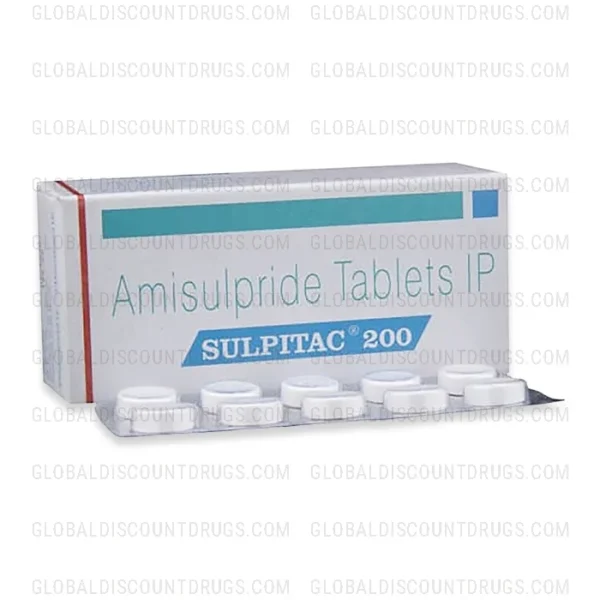
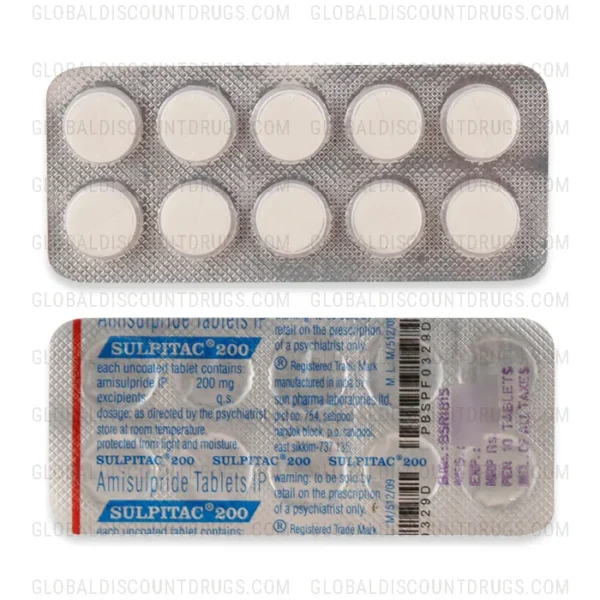
Amisulpride 200mg
In StockAmisulpride 200mg is a prescription medicine. It is a dosage form of amisulpride, an atypical antipsychotic used to treat schizophrenia and related disorders. It works by modulating dopamine receptors to improve thought and behavior. The physician determines dose and duration based on response.
| Active Ingredient: | Amisulpride |
|---|---|
| Indication: | Schizophrenia |
| Strength: | 200mg |
| Dosage Form: | Tablets |
| Manufacturer: | Sun Pharma |

Amisulpride 200mg: Quick Overview
Amisulpride 200mg is a prescription atypical antipsychotic tablet used to treat schizophrenia, including both positive and negative symptoms. It works by selectively blocking dopamine D2 and D3 receptors in the brain. This medication must be taken only under a licensed physician’s supervision, as improper use carries serious risks.
Prescription Requirement and Regulatory Status
Amisulpride 200mg tablets are a prescription-only medication classified as a controlled Schedule H drug in multiple countries. In the United States, amisulpride for psychiatric indications is not currently FDA approved for schizophrenia; however, the FDA has approved a separate IV formulation (Barhemsys) for postoperative nausea. Outside the US, including Europe and Australia, amisulpride tablets are regulated and approved for schizophrenia treatment under strict prescribing guidelines. Medical supervision is required because dosing must be individualized and patients need regular monitoring for metabolic and cardiac effects.
Clinical Context
Schizophrenia is a chronic psychiatric condition marked by hallucinations, delusions, disorganized thinking, and significant withdrawal from daily functioning. Without treatment, symptoms tend to worsen over time, affecting the patient’s relationships, employment, and overall safety.
Antipsychotic medications are the foundation of schizophrenia management. They do not cure the condition but help stabilize symptoms so patients can engage in therapy and maintain quality of life.
Amisulpride is positioned as a second-generation (atypical) antipsychotic. It is often preferred when a patient needs coverage for both positive symptoms like hallucinations and negative symptoms like emotional blunting or social withdrawal. At lower doses, around 50mg to 100mg daily, it is used in some countries for dysthymia (persistent mild depression).
How Amisulpride 200mg Works
Amisulpride belongs to the benzamide class of antipsychotics. Unlike many older antipsychotics, it acts selectively on dopamine receptors rather than broadly across multiple neurotransmitter systems. This selectivity is linked to its tolerability profile compared to first-generation agents.
At doses of 400mg or higher, amisulpride primarily blocks postsynaptic dopamine D2 and D3 receptors in the limbic system of the brain. This action reduces the excessive dopamine activity that drives psychotic symptoms such as hallucinations and delusions. At lower doses, it preferentially blocks presynaptic autoreceptors, which increases dopamine transmission and may help relieve negative symptoms and depressive features of schizophrenia.
This dual action at different dose levels is one reason physicians find amisulpride a flexible option within a structured treatment plan. Patients typically notice improvements in positive symptoms within the first few weeks, while negative symptoms may take longer to respond.
Drug Profile: Amisulpride 200mg
| Detail | Information |
|---|---|
| Drug Class | Atypical antipsychotic, benzamide derivative |
| Active Ingredient | Amisulpride |
| Mechanism | Dopamine D2/D3 receptor antagonist (limbic-selective) |
| Dosage Form | Oral tablet |
| Strength | 200mg per tablet |
| Dosing Frequency | Once or twice daily (as directed by physician) |
| Regulatory Status | Prescription-only; Schedule H in India; approved in EU/Australia for schizophrenia; not FDA approved for psychiatric use in the US |
Approved Uses of Amisulpride 200mg
Acute Schizophrenia: Amisulpride 200mg is used to treat active episodes of schizophrenia where positive symptoms including hallucinations, delusions, and agitation are prominent. It is prescribed as part of a broader treatment plan.
Negative Symptoms of Schizophrenia: When emotional withdrawal, lack of motivation, and reduced speech are the primary concerns, lower doses of amisulpride may be prescribed, though 200mg tablets are often used at the higher end of the dosing range for these presentations.
Dysthymia (In Some Countries): In selected markets outside the US, amisulpride at lower doses is prescribed for persistent depressive disorder (dysthymia). This use is not applicable at the 200mg strength in most cases.
Dosage and Administration
A physician determines the correct dose of amisulpride based on diagnosis, symptom severity, kidney function, age, and tolerance. General prescribing guidance in approved markets suggests the following:
For acute schizophrenia: Doses typically range from 400mg to 800mg daily, divided into two doses. In some cases, doses up to 1,200mg daily are used under close supervision.
For negative-symptom-predominant schizophrenia: Lower daily doses, often between 50mg and 300mg, may be used.
Timing: Amisulpride can be taken with or without food. Taking it at the same time each day supports consistent blood levels.
Missed dose: If a dose is missed, it should be taken as soon as remembered, unless it is close to the next scheduled dose. Two doses should never be taken together to compensate for a missed one.
Do not stop suddenly: Stopping amisulpride without physician guidance can cause withdrawal symptoms and a rapid return of psychotic symptoms. Any decision to discontinue must be made with a doctor, who will typically taper the dose gradually.
Side Effects of Amisulpride 200mg
Most patients tolerate amisulpride reasonably well when it is prescribed and monitored appropriately. Side effects, when they occur, are often manageable with dose adjustment.
Common side effects include drowsiness, restlessness, difficulty sleeping, weight gain, and elevated prolactin levels. Elevated prolactin can cause breast tenderness, irregular periods in women, or decreased libido in both men and women. Mild gastrointestinal symptoms such as nausea or constipation are also reported.
Serious side effects that require prompt medical attention include prolongation of the QT interval on an ECG, which can lead to irregular heart rhythms. Tardive dyskinesia, a condition involving involuntary repetitive movements, may develop with long-term use. Neuroleptic malignant syndrome, though rare, is a life-threatening reaction associated with antipsychotic use.
Seek emergency care immediately if any of the following occur:
- High fever with muscle rigidity and confusion
- Irregular or racing heartbeat
- Sudden fainting or loss of consciousness
- Severe muscle stiffness that does not resolve
- Uncontrolled facial or body movements
- Difficulty breathing or swallowing
Warnings and Precautions
Cardiac Risk: Amisulpride prolongs the QT interval in a dose-dependent manner. Patients with a personal or family history of cardiac arrhythmia, congenital long QT syndrome, or those taking other QT-prolonging medications should not use amisulpride without a cardiology evaluation. Baseline and periodic ECG monitoring is recommended.
Drug Interactions: Combining amisulpride with other QT-prolonging drugs, including some antibiotics (such as erythromycin or clarithromycin), antifungals, or other antipsychotics, increases the risk of dangerous arrhythmia. It should not be used with levodopa or other dopamine agonists, as these agents work against each other. Alcohol can worsen sedation. A full medication review by the prescribing physician is necessary before starting amisulpride.
Pregnancy and Breastfeeding: Amisulpride should be avoided during pregnancy unless the benefit is judged by a physician to outweigh the risk. Newborns exposed to antipsychotics in the third trimester may experience withdrawal symptoms or movement difficulties. Amisulpride passes into breast milk; breastfeeding is generally not recommended during treatment.
Renal Impairment: The kidneys primarily eliminate amisulpride. Patients with reduced kidney function require dose adjustments, as accumulation of the drug can increase side effects. Severe renal impairment may be a contraindication to its use.
Elderly Patients: Older adults with dementia-related psychosis have shown an increased risk of stroke and death with antipsychotic medications. Amisulpride is not approved for this use and should be avoided in this population unless clearly justified.
Seizure History: Amisulpride may lower the seizure threshold. Patients with epilepsy or a history of seizures require careful monitoring.
Who Should Not Use Amisulpride 200mg
- Patients with known hypersensitivity to amisulpride or any benzamide compound
- Individuals with pheochromocytoma (adrenal gland tumor)
- Patients with known or suspected prolactin-dependent tumors, including certain breast cancers
- Children and adolescents under 15 years of age
- Patients with severe renal failure (creatinine clearance below 10 mL/min) unless under specialist review
- Individuals currently taking levodopa for Parkinson’s disease
- Patients with congenital long QT syndrome or uncorrected hypokalemia
Storage Instructions
Store amisulpride 200mg tablets at room temperature, between 68°F and 77°F (20°C to 25°C). Keep the tablets away from direct sunlight, heat sources, and high humidity. Do not store them in bathrooms or near kitchen sinks. Keep the blister pack sealed until use. Store all medications out of reach of children and pets. Do not use tablets past the expiration date printed on the packaging. Do not flush unused medication down the toilet; follow local pharmaceutical disposal guidelines.
Frequently Asked Questions
Does Amisulpride 200mg require a prescription?
Yes, amisulpride requires a valid prescription in all countries where it is approved. Schizophrenia management involves careful evaluation, individualized dosing, and regular follow-up. A physician must assess cardiac function, kidney health, and current medications before prescribing. Self-medicating with antipsychotics is unsafe and not recommended under any circumstance.
How long does Amisulpride 200mg take to work?
Initial improvements in positive symptoms such as hallucinations and agitation can appear within one to two weeks of starting treatment. Negative symptoms, including emotional withdrawal and reduced motivation, may take four to six weeks or longer to respond. Full therapeutic benefit often requires consistent use over several months as determined by the treating physician.
Is it safe to stop Amisulpride 200mg suddenly?
No, stopping amisulpride suddenly is not safe. Abrupt discontinuation can trigger a rapid relapse of psychotic symptoms and may cause physical withdrawal effects. Physicians typically taper the dose gradually over weeks or months. Any decision to reduce or stop the medication must be discussed with the prescribing doctor first.
What medications interact with Amisulpride 200mg?
Amisulpride interacts with several drug classes. Combining it with other QT-prolonging medications including certain antibiotics, antifungals, and cardiac drugs raises the risk of serious heart rhythm problems. It should not be taken with levodopa. Sedatives and alcohol may worsen drowsiness. Always provide a complete list of all prescription, over-the-counter, and herbal products to the prescribing physician before starting amisulpride.
What should I do if I miss a dose of Amisulpride 200mg?
Take the missed dose as soon as you remember, provided the next scheduled dose is not due within a few hours. If it is nearly time for the next dose, skip the missed one and resume the regular schedule. Never take two doses at once to make up for a missed one. If doses are frequently missed, speak with the prescribing doctor about strategies for better adherence.
What is the cost of Amisulpride 200mg without insurance?
The cost without insurance depends on the seller, brand availability, and pack size, and may also vary by location and applicable pharmacy discounts. Generic versions, where available, tend to be more affordable than branded formulations. Patients should compare prices across licensed pharmacies and ask about manufacturer savings programs or patient assistance options.
How can I order Amisulpride 200mg online?
A valid prescription is required to order amisulpride online. The typical process involves uploading a prescription to a licensed online pharmacy or having the prescribing doctor send it electronically, selecting the medication and quantity, and arranging home delivery. Always verify that the pharmacy is licensed by the relevant state or national authority before placing an order. Purchasing from unverified sources carries serious safety risks.
Is Amisulpride 200mg available over the counter?
No, amisulpride is not available over the counter in most countries. It is classified as a prescription-only medication due to its potential for serious side effects, drug interactions, and the need for ongoing medical monitoring. Regulations vary by country, but medical supervision is required wherever the medication is legally available.
References
- DailyMed (NIH): Amisulpride drug label and full prescribing information https://dailymed.nlm.nih.gov/dailymed/search.cfm?labeltype=all&query=amisulpride
- MedlinePlus (NIH): Antipsychotic medications overview and patient guidance https://medlineplus.gov/antipsychoticmedicines.html
- European Medicines Agency (EMA): Amisulpride product assessment and approved indications https://www.ema.europa.eu/en/medicines/human/EPAR/solian
Resources
Understanding Schizophrenia Treatment Options National Institute of Mental Health (NIMH): https://www.nimh.nih.gov/health/topics/schizophrenia
Medication Safety and Drug Interactions MedlinePlus Drug Information: https://medlineplus.gov/druginformation.html
Finding a Licensed Online Pharmacy National Association of Boards of Pharmacy (NABP): https://nabp.pharmacy/programs/vipps/
Medical Disclaimer:
This content is for informational purposes only and does not constitute medical advice, diagnosis, or treatment. Consult a qualified specialist or physician before using Amisulpride 200mg. Read our full medical disclaimer for more details
Prescription Required (Rx) to Buy?
This medication is not available over the counter. A valid prescription from a licensed healthcare
professional is required. Always consult your doctor before use.
| Quantity | 100, 150, 200, 50 |
|---|---|
| Indication | Schizophrenia |
| Active Ingredient | Amisulpride |
| Pharmaceutical Form | Tablets |
| Manufacturer | Sun Pharma |
| Indian Brand | Sulpitac 200mg |
| US Brand Name | Amisulpride, Amisulpride OD, Solian, Solian OD |
| Generic Name | Amisulpride |
| Dosage | 200mg |
| Drug Type | Tablets |