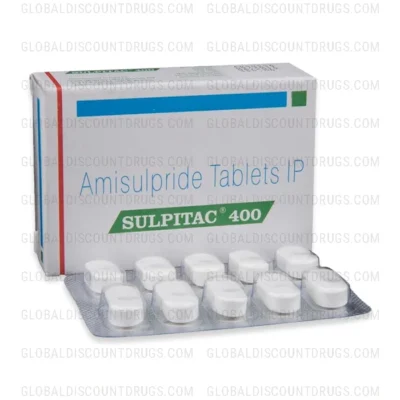

Amisulpride 50mg
In StockAmisulpride 50mg is a prescription medicine. It is a dosage form of amisulpride, an atypical antipsychotic used to manage schizophrenia and mood related symptoms. It works by influencing dopamine receptors in the brain. The physician determines dose and duration based on response.
| Active Ingredient: | Amisulpride |
|---|---|
| Indication: | Schizophrenia |
| Strength: | 50mg |
| Dosage Form: | Tablets |
| Manufacturer: | Sun Pharma |

Amisulpride 50mg – Quick Overview
Amisulpride 50mg is a low-dose atypical antipsychotic used primarily to manage the negative symptoms of schizophrenia and, in some countries, mild-to-moderate depressive disorders. It works by selectively blocking dopamine D2 and D3 receptors in the brain. This is a prescription-only medication and must be used strictly under physician supervision due to its significant psychiatric and cardiovascular safety profile.
Medical Supervision & Regulatory Status
Amisulpride is a prescription-only medication. In the United States, the oral tablet form is not currently FDA-approved; the injectable formulation (Barhemsys) holds FDA approval for postoperative nausea and vomiting. Oral amisulpride is approved and widely used in the European Union, the United Kingdom, Australia, and India under regulatory frameworks such as the EMA and national drug authorities. In India, it is classified as a Schedule H drug. Because of its psychiatric, metabolic, and cardiac effects, amisulpride requires ongoing medical evaluation, dose adjustment, and monitoring throughout therapy.
Clinical Context
Schizophrenia is a chronic psychiatric disorder characterized by positive symptoms — such as hallucinations and delusions — and negative symptoms, including emotional blunting, social withdrawal, and reduced motivation. Negative symptoms are particularly difficult to treat and have a significant impact on quality of life. Many first-generation antipsychotics offer limited benefit against negative symptoms, creating a clinical need for targeted options.
At low doses such as 50mg, amisulpride shows a unique pharmacological profile. Rather than simply suppressing dopaminergic activity, it preferentially acts on presynaptic dopamine receptors, gently modulating dopamine transmission in areas associated with motivation and mood. This mechanism makes the 50mg dose specifically relevant for patients experiencing predominant negative symptoms or those with dysthymia in regions where this indication is approved.
Amisulpride 50mg sits within a broader treatment plan for schizophrenia spectrum disorders and is typically used as part of a psychiatrist-supervised regimen. It is not a first-line emergency treatment but rather a carefully selected option for stable patients requiring long-term symptom management.
How Amisulpride 50mg Works
Amisulpride belongs to the benzamide class of atypical antipsychotics. Unlike many antipsychotics that block multiple receptor types broadly, amisulpride selectively targets dopamine D2 and D3 receptors with high specificity. This selectivity means it has a cleaner receptor profile and fewer of the sedation or histamine-related side effects seen with less selective agents.
At the 50mg dose, amisulpride preferentially blocks presynaptic D2/D3 autoreceptors. These autoreceptors normally act as a feedback brake, reducing dopamine release. By blocking them at low doses, amisulpride removes that brake, effectively increasing dopamine release in the prefrontal cortex — the area governing motivation, cognitive function, and emotional processing. This is why low-dose amisulpride is associated with improvement in negative symptoms and mood rather than sedation.
For patients, this translates to a gradual improvement in emotional engagement, social interaction, and day-to-day motivation — areas where conventional antipsychotics often fall short. Full therapeutic benefit typically develops over several weeks of consistent, prescribed use.
What is Amisulpride 50mg?
Drug Class: Atypical antipsychotic (Benzamide derivative) Active Ingredient: Amisulpride 50mg per tablet Mechanism: Selectively blocks dopamine D2/D3 receptors; at low doses, preferentially acts on presynaptic autoreceptors to increase dopamine activity in the prefrontal cortex Form: Oral tablet Dosing Frequency: Typically once or twice daily, as determined by a prescribing physician Regulatory Status: Prescription-only; not orally FDA-approved in the US; EMA-approved in Europe; widely approved in India, UK, and Australia
Uses / Indications
Negative Symptoms of Schizophrenia (Primary Use at 50mg) Amisulpride 50mg is used to treat the negative symptom cluster of schizophrenia — including emotional withdrawal, reduced speech, social isolation, and loss of motivation — in patients who are in a stable phase of their illness and not experiencing acute psychosis.
Schizophrenia (Broader Spectrum) At varying dose ranges as determined by a psychiatrist, amisulpride may also be used as part of a broader schizophrenia management strategy addressing both negative and residual symptoms.
Dysthymia / Mild Depression (Where Approved) In certain countries where regulatory approval exists, low-dose amisulpride may be used to treat persistent mild depressive disorder (dysthymia). This indication is not available in all regions and is not FDA-approved in the US. Use should only occur under explicit physician direction within applicable local guidelines.
How to Use / Dosage
Amisulpride 50mg dosage is determined entirely by your prescribing physician based on your diagnosis, symptom severity, body weight, kidney function, and tolerance. General guidance is provided here for informational purposes only — do not adjust your dose without medical advice.
Timing: Amisulpride tablets are typically taken once or twice daily, with or without food. Take at the same time each day to maintain consistent blood levels.
Missed Dose: If you miss a dose, take it as soon as you remember — unless it is close to the time of your next scheduled dose. In that case, skip the missed dose and resume your regular schedule. Do not double up doses to compensate.
Do Not Stop Suddenly: Never discontinue amisulpride abruptly without speaking to your doctor. Stopping psychiatric medication suddenly can cause withdrawal effects or rapid return of symptoms. Your physician will guide a gradual tapering schedule if discontinuation is appropriate.
Side Effects
Most patients taking amisulpride 50mg tolerate the medication reasonably well, especially at this low dose. Side effects, when they occur, are often mild and may improve as your body adjusts during the first few weeks of treatment. Always report new or worsening symptoms to your healthcare provider.
Common Side Effects: Some patients may experience insomnia, agitation, anxiety, or mild gastrointestinal discomfort such as nausea or constipation. Weight gain and increased prolactin levels are possible with amisulpride use, which can lead to menstrual irregularities, breast tenderness, or changes in libido. These effects are generally more pronounced at higher doses but should still be monitored even at 50mg.
Serious Side Effects: Amisulpride may cause QT interval prolongation — a change in the heart’s electrical activity that can increase the risk of serious arrhythmias. Extrapyramidal symptoms such as restlessness (akathisia), tremor, or muscle stiffness, while less common at low doses, can still occur. Tardive dyskinesia, a movement disorder involving repetitive involuntary movements, is a risk with prolonged antipsychotic use and requires immediate evaluation if observed.
Emergency Warning Signs — Seek Immediate Medical Attention If You Experience:
- Irregular, fast, or pounding heartbeat
- Sudden fainting or loss of consciousness
- High fever, severe muscle stiffness, and confusion (possible signs of Neuroleptic Malignant Syndrome)
- Uncontrollable repetitive movements of the face or limbs
- Severe dizziness or difficulty breathing
- Seizures
Warnings & Precautions
Cardiovascular Risk: Amisulpride prolongs the QT interval on an electrocardiogram. Patients with a history of cardiac arrhythmia, congenital long QT syndrome, bradycardia, or those taking other QT-prolonging medications face significantly increased risk. A baseline ECG is recommended before initiating therapy, and cardiac monitoring should continue throughout treatment.
Drug Interactions: Amisulpride should not be combined with other QT-prolonging agents including antiarrhythmics such as amiodarone or sotalol, certain antifungals like fluconazole, fluoroquinolone antibiotics, methadone, or other antipsychotics. Combining amisulpride with levodopa or dopamine agonists may reduce the effectiveness of both medications and should be discussed with your physician. Antihypertensive medications taken alongside amisulpride may cause additive blood pressure lowering, increasing the risk of orthostatic hypotension.
Pregnancy and Breastfeeding: Amisulpride should be used during pregnancy only when the benefit clearly outweighs the risk, as neonates exposed to antipsychotics in the third trimester may experience withdrawal symptoms or extrapyramidal effects after birth. Amisulpride passes into breast milk and is generally not recommended during breastfeeding. Discuss all risks and alternatives with your obstetrician and psychiatrist before making any decision.
Elderly Patients with Dementia: Amisulpride, like other antipsychotics, is associated with increased mortality in elderly patients with dementia-related psychosis. It is not approved for this population and should be avoided.
Renal Impairment: Amisulpride is eliminated primarily through the kidneys. Patients with moderate to severe renal impairment require significant dose reductions and close monitoring. Regular kidney function tests are advised.
Prolactin-Sensitive Conditions: Due to its prolactin-elevating effects, amisulpride should be used with caution in patients with prolactin-dependent tumors such as pituitary adenomas or prolactin-sensitive breast cancer.
Seizure Threshold: Amisulpride may lower the seizure threshold. Use with caution in patients with a history of epilepsy or seizure disorders.
Who Should Not Use This Medication
- Patients with known hypersensitivity to amisulpride or any component of the formulation
- Patients with pheochromocytoma (adrenal gland tumor)
- Patients with prolactin-dependent tumors
- Patients with congenital long QT syndrome or existing QT prolongation
- Patients currently taking other QT-prolonging medications without specialist guidance
- Elderly patients with dementia-related psychosis
- Children and adolescents (safety not established in pediatric populations)
- Patients with severe renal failure (unless under specialist nephrology and psychiatry co-management)
- Women who are pregnant or breastfeeding, unless specifically advised otherwise by a physician
Storage Instructions
Store amisulpride 50mg tablets at room temperature, between 68°F and 77°F (20°C–25°C). Keep the medication away from direct sunlight, excessive heat, and moisture — do not store in bathrooms or near kitchen sinks. Keep the tablets in their original packaging until use. Store all medications out of the reach and sight of children and pets. Do not use tablets past their printed expiration date. Do not dispose of unused medication by flushing it down the drain — consult your pharmacist about safe medication disposal programs in your area.
Frequently Asked Questions
Does Amisulpride 50mg require a prescription?
Yes, amisulpride requires a valid prescription from a licensed physician. Because it is an antipsychotic with cardiac and neurological risks, medical evaluation, dose determination, and ongoing monitoring are essential for safe use. Self-medicating with amisulpride is unsafe and not recommended under any circumstances.
How long does Amisulpride 50mg take to work?
Amisulpride does not produce immediate effects. Improvements in negative symptoms of schizophrenia are typically gradual, with meaningful changes often noticed after 4 to 6 weeks of consistent use. Your psychiatrist will evaluate therapeutic progress at follow-up appointments and adjust the dose if needed.
Can I stop taking Amisulpride 50mg suddenly?
No — you should never stop amisulpride abruptly without medical guidance. Sudden discontinuation can trigger a rapid return of psychiatric symptoms or withdrawal effects. Your doctor will create a safe tapering plan if discontinuation becomes appropriate.
What happens if I miss a dose of Amisulpride 50mg?
Take the missed dose as soon as you remember, unless your next scheduled dose is approaching. If it is nearly time for your next dose, skip the missed one and continue your regular schedule. Never take a double dose to make up for a missed one.
Are there any serious drug interactions with Amisulpride 50mg?
Yes. Amisulpride has clinically significant interactions with other QT-prolonging drugs including certain antiarrhythmics, antifungals, antibiotics, and antipsychotics. It may also interact with levodopa and antihypertensive agents. Always provide your doctor and pharmacist with a complete list of all medications, supplements, and herbal products you are currently taking.
What is the cost of Amisulpride 50mg without insurance?
The cost of amisulpride 50mg without insurance depends on the seller, brand availability, and pack size, and may also vary by location and applicable discounts. Generic versions are generally more affordable than branded formulations. Speak with your pharmacist to explore cost-saving options such as manufacturer programs or discount cards.
How can I order Amisulpride 50mg online?
Ordering amisulpride online requires a valid prescription from a licensed physician — it cannot legally be dispensed without one. The process typically involves uploading your prescription or having your doctor send it directly to a licensed online pharmacy, placing your order, and receiving home delivery. Always use a verified, accredited pharmacy to ensure you receive an authentic, safe product.
Is Amisulpride 50mg available over the counter?
No. Amisulpride is not available over the counter in most countries, including the United States, the United Kingdom, and the European Union. Regulations may vary by region, but medical supervision is consistently required due to the medication’s psychiatric and cardiovascular safety considerations.
Resources
- Amisulpride (Barhemsys) – FDA Drug Approval Information – https://www.accessdata.fda.gov/scripts/cder/daf/index.cfm?event=overview.process&ApplNo=209510
- Schizophrenia – Symptoms, Diagnosis & Treatment – https://medlineplus.gov/schizophrenia.html
- Atypical Antipsychotics – Clinical Overview – https://www.ncbi.nlm.nih.gov/books/NBK459157/
References
- U.S. Food and Drug Administration. Barhemsys (amisulpride) Injection – Drug Approval Package. FDA Center for Drug Evaluation and Research. https://www.accessdata.fda.gov/scripts/cder/daf/index.cfm?event=overview.process&ApplNo=209510
- MedlinePlus, U.S. National Library of Medicine. Schizophrenia. National Institutes of Health. https://medlineplus.gov/schizophrenia.html
- Chokhawala K, Stevens L. Antipsychotic Medications. In: StatPearls. National Center for Biotechnology Information, NIH. https://www.ncbi.nlm.nih.gov/books/NBK459157/
Medical Disclaimer:
This content is for informational purposes only and does not constitute medical advice, diagnosis, or treatment. Consult a qualified specialist or physician before using Amisulpride 50mg. Read our full medical disclaimer for more details
Prescription Required (Rx) to Buy?
This medication is not available over the counter. A valid prescription from a licensed healthcare
professional is required. Always consult your doctor before use.
| Quantity | 100, 200, 300, 400 |
|---|---|
| Indication | Schizophrenia |
| Active Ingredient | Amisulpride |
| Pharmaceutical Form | Tablets |
| Manufacturer | Sun Pharma |
| Indian Brand | Sulpitac 50mg |
| US Brand Name | Amisulpride, Amisulpride OD, Solian, Solian OD |
| Generic Name | Amisulpride |
| Dosage | 50mg |
| Drug Type | Tablets |