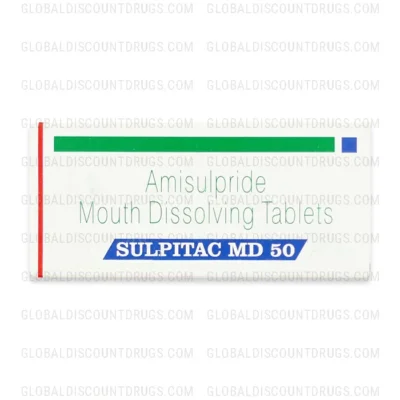

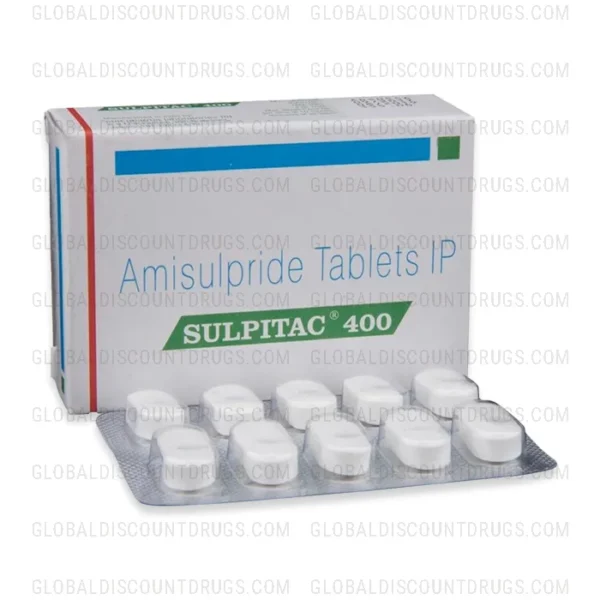
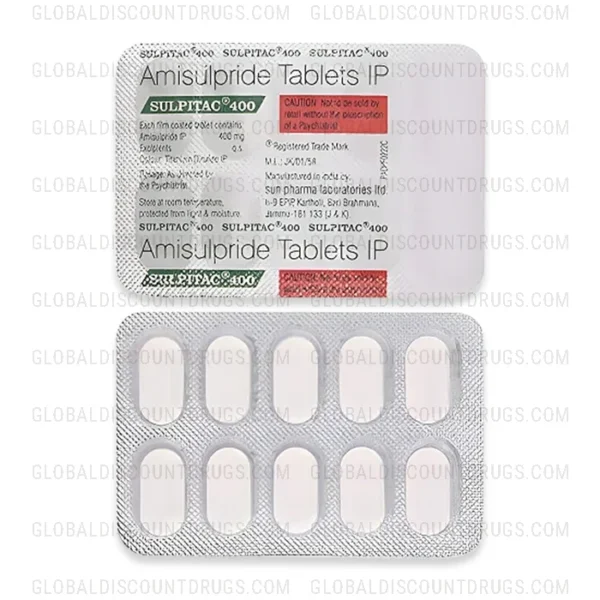
Amisulpride 400mg
In StockAmisulpride 400mg Tablets are a high-strength, prescription-only medication used to treat moderate to severe schizophrenia. This medication helps manage symptoms such as hallucinations, delusions, social withdrawal, and flattened emotions. It belongs to the class of atypical antipsychotics, known for fewer movement-related side effects compared to traditional antipsychotics.
| Active Ingredient: | Amisulpride |
|---|---|
| Indication: | Schizophrenia |
| Strength: | 400mg |
| Dosage Form: | Tablets |
| Manufacturer: | Sun Pharma |

Quick Overview: What Is Amisulpride 400mg Used For?
Amisulpride 400mg is a prescription atypical antipsychotic tablet used primarily to treat schizophrenia in adults, including both positive symptoms such as hallucinations and negative symptoms such as emotional withdrawal. It works by selectively blocking dopamine D2 and D3 receptors in the brain. This medication must only be used under the supervision of a licensed psychiatrist or physician.
Prescription Status and Regulatory Information
Amisulpride 400mg is a prescription-only medicine. In the United States, oral amisulpride for psychiatric conditions is not FDA-approved; however, the European Medicines Agency (EMA) has authorized it for schizophrenia under brand names such as Solian. In many countries, it is classified under controlled or regulated prescription schedules, meaning it cannot be dispensed without a valid doctor’s prescription. Medical supervision is required because the drug affects neurotransmitter systems that need careful monitoring during treatment.
Clinical Context
Schizophrenia is a chronic psychiatric condition affecting roughly 1 in 100 people worldwide. It disrupts thinking, perception, and social functioning through an imbalance in dopaminergic activity across different brain pathways. Without consistent treatment, both positive symptoms (hallucinations, delusions) and negative symptoms (flat affect, social withdrawal) can significantly impair daily life.
Standard antipsychotic therapy addresses these symptoms by modulating dopamine signaling. Many first-generation antipsychotics carry a high risk of movement-related side effects, which led to the development of second-generation or atypical antipsychotics. Amisulpride belongs to this newer class and is considered a selective agent within it.
Amisulpride 400mg fits into the treatment pathway as a maintenance or acute-phase therapy option for adults with schizophrenia. At the 400mg dose level, it is typically prescribed when positive symptoms are predominant, with physicians adjusting the dose based on treatment response.
How Amisulpride 400mg Works
Amisulpride belongs to the benzamide class of atypical antipsychotics. Unlike many agents in this category, it works with a high degree of selectivity, targeting only dopamine D2 and D3 receptors rather than broadly blocking multiple receptor types.
At higher doses like 400mg, amisulpride blocks D2 and D3 receptors in the mesolimbic pathway of the brain. This blockade reduces excessive dopamine activity that is associated with hallucinations, delusions, and disorganized thinking. The drug has little to no affinity for serotonin, histamine, or muscarinic receptors, which contributes to a side effect profile that is somewhat different from older antipsychotics.
For patients, this mechanism translates to a reduction in acute psychotic symptoms while preserving a relatively lower risk of sedation or weight gain compared to some other atypical antipsychotics. At lower doses (50 to 300mg), amisulpride preferentially acts on presynaptic receptors and may enhance dopamine release, which is why lower doses are used for predominantly negative symptoms.
What Is Amisulpride 400mg? (Drug Profile)
Drug Class: Atypical antipsychotic (benzamide derivative)
Active Ingredient: Amisulpride
Mechanism: Selective antagonist at dopamine D2 and D3 receptors; reduces excess mesolimbic dopamine activity
Dosage Form: Oral tablet
Dosing Frequency: Once or twice daily, as directed by a physician
Regulatory Status: Prescription-only; EMA-authorized in Europe for schizophrenia; not orally FDA-approved for psychiatric indications in the US
Approved Uses and Indications
Acute Schizophrenia: Amisulpride 400mg is used to manage active psychotic episodes in adults diagnosed with schizophrenia. It targets positive symptoms including hallucinations, paranoid thinking, and disorganized speech.
Maintenance Therapy for Schizophrenia: The medication may be continued after symptom stabilization to reduce the risk of relapse. Long-term use requires regular psychiatric evaluation.
Predominantly Negative Symptoms: At lower doses, amisulpride is prescribed for patients whose schizophrenia is marked mainly by negative symptoms. The 400mg dose level is typically reserved for patients with more prominent positive symptoms or as adjusted by a prescribing physician.
Dosage and How to Use Amisulpride 400mg
Dosage for amisulpride is strictly individualized. A psychiatrist or physician determines the appropriate dose based on the patient’s symptom severity, treatment history, and overall health status.
Timing: Tablets are generally taken once or twice daily, with or without food. If split into two doses, one is usually taken in the morning and one in the evening. Avoid taking a dose late at night as it may occasionally cause sleep disturbances.
Missed Dose: If a dose is missed, take it as soon as remembered, unless the next scheduled dose is approaching. Do not double up doses to make up for a missed one. Contact your prescriber if you are unsure.
Do Not Stop Suddenly: Discontinuing amisulpride without medical guidance can lead to a return of symptoms or withdrawal effects. Any decision to reduce or stop the medication should be made gradually under physician supervision.
Side Effects of Amisulpride 400mg
Most patients tolerate amisulpride reasonably well, and many side effects improve as the body adjusts to the medication over the first few weeks of treatment.
Common Side Effects: Some patients experience insomnia, agitation, anxiety, constipation, nausea, or weight gain. A rise in the hormone prolactin is also common with amisulpride and may lead to symptoms such as breast tenderness, irregular menstrual periods in women, or reduced libido.
Serious Side Effects: Amisulpride can prolong the QTc interval on an electrocardiogram, which may increase the risk of serious cardiac arrhythmias in susceptible individuals. Extrapyramidal symptoms (EPS) such as muscle stiffness, tremor, or restlessness may occur, particularly at higher doses. Tardive dyskinesia, involving involuntary repetitive movements, is a risk with long-term antipsychotic use. Neuroleptic Malignant Syndrome (NMS), though rare, is a potentially life-threatening reaction.
Seek Emergency Medical Attention for:
- High fever with muscle rigidity and confusion (possible NMS)
- Irregular or rapid heartbeat or fainting
- Severe muscle stiffness that does not resolve
- Sudden difficulty breathing or swallowing
- Uncontrolled repetitive movements of the face or limbs
- Seizures
Warnings and Precautions
QTc Prolongation and Cardiac Risk: Amisulpride can lengthen the QTc interval, increasing the risk of ventricular arrhythmias. It should not be combined with other QT-prolonging drugs, and a baseline electrocardiogram is recommended before starting therapy in patients with cardiac risk factors.
Drug Interactions: Amisulpride interacts with other antipsychotics, lithium, methadone, certain antifungals (such as ketoconazole), antibiotics in the macrolide class, and antiarrhythmic agents that also prolong the QT interval. Combining amisulpride with alcohol or central nervous system depressants increases sedation. Levodopa and other dopamine agonists may have reduced effectiveness when taken alongside amisulpride due to receptor competition.
Pregnancy and Breastfeeding: The safety of amisulpride during pregnancy has not been established in controlled human studies. Neonates exposed to antipsychotics in the third trimester may experience extrapyramidal symptoms or withdrawal effects after birth. Amisulpride passes into breast milk, and breastfeeding is generally not recommended during treatment. Patients who are pregnant or planning to become pregnant should discuss this with their physician.
Elderly Patients: Older adults with dementia-related psychosis treated with antipsychotics have a higher risk of stroke and death. Amisulpride is not approved for dementia-related conditions and should be used cautiously in the elderly.
Renal Impairment: Amisulpride is primarily excreted through the kidneys. Patients with reduced kidney function may need dose adjustments and closer monitoring.
Blood Sugar and Metabolic Monitoring: Atypical antipsychotics as a class are associated with changes in blood glucose and lipid levels. Periodic monitoring of metabolic parameters is advised during treatment.
Driving and Machinery: Amisulpride may cause drowsiness or impair concentration. Patients should exercise caution when operating vehicles or machinery until they understand how the medication affects them.
Who Should Not Use Amisulpride 400mg
The following groups should not use this medication without direct physician clearance or should generally avoid it:
- Patients with known hypersensitivity to amisulpride or benzamide derivatives
- Patients with prolactin-dependent tumors, including certain breast cancers and pituitary prolactinomas
- Patients with phaeochromocytoma (adrenal gland tumor)
- Patients taking medications that significantly prolong the QTc interval
- Children and adolescents (safety not established)
- Patients with severe renal failure (creatinine clearance below 10 mL/min)
- Individuals with congenital long QT syndrome or a personal or family history of cardiac arrhythmias
Storage Instructions
Store amisulpride 400mg tablets at room temperature, between 59°F and 77°F (15°C and 25°C). Keep the tablets away from direct light, heat, and moisture. Do not store in a bathroom medicine cabinet where humidity fluctuates. Keep all medications out of reach of children and pets. Do not use tablets past the expiration date printed on the packaging, and dispose of unused medication according to local pharmacy take-back guidelines.
Frequently Asked Questions
Does Amisulpride 400mg require a prescription?
Yes, amisulpride requires a valid prescription from a licensed physician or psychiatrist. It is a regulated medication because it affects dopamine signaling in the brain, requires baseline evaluation, and needs ongoing monitoring for cardiac and metabolic changes. Self-medicating with antipsychotics is unsafe and not recommended under any circumstances.
How long does Amisulpride 400mg take to work?
Most patients notice some reduction in acute symptoms within one to two weeks of starting amisulpride. Full therapeutic benefit for schizophrenia, particularly for negative symptoms, may take four to six weeks or longer. Patients should not stop the medication prematurely if results seem slow. A psychiatrist will evaluate progress over time.
Can I stop taking Amisulpride 400mg suddenly?
No. Stopping amisulpride abruptly is not advisable without physician guidance. Sudden discontinuation can cause a return of psychotic symptoms and may produce withdrawal effects. Dose reduction is typically done gradually under medical supervision, with a planned tapering schedule based on the patient’s treatment history.
What medications interact with Amisulpride 400mg?
Amisulpride interacts with QT-prolonging drugs, lithium, levodopa, macrolide antibiotics, and azole antifungals. Always share a complete list of your current medications and supplements with your prescribing physician. Do not start or stop any other medicine during amisulpride treatment without medical clearance.
What should I do if I miss a dose?
Take the missed dose as soon as you remember, unless it is almost time for the next scheduled dose. In that case, skip the missed dose and continue with your regular schedule. Never take two doses at the same time to compensate. If you are frequently missing doses, speak with your pharmacist or physician about strategies to stay consistent.
What is the cost of Amisulpride 400mg without insurance?
The cost without insurance depends on the seller, brand availability, and pack size, and may also vary by location and available discounts. Generic versions tend to be more affordable than branded formulations. Patients are encouraged to compare prices across licensed pharmacies and ask their physician about patient assistance programs if cost is a concern.
How can I order Amisulpride 400mg online?
A valid prescription is required to order amisulpride online. The standard process involves uploading your prescription or having your prescribing physician send it directly to a licensed online pharmacy, after which the medication is shipped to your home. Always use a verified, state-licensed pharmacy to avoid counterfeit or substandard products.
Is Amisulpride 400mg available over the counter?
No. Amisulpride is not available over the counter in most countries, including the United States. It is classified as a prescription-only medication in most regions due to its psychiatric indication and the need for medical supervision. Regulations may vary by country, but medical oversight is universally required for its use.
References:
- U.S. Food and Drug Administration (FDA). Amisulpride (Barhemsys) Prescribing Information. https://www.accessdata.fda.gov/drugsatfda_docs/label/2020/210875s000lbl.pdf
- MedlinePlus, National Library of Medicine. Antipsychotic Medications. https://medlineplus.gov/antipsychoticmedicines.html
- Leucht S, et al. (2013). Comparative efficacy and tolerability of 15 antipsychotic drugs in schizophrenia: a multiple-treatments meta-analysis. The Lancet, 382(9896), 951-962. https://www.thelancet.com/journals/lancet/article/PIIS0140-6736(13)60733-3/fulltext
Disclaimer:
This content is for informational purposes only and does not constitute medical advice, diagnosis, or treatment. Consult a qualified specialist or physician before using Amisulpride 400mg. Read our full medical disclaimer for more details
Prescription Required (Rx) to Buy?
This medication is not available over the counter. A valid prescription from a licensed healthcare
professional is required. Always consult your doctor before use.
| Quantity | 120, 30, 60, 90 |
|---|---|
| Indication | Schizophrenia |
| Active Ingredient | Amisulpride |
| Pharmaceutical Form | Tablets |
| Manufacturer | Sun Pharma |
| Indian Brand | Sulpitac 400mg |
| US Brand Name | Amisulpride |
| Generic Name | Amisulpride |
| Dosage | 400mg |
| Drug Type | Tablets |