
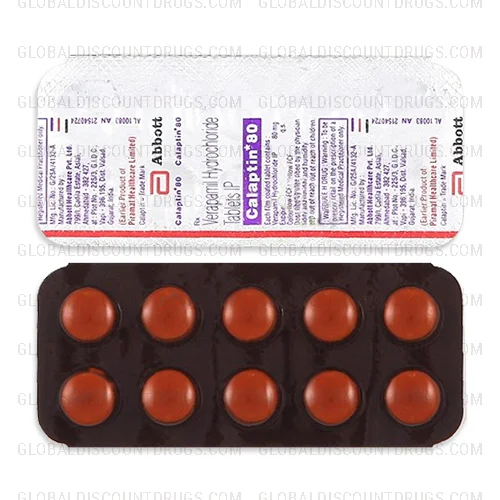
Verapamil 80mg
In StockVerapamil 80mg Tablet is a prescription calcium channel blocker used to treat hypertension, angina, and selected supraventricular heart rhythm disorders. Blood pressure and heart rate should be monitored during therapy.
| Active Ingredient: | Verapamil |
|---|---|
| Indication: | Hypertension |
| Strength: | 80mg |
| Dosage Form: | Tablets |
| Manufacturer: | Abbott |

Quick Overview
Verapamil 80mg is a prescription calcium channel blocker used to treat high blood pressure, angina (chest pain from reduced blood flow to the heart), and certain fast heart rhythms. It works by relaxing blood vessels and slowing electrical signals in the heart. Verapamil requires a valid prescription and medical supervision, because heart rate, blood pressure, liver function, and many drug interactions need careful monitoring.
Medical Supervision and Regulatory Status
Verapamil 80mg is available only with a prescription in the United States, and it is not a controlled substance, so it has no DEA schedule. The FDA approved the brand Calan, and generic verapamil immediate-release tablets are widely available. The label carries no boxed warning. Supervision is needed because verapamil can slow the heart and its electrical conduction too much, lower blood pressure, worsen heart failure, and raise liver enzymes, and it interacts with a long list of medicines. Extended-release verapamil is a different product and is not interchangeable with these tablets.
Clinical Context
Verapamil treats three heart and circulation problems: high blood pressure, angina (chest pain from reduced blood flow to the heart), and certain fast heart rhythms.
The rhythm problems include atrial fibrillation or flutter, where the upper chambers beat chaotically and the ventricles can race, and paroxysmal supraventricular tachycardia (PSVT), a sudden fast heartbeat that starts above the lower chambers. Treatment matters because uncontrolled pressure damages the heart, brain, and kidneys, angina limits activity, and fast rhythms can cause dizziness, fainting, or heart failure over time.
Verapamil is not usually the first drug chosen for high blood pressure alone, since dihydropyridine calcium channel blockers, thiazide-type diuretics, ACE inhibitors, and ARBs are more common starting options. It is a standard option for controlling the heart rate in atrial fibrillation in people with healthy pumping function, for preventing repeat PSVT, and for angina when a beta blocker is not suitable. Your prescriber decides where verapamil fits for you.
How Verapamil 80mg Works
Verapamil is a non-dihydropyridine calcium channel blocker, which means it keeps calcium out of heart and artery muscle cells, so it relaxes blood vessels and slows the heart’s electrical conduction.
In the arteries, less calcium means the muscle relaxes and the vessels widen, so blood pressure falls. In the heart, the same effect weakens each contraction slightly and lowers the heart’s oxygen demand, which helps in angina. It also slows signals passing through the AV node, the relay point between the upper and lower chambers, which lowers the heart rate in atrial fibrillation and can interrupt certain fast rhythms.
Because verapamil acts on the heart as well as the vessels, it affects heart rate more than amlodipine does, and it can add to the effect of beta blockers. The tablets wear off within hours, so they are taken several times a day. Verapamil controls symptoms and rhythm while it is taken and does not cure the underlying condition.
What Is Verapamil 80mg?
Verapamil 80mg is an immediate-release prescription calcium channel blocker tablet usually taken three or four times daily, and the facts below summarize its class, ingredient, forms, and regulatory status.
- Drug Class: Non-dihydropyridine calcium channel blocker
- Active Ingredient: Verapamil hydrochloride
- Mechanism: Blocks calcium entry into heart and artery muscle cells, relaxing blood vessels, slowing AV node conduction, and lowering the heart’s oxygen demand.
- Available Forms and Strengths: Immediate-release oral tablets in 40 mg, 80 mg, and 120 mg (generic and Calan brand). Extended-release tablets and capsules are separate products.
- Dosing Frequency: Usually three times daily (three to four times daily for some rhythm uses)
- Regulatory Status: Prescription only (Rx) in the US, not a controlled substance, no boxed warning, generic versions available
Approved Uses
The FDA has approved verapamil immediate-release tablets for angina, certain fast heart rhythms, and essential hypertension, each with specific labeled conditions explained below.
- Angina: Verapamil is used for vasospastic angina (caused by spasm of a heart artery), chronic stable angina (brought on by exertion), and unstable angina in patients who cannot use or do not respond to a beta blocker or nitrate.
- Arrhythmias (abnormal heart rhythms): With digoxin, it helps control the ventricular rate at rest and during stress in chronic atrial flutter or fibrillation. It is also used to prevent repeated episodes of paroxysmal supraventricular tachycardia.
- Essential hypertension: Verapamil lowers blood pressure, and lowering pressure reduces the risk of strokes and heart attacks.
How to Use and Dosage
Your prescriber sets the dose, and the labeled starting dose is often 80 mg three times daily, with 40 mg three times daily for small, older, or liver-impaired patients.
For angina, the labeled range is 80 mg to 120 mg three times daily, and the dose can be raised as often as daily if needed. For rhythm control, daily totals of 240 mg to 480 mg are divided into three or four doses. For high blood pressure, the usual start is 80 mg three times daily, with increases made at weekly intervals, and the label reports no added benefit above 360 mg a day. People with liver impairment often receive about 30 percent of the usual dose.
Swallow the tablet with water and space doses evenly through the day, following the directions on your pharmacy label about food. Avoid grapefruit juice unless your prescriber approves it, because it can raise verapamil levels.
If you miss a dose, take it as soon as you remember, unless the next dose is almost due. Then skip the missed tablet and continue as usual. Never double up.
Do not stop verapamil on your own. The label describes no dangerous withdrawal reaction, but angina, fast rhythms, and high blood pressure can return. If a side effect is troubling, your prescriber can change the dose before you consider stopping.
Side Effects
Side effects of verapamil vary by person, and constipation, dizziness, nausea, low blood pressure, and headache are reported most often in clinical studies.
Boxed warning: Verapamil has none.
Common effects: Constipation is the most frequent effect and can be bothersome, so fluids, fiber, and activity help. Dizziness, nausea, low blood pressure, headache, swelling of the ankles or feet, tiredness, and a slow heartbeat are also reported. Many effects ease with time, and a dose change can be considered if they persist.
Serious effects: Verapamil can slow the heartbeat to a dangerous level, cause heart block (interrupted electrical signals), worsen heart failure or cause fluid in the lungs, and drop blood pressure enough to cause fainting. Rare effects include liver injury with raised enzymes or jaundice, severe allergic reactions or skin reactions, and overgrowth of the gums. It can also worsen muscle weakness in people with myasthenia gravis or similar disorders.
Emergency Warning Signs
- Fainting, near-fainting, or a very slow or irregular heartbeat with dizziness
- New, worsening, or more frequent chest pain
- Swelling of the face, lips, tongue, or throat, or trouble breathing or swallowing
- Sudden weight gain, swelling in the legs, or worsening shortness of breath
- Yellowing of the skin or eyes, with dark urine or severe stomach pain
- Severe, widespread rash, blistering, or peeling skin
- New or worsening muscle weakness, especially with trouble swallowing or breathing
Call 911 or go to the nearest emergency room for fainting, chest pain, trouble breathing, or swelling of the face or throat. For the other signs, contact your prescriber or seek urgent care the same day.
Warnings and Precautions
Verapamil slows electrical conduction in the heart and can cause low blood pressure, so it must not be used in several heart conditions and requires careful dose increases.
The full exclusion list appears in the next section. Extra care applies to people with milder heart failure (who may need digoxin and a diuretic alongside it), first-degree heart block, a slow heart rate, hypertrophic cardiomyopathy (a thickened heart muscle), liver disease, kidney disease, or a muscle-signaling disorder such as myasthenia gravis. Constipation can become severe, particularly in older adults.
Verapamil is involved in more drug interactions than most blood pressure medicines. Beta blockers such as metoprolol and atenolol can add to the slowing of the heart and to heart failure risk, and intravenous beta blockers must not be given with intravenous verapamil. Digoxin levels can rise by half or more, so doses and levels need review. Disopyramide should not be given within 48 hours before or 24 hours after verapamil, and flecainide and quinidine can add to heart failure and low blood pressure. Simvastatin should be limited to 10 mg daily and lovastatin to 20 mg daily with verapamil. Cyclosporine, tacrolimus, sirolimus, carbamazepine, theophylline, midazolam, and buspirone levels may rise, and lithium effects can change. Clarithromycin, erythromycin, ritonavir, itraconazole, and ketoconazole raise verapamil levels, while rifampin and St. John’s wort can lower them. Grapefruit juice can raise levels, and alcohol effects may last longer.
The label notes that there are no adequate studies in pregnant women, so the prescriber weighs benefit against risk. Tell your prescriber if you are pregnant or planning pregnancy. Verapamil passes into breast milk, so feeding plans should be reviewed with the prescriber or pediatrician.
Older adults tend to clear verapamil more slowly and are more sensitive to low blood pressure and constipation, so a 40 mg starting dose is common. Safety and effectiveness of the tablets in children have not been established in the label. People with liver impairment need about 30 percent of the usual dose. People with kidney impairment can usually take it with caution, and the prescriber may check the heart tracing for conduction changes.
Monitoring usually includes blood pressure and pulse at each visit, an ECG to check the PR interval (a measure of conduction), periodic liver tests, digoxin levels when taken together, and attention to constipation, swelling, and signs of heart failure.
Who Should Not Use This Medication
People with severe left ventricular dysfunction, very low blood pressure, cardiogenic shock, sick sinus syndrome, second or third degree AV block, or accessory pathway rhythms should not use verapamil.
- Severe left ventricular dysfunction (a weak pumping heart)
- Systolic blood pressure below 90 mm Hg, or cardiogenic shock
- Sick sinus syndrome, unless a functioning pacemaker is in place
- Second or third degree AV block, unless a functioning pacemaker is in place
- Atrial flutter or fibrillation with an accessory bypass tract (such as Wolff-Parkinson-White syndrome)
- Known hypersensitivity (allergy) to verapamil or any ingredient in the tablet
Storage Instructions
Store verapamil tablets at room temperature, between 68°F and 77°F (20°C to 25°C), in a tightly closed container that protects them from light and moisture.
Avoid keeping the bottle in a bathroom or near the stove, where heat and steam can damage tablets. Keep it out of sight and reach of children, because even a single extra tablet can be dangerous to a child and an overdose can slow the heart severely. If a child swallows tablets, call Poison Control at 1-800-222-1222, or 911 if the child collapses or has trouble breathing. Do not share your tablets.
For disposal, use a drug take-back site or program, such as those at many pharmacies or on DEA take-back days. If none is available, FDA guidance allows mixing tablets with used coffee grounds or cat litter in a sealed bag, placing it in household trash, and scratching out personal details on the label.
Frequently Asked Questions
What is the cost of Verapamil 80mg without insurance?
The cost without insurance depends on the seller, brand availability, and pack size. Location and available discounts can also change it. Generic verapamil tablets are generally more affordable than the brand-name product, Calan, and are widely available. Request a quote from a licensed US pharmacy, and ask whether your prescription can be filled with the generic.
How can I order Verapamil 80mg online?
You can order Verapamil 80mg online only with a valid prescription. Upload it, or ask your prescriber to send it to the pharmacy, then order from a licensed US pharmacy and receive home delivery. Before paying, confirm the pharmacy holds a state license and has a pharmacist available to answer questions.
Is Verapamil 80mg available over the counter?
No, verapamil is not sold over the counter in the United States. Rules differ by country, but here it stays prescription-only. Medical supervision is required because verapamil slows heart conduction, can lower blood pressure, and interacts with many common medicines. A prescriber also adjusts the dose to your liver function, age, and heart rhythm.
Does Verapamil 80mg require a prescription?
Yes, verapamil requires a prescription from a licensed US prescriber. Evaluation matters because the drug can slow the heartbeat, block electrical signals, and worsen heart failure, and several heart conditions rule it out. Your prescriber reviews your history, may order an ECG, and sets a starting dose. A pharmacist checks the prescription and your other medicines before dispensing.
How long does Verapamil 80mg take to work?
Verapamil tablets reach peak blood levels in about one to two hours, but blood pressure lowering builds over the first week or so. Doses for high blood pressure are usually raised weekly, while angina doses may be raised daily. Response varies by person, and hypertension rarely causes symptoms, so feeling no change is common. Keep taking it as prescribed.
Is it safe to stop taking Verapamil 80mg suddenly?
No, stopping verapamil suddenly without medical advice is not recommended. The label describes no dangerous withdrawal reaction, but angina, fast heart rhythms, and high blood pressure can return. If constipation, dizziness, or swelling bothers you, your prescriber can adjust the dose or change medicines instead of having you quit abruptly. Report any slow pulse or fainting immediately.
Can Verapamil 80mg interact with other medicines?
Yes, verapamil interacts with many medicines. Beta blockers such as metoprolol can slow the heart too much, and digoxin levels can rise sharply. Simvastatin and lovastatin doses must be limited, and clarithromycin, ritonavir, and itraconazole can raise verapamil levels. Rifampin lowers them. Cyclosporine, tacrolimus, and carbamazepine levels can increase, so a pharmacist should review every medicine you take.
What should I do if I miss a dose of Verapamil 80mg?
Take the missed verapamil 80mg tablet as soon as you remember, unless your next dose is almost due. If it is, skip the missed tablet and resume your regular schedule. Never take two tablets together, because the extra dose can slow the heartbeat and drop blood pressure. Spacing doses evenly through the day reduces gaps.
References
- DailyMed (NIH), verapamil hydrochloride tablets drug label. Official FDA-approved prescribing information, including indications, dosing, contraindications, and interactions.
- MedlinePlus, Verapamil. Plain-language patient information on uses, precautions, side effects, and missed doses.
- FDA, Drugs@FDA entry for Calan (verapamil hydrochloride). Approval history and current labeling for the reference brand product.
Medical Disclaimer:
This content is for informational purposes only and does not constitute medical advice, diagnosis, or treatment. Consult a qualified specialist or physician before using Verapamil 80mg.
Prescription Required (Rx) to Buy?
This medication is not available over the counter. A valid prescription from a licensed healthcare
professional is required. Always consult your doctor before use.
| Quantity | 180, 270, 360, 90 |
|---|---|
| Indication | Hypertension |
| Active Ingredient | Verapamil |
| Pharmaceutical Form | Tablets |
| Manufacturer | Abbott |
| Indian Brand | Calaptin 80 |
| US Brand Name | Anpec, Bosoptin, Calan, Covera, Isoptin, Securon, Veracaps, Verapamil, Verapamil HCL, Verapamilo, Verelan, Vertab |
| Generic Name | Verapamil |
| Dosage | 80mg |
| Drug Type | Tablets |