

Trimetazidine 20mg
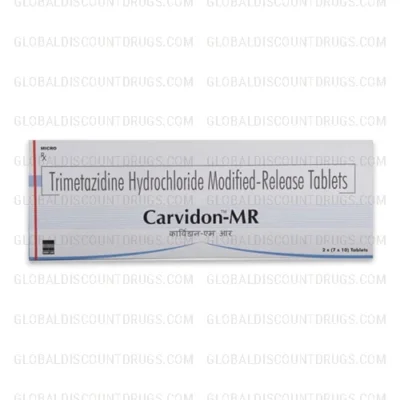
In StockTrimetazidine 20 mg Tablet is an antianginal metabolic medicine used in some countries as add-on treatment for stable angina that is not adequately controlled by other therapies. It does not relieve an acute angina attack.
| Active Ingredient: | Trimetazidine |
|---|---|
| Indication: | Chronic Angina |
| Strength: | 20mg |
| Dosage Form: | Tablets |
| Manufacturer: | Abbott |

Trimetazidine 20mg – Quick Overview
Trimetazidine 20mg is a prescription heart medicine used in some countries as add-on treatment for stable angina (chest pain from reduced blood flow to the heart). It works by helping heart cells use energy more efficiently without changing heart rate or blood pressure. It is not FDA-approved in the US and should be used only under a doctor’s supervision.
Medical Supervision & Regulatory Status
Trimetazidine 20mg is a prescription-only medicine in the countries where it is approved, including the EU, where its use has been restricted since a 2012 safety review. In the US, trimetazidine has no FDA-approved use. Supervision is required because it can cause or worsen movement problems such as tremor and parkinsonian symptoms, and it is not suitable for people with severe kidney disease.
Clinical Context
Trimetazidine is used for stable angina pectoris, which causes chest pain or pressure during exertion or stress when the heart muscle does not get enough oxygen-rich blood.
Treatment is needed because angina limits daily activity and signals underlying coronary artery disease. Controlling symptoms helps people stay active, while other treatments address the underlying risk of heart attack.
Trimetazidine is not a first-choice medicine. In Europe, regulators advise using it only as an add-on when angina is not controlled by, or a person cannot tolerate, first-line medicines such as beta blockers, calcium channel blockers, or long-acting nitrates. Your doctor decides whether it fits your situation.
How Trimetazidine 20mg Works
Trimetazidine belongs to a class often called metabolic modulators or anti-ischemic agents. It does not widen blood vessels or slow the heart rate. It helps heart muscle cells cope when oxygen supply is low.
In simple terms, heart cells burn fats and sugars for energy, and burning fats needs more oxygen. Trimetazidine blocks an enzyme (long-chain 3-ketoacyl-CoA thiolase) so cells shift toward burning glucose, which uses less oxygen and helps preserve cell energy during reduced blood flow.
For patients, this may mean fewer angina attacks and better exercise tolerance in some people. Because it does not change heart rate or blood pressure, it can be added to other angina medicines, but response varies from person to person.
What Is Trimetazidine 20mg?
Trimetazidine 20mg is an oral film-coated tablet containing 20 mg of trimetazidine dihydrochloride, a prescription anti-anginal medicine usually taken three times daily with meals.
- Drug class: Metabolic modulator (anti-anginal agent)
- Active ingredient: Trimetazidine dihydrochloride 20 mg
- Mechanism: Inhibits fatty acid oxidation (3-KAT), shifting heart cell energy use toward glucose.
- Form: Oral film-coated tablet (immediate-release)
- Dosing frequency: Usually one tablet three times daily with meals, as prescribed
- Regulatory status: Prescription-only where approved; not FDA-approved in the US
Uses / Indications
Approved uses depend on the country. In the EU, trimetazidine is approved for:
- Stable angina pectoris in adults: as add-on therapy for symptom relief in patients whose angina is not adequately controlled by, or who cannot tolerate, first-line anti-anginal medicines.
Some other countries have older or broader labels. Trimetazidine is not meant for treating a sudden angina attack, unstable angina, or a heart attack, and it should not be used to start treatment in an emergency.
How to Use / Dosage
Take trimetazidine exactly as prescribed. The usual dose for the 20 mg tablet is one tablet three times a day with meals. Your doctor may lower the dose if you are older or have moderate kidney problems.
Timing: Take each dose with food, spaced across the day, such as with breakfast, lunch, and dinner. Swallow the tablet with water.
Missed dose: Skip the missed dose and take your next dose at the usual time with a meal. Never take a double dose to make up for a missed one.
Do not stop without advice: Stopping is not usually dangerous in itself, but angina symptoms may return. Your doctor usually reviews benefit after about 3 months and may stop it if there is no improvement.
Side Effects
Many people take trimetazidine without serious problems, but tell your doctor about any side effects that bother you or do not go away.
Common effects include dizziness, headache, stomach pain, nausea, indigestion, diarrhea, vomiting, skin rash or itching, and weakness.
Serious effects include parkinsonian symptoms (tremor, stiffness, slow movement, shuffling walk), restless legs, unsteady walking, falls, low blood pressure on standing, an irregular or racing heartbeat, constipation, swelling of the face or throat (angioedema), liver inflammation, and, rarely, low white blood cell or platelet counts. Parkinsonian symptoms can occur in people with no history of Parkinson’s disease and usually improve after stopping.
Emergency warning signs. Get medical help immediately if you notice:
- New tremor, stiffness, slow movement, or walking difficulty
- Fainting, severe dizziness, or repeated falls
- Chest pain that does not ease with your usual medicine, or chest pain at rest
- Swelling of the face, lips, or throat, or trouble breathing
- Unusual bruising or bleeding, or fever with a sore throat or frequent infections
- Yellowing of the skin or eyes, or dark urine
- A fast or irregular heartbeat
Warnings & Precautions
Trimetazidine must not be used in people with Parkinson’s disease, parkinsonian symptoms, tremors, restless legs syndrome, or other related movement disorders, or in people with severe kidney impairment (creatinine clearance below 30 mL/min). It is also contraindicated in people with a known hypersensitivity to trimetazidine or any ingredient in the tablet.
Not for emergencies: Trimetazidine does not treat or prevent acute angina attacks, unstable angina, or a heart attack. If you have sudden or worsening chest pain, call emergency services.
Movement symptoms and falls: If you notice tremor, stiffness, or walking problems, tell your doctor right away, because the medicine usually needs to be stopped. Take extra care if you also use blood pressure medicines, which can add to dizziness and fall risk.
Interactions: No major drug interactions are well established, but tell your doctor about all medicines, including other angina drugs and blood pressure medicines, because combined effects on dizziness and blood pressure can occur. Always tell your doctor and pharmacist about everything you take, including supplements.
Driving: Dizziness and drowsiness can occur, so be careful when driving or operating machinery until you know how it affects you.
Pregnancy and breastfeeding: It is preferable to avoid trimetazidine during pregnancy, and it is not recommended while breastfeeding, because safety data are limited. Discuss alternatives with your doctor.
Special populations: People with moderate kidney problems, and older adults, are more exposed to the medicine and may need a lower dose and closer monitoring. Safety in children has not been established.
Who Should Not Use This Medication
- People with Parkinson’s disease or parkinsonian symptoms, tremor, or restless legs syndrome
- People with severe kidney impairment
- Anyone allergic to trimetazidine or any ingredient in the tablet
- Anyone looking for treatment of an acute angina attack or heart attack
- Pregnant or breastfeeding women, unless their doctor advises otherwise
- Anyone using it without a prescription or without a confirmed angina diagnosis
Storage Instructions
Store trimetazidine tablets in the original pack at room temperature, below 77°F (25°C), unless your package leaflet says otherwise. Keep them dry and away from direct light and heat. Keep out of reach of children and pets. Do not use after the expiry date, and ask a pharmacist how to dispose of unused tablets safely.
Frequently Asked Questions
What is the cost of Trimetazidine 20mg without insurance?
The cost without insurance depends on the seller, brand availability, and pack size. It may also vary by location and available discounts. Because trimetazidine is not FDA-approved in the US, there is no regulated US price. In countries where it is approved, generic versions are usually affordable, so ask a licensed pharmacist about options.
How can I order Trimetazidine 20mg online?
Where it is approved, you need a valid prescription and a licensed pharmacy. Upload your prescription or ask your doctor to send it, then order for home delivery. Trimetazidine is not FDA-approved in the US, so US websites selling it are not regulated. Avoid unverified sellers, since products may be counterfeit or mislabeled.
Is Trimetazidine 20mg available over the counter?
No, it is not available over the counter in most countries where it is approved. Regulations vary by region, and it generally requires prescription supervision. In the US it has no approved use, so any product sold online without a prescription is unreliable. It needs medical supervision because of its movement-related and kidney-related risks.
Does Trimetazidine 20mg require a prescription?
Yes, in countries where it is approved, a prescription is required. A doctor must confirm stable angina, check for Parkinson-like symptoms and kidney function, and review your other heart medicines. Follow-up visits show whether it helps. This evaluation protects you from movement disorders and other avoidable side effects.
How long does Trimetazidine 20mg take to work?
Benefits for angina build over weeks rather than hours, and it does not relieve a sudden attack. Doctors usually review your response after about 3 months and may stop it if there is no benefit. Do not use it to treat an attack, and do not change the dose on your own.
Is it safe to stop Trimetazidine 20mg suddenly?
It is not usually dangerous to stop, but talk to your doctor first. Angina symptoms may return, and you may need other treatment. If you notice tremor, stiffness, or walking problems, contact your doctor promptly, since stopping is often recommended in that case.
Does Trimetazidine 20mg interact with other medicines?
No major interactions are well established, but tell your doctor about all medicines you take. It is often used with other angina drugs, and combining it with blood pressure medicines can add to dizziness and fall risk. Always tell your doctor and pharmacist about all medicines and supplements before starting.
What should I do if I miss a dose of Trimetazidine 20mg?
Skip the missed dose and take your next dose at the usual time with a meal. Never take a double dose to catch up. If you often forget, ask your doctor or pharmacist about tips, such as linking each dose to a mealtime.
References
- European Medicines Agency, Trimetazidine referral (restriction to add-on use in stable angina): https://www.ema.europa.eu/en/medicines/human/referrals/trimetazidine
- PubChem (NIH/National Library of Medicine), Trimetazidine: https://pubchem.ncbi.nlm.nih.gov/compound/Trimetazidine
- U.S. Food and Drug Administration, Personal Importation: https://www.fda.gov/industry/import-basics/personal-importation
Medical Disclaimer:
This content is for informational purposes only and does not constitute medical advice, diagnosis, or treatment. Consult a qualified specialist or physician before using Trimetazidine 20mg.
Prescription Required (Rx) to Buy?
This medication is not available over the counter. A valid prescription from a licensed healthcare
professional is required. Always consult your doctor before use.
| Quantity | 120, 180, 240, 60 |
|---|---|
| Indication | Chronic Angina |
| Active Ingredient | Trimetazidine |
| Pharmaceutical Form | Tablets |
| Manufacturer | Abbott |
| Indian Brand | Cytogard 20mg |
| US Brand Name | Trimetazidine |
| Generic Name | Trimetazidine |
| Dosage | 20mg |
| Drug Type | Tablets |