
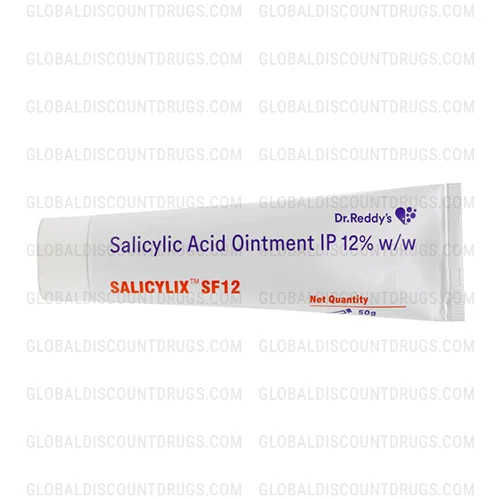
Salicylic Acid 12% Ointment 50gms
In StockSalicylic Acid 12% Ointment softens and loosens thickened skin associated with selected dermatological conditions through keratolytic action. Apply only to affected areas and avoid healthy or damaged skin unless directed.
| Active Ingredient: | Salicylic Acid |
|---|---|
| Indication: | Psoriasis |
| Strength: | 12%-50gms |
| Dosage Form: | Ointment |
| Manufacturer: | Dr.Reddy's |

Salicylic Acid 12% Ointment 50gm Quick Overview
Salicylic Acid 12% Ointment is an over-the-counter topical treatment used to soften and gradually remove corns, calluses, and common warts. It works by loosening the dead skin cells that build up in these areas, allowing them to peel away over time. This 12% strength is intended for external use only and should be used as directed on the label or by a healthcare provider, especially if you have diabetes, poor circulation, or sensitive skin.
Medical Supervision & Regulatory Status
Salicylic Acid 12% Ointment is available over-the-counter (OTC) in the US under the FDA’s OTC monograph for corn, callus, and wart removers. Despite OTC availability, people with diabetes, poor circulation, or nerve damage in the feet should consult a doctor before use, since minor skin injuries in these groups can become serious.
Clinical Context
Corns, calluses, and common warts result from repeated pressure, friction, or a viral skin infection (in the case of warts), leading to thickened or raised areas of skin. While often harmless, they can cause discomfort, pain while walking, or self-consciousness, prompting many people to seek at-home removal options.
Treatment is typically sought when the affected area becomes painful, catches on socks or shoes, or fails to improve with basic foot care like cushioning or moisturizing. Persistent or spreading warts, or corns that recur despite treatment, may need professional evaluation.
Topical salicylic acid preparations, including 12% ointment, sit among the first-line self-care options for uncomplicated corns, calluses, and warts on the hands and feet, before considering in-office procedures like cryotherapy or debridement performed by a podiatrist or dermatologist.
How Salicylic Acid 12% Ointment Works
Salicylic acid belongs to a class of compounds called keratolytics, chemically related to salicylates (the same drug family as aspirin). At 12% concentration, it works by increasing moisture in the outer skin layer and breaking down the bonds holding dead skin cells together.
This softening action allows the thickened, hardened skin of a corn, callus, or wart to gradually loosen and shed with repeated application. It’s worth noting that salicylic acid does not kill the wart virus itself — it only helps the affected skin layer peel away over time.
For patients, this means visible improvement typically takes days to weeks of consistent use rather than a single application, and the treated skin should be monitored for irritation throughout the process.
What is Salicylic Acid 12% Ointment?
| Attribute | Details |
|---|---|
| Drug Class | Keratolytic; salicylate derivative |
| Active Ingredient | Salicylic Acid 12% w/w |
| Mechanism of Action | Softens and breaks down bonds between cells in the outer skin layer, helping thickened, rough, or dead skin shed |
| Form | Topical ointment, 50 g tube |
| Dosing Frequency | Usually applied once or twice daily, as directed |
| Regulatory Status | Available over the counter for certain wart, corn, and callus remover products that meet applicable FDA requirements |
Uses / Indications
| Condition | How It Helps |
|---|---|
| Corns | Softens and helps remove thickened skin caused by pressure or friction, usually on the toes. |
| Calluses | Helps thin and remove hardened, thickened patches of skin, commonly found on the feet or hands. |
| Common warts | Gradually peels away raised skin growths caused by certain types of human papillomavirus (HPV), commonly on the hands or feet. |
How to Use / Dosage
For corns and calluses, the ointment is generally applied one or two times a day as needed for up to 14 days, or as directed by a doctor, until the corn or callus is removed. Soaking the area in warm water for about five minutes beforehand may help. Apply a thin layer only to the affected area, avoiding healthy surrounding skin.
If a dose is missed, simply resume the regular schedule at the next application; do not double up. Since this is a self-limited course of treatment rather than an ongoing prescription medicine, there is no “stopping suddenly” concern — but if the corn, callus, or wart does not improve, worsens, or spreads after the recommended treatment period, stop use and consult a doctor.
Side Effects
Most people tolerate topical salicylic acid well when used correctly on the intended area. Common side effects include irritation, burning, stinging, scaling, and peeling of the treated skin.
Serious effects are uncommon with proper use but can occur with overuse, application to broken skin, or use over large body areas, since excess absorption may affect the body more broadly. Covering treated skin with bandages or petroleum-based products can increase absorption of salicylic acid and raise the risk of side effects, so this should be avoided unless a healthcare provider advises otherwise.
Emergency Warning Signs — seek medical attention if you experience:
- Confusion or unusual drowsiness
- Rapid or deep breathing
- Ringing in the ears (tinnitus) or hearing changes
- Dizziness or persistent headache
- Severe skin redness, blistering, or spreading irritation
- Signs of infection (increasing pain, warmth, swelling, pus)
Warnings & Precautions
This ointment should not be used on the face, on moles, birthmarks, genital or anal warts, warts with hair growing from them, or on irritated or broken skin. People with diabetes, poor circulation, or peripheral neuropathy should consult a doctor before use, as reduced sensation can mask injury and slow healing of even minor skin damage.
Salicylic acid can increase skin sensitivity to sunlight; sunscreen and protective clothing over treated areas are advisable during use. Combining this ointment with other salicylate-containing products, or with oral medications like aspirin or certain diabetes drugs, may increase the risk of systemic absorption and side effects, so it’s important to tell a doctor or pharmacist about all other medications and topical products being used. Pregnant or breastfeeding individuals should consult a healthcare provider before use, since data on topical use in these groups is limited. Use in young children should also be discussed with a pediatrician, as their skin may absorb more of the active ingredient relative to body size.
Who Should Not Use This Medication
- People with diabetes or poor blood circulation, without doctor approval
- Anyone with open wounds, infected skin, or irritated skin at the application site
- Use on the face, genital/anal warts, moles, or birthmarks
- People with known allergy or sensitivity to salicylates (including aspirin)
- Warts with hair growing from them
- Children under the age recommended on the label, without medical guidance
Storage Instructions
Store at room temperature, away from excess heat and moisture. Keep the tube tightly closed and away from direct sunlight. Keep out of reach of children and pets, as accidental ingestion or misuse can be harmful.
Frequently Asked Questions
Is a prescription needed for Salicylic Acid 12% Ointment?
No, this product is available over-the-counter in the US. However, people with diabetes, poor circulation, or nerve problems should check with a doctor before using it, since it can be risky for these groups.
How long does it take to work?
Improvement is usually seen within one to two weeks of consistent use for corns and calluses, and it may take longer for warts. Results vary by individual and by how thick the affected skin is.
Is it safe to stop using it early?
Yes, you can stop at any time without a tapering process, since this is a topical self-care treatment rather than a systemic medicine. If the area isn’t improving after the recommended treatment period, stop and see a doctor.
Can it interact with other medicines?
Yes, using it alongside other salicylic acid products or aspirin-containing medicines can raise the risk of side effects from excess absorption. Tell your pharmacist about all products you use, including other topical treatments.
What if I miss an application?
Simply apply it at your next scheduled time — there’s no need to double up. Missing a dose occasionally will not significantly affect overall treatment as long as you resume regular use.
What is the cost without insurance?
The cost without insurance depends on the seller, brand availability, and pack size, and may also vary by location and available discounts. Generic salicylic acid products are generally more affordable than branded versions.
Is Salicylic Acid 12% Ointment available over the counter?
Yes, it is available OTC in most countries, including the US, under FDA monograph rules. Regulations can vary by region, so check local guidance, and consult a doctor if you have underlying health conditions.
References
DailyMed (NIH) – Salicylic Acid Corn/Callus/Wart Remover Labeling: https://dailymed.nlm.nih.gov/dailymed/drugInfo.cfm?setid=8b71018c-766f-43fb-b191-a9650e6c3544
MedlinePlus / Mayo Clinic Consumer Drug Information – Salicylic Acid (Topical Route): https://www.mayoclinic.org/drugs-supplements/salicylic-acid-topical-route/description/drg-20066030
U.S. FDA – OTC Monograph M030: Corn and Callus Remover Drug Products for OTC Human Use (referenced via WebMD Drug Information): https://www.webmd.com/drugs/salicylic-acid-topical
Medical Disclaimer:
This content is for informational purposes only and does not constitute medical advice, diagnosis, or treatment. Consult a qualified specialist or physician before using Salicylic Acid 12% Ointment.
| Quantity | 2, 4, 6, 8 |
|---|---|
| Indication | Psoriasis |
| Active Ingredient | Salicylic Acid |
| Pharmaceutical Form | Ointment |
| Manufacturer | Dr.Reddy's |
| Indian Brand | Salicylix SF 12 Ointment 50GM |
| US Brand Name | Salicylic Acid |
| Generic Name | Salicylic Acid |
| Dosage | 12%-50gms |
| Drug Type | Tubes |