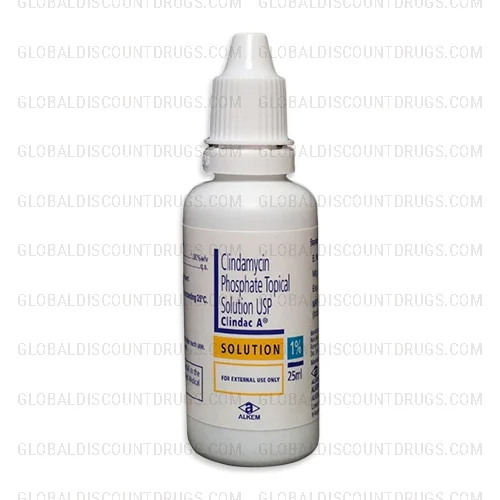
Clindamycin 1% Topical Solution 25ml
In StockClindamycin 1% Topical Solution is a prescription lincosamide antibiotic applied to acne-prone skin to reduce acne-causing bacteria and inflammatory lesions. Apply evenly to clean, dry skin as directed.
| Active Ingredient: | Clindamycin |
|---|---|
| Indication: | Acne Vulgaris |
| Strength: | 1% 25ml |
| Dosage Form: | Topical Solution (for Skin) |
| Manufacturer: | Alkem Laboratories Ltd |

Clindamycin 1% Topical Solution — Quick Overview
Clindamycin 1% Topical Solution is a prescription antibiotic applied directly to the skin to treat acne vulgaris. It belongs to the lincosamide class of antibiotics and works by slowing or stopping the growth of acne-causing bacteria on the skin. It is available only with a doctor’s prescription and should be used exactly as directed.
Medical Supervision & Regulatory Status
This product is a prescription-only (Rx) medication in the United States and is not available over the counter. Prescribing information notes it is for external use only, and supervision is required because topical clindamycin can be partially absorbed into the bloodstream and carries specific safety warnings that a prescriber needs to evaluate against your medical history.
Clinical Context
Acne vulgaris is a common inflammatory skin condition involving clogged pores, excess oil, and overgrowth of acne-related bacteria, most often affecting the face, chest, and back. Clindamycin phosphate topical solution is indicated specifically for the treatment of acne vulgaris.
Treatment matters because untreated moderate-to-severe acne can lead to lasting skin changes, including scarring and pigmentation, as well as emotional distress. Topical antibiotics like clindamycin target the bacterial and inflammatory components of acne that contribute to breakouts.
Clindamycin solution typically isn’t used as a stand-alone therapy. Doctors usually prescribe it alongside benzoyl peroxide or a topical retinoid, since combination therapy improves results and helps reduce the risk of bacterial resistance compared with clindamycin used on its own.
How Clindamycin 1% Topical Solution Works
Clindamycin is a lincosamide-class antibiotic that fights the bacteria associated with acne breakouts and helps calm the inflammation they trigger.
At the cellular level, clindamycin interferes with bacterial protein production, which stops susceptible bacteria on the skin from multiplying. Only a small fraction of the topical dose — roughly 4–5% — is absorbed into the bloodstream, which is why it’s applied directly to affected skin rather than taken systemically for acne.
For patients, this translates to fewer new blemishes and reduced redness and swelling over time, though visible improvement is gradual rather than immediate.
What Is Clindamycin 1% Topical Solution?
- Drug Class: Lincosamide antibiotic (topical acne agent)
- Active Ingredient: Clindamycin phosphate, USP, equivalent to 10 mg clindamycin per mL (1%)
- Mechanism: Inhibits growth of acne-related bacteria on the skin; anti-inflammatory effect reduces redness and swelling
- Form: Topical solution in an isopropyl alcohol-based vehicle with propylene glycol and purified water, packaged in a 25 mL bottle
- Dosing Frequency: As directed by your prescriber, typically once or twice daily
- Regulatory Status: Prescription only (Rx) in the United States
Uses / Indications
Acne Vulgaris: Clindamycin Phosphate Topical Solution 1% is approved for the treatment of acne vulgaris. It is approved for use in adults and children age 12 and older. This is the only FDA-approved use for this product; it should not be applied for other skin conditions unless specifically directed by a physician.
How to Use / Dosage
Your doctor will determine your exact dosing schedule based on your skin type and acne severity — do not adjust the amount or frequency on your own.
- Timing: Apply a thin film of the solution to the affected area, using it sparingly and avoiding the eyes and mouth. If using an applicator tip, use a dabbing rather than a rolling motion.
- Missed Dose: If you forget an application, apply it as soon as you remember unless it’s almost time for your next dose — then skip the missed one. Don’t double up.
- Do Not Stop Suddenly Without Guidance: Even though this is a topical product, stopping treatment abruptly or inconsistently can reduce effectiveness and contribute to antibiotic resistance. Discuss any changes with your prescriber first.
Side Effects
Most people tolerate this medication well, and side effects are usually mild and manageable.
Common side effects include skin redness, itching, or burning at the application site, along with dryness or peeling. Irritation risk may be higher if you’re also using other acne products, so tell your doctor about your full skincare routine.
Serious side effects are uncommon but require prompt medical attention. Watery or bloody diarrhea — even occurring up to two months after stopping the medication — should be reported to your healthcare provider right away, as it may signal a serious bowel condition linked to clindamycin absorption.
Emergency Warning Signs — seek medical care immediately if you experience:
- Severe or bloody diarrhea
- Severe abdominal cramping or pain
- Signs of an allergic reaction: rash, hives, or swelling of the face, lips, tongue, or throat
- Difficulty breathing or swallowing
- Severe skin irritation, blistering, or contact dermatitis
- Signs of a new skin infection at the treated area
Warnings & Precautions
This medication carries a boxed-level safety concern: clindamycin, including the topical form, has been associated with severe colitis that can be life-threatening because the drug is absorbed from the skin surface. Report persistent or bloody diarrhea to your doctor without delay, even weeks after finishing treatment.
Because the solution’s alcohol-based formula can cause burning and irritation if it contacts the eyes, rinse thoroughly with cool water if accidental contact occurs, and apply carefully around the mouth given its unpleasant taste. People with atopic (allergy-prone) skin conditions should use this product with added caution under medical supervision. Regarding drug interactions, clindamycin has neuromuscular blocking properties and should be used cautiously in patients taking neuromuscular blocking agents (medications sometimes used during surgery or anesthesia) — tell your doctor about all prescription and OTC medicines you use. For pregnancy and breastfeeding, clinical data on systemic clindamycin use during the second and third trimesters have not shown an increased rate of birth defects, but topical use during pregnancy or while breastfeeding should still only occur under a doctor’s guidance, since skin absorption and infant exposure haven’t been fully established for this specific formulation. Special populations — including older adults, individuals with prior gastrointestinal disease, and those on other topical acne treatments — should have their use monitored by a healthcare provider to watch for irritation or systemic effects.
Who Should Not Use This Medication
- A history of hypersensitivity to clindamycin or lincomycin
- A personal history of regional enteritis (Crohn’s disease) or ulcerative colitis
- A prior history of antibiotic-associated colitis
- Known allergy to any inactive ingredient in the solution (including the alcohol base)
- Children under 12 years old, unless specifically prescribed by a physician
Storage Instructions
- Store at controlled room temperature, 20°C to 25°C (68°F to 77°F)
- Protect from freezing and avoid exposure to excess heat or direct sunlight
- Keep the container tightly closed and store it upright
- Keep out of the reach of children and pets; dispose of unused or expired product through a medication take-back program rather than household trash
Frequently Asked Questions
Does Clindamycin 1% Topical Solution require a prescription?
Yes, this medication is prescription-only in the United States. A doctor needs to evaluate your skin condition and medical history first, since clindamycin carries specific interaction and colitis-related risks that require monitoring for safe use.
Is Clindamycin 1% Topical Solution available over the counter?
No, it is not sold over the counter in most countries, including the U.S. Regulations can vary by region, but medical supervision is generally required to make sure it’s appropriate for your skin and health history.
How long does it take to work?
Most patients notice gradual improvement in acne lesions over several weeks of consistent use, though individual response times vary. Full results are typically evaluated by your dermatologist at follow-up, often around 8–12 weeks.
Is it safe to stop using this medication suddenly?
You can generally stop applying it without a taper, but doing so without your doctor’s input may allow acne to return or affect your overall treatment plan. Always check with your prescriber before discontinuing.
Can Clindamycin interact with other medications or skincare products?
Yes — it should be used cautiously with neuromuscular blocking agents and may increase irritation when combined with other topical acne treatments like retinoids or exfoliants. Share your full medication and skincare list with your doctor or pharmacist.
What if I miss a dose?
Apply it as soon as you remember, unless it’s nearly time for your next scheduled application — in that case, skip the missed dose. Don’t apply extra to make up for it.
What is the cost of Clindamycin 1% Topical Solution without insurance?
Generic clindamycin topical solution is generally affordable compared with branded alternatives. The cost without insurance depends on the seller, brand availability, and pack size, and may also vary by location and available discounts.
How can I order Clindamycin 1% Topical Solution online?
A valid prescription is required to order this medication. Typically, you upload your prescription or have your doctor send it electronically, place your order through a licensed pharmacy, and receive it via home delivery — always verify the pharmacy is licensed before ordering.
References
- DailyMed (NIH/NLM) — Clindamycin Phosphate Topical Solution, USP 1% — Official FDA Label: https://dailymed.nlm.nih.gov/dailymed/lookup.cfm?setid=b2dfb76b-db09-43e7-8366-6791449a4918
- MedlinePlus (NIH) — Clindamycin Topical: https://medlineplus.gov/druginfo/meds/a609005.html
- Mayo Clinic — Clindamycin (Topical Route): Description and Dosage: https://www.mayoclinic.org/drugs-supplements/clindamycin-topical-route/description/drg-20063064
Prescription Required (Rx) to Buy?
This medication is not available over the counter. A valid prescription from a licensed healthcare
professional is required. Always consult your doctor before use.
| Quantity | 10, 15, 20, 5 |
|---|---|
| Indication | Acne Vulgaris |
| Active Ingredient | Clindamycin |
| Pharmaceutical Form | Topical Solution (for Skin) |
| Manufacturer | Alkem Laboratories Ltd |
| Indian Brand | Clindac A Solution |
| US Brand Name | Cleocin T, Clindamycin |
| Generic Name | Clindamycin |
| Dosage | 1% 25ml |
| Drug Type | Bottles |