
Potassium Chloride PR 750mg
Out of StockPotassium Chloride PR 750 mg Prolonged-Release Tablet helps restore or maintain healthy potassium levels in patients who require supplementation. Swallow the tablet whole to preserve its controlled-release properties.
| Active Ingredient: | Potassium Chloride |
|---|---|
| Indication: | Hypokalemia |
| Strength: | PR 750mg |
| Dosage Form: | Tablets |
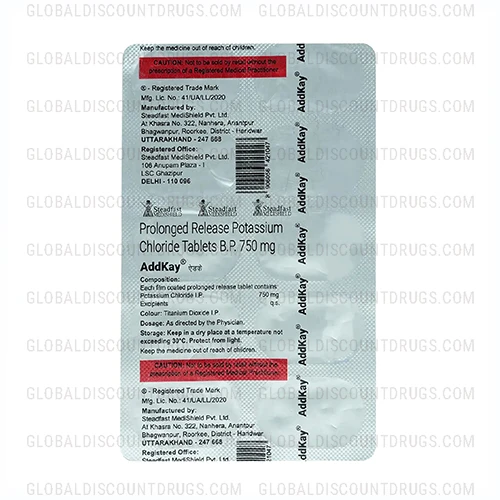
| Manufacturer: | Steadfast Medishield |

Potassium Chloride PR 750mg – Quick Overview
Potassium Chloride PR (prolonged-release) 750mg, equivalent to 10 mEq of potassium, is a prescription tablet used to treat and prevent low blood potassium (hypokalemia). It works by replenishing potassium levels needed for normal nerve, muscle, and heart function. This medicine requires a valid prescription and should be taken exactly as directed, always with food and fluids.
Medical Supervision & Regulatory Status
Potassium Chloride PR 750mg is available by prescription only in the United States and is regulated by the FDA (potassium chloride extended-release tablets, initially approved 1948). It is not available over the counter because incorrect use can cause dangerously high blood potassium (hyperkalemia) or gastrointestinal injury, requiring monitoring through blood tests.
Clinical Context
Hypokalemia, or low blood potassium, can occur due to diuretic use, inadequate dietary intake, gastrointestinal losses, or certain medical conditions, and it can disrupt normal heart rhythm and muscle function if left uncorrected. Potassium plays an essential role in nerve signaling, muscle contraction, and maintaining a stable heartbeat.
Treatment is needed when dietary changes or adjusting diuretic doses are insufficient to restore normal potassium levels, particularly in patients also managing metabolic alkalosis.
Within electrolyte management, the prolonged-release (wax matrix) formulation allows potassium to be released gradually, reducing the risk of a high local concentration irritating the stomach lining compared to immediate-release forms.
How Potassium Chloride PR Works?
Potassium Chloride PR belongs to the electrolyte replacement / mineral supplement class.
Its mechanism involves supplying potassium ions that are absorbed into the bloodstream and distributed into body cells, restoring the balance needed for normal electrical signaling in nerves and muscles, including the heart.
By correcting low potassium levels, this medication helps prevent complications such as muscle weakness, abnormal heart rhythms, and worsening metabolic alkalosis, supporting overall electrolyte stability.
What is Potassium Chloride PR 750mg?
| Attribute | Detail |
|---|---|
| Drug Class | Electrolyte replacement (potassium supplement) |
| Active Ingredient | Potassium Chloride, USP – 750mg (10 mEq) |
| Mechanism | Replenishes potassium ions to restore normal nerve, muscle, and cardiac function |
| Form | Oral prolonged-release (extended-release) tablet, wax matrix |
| Dosing Frequency | Once daily or in divided doses, as prescribed by a healthcare provider |
| Regulatory Status | Prescription only (Rx), FDA-approved |
Uses / Indications
| Indication | Brief Explanation |
|---|---|
| Treatment of Hypokalemia | Corrects confirmed low blood potassium levels, with or without metabolic alkalosis. |
| Prevention of Hypokalemia | Used to prevent low potassium levels in at-risk patients, such as those taking certain diuretics, when dietary measures are insufficient. |
This medication is not intended for patients with severe hypokalemia (serum potassium below 2.5 mEq/L), who require intravenous potassium instead.
How to Use / Dosage
Your doctor will determine your exact dose based on blood potassium levels, which are typically monitored through periodic lab tests. This tablet should always be taken with meals and a full glass of water or other liquid, and swallowed whole — never crushed, chewed, or sucked, as this can affect the controlled-release action and irritate the stomach. If a dose greater than 20 mEq per day is prescribed, it is generally divided so no more than 20 mEq is taken at one time. If you miss a dose, take it as soon as you remember with food, unless it is close to your next scheduled dose — do not double up. Do not stop or adjust your dose without consulting your doctor, since potassium levels must be corrected gradually and monitored.
Side Effects
Most people tolerate potassium chloride PR well when taken correctly with food and fluids. Common side effects include mild stomach upset, nausea, diarrhea, or gas. Serious effects can include gastrointestinal ulceration or bleeding and dangerously elevated potassium levels (hyperkalemia), particularly in patients with kidney impairment.
Emergency Warning Signs — Seek immediate medical care if you experience:
- Severe stomach pain, bloating, or vomiting
- Black, tarry, or bloody stools
- Irregular heartbeat, palpitations, or chest discomfort
- Unusual muscle weakness or tingling/numbness
- Difficulty breathing
- Significant decrease in urination
- Confusion or severe fatigue
Warnings & Precautions
Potassium Chloride PR is contraindicated in patients with hyperkalemia, and in those with structural, pathological (such as diabetic gastroparesis), or drug-related conditions that delay or obstruct passage of tablets through the gastrointestinal tract, since prolonged mucosal contact can cause ulceration or stenosis. It is also contraindicated in patients taking potassium-sparing diuretics such as triamterene or amiloride, due to the combined risk of dangerous hyperkalemia; caution is similarly needed with ACE inhibitors, ARBs, and other potassium-sparing agents. Patients with renal impairment, cardiac disease, or acid-base disturbances require closer monitoring, as they are at higher risk for both under- and over-correction of potassium levels. If severe vomiting, abdominal pain, distention, or gastrointestinal bleeding occurs, the medication should be discontinued and the patient evaluated for possible ulceration, obstruction, or perforation. Use in pregnancy and breastfeeding should be guided by a doctor based on individual electrolyte needs, and serum potassium should be monitored periodically throughout maintenance therapy.
Who Should Not Use This Medication
- Existing hyperkalemia (high blood potassium)
- Conditions causing delayed gastrointestinal transit, such as diabetic gastroparesis
- Concurrent use of potassium-sparing diuretics (e.g., triamterene, amiloride)
- Severe renal impairment without medical supervision
- Known hypersensitivity to potassium chloride or tablet components
- Difficulty swallowing tablets whole (liquid potassium may be preferred)
Storage Instructions
Store Potassium Chloride PR 750mg tablets at controlled room temperature (68–77°F / 20–25°C). Protect from excess light and moisture, and keep in a tightly closed, child-resistant container. Always store out of reach and sight of children and pets, and dispose of unused medication safely through a take-back program.
Frequently Asked Questions
What is the cost of Potassium Chloride PR 750mg without insurance?
Potassium chloride is widely available as a generic and is generally affordable. The cost without insurance depends on the seller, brand availability, and pack size, and may also vary by location and available discounts.
How can I order Potassium Chloride PR online?
A valid prescription is required to order this medication. You can upload your prescription or have your doctor send it directly to a licensed pharmacy for home delivery. Always use verified, licensed pharmacies to ensure product safety and authenticity.
Is Potassium Chloride PR available over the counter?
No, this prescription-strength extended-release formulation is not available over the counter in most countries. Regulations may vary by region, but medical supervision is required to monitor blood potassium levels.
Does Potassium Chloride PR require a prescription?
Yes, a prescription is required in the U.S. and most countries. Regular blood testing is needed to ensure potassium levels stay within a safe range during treatment.
How long does it take for Potassium Chloride PR to work?
Potassium levels can begin to improve within days of starting therapy, though the time to reach a normal range varies by individual and the severity of the deficiency. Your doctor will track progress with blood tests.
Is it safe to stop Potassium Chloride PR suddenly?
You should not stop without consulting your doctor, especially if you are also taking diuretics or have an ongoing condition causing potassium loss. Stopping abruptly may allow hypokalemia to return.
Can Potassium Chloride PR interact with other medications?
Yes, it can interact with potassium-sparing diuretics, ACE inhibitors, ARBs, and other drugs affecting potassium levels, increasing the risk of hyperkalemia. Always share your full medication list with your doctor and pharmacist before starting treatment.
Resources:
DailyMed – Potassium Chloride Extended-Release Tablets, USP 750mg Label (NIH): https://dailymed.nlm.nih.gov/dailymed/lookup.cfm?setid=0224e5b3-3c49-4e6e-aa78-1abcc6969246
FDA Prescribing Information – Potassium Chloride Extended-Release Tablets: https://dailymed.nlm.nih.gov/dailymed/fda/fdaDrugXsl.cfm?setid=8000e242-fe20-4d02-8f7d-97298857cf4c
MedlinePlus – Potassium Chloride Drug Information (NIH): https://medlineplus.gov/druginfo/meds/a682498.html
Medical Disclaimer:
This content is for informational purposes only and does not constitute medical advice, diagnosis, or treatment. Consult a qualified specialist or physician before using Potassium Chloride PR 750mg.
Prescription Required (Rx) to Buy?
This medication is not available over the counter. A valid prescription from a licensed healthcare
professional is required. Always consult your doctor before use.
| Quantity | 120, 30, 60, 90 |
|---|---|
| Indication | Hypokalemia |
| Active Ingredient | Potassium Chloride |
| Pharmaceutical Form | Tablets |
| Manufacturer | Steadfast Medishield |
| Indian Brand | Addkay PR 750mg |
| US Brand Name | Potassium Chloride |
| Generic Name | Potassium Chloride |
| Dosage | PR 750mg |
| Drug Type | Tablets |