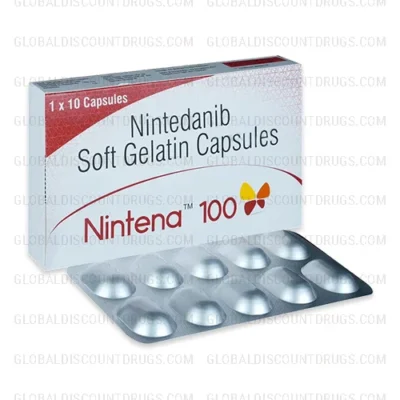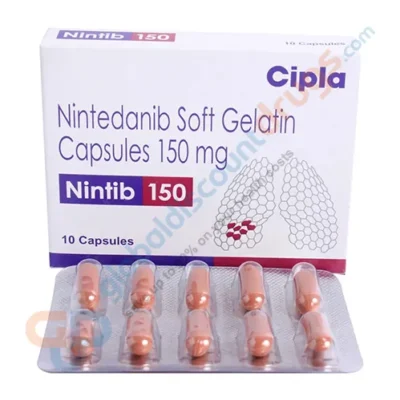

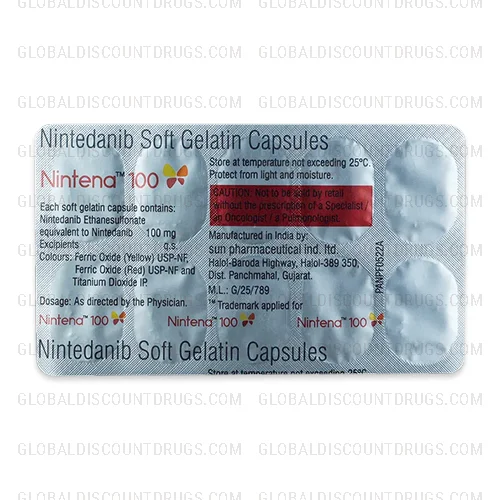
Nintedanib 100mg
In StockNintedanib 100 mg Capsule is a prescription tyrosine kinase inhibitor used to slow progression in selected fibrosing interstitial lung diseases. Liver function and treatment tolerability should be monitored regularly.
| Active Ingredient: | Nintedanib |
|---|---|
| Indication: | Idiopathic Pulmonary Fibrosis |
| Strength: | 100mg |
| Dosage Form: | Capsules |
| Manufacturer: | Sun Pharma |

Quick Overview
Nintedanib 100mg is a prescription antifibrotic medicine used to slow the progression of certain chronic lung scarring conditions, including idiopathic pulmonary fibrosis (IPF) and other fibrosing interstitial lung diseases. It works by blocking specific enzymes (kinases) involved in the fibrotic process that damages lung tissue. It is used strictly as prescribed and requires ongoing monitoring by a physician.
Medical Supervision & Regulatory Status
Nintedanib is a prescription-only medication in all markets, including the United States, where it is FDA-approved (brand name Ofev) for idiopathic pulmonary fibrosis, chronic fibrosing interstitial lung diseases with a progressive phenotype, and systemic sclerosis-associated interstitial lung disease. Medical supervision is required due to the risk of liver toxicity, bleeding, and gastrointestinal perforation, along with the need for regular blood testing during treatment.
Clinical Context
Idiopathic pulmonary fibrosis and related interstitial lung diseases involve progressive scarring of lung tissue, which gradually reduces the lungs’ ability to take in oxygen. Without treatment, this scarring tends to worsen over time, leading to increasing shortness of breath and reduced quality of life.
Nintedanib was developed to slow this progression by targeting the cellular pathways involved in fibrosis (tissue scarring), rather than reversing existing damage. It does not cure pulmonary fibrosis but is intended to reduce the rate of lung function decline.
This medication fits into long-term disease management plans for chronic, progressive lung conditions, often used alongside supportive care such as oxygen therapy, pulmonary rehabilitation, and regular lung function monitoring, as directed by a pulmonologist.
How Nintedanib Works
Nintedanib belongs to a class of medicines known as tyrosine kinase inhibitors. It works by blocking multiple intracellular signaling pathways, including receptors involved in fibroblast proliferation and the formation of new blood vessels (angiogenesis), which are both implicated in the progression of lung fibrosis.
By inhibiting these pathways, nintedanib is thought to reduce the activity of fibroblasts — the cells responsible for producing excess scar tissue in the lungs — thereby slowing the rate at which lung tissue becomes scarred and stiff.
This mechanism is intended to help preserve lung function over time, which may translate into a slower decline in breathing capacity and, in some patients, reduced frequency of acute disease flare-ups, when used consistently as prescribed.
What is Nintedanib?
- Drug Class: Tyrosine kinase inhibitor (antifibrotic)
- Active Ingredient: Nintedanib (as esylate), 100 mg
- Mechanism: Inhibits fibroblast growth factor, vascular endothelial growth factor, and platelet-derived growth factor receptor pathways involved in fibrosis
- Form: Oral soft gelatin capsule
- Dosing Frequency: Typically twice daily, approximately 12 hours apart, with food
- Regulatory Status: Prescription-only; FDA-approved under brand name Ofev for specific indications
Uses / Indications
- Idiopathic Pulmonary Fibrosis (IPF): Slows the decline in lung function in patients with this progressive scarring lung disease.
- Chronic Fibrosing Interstitial Lung Disease with a progressive phenotype: Used to slow disease progression in other fibrosing lung conditions that behave similarly to IPF.
- Systemic Sclerosis-Associated Interstitial Lung Disease (SSc-ILD): Slows the rate of lung function decline in patients with scleroderma-related lung fibrosis.
How to Use / Dosage
Dosage must be determined by a physician, typically starting at a standard twice-daily dose that may be adjusted based on tolerability, liver function, and side effects. Capsules should be swallowed whole with food, and not chewed or crushed, to reduce gastrointestinal irritation. If a dose is missed, skip it and resume the next scheduled dose — do not double up. This medication should never be stopped or have its dose changed without consulting a physician, as doing so may affect disease control, and any interruption in therapy requires medical guidance before restarting.
Side Effects
Most patients experience manageable side effects, particularly gastrointestinal symptoms, but nintedanib does carry more serious risks that require monitoring.
Common effects may include diarrhea, nausea, vomiting, decreased appetite, abdominal pain, and mild liver enzyme elevations.
Serious effects can include significant liver injury, gastrointestinal perforation, bleeding events, and arterial thromboembolic events (such as heart attack), which is why regular liver function monitoring is required during treatment.
Emergency Warning Signs — seek medical attention if you experience:
- Yellowing of the skin or eyes (jaundice)
- Severe or persistent abdominal pain
- Unusual bleeding or bruising
- Chest pain or pressure
- Sudden weakness or numbness on one side of the body
- Dark urine or unusual fatigue
- Signs of severe allergic reaction (facial swelling, difficulty breathing)
Warnings & Precautions
Nintedanib carries a risk of liver toxicity, so regular liver function tests are required before and periodically during treatment, and dose adjustments or temporary discontinuation may be necessary if abnormalities occur. It is associated with an increased risk of gastrointestinal perforation, so caution is advised in patients with recent abdominal surgery or a history of peptic ulcer disease. Because it can increase bleeding risk, it should be used cautiously in patients on anticoagulants or with a known bleeding disorder, and should generally be avoided in patients with a recent history of significant bleeding. Nintedanib is contraindicated during pregnancy due to the risk of fetal harm, and effective contraception is recommended for individuals who could become pregnant during and after treatment; it should not be used while breastfeeding. Caution is also required in patients with a history of arterial thromboembolic events, such as heart attack or stroke, and blood pressure should be monitored, as nintedanib may be associated with hypertension.
Who Should Not Use This Medication
- Individuals with known hypersensitivity to nintedanib or its components
- Patients who are pregnant
- Individuals with severe liver impairment
- Patients with a recent history of gastrointestinal perforation or active peptic ulcer disease
- Individuals with a recent history of significant bleeding or at high risk of bleeding
- Patients with a recent history of heart attack or unstable cardiovascular disease, without physician clearance
Storage Instructions
Store at room temperature, away from excessive heat, moisture, and direct light. Keep capsules in their original blister packaging until immediately before use. Keep out of reach and sight of children. Do not use beyond the expiration date printed on the packaging.
Frequently Asked Questions
What is the cost of Nintedanib without insurance?
It can be costly, as it is a specialty medication without a widely available generic in most regions. The cost without insurance depends on the seller, brand availability, and pack size, and may also vary by location, insurance coverage, and manufacturer assistance programs.
How can I order Nintedanib online?
A valid prescription from a specialist, typically a pulmonologist or rheumatologist, is required. You can upload your prescription or have your doctor send it to a licensed pharmacy for processing and delivery. Always use verified, licensed pharmacies to ensure product authenticity.
Is Nintedanib available over the counter?
No, it is not available over the counter in any country and always requires a valid prescription. Given its serious side-effect profile, close medical supervision is required throughout treatment.
Does Nintedanib require a prescription?
Yes, a prescription from a specialist is required in all regions. This ensures proper diagnosis, baseline testing, and ongoing monitoring for safety.
How long does it take to work?
Nintedanib is not intended to provide immediate symptom relief; its benefit is measured over months, by slowing the rate of lung function decline on repeated testing. Consistent daily use as prescribed is essential to its effectiveness.
Can I stop taking it once I feel better?
Do not stop without consulting your doctor, as nintedanib is a long-term maintenance therapy for a chronic, progressive condition. Stopping treatment may allow disease progression to resume.
Can this medication interact with other drugs?
Yes, it can interact with strong CYP3A4 inhibitors or inducers, anticoagulants, and certain other medications, affecting nintedanib levels or bleeding risk. Always share your complete medication list with your doctor or pharmacist before starting.
References
- MedlinePlus (NIH) – Nintedanib Information: https://medlineplus.gov/druginfo/meds/a614017.html
- DailyMed (NIH) – Nintedanib (Ofev) Product Labeling: https://dailymed.nlm.nih.gov/dailymed/
- U.S. FDA – Ofev (nintedanib) Prescribing Information: https://www.fda.gov/drugs
Medical Disclaimer:
This content is for informational purposes only and does not constitute medical advice, diagnosis, or treatment. Consult a qualified specialist or physician before using Nintedanib.
Prescription Required (Rx) to Buy?
This medication is not available over the counter. A valid prescription from a licensed healthcare
professional is required. Always consult your doctor before use.
| Quantity | 120, 180, 240, 60 |
|---|---|
| Indication | Idiopathic Pulmonary Fibrosis |
| Active Ingredient | Nintedanib |
| Pharmaceutical Form | Capsules |
| Manufacturer | Sun Pharma |
| Indian Brand | Nintena 100mg 10's |
| US Brand Name | Ofev |
| Generic Name | Nintedanib |
| Dosage | 100mg |
| Drug Type | Capsules |