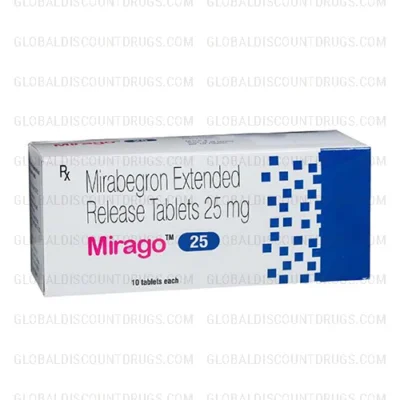

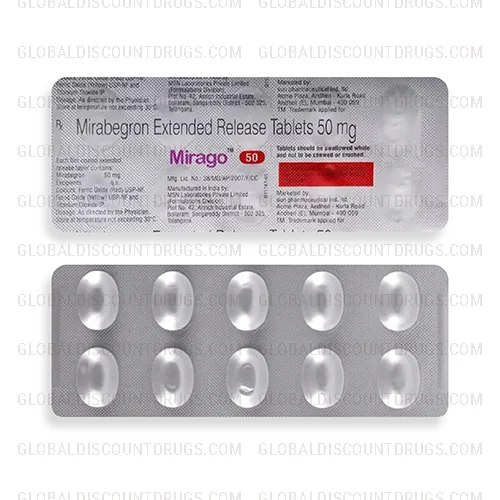
Mirabegron 50mg
In StockMirabegron 50 mg Tablet is a prescription beta-3 adrenergic agonist used to manage urinary urgency, frequency, and urge incontinence associated with overactive bladder. Blood pressure monitoring may be recommended during treatment.
| Active Ingredient: | Mirabegron |
|---|---|
| Indication: | Overactive Bladder |
| Strength: | 50mg |
| Dosage Form: | Tablets |
| Manufacturer: | Sun Pharma |

Mirabegron 50mg – Quick Overview
Mirabegron is a prescription medication used to treat overactive bladder (OAB) symptoms, including urgency, frequency, and urge incontinence in adults. It works by relaxing the bladder muscle to increase storage capacity. This medication requires a prescription and should be used as directed by a healthcare provider.
Medical Supervision & Regulatory Status
Mirabegron is available only by prescription in the United States and is regulated by the FDA. A healthcare provider must evaluate blood pressure and kidney/liver function before prescribing, since this medication can raise blood pressure and requires dose adjustment in certain patients.
Clinical Context
Overactive bladder affects millions of adults and can significantly disrupt daily life, sleep, and social activities due to sudden, hard-to-control urges to urinate. While behavioral strategies (fluid management, bladder training, pelvic floor exercises) are often tried first, many patients need medication to adequately control symptoms.
Mirabegron offers an alternative to older anticholinergic OAB medications (like oxybutynin or tolterodine), which are often limited by side effects such as dry mouth and constipation. Because mirabegron works through a different mechanism, it’s frequently considered for patients who cannot tolerate anticholinergics or have contraindications to them, such as certain older adults concerned about cognitive effects.
Mirabegron fits into bladder symptom management as a first-line or alternative option, chosen based on a patient’s symptom pattern, other health conditions, and prior treatment response, in consultation with a provider.
How Mirabegron Works
Mirabegron belongs to a drug class called beta-3 adrenergic agonists, distinct from the anticholinergic medications traditionally used for OAB. It works by activating beta-3 receptors in the detrusor (bladder) muscle, causing it to relax during the storage phase of the bladder cycle.
This relaxation allows the bladder to hold more urine before signaling the urge to void, which directly reduces the frequency of urgent bathroom trips and episodes of leakage. Because it doesn’t block acetylcholine receptors the way older OAB drugs do, mirabegron is less likely to cause dry mouth, constipation, or cognitive side effects.
What is Mirabegron?
- Drug Class: Beta-3 adrenergic agonist
- Active Ingredient: Mirabegron 50mg
- Mechanism: Relaxes bladder detrusor muscle to increase storage capacity
- Form: Extended-release oral tablet
- Dosing Frequency: Once daily
- Regulatory Status: Prescription only (US)
Uses / Indications
Overactive Bladder (OAB): Approved to treat symptoms of urgency, frequency, and urge urinary incontinence in adults.
Neurogenic Detrusor Overactivity (pediatric use, specific formulation): Some formulations are approved for children with neurogenic detrusor overactivity, typically used alongside other therapies as directed by a specialist.
How to Use / Dosage
Your doctor determines the appropriate dose based on your kidney and liver function, other medications, and response to treatment. Tablets are typically taken once daily, with or without food, and should be swallowed whole—not crushed or chewed.
If you miss a dose, take it as soon as you remember, but skip it if it’s almost time for your next dose—do not double up. Do not stop taking this medication suddenly without consulting your provider, particularly if your symptoms have improved, since discontinuation may cause symptoms to return.
Side Effects
Most people tolerate mirabegron well, though some side effects can occur.
Common side effects may include increased blood pressure, headache, nasal congestion, urinary tract infection, and constipation.
Serious side effects, though less common, can include severe hypertension, urinary retention (especially in patients with bladder outlet obstruction), and angioedema (swelling of the face, lips, tongue, or throat).
Emergency Warning Signs — Seek immediate medical care if you experience:
- Swelling of the face, lips, tongue, or throat
- Difficulty breathing or swallowing
- Severe or sudden increase in blood pressure
- Inability to urinate
- Severe hives or rash
- Rapid or irregular heartbeat
Warnings & Precautions
Mirabegron is contraindicated in patients with severe uncontrolled high blood pressure and in those with a known hypersensitivity to the drug. Because mirabegron can increase blood pressure, it should be used cautiously in patients with a history of hypertension, and blood pressure should be monitored periodically during treatment, particularly in patients with pre-existing cardiovascular conditions.
This medication can increase concentrations of certain other drugs metabolized by the liver enzyme CYP2D6, including some antidepressants (such as tricyclics), antiarrhythmics, and beta-blockers like metoprolol, so dose adjustments of those medications may be needed. Mirabegron should be used with caution in patients with severe kidney or liver impairment, and dose reduction or avoidance may be necessary depending on the degree of impairment. Safety during pregnancy and breastfeeding has not been well established, so use during these periods should be discussed carefully with a provider. Patients with bladder outlet obstruction or those taking anticholinergic medications for OAB should be monitored for urinary retention.
Who Should Not Use This Medication
- Severe uncontrolled high blood pressure
- Known hypersensitivity to mirabegron
- Severe kidney disease (specific contraindications based on stage)
- Severe liver disease (specific contraindications based on stage)
- Untreated or unresolved bladder outlet obstruction
- End-stage renal disease requiring dialysis
Storage Instructions
Store at room temperature (68-77°F/20-25°C), away from excess heat and moisture. Keep in the original container with the lid tightly closed. Store out of reach of children and pets.
Frequently Asked Questions
Is a prescription required for Mirabegron?
Yes, a prescription is required in the United States. Your provider will assess your blood pressure and kidney/liver function before prescribing this medication.
How long does it take to work?
Some patients notice symptom improvement within a few days to weeks, though it may take up to 8-12 weeks to see the full benefit. Your provider will help determine if the medication is working adequately for you.
Is it safe to stop taking this medication suddenly?
Stopping is not typically dangerous, but your OAB symptoms may return. Talk to your provider before discontinuing so they can guide you on next steps or alternative treatments.
What medications interact with this drug?
Mirabegron can increase levels of certain drugs processed by the liver, including some antidepressants, heart rhythm medications, and beta-blockers like metoprolol. Always share your full medication list with your provider or pharmacist.
What should I do if I miss a dose?
Take the missed dose as soon as you remember, but skip it if it’s close to your next scheduled dose. Do not take two doses at once.
What is the cost without insurance?
The cost without insurance depends on the seller, brand availability, and pack size, and may also vary by location and available discounts. Generic versions, where available, are often more affordable than brand-name options.
How can I order this medication online?
A valid prescription is required to order this medication. Typically, you or your doctor submit the prescription to a licensed pharmacy, which then ships it to your home; always verify the pharmacy is licensed before ordering.
Is this medication available over the counter?
No, it is not available over the counter in the United States. Medical evaluation and a prescription are required due to blood pressure and interaction risks that must be assessed by a provider.
Resources
- FDA Prescribing Information (Mirabegron): https://www.accessdata.fda.gov/scripts/cder/daf/
- MedlinePlus Drug Information: https://medlineplus.gov/druginfo/meds/a613030.html
- American Urological Association – OAB Guidelines: https://www.auanet.org/guidelines-and-quality/guidelines/overactive-bladder-(oab-guideline)
References
- MedlinePlus (NIH) – Mirabegron: https://medlineplus.gov/druginfo/meds/a613030.html
- DailyMed (NIH) – Mirabegron Label: https://dailymed.nlm.nih.gov/dailymed/search.cfm?query=mirabegron
- FDA Drug Approvals – Mirabegron: https://www.accessdata.fda.gov/scripts/cder/daf/
Medical Disclaimer
This content is for informational purposes only and does not constitute medical advice, diagnosis, or treatment. Consult a qualified specialist or physician before using mirabegron.
Prescription Required (Rx) to Buy?
This medication is not available over the counter. A valid prescription from a licensed healthcare
professional is required. Always consult your doctor before use.
| Quantity | 180, 270, 360, 90 |
|---|---|
| Indication | Overactive Bladder |
| Active Ingredient | Mirabegron |
| Pharmaceutical Form | Tablets |
| Manufacturer | Sun Pharma |
| Indian Brand | Mirago 50mg |
| US Brand Name | Mirabegron |
| Generic Name | Mirabegron |
| Dosage | 50mg |
| Drug Type | Tablets |