
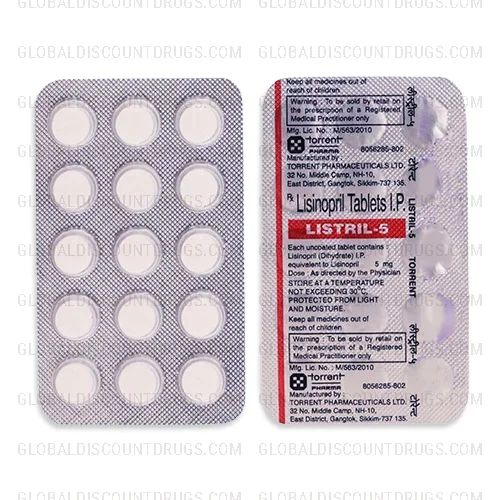
Lisinopril 5mg
In StockLisinopril 5 mg Tablet is a prescription ACE inhibitor used for hypertension, heart failure, and selected patients after a heart attack. Kidney function, blood pressure, and potassium levels may require monitoring.
| Active Ingredient: | Lisinopril |
|---|---|
| Indication: | Hypertension |
| Strength: | 5mg. |
| Dosage Form: | Tablets |
| Manufacturer: | Torrent Pharmaceuticals Ltd |

Quick Overview
Lisinopril 5mg is an ACE inhibitor tablet used to treat high blood pressure, heart failure, and to improve survival after a heart attack in stable patients. It works by relaxing blood vessels so the heart pumps against less resistance. It requires a prescription and medical supervision, because kidney function, potassium levels, and blood pressure need regular checks.
Medical Supervision and Regulatory Status
Lisinopril 5mg is a prescription-only medicine in the United States, approved by the FDA, and it is not a controlled substance. Supervision is needed because the drug can cause dangerous swelling of the face and throat, raise potassium, affect kidney function, and harm a developing baby. Generic lisinopril tablets are widely available, and brands include Zestril, Prinivil, and Qbrelis (an oral solution).
Clinical Context
High blood pressure, heart failure, and a recent heart attack are all conditions where the heart and blood vessels work under extra strain, and lisinopril is approved for each. High blood pressure (hypertension) often causes no symptoms, yet over the years it raises the risk of stroke, heart attack, and kidney disease.
Heart failure means the heart cannot pump enough blood for the body’s needs, which can lead to fatigue, breathlessness, and fluid buildup in the legs or lungs. After a heart attack, the heart muscle is weakened and vulnerable, and early treatment in stable patients is aimed at improving the chance of survival. Treatment lowers strain on the heart, though results differ from person to person.
For high blood pressure, ACE inhibitors are one of the standard first-line drug classes in current US guidelines, alongside thiazide diuretics, calcium channel blockers, and angiotensin receptor blockers. In heart failure with reduced pumping strength, ACE inhibitors are a long-established foundation treatment, although some patients are moved to a newer combination drug when appropriate. The prescriber chooses based on your other conditions and medicines.
How Lisinopril 5mg Works
Lisinopril is an angiotensin-converting enzyme (ACE) inhibitor that blocks the enzyme making angiotensin II, a hormone that narrows blood vessels and raises blood pressure. With less angiotensin II, the vessels widen and blood flows with less resistance.
Lower angiotensin II also reduces aldosterone, a hormone that tells the kidneys to hold on to salt and water. The body then sheds slightly more fluid, which lightens the load on the heart and further lowers blood pressure. The kidneys remove lisinopril from the body without the liver changing it first, which is why kidney function matters for dosing.
The same actions explain several side effects. ACE inhibitors allow a chemical called bradykinin to build up, which is linked to the dry cough and to rare swelling reactions. Less aldosterone also means the body can hold on to potassium, so blood levels may rise. Benefits build over days to weeks and are not guaranteed for every person.
What Is Lisinopril 5mg?
Lisinopril 5mg is an ACE inhibitor tablet taken once daily, in a low-dose strength often used to begin treatment or to make careful dose adjustments.
- Drug Class: Angiotensin-converting enzyme (ACE) inhibitor
- Active Ingredient: Lisinopril
- Mechanism: Blocks the enzyme that makes angiotensin II, relaxing blood vessels and reducing salt and water retention.
- Available Forms and Strengths: Tablets, commonly 2.5 mg, 5 mg, 10 mg, 20 mg, 30 mg, and 40 mg (strengths vary by manufacturer); oral solution (Qbrelis)
- Dosing Frequency: Once daily
- Regulatory Status: US prescription-only (Rx), not a controlled substance, generic available
Approved Uses
The FDA has approved lisinopril for high blood pressure in adults and children age 6 and older, heart failure as add-on therapy, and stable patients after an acute heart attack.
- High blood pressure (hypertension): Used alone or with other blood pressure medicines to lower pressure and reduce the risk of strokes and heart attacks. It is also approved for children age 6 and older.
- Heart failure: Used as add-on treatment alongside diuretics (water pills), and sometimes digitalis, to reduce symptoms.
- Acute heart attack (myocardial infarction): Started within 24 hours in hemodynamically stable patients (those with steady blood pressure) to improve survival.
How to Use and Dosage
A prescriber sets the dose of Lisinopril 5mg for each person, and the tablet is taken once a day, with or without food, at the same time daily. Labeled daily doses range from 2.5 mg to 80 mg depending on the condition, and the 5 mg strength is commonly used as a starting dose for people on diuretics, with heart failure, or with reduced kidney function.
Take the tablet at a consistent time, such as in the morning, so it becomes a routine. Stand up slowly during the first days, because dizziness is most likely after the first dose or a dose increase. Drink fluids normally, and tell the prescriber if vomiting, diarrhea, or heavy sweating leads to dehydration.
If a dose is missed, take it when remembered unless the next dose is almost due, and skip it in that case. Do not double up.
Do not stop taking this medicine on your own, even when blood pressure readings look normal. Blood pressure can rise again and heart failure symptoms can return. This drug has no known withdrawal syndrome comparable to beta blockers, so the prescriber can plan any change. If pregnancy occurs, call the prescriber right away, because the medicine must be stopped.
Side Effects
Side effects from Lisinopril 5mg differ from person to person, and most are mild, with a persistent dry cough being the most familiar.
Boxed warning: fetal toxicity. When pregnancy is detected, lisinopril should be stopped as soon as possible. Medicines that act on the renin-angiotensin system can cause injury and death to a developing baby.
Common effects. Dry, tickling cough, dizziness, light-headedness, headache, tiredness, nausea, diarrhea, and rash are among the effects reported. Dizziness is more likely after the first dose, with a dose increase, or when dehydrated. Frequency figures are left out because they vary by condition and study.
Serious effects. Angioedema (swelling of the face, lips, tongue, throat, or intestines) can occur at any time. Other serious effects include very low blood pressure, high potassium, worsening kidney function, liver injury with yellowing of the skin or eyes, and a drop in white blood cells that raises infection risk. People using insulin or diabetes pills may have low blood sugar more often.
Emergency warning signs
- Swelling of the face, lips, tongue, or throat, or hoarseness
- Trouble breathing or swallowing
- Fainting, or severe dizziness with a very fast, slow, or irregular heartbeat
- Severe stomach pain with nausea or vomiting (possible intestinal swelling)
- Yellowing of the skin or eyes, or dark urine
- Fever, sore throat, or chills that do not clear up (possible low white blood cells)
- Very little urine, sudden swelling, or muscle weakness (possible kidney problems or high potassium)
Call 911 for facial or throat swelling, trouble breathing, or fainting. For the other signs, contact the prescriber or an urgent care clinic the same day. If someone takes too much, call Poison Control at 1-800-222-1222 or 911 if they are unresponsive.
Warnings and Precautions
Lisinopril 5mg carries a boxed warning for fetal toxicity: it can harm or kill a developing baby, so anyone who becomes pregnant should call the prescriber right away. The risk is greatest in the second and third trimesters, when exposure can cause low amniotic fluid, poor kidney and skull development in the baby, and newborn kidney failure or low blood pressure. People planning pregnancy should ask about an alternative beforehand. Angioedema can start after the first dose or after years of use, and it has been reported more often in Black patients. Anyone with swelling of the face, lips, tongue, or throat should stop the tablet and seek emergency care. Low blood pressure is more likely with dehydration, a low-salt diet, dialysis, or diuretics. High potassium is more likely in kidney disease, diabetes, and heart failure. Caution also applies with narrowed kidney arteries, severe aortic valve narrowing, and thickened heart muscle. Tell the surgeon and anesthesiologist about this medicine before any operation, because blood pressure can drop sharply during anesthesia. The conditions in which the medicine must not be used appear in the next section.
Several medicines change how lisinopril works. Potassium supplements, potassium-containing salt substitutes, and potassium-sparing diuretics such as spironolactone, amiloride, and triamterene can push potassium too high. NSAIDs such as ibuprofen and naproxen can blunt the blood pressure effect and may worsen kidney function, especially in older adults or people who are dehydrated. Diuretics such as furosemide and hydrochlorothiazide add to the blood pressure drop, and lithium levels can rise to toxic levels. Angiotensin receptor blockers (losartan, valsartan) and aliskiren increase the risk of low blood pressure, high potassium, and kidney injury. Sacubitril/valsartan raises the risk of angioedema and must be separated from lisinopril by 36 hours. Sirolimus, everolimus, temsirolimus, and DPP-4 inhibitors such as sitagliptin may also raise the risk of angioedema. Insulin and diabetes pills can lead to low blood sugar, and alcohol may add to dizziness and low blood pressure.
For breastfeeding, limited information exists on how much passes into milk, and the prescriber may suggest another medicine, particularly for newborns and premature infants. Older adults often have reduced kidney function, so lower doses and closer monitoring are common. In children, the drug is approved for high blood pressure from age 6, and it is not recommended for children with very low kidney function (below 30 mL/min). It has not been studied in younger children. Because the kidneys clear lisinopril, reduced kidney function raises drug levels and calls for a lower starting dose. Liver injury is rare, but it can progress quickly, so yellowing of the skin or eyes should be reported immediately.
Monitoring matters. Blood pressure should be checked at visits and often at home, and the prescriber commonly checks kidney function (creatinine) and potassium before starting and after dose changes. Blood sugar should be watched in people with diabetes who use insulin or oral drugs, and any signs of infection such as fever or sore throat should be reported promptly.
Who Should Not Use This Medication
Lisinopril 5mg should not be used in the situations below, which come from the label contraindications and the boxed warning on pregnancy.
- A past episode of angioedema linked to an ACE inhibitor or any other cause (including hereditary or unexplained angioedema)
- Allergy to lisinopril, other ACE inhibitors (such as enalapril, ramipril, or benazepril), or any ingredient in the tablet
- Diabetes while taking aliskiren
- Use of sacubitril/valsartan, or within 36 hours of switching to or from it
- Pregnancy, or planning pregnancy, because of the boxed warning (the prescriber will choose a different medicine)
Storage Instructions
Store Lisinopril 5mg tablets at room temperature, about 77 degrees Fahrenheit, in a tightly closed container that protects them from moisture, and keep them out of children’s reach. Brief temperature changes between 59 and 86 degrees Fahrenheit are allowed by the label, such as during shipping. Avoid bathrooms and kitchen counters near the stove, where heat and steam build up, and keep the tablets away from direct light. Put the bottle in a high or locked spot if children visit the home.
For disposal, use a drug take-back site or a pharmacy kiosk when possible. If none is nearby, mix the tablets with used coffee grounds or cat litter in a sealed bag and place it in household trash, then remove the label from the empty bottle. Lisinopril is not on the FDA flush list, so do not flush it.
Frequently Asked Questions
What is the cost of Lisinopril 5mg without insurance?
The cost without insurance depends on the seller, brand availability, and pack size. Location and discount programs can also change what you pay. Generic lisinopril is widely available and is generally more affordable than brands such as Zestril or Prinivil. A 90-day supply may cost differently per tablet than a 30-day fill, so ask the pharmacist to compare options.
How can I order Lisinopril 5mg online?
You can order Lisinopril 5mg online only with a valid prescription, filled by a licensed US pharmacy. Upload the prescription or ask your prescriber to send it electronically, then select home delivery. Before paying, confirm the pharmacy holds a state license and offers a pharmacist you can reach by phone with questions.
Is Lisinopril 5mg available over the counter?
No, Lisinopril 5mg is not sold over the counter in the United States. Rules vary by country, but US law requires a prescription. Blood tests for kidney function and potassium, plus blood pressure checks, are part of safe use, so a prescriber needs to start the medicine and follow your progress over time.
Does Lisinopril 5mg require a prescription?
Yes, Lisinopril 5mg requires a prescription from a licensed US clinician. The prescriber reviews your blood pressure, kidney function, potassium level, and pregnancy plans before starting it, because the medicine can harm a developing baby. Follow-up visits and lab work let the prescriber adjust the dose and catch problems early, before they become serious.
How long does Lisinopril 5mg take to work?
Each Lisinopril 5mg dose starts lowering blood pressure within about one hour, peaks around six hours, and lasts about a day. Full blood pressure effect may take two to four weeks of daily use. In heart failure, symptom improvement can take longer. Many people feel no difference at all, so keep taking it daily and attend scheduled checkups.
Is it safe to stop taking Lisinopril 5mg suddenly?
Stopping Lisinopril 5mg suddenly on your own is not recommended, because blood pressure can rise again and heart failure symptoms can return. Unlike beta blockers, it has no boxed warning about rebound, so changes can be planned with the prescriber, sometimes with a switch to another medicine. Pregnancy is the exception: call the prescriber immediately.
Can Lisinopril 5mg interact with other medicines?
Yes, several medicines interact with Lisinopril 5mg. Potassium supplements, potassium salt substitutes, and spironolactone raise potassium. Ibuprofen and naproxen can weaken the effect and strain the kidneys. Diuretics can drop blood pressure too far. Lithium levels can rise. Sacubitril/valsartan and aliskiren should not be combined with it in the situations the label lists. Share every medicine with your pharmacist.
What should I do if I miss a dose of Lisinopril 5mg?
Take the missed dose when you remember, unless it is nearly time for the next one, in which case skip it. Do not double up, because extra lisinopril can cause dizziness and a sharp blood pressure drop. Resume your regular time the next day, and let the prescriber know if forgetting doses is common.
References
These three sources cover the official prescribing label, plain-language patient information, and FDA regulatory records for lisinopril, the active ingredient in Lisinopril 5mg.
- DailyMed (NIH, National Library of Medicine): Current FDA-approved prescribing information for lisinopril tablets, including indications, boxed warning, dosing, and contraindications.
- MedlinePlus (NIH): Plain-language drug information page for lisinopril, covering how to take it, side effects, precautions, and storage.
- FDA (Drugs@FDA): Approval history and labeling entry for lisinopril tablets, including Zestril, Prinivil, and generic listings.
Medical Disclaimer:
This content is for informational purposes only and does not constitute medical advice, diagnosis, or treatment. Consult a qualified specialist or physician before using Lisinopril 5mg.
Prescription Required (Rx) to Buy?
This medication is not available over the counter. A valid prescription from a licensed healthcare
professional is required. Always consult your doctor before use.
| Quantity | 120, 180, 240, 60 |
|---|---|
| Indication | Hypertension |
| Active Ingredient | Lisinopril |
| Pharmaceutical Form | Tablets |
| Manufacturer | Torrent Pharmaceuticals Ltd |
| Indian Brand | Listril 5 |
| US Brand Name | Fibsol, Liprace, Lisinobell, Lisinopril, Lisodur, Prinivil, Zestril |
| Generic Name | Lisinopril |
| Dosage | 5mg. |
| Drug Type | Tablets |