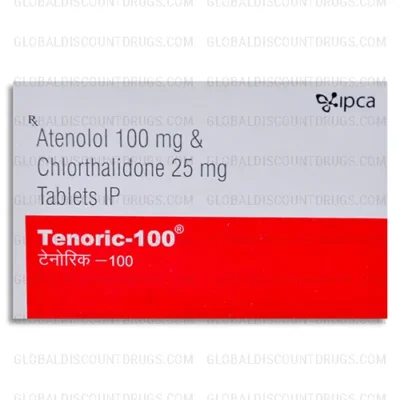


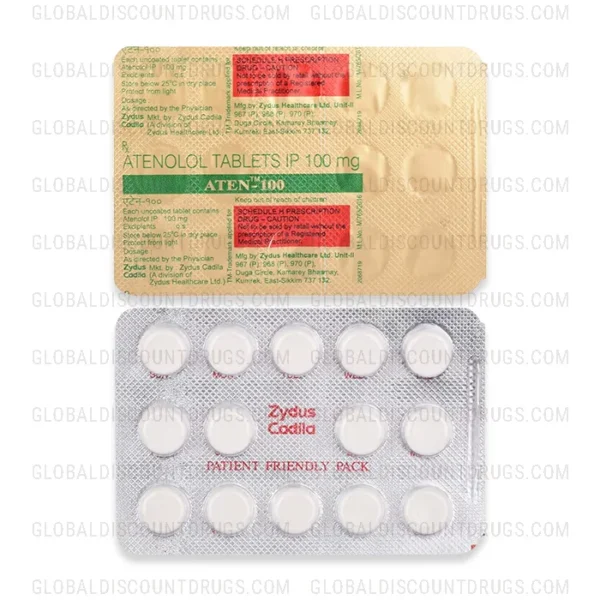
Atenolol 100mg
In StockAtenolol 100 mg Tablet is a prescription beta-1 selective blocker used to treat hypertension, angina, and selected heart rhythm disorders. Do not stop treatment suddenly unless advised by your healthcare provider.
| Active Ingredient: | Atenolol |
|---|---|
| Indication: | Hypertension |
| Strength: | 100mg |
| Dosage Form: | Tablets |
| Manufacturer: | Zydus Cadila |

Quick Overview
Atenolol 100mg is a prescription beta blocker used to treat high blood pressure, chest pain from angina, and to lower heart risks after a heart attack. It works by slowing the heart and easing its workload. Atenolol requires a valid prescription and ongoing medical supervision, because heart rate and blood pressure need regular checks.
Medical Supervision and Regulatory Status
Atenolol 100mg is available only with a prescription in the United States, and it is not a controlled substance under federal law, so it has no DEA schedule. The FDA approved the original brand, Tenormin, and generic atenolol tablets are widely sold. A prescriber must supervise treatment because atenolol can slow the heart too much, lower blood pressure, mask signs of low blood sugar, and trigger worse angina if stopped abruptly. The kidneys clear most of the drug, so kidney function also guides dosing.
Clinical Context
Atenolol treats conditions that strain the heart, mainly hypertension (high blood pressure), angina (chest pain from reduced blood flow to the heart), and the period after a heart attack. Hypertension often causes no symptoms, yet over years it raises the risk of stroke, heart failure, and kidney damage.
Treatment matters because uncontrolled blood pressure injures arteries quietly. Angina signals that heart muscle is not getting enough oxygen during effort, and a heart attack can leave the heart weaker. By lowering heart rate and pressure, atenolol reduces how hard the heart has to work.
In current US hypertension guidance, beta blockers such as atenolol are not usually the first choice for high blood pressure alone. Thiazide-type diuretics, ACE inhibitors, ARBs, and calcium channel blockers are the preferred starting options. A beta blocker is more often added or chosen when a person also has angina, a prior heart attack, or certain rhythm problems. For angina, beta blockers are a standard treatment option. Your prescriber decides where atenolol fits for you.
How Atenolol 100mg Works
Atenolol is a beta-1 selective blocker, which means it blocks adrenaline signals at receptors found mostly in the heart, so the heart beats more slowly and with less force. These receptors normally respond to adrenaline and noradrenaline, the body’s stress hormones. When atenolol occupies them, each beat pushes with less pressure and the resting heart rate drops.
A slower, gentler heartbeat needs less oxygen, which is why chest pain from angina may come on less often during activity. Atenolol may also reduce the release of renin from the kidneys, a hormone that raises blood pressure, which could add to its effect.
Atenolol is called cardioselective, but that selectivity is partial and weakens at higher doses, so the drug can still affect the airways in some people. It dissolves in water and leaves the body mostly through the kidneys rather than the liver. It controls blood pressure and angina while taken. It does not cure either condition.
What Is Atenolol 100mg?
Atenolol 100mg is a once-daily prescription beta-1 selective blocker tablet, and the facts below summarize its class, ingredient, forms, and US regulatory status.
- Drug Class: Beta-1 selective (cardioselective) adrenergic receptor blocker
- Active Ingredient: Atenolol
- Mechanism: Blocks beta-1 receptors in the heart, lowering heart rate, force of contraction, and blood pressure.
- Available Forms and Strengths: Oral tablets in 25 mg, 50 mg, and 100 mg (generic and Tenormin brand)
- Dosing Frequency: Usually once daily
- Regulatory Status: Prescription only (Rx) in the US, not a controlled substance, generic versions available
Approved Uses
The FDA has approved atenolol for three uses: treating hypertension, managing long-term stable angina pectoris, and lowering the risk of cardiovascular death in stable patients after a heart attack.
- Hypertension (high blood pressure): Atenolol lowers blood pressure and can be used alone or with other blood pressure medicines. Keeping pressure down reduces the risk of strokes and heart attacks.
- Chronic stable angina pectoris due to coronary artery disease: Atenolol is used to reduce how often chest pain episodes occur when the heart arteries are narrowed.
- Acute myocardial infarction (heart attack): In patients who are stable, meaning blood pressure and circulation are steady, atenolol is used to lower the risk of cardiovascular death. Treatment can begin as soon as the patient’s condition allows, usually in a hospital.
How to Use and Dosage
Your prescriber sets the dose of Atenolol 100mg, and the labeled adult range is typically 50 mg to 100 mg once daily, though angina may need up to 200 mg.
For high blood pressure, the label describes a usual starting dose of 50 mg once daily, which may be raised to 100 mg after one to two weeks. Doses can be lower for older adults and for people with reduced kidney function, so never adjust the dose on your own.
Take it at the same time each day. The label does not tie the tablet to meals, so follow the directions printed on your pharmacy label. Swallow it with water, and check your pulse or blood pressure at home if your prescriber has asked you to.
If you miss a dose, take it as soon as you remember, unless the next dose is almost due. In that case, skip the missed tablet and return to your usual schedule. Do not double up.
Do not stop atenolol suddenly. Abrupt withdrawal has caused severe worsening of angina, heart attack, and dangerous heart rhythms, mainly in people with coronary artery disease. When treatment must end, the label calls for lowering the dose gradually over about one to two weeks.
Side Effects
Side effects of atenolol vary from person to person, and many reported effects relate to a slower heart rate and lower blood pressure.
Boxed warning: Stopping atenolol abruptly can cause severe angina, heart attack, and ventricular arrhythmias (dangerous heart rhythms), particularly in people with coronary artery disease. Any reduction must be gradual and supervised by a prescriber.
Common effects: The most frequently reported effects include a slow heartbeat, cold hands and feet, dizziness or lightheadedness (especially on standing), tiredness, nausea, and diarrhea. Some people also report low mood or trouble sleeping. Many of these ease as the body adjusts, but tell your prescriber if they persist or interfere with daily life.
Serious effects: Atenolol can cause or worsen heart failure, slow the heartbeat to a dangerous level, or interrupt electrical signals in the heart (heart block). It can trigger wheezing in people with asthma or COPD, hide the racing pulse that warns of low blood sugar, and mask symptoms of an overactive thyroid. Some people develop a rash or worsening psoriasis, or a more severe allergic reaction than expected.
Emergency Warning Signs
- New or worsening chest pain, or chest pain that does not settle
- Fainting, near-fainting, or a very slow or irregular heartbeat with dizziness
- Wheezing, chest tightness, or trouble breathing
- Swelling of the face, lips, tongue, or throat, or hives with trouble swallowing
- Sudden weight gain, swollen ankles or legs, or worsening shortness of breath
- Sweating, shaking, or confusion in a person with diabetes (possible low blood sugar)
- Cold, pale, or bluish fingers or toes with pain
Call 911 or go to the nearest emergency room for chest pain, fainting, trouble breathing, or swelling of the face or throat. For milder versions of the other signs, contact your prescriber or seek urgent care the same day.
Warnings and Precautions
Atenolol carries a boxed warning against stopping it suddenly, especially in people with coronary artery disease, because abrupt withdrawal has led to severe angina, heart attack, and dangerous heart rhythms.
Atenolol must not be used with a very slow heart rate, heart block beyond first degree, cardiogenic shock, or overt heart failure, and the full exclusion list appears in the next section. Extra caution applies to people with asthma, COPD, or emphysema (beta blockers can tighten the airways), a history of heart failure, diabetes treated with insulin or tablets, hyperthyroidism, poor circulation in the legs or Raynaud’s phenomenon, or a pheochromocytoma (an adrenal tumor). Atenolol is generally not stopped before major surgery, but tell the surgeon and anesthesiologist you take it. People with severe allergies should know that atenolol may make allergic reactions harder to treat, and epinephrine may work less well.
Several medicines change how atenolol behaves. Verapamil and diltiazem (calcium channel blockers) can slow the heart and conduction too much when combined with it. Amiodarone, disopyramide, and digoxin also affect heart rhythm and conduction. Clonidine can cause a sharp rebound rise in blood pressure if it is stopped while atenolol continues, so a prescriber must time any change carefully. Reserpine and similar drugs add to heart-slowing effects. NSAIDs such as ibuprofen and indomethacin can blunt the blood pressure effect, and ampicillin may lower how much atenolol the body absorbs. Insulin and diabetes tablets may need monitoring because atenolol can hide the warning signs of low blood sugar. Alcohol can add to dizziness and low blood pressure, and decongestants such as pseudoephedrine can raise blood pressure and work against treatment.
Atenolol can cause fetal harm, and babies exposed late in pregnancy have shown slower growth, slow heart rate, and low blood sugar. Tell your prescriber right away if you are pregnant or planning pregnancy. Atenolol passes into breast milk, and nursing infants may develop a slow heart rate or low blood sugar, so feeding plans should be reviewed with the prescriber or pediatrician.
Older adults tend to be more sensitive to the drug and may need a lower dose, partly because kidney function declines with age. Safety and effectiveness in children have not been established. People with reduced kidney function need lower doses, with specific limits in the label for those with lower creatinine clearance and those on dialysis. The label’s dose adjustments focus on the kidneys, since atenolol is cleared mostly by them rather than the liver.
Monitoring usually includes blood pressure and heart rate at each visit, kidney function tests, blood sugar checks for people with diabetes, and attention to signs of heart failure such as swelling or breathlessness. Thyroid symptoms and any new wheezing should be reported.
Who Should Not Use This Medication
Atenolol should not be used by people with a very slow heart rate, higher-grade heart block, cardiogenic shock, overt heart failure, or a known allergy to the drug.
- Sinus bradycardia (a very slow heart rate)
- Heart block greater than first degree, unless a pacemaker is in place and the prescriber has approved it
- Cardiogenic shock (the heart cannot pump enough blood to the body)
- Overt cardiac failure (clearly decompensated heart failure)
- Known hypersensitivity (allergy) to atenolol or any ingredient in the tablet
Storage Instructions
Store atenolol tablets at room temperature, between 68°F and 77°F (20°C to 25°C), in a tightly closed container that protects them from light and moisture.
Keep the bottle in a bedroom drawer or kitchen cabinet rather than a bathroom, where steam can damage tablets. Use child-resistant caps and keep the bottle out of sight and reach, since an overdose of a beta blocker in a child can be dangerous and calls for Poison Control (1-800-222-1222) or 911. Do not share your tablets with anyone else.
For disposal, use a drug take-back site or program, such as those at many pharmacies or on DEA take-back days. If none is available, FDA guidance allows mixing tablets with used coffee grounds or cat litter in a sealed bag, placing it in household trash, and scratching out personal details on the label.
Frequently Asked Questions
What is the cost of Atenolol 100mg without insurance?
The cost without insurance depends on the seller, brand availability, and pack size. Location and available discounts can also change what you pay. Generic atenolol is generally more affordable than the brand-name version, Tenormin. Ask a licensed pharmacy for a quote before you order, and ask whether the generic is acceptable for your prescription.
How can I order Atenolol 100mg online?
You can order Atenolol 100mg online only with a valid prescription. Upload the prescription, or ask your prescriber to send it directly to the pharmacy, then place the order with a licensed US pharmacy and receive it by home delivery. Before paying, confirm the pharmacy holds a state license and has a pharmacist available to answer questions.
Is Atenolol 100mg available over the counter?
No, atenolol is not sold over the counter in the United States. Rules differ by country, but in the US it remains a prescription medicine because treatment needs medical supervision. A clinician checks your heart rate, blood pressure, kidney function, and other medicines, and adjusts treatment, so buying it without a prescription is not permitted.
Does Atenolol 100mg require a prescription?
Yes, Atenolol 100mg requires a prescription from a licensed US prescriber. The evaluation matters because atenolol can slow the heartbeat, lower blood pressure, and hide signs of low blood sugar. Your prescriber reviews your medical history first, picks a starting dose, and schedules follow-up checks. Pharmacists then verify the prescription before dispensing.
How long does Atenolol 100mg take to work?
Atenolol begins slowing the heart within hours, but full blood pressure lowering can take one to two weeks. The label notes that prescribers wait that long before raising the dose. Response varies by person, and high blood pressure usually causes no symptoms, so you may feel no change. Keep taking it as prescribed and report concerns to your prescriber.
Is it safe to stop taking Atenolol 100mg suddenly?
No, stopping Atenolol 100mg suddenly is not safe. The boxed warning describes severe angina, heart attack, and dangerous heart rhythms after abrupt withdrawal, especially in people with coronary artery disease. If treatment must end, prescribers usually lower the dose gradually over about one to two weeks. Call your prescriber first if side effects are bothering you.
Can Atenolol 100mg interact with other medicines?
Yes, atenolol interacts with several medicines. Verapamil and diltiazem can slow the heart too much, clonidine can cause rebound high blood pressure if it is stopped, and digoxin, amiodarone, and disopyramide add to heart rhythm effects. NSAIDs such as ibuprofen may weaken blood pressure control. Give your pharmacist a full list of prescription, over-the-counter, and supplement products.
What should I do if I miss a dose of Atenolol 100mg?
Take the missed Atenolol 100mg tablet as soon as you remember, unless it is almost time for your next dose. In that case, skip the missed tablet and return to your regular schedule. Never take two doses at once to catch up, because that can slow the heart rate too much. Ask your pharmacist about reminders.
References
- DailyMed (NIH), Atenolol tablets drug label. Official FDA-approved prescribing information, including the boxed warning, dosing, contraindications, and interactions.
- MedlinePlus, Atenolol. Plain-language patient information on uses, precautions, side effects, and missed doses. https://medlineplus.gov/druginfo/meds/a684031.html
- FDA, Drugs@FDA entry for Tenormin (atenolol). Approval history and current labeling for the reference brand product.
Medical Disclaimer:
This content is for informational purposes only and does not constitute medical advice, diagnosis, or treatment. Consult a qualified specialist or physician before using Atenolol 100mg.
Prescription Required (Rx) to Buy?
This medication is not available over the counter. A valid prescription from a licensed healthcare
professional is required. Always consult your doctor before use.
| Quantity | 112, 224, 336, 448 |
|---|---|
| Indication | Hypertension |
| Active Ingredient | Atenolol |
| Pharmaceutical Form | Tablets |
| Manufacturer | Zydus Cadila |
| Indian Brand | Aten 100mg |
| US Brand Name | Anselol, Atehexal, Atenolol, Noten, Tenormin, Tensig |
| Generic Name | Atenolol |
| Dosage | 100mg |
| Drug Type | Tablets |