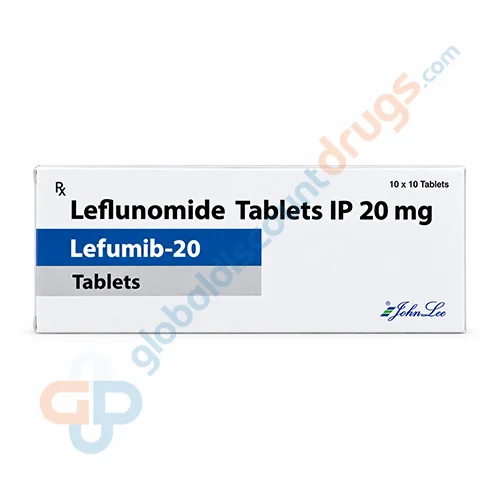
Leflunomide
In StockLeflunomide is a Disease-Modifying Antirheumatic Drug (DMARD) and an immunosuppressant used to treat active rheumatoid arthritis (RA) and psoriatic arthritis. It works by inhibiting the enzyme dihydroorotate dehydrogenase, which is essential for lymphocyte proliferation. This action helps slow the progression of joint damage and inflammation. Leflunomide is a key agent for patients who do not tolerate or respond to Methotrexate.

What is Leflunomide?
Leflunomide is a disease-modifying antirheumatic drug (DMARD), a class of medications used to slow or modify the course of certain autoimmune joint diseases rather than simply treating symptoms. It works by reducing the activity of the immune system.
Leflunomide is approved and commonly prescribed for:
- Rheumatoid arthritis, particularly to reduce joint damage and slow disease progression
- Psoriatic arthritis (used off-label in some regions, though it may be approved for this indication in certain countries)
Leflunomide is available in the following formulation:
- Oral tablets(Leflunomide 10mg, Leflunomide 20mg)
Strengths and exact product availability vary by country and manufacturer. Leflunomide is typically prescribed and monitored by a specialist experienced in managing autoimmune joint conditions.
What is the Recommended Dosage of Leflunomide?
There is no single standard dose that applies to all patients. Dosage is highly individualized and depends on several factors, including:
- The specific condition being treated
- The patient’s age
- Body weight
- Liver function, since leflunomide is processed by the liver and can affect liver enzymes
- Whether other DMARDs or immune-modifying medications are being used concurrently
- Response to treatment, which is often tracked through laboratory testing
Some treatment plans begin with a loading dose followed by a lower maintenance dose, while others begin directly at a maintenance dose. Because leflunomide has the potential for serious side effects, dosing must always be determined and supervised by a licensed medical specialist.
This guide does not provide specific dosing amounts. Patients and caregivers should always follow the exact instructions provided by the prescribing physician or pharmacist and should never adjust the dose without medical guidance.
How Leflunomide Works
Leflunomide works by inhibiting an enzyme involved in the production of pyrimidines, building blocks needed for certain rapidly dividing cells, including some immune cells involved in autoimmune inflammation. By slowing the proliferation of these immune cells, leflunomide reduces the inflammatory activity that damages joints in conditions like rheumatoid arthritis.
Leflunomide manages disease activity and can slow structural joint damage, but it does not cure rheumatoid arthritis or psoriatic arthritis. It is typically used as part of a longer-term treatment strategy directed by a specialist, and its full effects may take several weeks to become noticeable.
Is a Prescription Required to Buy Leflunomide Online?
Yes. Leflunomide is a prescription-only medication due to its potency, potential for serious side effects, and the need for regular medical monitoring during treatment.
Patients should consult a licensed medical specialist before starting leflunomide. This typically includes:
- A rheumatologist, who most commonly prescribes and monitors leflunomide for joint-related autoimmune conditions
- A dermatologist, in cases where it is used for psoriatic arthritis with significant skin involvement
Patients should be cautious of websites offering leflunomide without a prescription, as such products may be counterfeit or improperly manufactured. Leflunomide should only be purchased from licensed pharmacies that require a valid prescription.
Side Effects of Leflunomide
Common Side Effects
These effects are generally mild, though some may require monitoring or dose adjustment:
- Diarrhea or stomach upset
- Nausea
- Headache
- Mild hair thinning
- Elevated liver enzymes on routine blood tests
- Mild rash
Serious Side Effects
Leflunomide carries a risk of more serious effects. Patients should seek immediate medical attention if they experience:
- Yellowing of the skin or eyes, dark urine, or other signs of liver problems
- Signs of infection (fever, chills, persistent sore throat), which may indicate reduced immune function
- Unusual bruising or bleeding, which may indicate effects on blood cell production
- Severe or worsening skin reactions, including blistering or peeling skin
- Numbness, tingling, or weakness in the hands or feet, which may indicate a rare nerve-related side effect
- Signs of high blood pressure, such as severe headache or vision changes
- Signs of an allergic reaction, such as difficulty breathing, hives, or swelling of the face, lips, or throat
This is not a complete list of possible side effects. Because leflunomide requires regular laboratory monitoring, patients should attend all scheduled blood tests and report any unusual or concerning symptoms to their specialist promptly.
Drug Interactions
Leflunomide can interact with a range of other medications and supplements. Categories of potential interactions include:
- Other DMARDs or immune-suppressing medications, including methotrexate, which may increase the risk of liver-related or blood-related side effects when combined
- Live vaccines, which may be less effective or pose additional risk during treatment with leflunomide
- Medications that affect the liver, since leflunomide is processed by the liver and combining it with other liver-affecting drugs may increase risk
- Certain cholesterol-lowering medications, which may interact with how leflunomide is processed in the body
- NSAIDs and other pain relievers, which are often used alongside leflunomide but may require monitoring, particularly for liver and kidney effects
- Warfarin and other blood thinners, as leflunomide may affect their activity
- Herbal supplements and over-the-counter products, particularly those known to affect liver function
Patients should provide their licensed medical specialist and pharmacist with a complete and current list of all prescription medications, over-the-counter drugs, vitamins, and herbal or dietary supplements before starting leflunomide.
Safety & Important Considerations
- Liver disease: Leflunomide requires caution and regular monitoring in patients with liver impairment, and it may not be appropriate for patients with significant pre-existing liver disease.
- Pregnancy and breastfeeding: Leflunomide is associated with serious risk of harm to a developing fetus and is generally not recommended during pregnancy. It remains in the body for an extended period after stopping, and a specialist may recommend a specific medical procedure to accelerate its elimination for patients planning pregnancy. Patients who are pregnant, planning pregnancy, or breastfeeding must discuss this directly with their prescriber before starting or continuing treatment.
- Children and elderly patients: Leflunomide’s use in children is limited and depends on the specific condition; elderly patients may require closer monitoring due to increased sensitivity to side effects.
- Monitoring requirements: Regular liver function tests and blood counts are typically required throughout treatment, especially during the early months, to detect early signs of serious side effects.
- Blood pressure monitoring: Leflunomide can raise blood pressure in some patients, and periodic blood pressure checks may be recommended.
- Extended elimination time: Leflunomide’s active metabolite can remain in the body for a long time after stopping treatment, which is relevant for patients considering pregnancy, surgery, or switching medications.
- FDA and regulatory guidance: Leflunomide carries labeled warnings, including a boxed warning regarding the risk of harm to a developing fetus. A specialist can provide the most current safety information relevant to an individual’s treatment plan.
Who This Medication Is For
Leflunomide is generally prescribed for adult patients diagnosed with active rheumatoid arthritis, particularly when the goal is to slow joint damage and reduce disease activity. It may also be used for psoriatic arthritis in some cases, based on a licensed specialist’s evaluation and diagnosis.
Who Should Not Take Leflunomide
Leflunomide may not be appropriate for everyone. It may be contraindicated or require extra caution in patients who have:
- A known allergy to leflunomide
- Significant pre-existing liver disease
- Pregnancy, or the intention to become pregnant while taking the medication or before completing the elimination procedure
- Severe immune suppression or certain active infections
- Significant bone marrow suppression or blood disorders
- Uncontrolled high blood pressure, which may require evaluation before starting treatment
This list is not exhaustive. A full medical history review by a licensed specialist is necessary before starting treatment to determine whether leflunomide is appropriate for an individual patient.
What to Do If You Miss a Dose
If a dose of leflunomide is missed, patients should take it as soon as they remember, unless it is close to the time of the next scheduled dose. In that case, the missed dose should be skipped, and the regular dosing schedule should resume. Doses should never be doubled to make up for a missed one.
Patients or caregivers who are unsure what to do after a missed dose, or who miss multiple doses, should contact their licensed medical specialist or pharmacist for specific instructions.
Related medications to Leflunomide
Other DMARDs in the same general therapeutic category may be considered by a specialist, including methotrexate, sulfasalazine, or hydroxychloroquine. Biologic medications may also be considered depending on disease severity and response to prior treatments.
Switching between DMARDs or adding additional therapies should only be done under the guidance of a licensed medical specialist, as these medications differ in mechanism, monitoring requirements, and side effect profiles.
Storage Instructions
- Store leflunomide at room temperature, generally between 68°F and 77°F (20°C to 25°C), unless the product label specifies otherwise.
- Protect the medication from excessive heat, moisture, and direct light.
- Keep tablets in their original, tightly closed container.
- Store out of reach of children and pets.
- Dispose of expired or unused medication according to local guidelines or take-back programs rather than discarding it in household trash or flushing it, unless specifically instructed to do so.
Disclaimer:
This page is for educational purposes only. It is not a substitute for professional medical advice, diagnosis, or treatment. Patients must consult a licensed medical specialist appropriate to their condition before starting, changing, or stopping treatment with leflunomide. Treatment decisions must be based on a full clinical evaluation by a qualified specialist.
Prescription Required (Rx) to Buy?
This medication is not available over the counter. A valid prescription from a licensed healthcare
professional is required. Always consult your doctor before use.