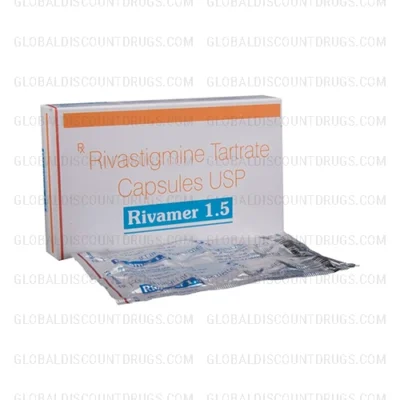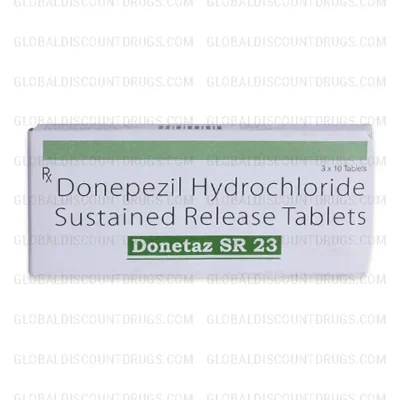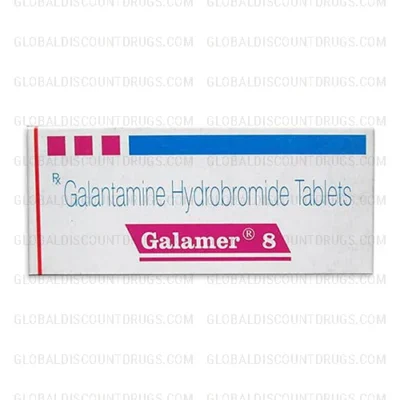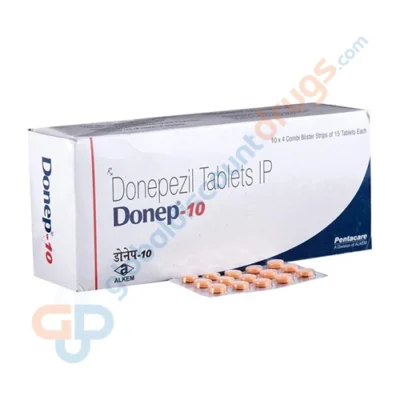

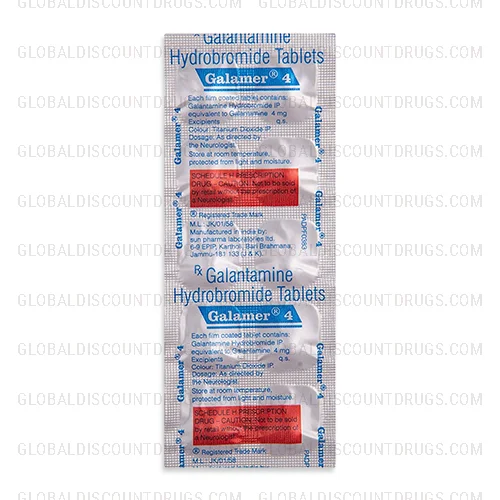
Galantamine 4mg
In StockGalantamine 4 mg Tablet is a prescription cholinesterase inhibitor used to manage mild to moderate dementia of the Alzheimer’s type. The lower strength supports gradual treatment initiation and dose adjustment.
| Active Ingredient: | Galantamine |
|---|---|
| Indication: | Alzheimer's Disease |
| Strength: | 4mg |
| Dosage Form: | Tablets |
| Manufacturer: | Sun Pharma |

Galantamine 4mg: Quick Overview
Galantamine 4mg is a prescription tablet used to treat mild to moderate dementia of the Alzheimer’s type. It is a cholinesterase inhibitor that raises acetylcholine, a brain chemical involved in memory and thinking. It does not cure Alzheimer’s disease. In the US it requires a prescription, and a doctor sets the dose and monitors safety.
Medical Supervision & Regulatory Status
Galantamine tablets are prescription-only (Rx only) in the United States and are FDA-approved for Alzheimer’s-type dementia. A licensed prescriber must confirm the diagnosis before treatment begins.
Supervision matters because galantamine can slow the heart rate, irritate the stomach, and interact with common medicines. The dose also has to be raised gradually and adjusted for liver and kidney function.
Clinical Context
Galantamine is used for mild to moderate Alzheimer’s-type dementia, a progressive brain disease that gradually affects memory, thinking, language, and daily activities.
Treatment aims to support thinking and daily functioning for as long as possible. Galantamine does not stop or reverse the underlying disease, so expectations should be realistic and discussed with the care team.
Galantamine is one of the cholinesterase inhibitors used for symptom management, alongside medicines such as donepezil and rivastigmine. Doctors choose among them based on the patient’s overall health, other medicines, and how well each is tolerated. Galantamine 4 mg is the usual starting strength, and the doctor then adjusts the dose over several weeks.
How Galantamine 4 mg Works
Galantamine works by blocking acetylcholinesterase, the enzyme that breaks down acetylcholine in the brain, so more of this chemical stays available for nerve signaling.
In Alzheimer’s disease, acetylcholine-producing nerve cells are lost. By keeping the remaining acetylcholine active longer, galantamine may help some people maintain memory, thinking, and daily function for a period of time.
Galantamine is also described as modulating nicotinic receptors, which may add to its effect. It treats symptoms only. The effects fade if the medicine is stopped.
What Is Galantamine 4mg?
- Drug class: Cholinesterase (acetylcholinesterase) inhibitor
- Active ingredient: Galantamine (as galantamine hydrobromide)
- Mechanism: Reduces the breakdown of acetylcholine in the brain. This may support memory and thinking in mild to moderate Alzheimer’s-type dementia.
- Form: Oral film-coated tablet (also made in 8 mg and 12 mg tablets, an oral solution, and extended-release capsules)
- Dosing frequency: Twice daily, preferably with morning and evening meals
- Regulatory status: US prescription-only (Rx only), FDA-approved
Uses / Indications
Galantamine tablets are FDA-approved only for mild to moderate dementia of the Alzheimer’s type.
- Alzheimer’s-type dementia (mild to moderate): Used to help manage symptoms such as memory loss and reduced thinking ability. It is not a cure.
- Not approved for mild cognitive impairment (MCI): In clinical studies of people with MCI, galantamine did not show benefit, and more deaths were reported than with placebo.
How to Use / Dosage
Galantamine tablets are taken by mouth twice a day, preferably with morning and evening meals. Your doctor decides your exact dose, so always follow the prescription label.
- Timing: Take it at about the same times every day, with food. Drink plenty of fluids, because this may reduce stomach upset and helps prevent dehydration.
- Typical titration: Treatment commonly starts at 4 mg twice daily. Doctors usually wait at least four weeks before increasing the dose, and increase in steps only if it is well tolerated.
- Missed dose: Take it when you remember, unless it is almost time for the next dose. Skip the missed dose in that case and never double up.
- Interruptions: If you stop for several days or longer, contact your doctor before restarting. The starting dose may need to be repeated.
- Do not stop suddenly: Stopping on your own can lead to a loss of benefit. Talk to your doctor first.
Side Effects
Many people tolerate galantamine well, and side effects are most common when starting treatment or after a dose increase. Tell your doctor about any that persist or worry you.
Common effects: Nausea, vomiting, diarrhea, stomach pain, reduced appetite, weight loss, dizziness, headache, and drowsiness. Nausea and vomiting can lead to dehydration, so keep drinking fluids and report persistent symptoms.
Serious effects: Galantamine can slow the heart rate and cause fainting, especially in people with heart rhythm problems. It can also increase stomach acid and the risk of stomach or intestinal bleeding. Rare severe skin reactions, such as Stevens-Johnson syndrome and acute generalized exanthematous pustulosis, have been reported. Seizures, difficulty urinating, and worsened breathing problems in people with asthma or lung disease may also occur.
Emergency warning signs. Seek urgent medical help for:
- Fainting, a very slow or irregular heartbeat, or chest pain
- Black, tarry, or bloody stools, or vomiting blood
- Widespread rash, blistering, or peeling skin
- Seizures
- Severe or persistent vomiting or signs of dehydration
- Trouble breathing, or swelling of the face, lips, or throat
- Inability to urinate
Warnings & Precautions
Galantamine is contraindicated in anyone with a known allergy to galantamine hydrobromide or any ingredient in the tablet. Before starting, tell your doctor about heart rhythm problems (such as slow heart rate or heart block), ulcers or stomach bleeding, seizures, asthma or COPD, and bladder or urinary obstruction.
Drug interactions. Your prescriber and pharmacist should review every medicine you take, especially:
- Other cholinesterase inhibitors (donepezil, rivastigmine): combining them raises side-effect risk.
- Anticholinergic medicines (such as oxybutynin, benztropine, and diphenhydramine): they can counteract galantamine.
- Beta-blockers, digoxin, and some calcium channel blockers (diltiazem, verapamil): they may increase the risk of a slow heart rate.
- NSAIDs (ibuprofen, naproxen): these add to the risk of stomach bleeding.
- CYP2D6 or CYP3A4 inhibitors (paroxetine, fluoxetine, quinidine, ketoconazole, ritonavir, erythromycin): they can raise galantamine levels.
- Cimetidine: it may also raise galantamine levels.
- Anesthesia and muscle relaxants (such as succinylcholine): tell your surgeon or anesthesiologist you take galantamine.
Pregnancy and breastfeeding. Human data are limited. Discuss risks and benefits with your doctor, and call them if you become pregnant while taking it.
Special populations. Doses are limited in moderate liver impairment and in moderate kidney impairment. Galantamine is not recommended in severe liver impairment or severe kidney impairment (creatinine clearance below 9 mL/min). Older adults and people with low body weight may be more sensitive to side effects.
Monitoring. Your care team may check weight, appetite, heart rate, and overall response, and they will reassess regularly whether treatment is still helping.
Who Should Not Use This Medication
Do not use galantamine tablets if any of the following apply:
- You have a known allergy to galantamine hydrobromide or any ingredient in the tablet.
- You have severe liver impairment (not recommended).
- You have severe kidney impairment, with creatinine clearance below 9 mL/min (not recommended).
- You have been diagnosed only with mild cognitive impairment (not an approved use).
- You are already taking another cholinesterase inhibitor without your doctor’s direction.
Discuss with your doctor before use if you have a slow heartbeat, heart block, an ulcer or bleeding history, seizures, asthma or COPD, or trouble urinating.
Storage Instructions
Store galantamine tablets in a tightly closed container at room temperature, about 68°F to 77°F (20°C to 25°C). Keep them away from moisture, heat, and direct light, and avoid bathroom storage. Keep all medicines out of the sight and reach of children and pets, and dispose of expired tablets through a pharmacy take-back program.
Frequently Asked Questions
1. What is the cost of Galantamine 4mg without insurance?
The cost without insurance depends on the seller, brand availability, and pack size. Generic galantamine is generally more affordable than brand-name versions. Price may also vary by location and available discounts, so compare licensed pharmacies and ask your pharmacist about lower-cost generic options for your prescription.
2. How can I order Galantamine 4mg online?
You need a valid prescription to order Galantamine 4 mg online. Upload your prescription or have your doctor send it, then complete the order with a licensed US pharmacy, which can arrange home delivery. For safety, use only verified pharmacies that require a prescription and provide a pharmacist for questions.
3. Is Galantamine 4mg available over the counter?
No, Galantamine 4 mg is not sold over the counter as a medicine in most countries, including the US. Regulations can vary by region, and the medicine needs medical supervision. A doctor must confirm the diagnosis, choose the dose, and monitor heart rate, weight, and side effects. Do not use unregulated products as substitutes.
4. Does Galantamine 4mg require a prescription?
Yes, Galantamine 4 mg requires a prescription from a licensed healthcare provider in the US. Medical evaluation confirms that the diagnosis is appropriate and screens for heart, stomach, liver, kidney, and medicine-interaction risks. Ongoing monitoring helps your doctor adjust the dose safely and decide whether the medicine is still helping.
5. How long does Galantamine 4mg take to work?
Benefits are gradual, and there is no set time when everyone notices a change. Doses are increased in steps at least four weeks apart, so the full effect is judged over weeks to months. Galantamine may help stabilize symptoms but does not cure Alzheimer’s disease, so keep regular follow-ups with your doctor.
6. Is it safe to stop taking Galantamine 4mg suddenly?
Do not stop galantamine on your own without talking to your doctor. The benefit may be lost once the medicine is stopped, and symptoms can worsen. If you have missed doses for several days, call your doctor before restarting, because the dose may need to begin again at a lower level.
7. Does Galantamine 4mg interact with other medicines?
Yes, galantamine can interact with several medicines. Examples include anticholinergics, other cholinesterase inhibitors, beta-blockers, digoxin, NSAIDs, and drugs such as paroxetine, fluoxetine, ketoconazole, and erythromycin. Give your doctor and pharmacist a full list of prescription, over-the-counter, and herbal products before starting.
8. What should I do if I miss a dose of Galantamine 4mg?
Take the missed dose when you remember, unless it is almost time for your next dose. In that case, skip it and continue your regular schedule. Never take two doses together to catch up. If you miss several days of doses, contact your doctor before restarting.
References
- MedlinePlus (NIH/NLM). Galantamine: https://medlineplus.gov/druginfo/meds/a699058.html
- National Library of Medicine (PMC). Long-Term Response to Galantamine in Relation to Short-Term Efficacy Data: Pooled Analysis in Patients with Mild to Moderate Alzheimer’s Disease: https://www.ncbi.nlm.nih.gov/pmc/articles/PMC3182415/
Medical Disclaimer:
This content is for informational purposes only and does not constitute medical advice, diagnosis, or treatment. Consult a qualified specialist or physician before using Galantamine 4 mg.
Prescription Required (Rx) to Buy?
This medication is not available over the counter. A valid prescription from a licensed healthcare
professional is required. Always consult your doctor before use.
| Quantity | 100, 150, 200, 50 |
|---|---|
| Indication | Alzheimer's Disease |
| Active Ingredient | Galantamine |
| Pharmaceutical Form | Tablets |
| Manufacturer | Sun Pharma |
| Indian Brand | Galamer 4 |
| US Brand Name | Galantamine, Nivalin, Razadyne, Reminyl |
| Generic Name | Galantamine |
| Dosage | 4mg |
| Drug Type | Tablets |